Man’s night vision camera captures otherworldly ocean secrets no one expected to see
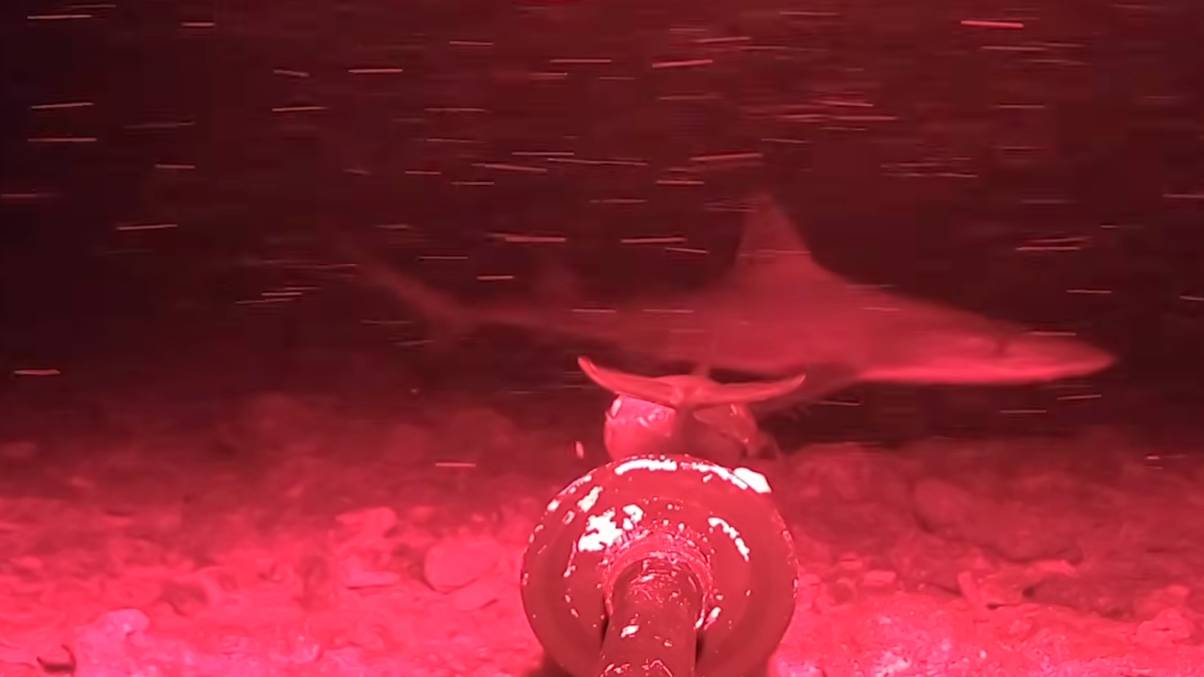
Ever wonder what secrets hide in the vast, uncharted depths of the Indonesian Ocean? Well, turns out even the ocean’s not immune to the mystery bug – over 70% of the global seafloor is still a complete enigma to us landlubbers. Enter YouTuber Barny Dillarstone, who, armed with some night vision cameras and a healthy dose of curiosity, plunged into this watery unknown. Spoiler alert: his underwater vigil caught more than just fish; it spotlighted bizarre animal antics, ancient shark celebrities that predate the dinosaurs, and even a rare critter that’s never been filmed alive before. Ready to dive into the deep end of marine mysteries with me? LEARN MORE.
A man dropped several night vision cameras into the Indonesian Ocean – and his findings are a reminder of how much we still have to learn about the marine world.
It’s no joke that what goes on under the sea remains a mystery to us land dwellers, with more than 70 percent of the global seafloor remaining unexplored or unmapped.
Fortunately, modern technology means marine exploration has become more accessible than ever, with a number of curious content creators taking matters into their own hands and dropping cameras across the ocean and sharing their findings with us. One such person is YouTuber Barny Dillarstone, who submerged several cameras while on a recent trip to Indonesia.
So what did he find?

What’s going on under the sea? (YouTube/Barny Dillarstone)
The video saw Dillarstone and his team drop cameras in five separate locations between 500ft and 800ft below the surface in search of rarely documented critters.
Unexplainable animal behaviour
Throughout the video, Dillarstone notes how several of the animals caught on camera appear to be acting strangely.
At one point, he notes that an almaco jack fish, which is known for keeping its distance, comes unusually close to the camera, even making several trips.
“Infrared light is invisible to the human eye and to most marine life,” Dillarstone noted.
“Might infrared make those that normally keep their distance become bolder?”
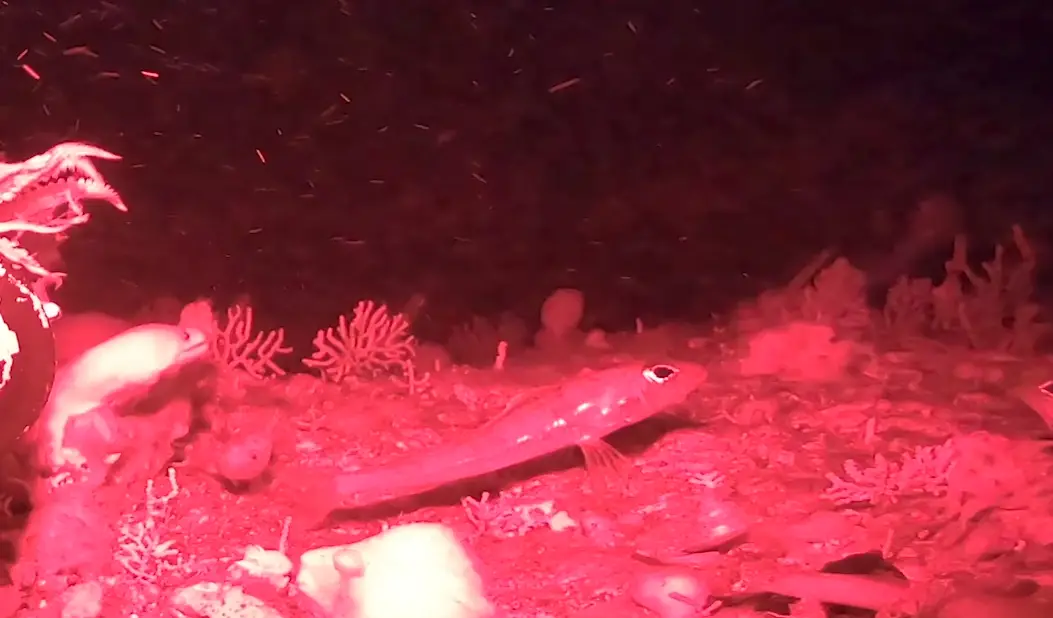
Later on in the video, Dillarstone and his team encounter a series of Hime fish, tiny creatures which are roughly the size of a person’s hand.
These tiny fish can endure currents likely to exhaust an Olympic swimmer ‘within seconds’ – but that wasn’t the most fascinating discovery.
Dillarstone notes how the Hime exhibit somehwat irritable behaviour around other animals, even banging their dorsal fins rhythmically at one point.
(YouTube/Barny Dillarstone)
He was unsure what the fish were attempting to communicate with their ‘short rhythmic contractions’ as the science was ‘unclear’. Nevertheless, it’s an interesting insight into how communication works in the depths of the ocean.
A shark which predates the dinosaurs
Early on in the video, we see Dillarstone identify a Bluntnose Sixgill Shark, a species which is ‘so ancient’ that it was swimming around the ocean long before some dinosaurs existed.
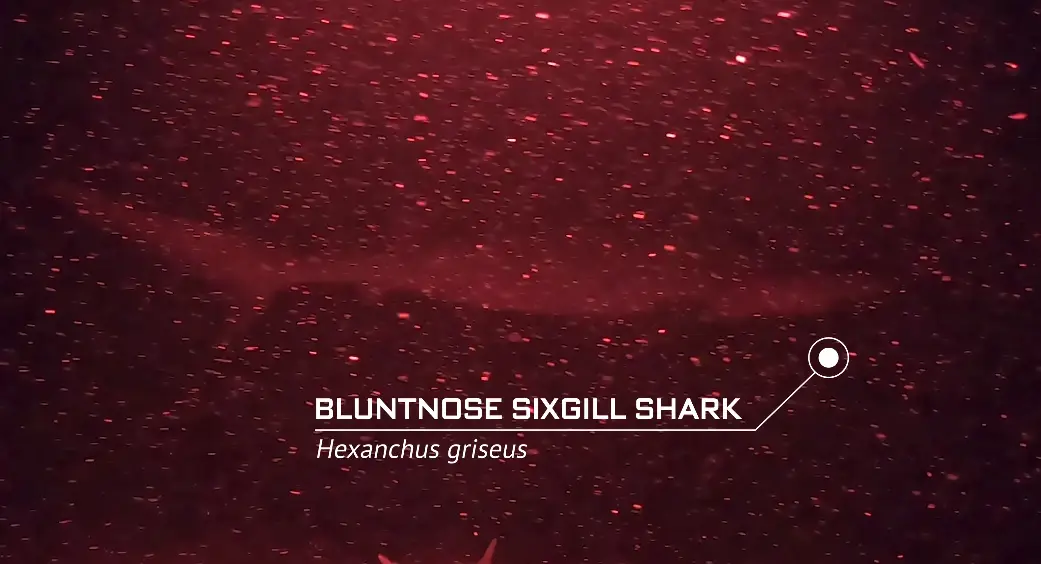
We also had a prehistoric visitor in the name of the Bluntnose Sixgill Shark (YouTube/Barny Dillarstone)
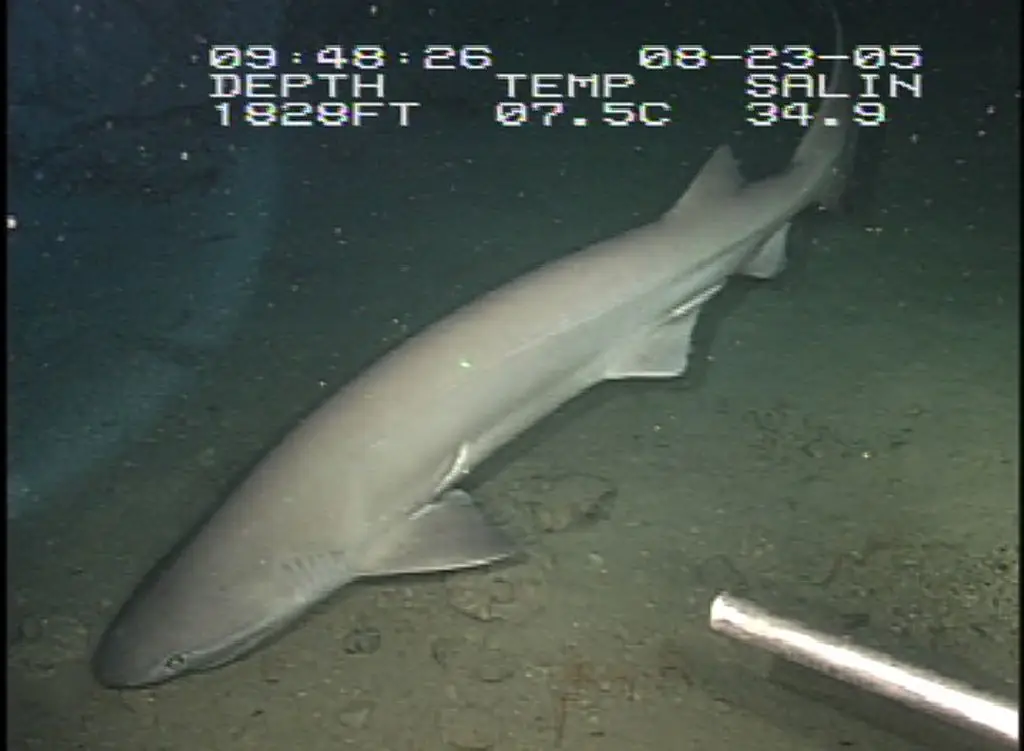
A Sixgill Shark captured on camera in 2005 (Universal History Archive/Universal Images Group via Getty Images)
For context, dinosaurs first emerged around 245 million years ago and roamed the Earth between 165 and 180 million years ago.
The species is also often referred to as a ‘living fossil’ due to its distinct appearance from other sharks, including having six gills instead of the standard five, and a prehistoric lineage means the animal is a reminder of how old our planet is.
A previously unseen animal
Dillarstone was also able to capture an animal which he had never seen before on camera, briefly leaving the content creator unable to explain what he was seeing.
After consulting with some of the ‘world’s top shark experts’, Dillarstone concluded that it was an Indonesian houndshark.
“As far as I’m aware, this is the first time this species has ever been recorded alive on camera,” he explained.
Pretty cool huh.

Joking Hazard Enlarged Box Empty Box for Card Storage
$12.00 (as of October 27, 2026 01:02 GMT +00:00 - More infoProduct prices and availability are accurate as of the date/time indicated and are subject to change. Any price and availability information displayed on [relevant Amazon Site(s), as applicable] at the time of purchase will apply to the purchase of this product.)
Fire Blanket - 1500F CE Certified Emergency Fire Blanket for Home & Kitchen | 500GSM Fabric & 0.5mm Thick - 100% Fiberglass Fire Extinguisher for Car,Warehouse Office - 2pc (47x47 inches) by Supa Ant
$53.45 (as of October 27, 2026 01:02 GMT +00:00 - More infoProduct prices and availability are accurate as of the date/time indicated and are subject to change. Any price and availability information displayed on [relevant Amazon Site(s), as applicable] at the time of purchase will apply to the purchase of this product.)
1MORE Triple Driver in-Ear Earphones Hi-Res Headphones with High Resolution, Bass Driven Sound, MEMS Mic, in-Line Remote, High Fidelity for Smartphones/PC/Tablet - Silver
$69.99 (as of October 27, 2026 01:02 GMT +00:00 - More infoProduct prices and availability are accurate as of the date/time indicated and are subject to change. Any price and availability information displayed on [relevant Amazon Site(s), as applicable] at the time of purchase will apply to the purchase of this product.)
RIVER OF GOODS Coastal 52 Inch Wooden Bead LED Ceiling Fan, Brown
(as of October 27, 2026 01:02 GMT +00:00 - More infoProduct prices and availability are accurate as of the date/time indicated and are subject to change. Any price and availability information displayed on [relevant Amazon Site(s), as applicable] at the time of purchase will apply to the purchase of this product.)