Saudi Archaeologists Stumble Upon Mysterious 1,100-Year-Old Gold Jewelry Hoard—What Secrets Do These Ancient Treasures Hold?
Imagine stumbling upon a treasure chest that’s been collecting dust for over a millennium—except instead of pirates, this time it’s nestled in Saudi Arabia’s Al-Qassim region at the Diriyah archaeological site. What really makes it jaw-dropping? We’re talking about about 100 pieces of gold jewelry, shimmering with colorful stones and intricate floral designs, crafted so skillfully you’d think it was yesterday’s fashion statement. But here’s the kicker: this isn’t just any bling; it dates back to the Abbasid period—a golden era that sparked mind-blowing advances in art, science, and literature. Who left this stunning hoard behind along a bustling hajj route between Iraq and Mecca? That mystery alone could keep you up at night. Honestly, it’s like uncovering a secret Instagram feed from a thousand years ago where beauty, trade, and culture collided. Dive into this dazzling time capsule and let’s ask: could this be the ultimate historical selfie? LEARN MORE
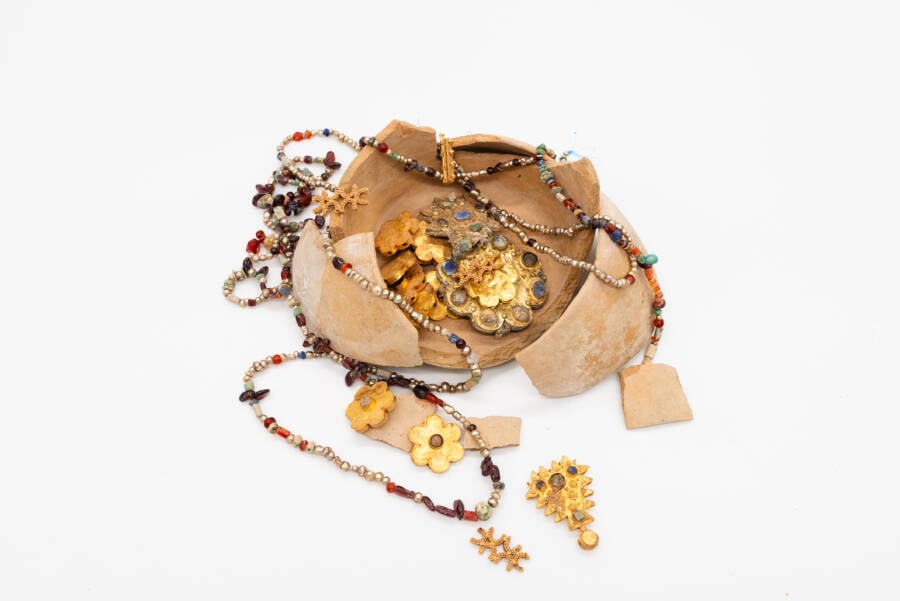
Found at the Diriyah archaeological site in Saudi Arabia’s Al–Qassim region, this enormous collection features expertly crafted pendants, discs, and beads adorned with floral patterns and multicolored stones.

Saudi Arabia Ministry of CultureThe gold jewelry that was found along an ancient hajj route in Saudi Arabia.
During excavations at the Diriyah archaeological site in Saudi Arabia’s Al-Qassim region, archaeologists came across a stunning hoard of jewelry from more than 1,000 years ago. These ornate gold pieces featuring colored stones were tucked away at the site of a former permanent settlement that one sat along a hajj route between Iraq and Mecca.
The jewelry is dated to the Abbasid period (750-1258 C.E.), a golden era of monumental advances in science, literature, and art in the Islamic world.
The 1,100-Year-Old Trove Of Gold Jewelry Found At Diriyah
According to a statement from the Saudi Ministry of Culture, this set of gold jewelry was found during excavations at the Diriyah archaeological site, where the Saudi Heritage Commission has been at work for the past four seasons.

Saudi Arabia Ministry of CultureThe jewelry set that was found at Diriyah in the Al-Qassim region.
Though roughly 1,100 years old, the jewelry remains in surprisingly good condition. It includes about 100 pieces, which range from floral pendants to necklaces to beads to disc-shaped items. Some pieces include floral motifs while others are adorned with colorful stones, which suggests that the jewelry’s designers had access to a sprawling trade network.
What’s more, the jewelry shows signs of advanced craftsmanship. The pieces were expertly hammered into thin gold sheets, after which craftsmen pressed decorative patterns into the surface, or placed stones into the frames.
So who owned the jewelry? Some clues about the owner may be gleaned from where the jewelry set was found. The excavation site once sat along a prominent hajj road that travelers used to get from Iraq to Mecca.
Diriyah’s Place As A Permanent Settlement Along The Basran Hajj Route
Some 1,100 years ago, this gold jewelry set was lost, abandoned, or hidden at the present-day Diriyah archaeological site in Al-Qassim. There, archaeologists found evidence of a permanent settlement, which would have once abutted the Basran Hajj route between Iraq and Mecca.
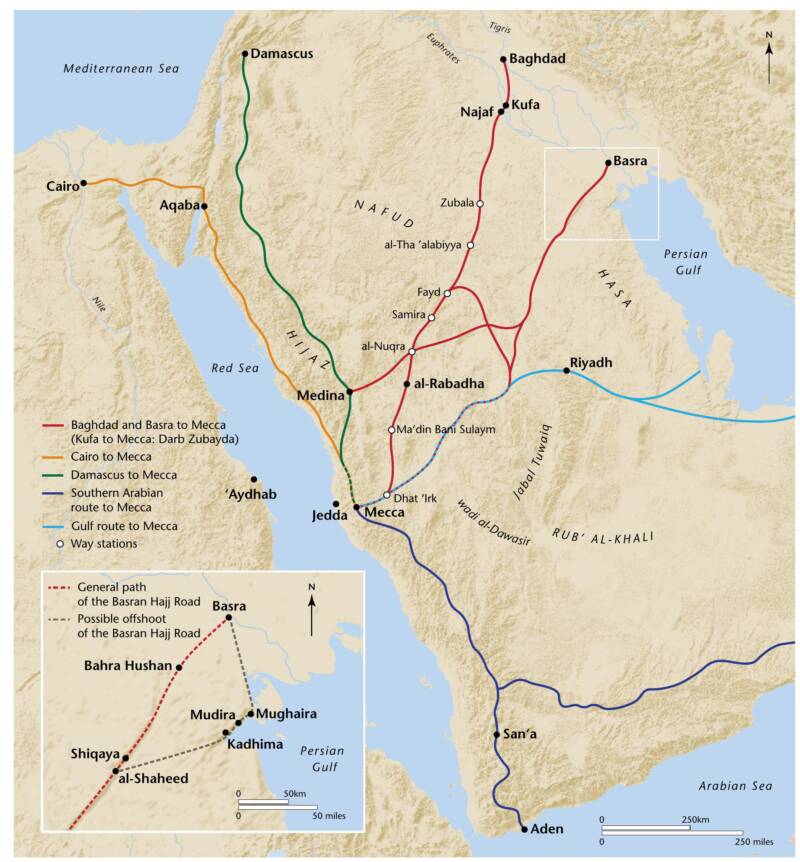
Matt BiggA map showing hajj routes, including the northern portion of the Basran Hajj road.
There, archaeologists also found the foundations of stone buildings, mud walls, fire hearths, and plastered rooms, as well as pottery, glass fragments, and metal tools. Such findings indicate a permanent settlement — not a temporary camp — and suggest that the site was once a place of “strategic importance” along pilgrimage and trade routes.
As such, it’s possible that the owner of the gold jewelry had some connection to this nexus of trade and pilgrimage. Perhaps they were an affluent resident or a merchant, or maybe they were simply a wealthy traveler that was just passing through.
But while the identity of the jewelry’s owner is a mystery, the jewelry itself is a clear symbol of its time and place. Hajj routes like the Basran Hajj path were not only frequented by pilgrims, but also by traders and travelers, who brought with them news and new ideas from afar.
During the Abbasid period, there was an abundance of new ideas in the realms of science, literature, and art, which surely traveled along the Basran Hajj route.
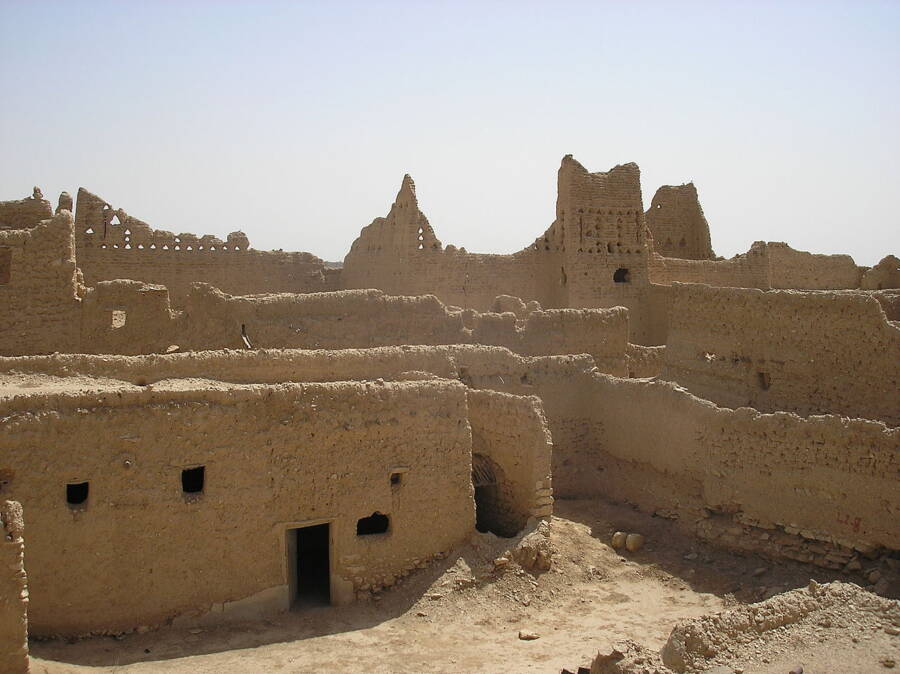
Xristoph/Wikimedia CommonsRuins in Diriyah, once a stopover for pilgrims on their way to and from Mecca.
And the newly-uncovered gold jewelry set stands as one of the most stunning collections of artifacts from this historic era. While many questions about the jewelry remain — including who owned it and how it was left behind — the set stands as a stunning window into the golden days of the Abbasid period.
“This discovery at Diriyah reflects the abundance of the Kingdom’s cultural heritage and its longstanding role as a crossroads of trade routes and cultural exchange,” said Dr. Jasir Suliman Alherbish, CEO of the Saudi Heritage Commission.

RIVER OF GOODS Stained Glass Bird Accent Lamp - 8" W x 13.5" H - Tiffany Style Table Lamps for Home, Office Desk, Bedroom, Nightstand - Blue Jay Decor
(as of September 10, 2026 00:38 GMT +00:00 - More infoProduct prices and availability are accurate as of the date/time indicated and are subject to change. Any price and availability information displayed on [relevant Amazon Site(s), as applicable] at the time of purchase will apply to the purchase of this product.)
Joking Hazard Enlarged Box Empty Box for Card Storage
$12.00 (as of September 10, 2026 00:38 GMT +00:00 - More infoProduct prices and availability are accurate as of the date/time indicated and are subject to change. Any price and availability information displayed on [relevant Amazon Site(s), as applicable] at the time of purchase will apply to the purchase of this product.)
RIVER OF GOODS Coastal 52 Inch Wooden Bead LED Ceiling Fan, Brown
(as of September 10, 2026 00:38 GMT +00:00 - More infoProduct prices and availability are accurate as of the date/time indicated and are subject to change. Any price and availability information displayed on [relevant Amazon Site(s), as applicable] at the time of purchase will apply to the purchase of this product.)
RIVER OF GOODS Stained Glass Magna Carta LED Ceiling Fan - 52" L x 52" W - Tiffany Style - Flush Mount Ceiling Fan with Remote - Teal
(as of September 10, 2026 00:38 GMT +00:00 - More infoProduct prices and availability are accurate as of the date/time indicated and are subject to change. Any price and availability information displayed on [relevant Amazon Site(s), as applicable] at the time of purchase will apply to the purchase of this product.)