Ex-OpenAI Insider Warns: AI Could Obliterate Nearly Every Job—Even Bill Gates Didn’t See This Coming

So here’s the deal — Daniel Kokotajlo, formerly insider at OpenAI, isn’t just whispering about artificial intelligence; he’s practically shouting about its looming takeover of the job market. Imagine a world where AI doesn’t just dabble in tasks but masters them so spectacularly that it outspeeds, outsmarts, and outsells the sharpest human minds — all before you finish your morning coffee. Daniel’s brainchild, the AI Futures Project, and his predictive masterpiece, ‘AI 2027’, foresee a ‘super intelligence’ dawning by the end of this decade, flipping the employment landscape on its head. Advocating for a ‘Plan A’ to navigate the risks, Kokotajlo boils it down: when AI turns into a self-improving juggernaut, every job could, in theory, be claimed — but here’s the kicker: what’s left for us mere mortals? That’s not a technical conundrum; it’s politics, baby. So, are we ready to negotiate with our future robot overlords, or will we simply watch as they clock in for all the shifts? Let’s dive into this thrilling, slightly scary saga where AI aims to be the boss — literally.
A former researcher at OpenAI has opened up about the impact that he believes the technology will have on the job market.
Daniel Kokotajlo founded the AI Futures Project, and co-wrote a scenario called ‘AI 2027’ which looks at the potential effect that artificial intelligence.
This includes a prediction about ‘super intelligence’, which he believes could be a reality by the end of the 2020s.
Kokotajlo went on to participate in a further publication called AI 2040: Plan A which includes some ideas of how humanity can deal with the dangers this ‘super intelligence’.
There are a lot of concerns about AI, with critics drawing attention to how generative AI can be used to generate images and videos of people doing or saying things that they haven’t actually done, sparking safety concerns.
Others draw attention to the environmental cost, including the high water use of AI data centres, as well as the intense noise pollution when they are built near residential areas.
Many artists, musicians, and writers have also expressed outrage and horror at AI generated work.
But speaking on the Diary of a CEO podcast, Kokotajlo addressed one concern in particular, which is AI taking people’s jobs.

Daniel Kokotajlo spoke to the Diary of a CEO podcast (YouTube/The Diary of a CEO)
He explained that AI businesses want to turn their development on themselves first, because this theoretically means that the AI will be able to improve itself faster and better than human engineers could.
The aim, he told podcast host Steven Bartlett, is that there will be point of critical mass where the AI will become a ‘superintelligence’.
“If the companies do manage to build super intelligence then by definition they’re going to be able to take almost all the jobs or all the jobs because it’s better, faster, cheaper than the best humans at everything,” he said.
He explained that because the AI would be training itself then by the time it was released into the wider economy it would be able to ‘learn’ new things very quickly.
Asked what jobs might remain in this scenario, he replied: “I think that’s actually a political question, not a technical question, because on a technical level all the jobs can be done by the AIs if they’ve reached that level.
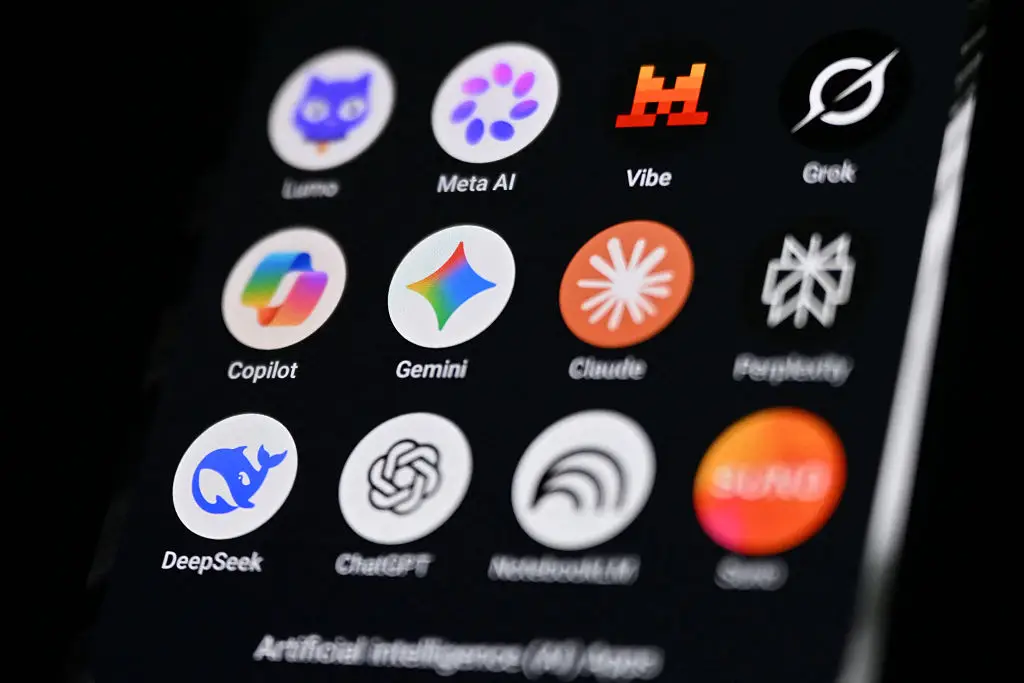
AI developers are pressing ahead (Martin LELIEVRE / AFP via Getty Images)
“And so it’s a question of what jobs are allowed for them to do.”
As for what jobs would not be allowed, he said that it ‘depends on who’s in charge’, adding that there could be some sort of ‘political conversation’.
But what about if there is any displacement at the moment?
“We’re already starting to see a little bit of it now, but not very much,” he said.
“Because AIs aren’t good enough yet. They’re impressive but they’re not just a drop in replacement for a human worker in almost any field.”
Kokotajlo claimed that developers ‘want to get to those very high levels of intelligence and then deploy more out into the economy’.
He added: “By the time it’s actually coming for all these different jobs they will have had fully autonomous AI research happening for months, maybe years.”

Supa Ant Fire Blanket -Certified 1200F Extra Thick, Glow in The Dark | Glow in The Dark Emergency Supplies 500gsm, 0.5mm Thick Wearable Fire Blankets for Home. Emergency Blanket with Cape & Hood
$83.99 (as of September 21, 2026 00:45 GMT +00:00 - More infoProduct prices and availability are accurate as of the date/time indicated and are subject to change. Any price and availability information displayed on [relevant Amazon Site(s), as applicable] at the time of purchase will apply to the purchase of this product.)
Supa Ant Canning Supplies Starter Kit (Food Grade) - Canning Kits Set for Beginners - 3 Pcs. Including Wide Mouth Jar Funnel, Magnetic Lid Lifter, Stainless Steel Jar Lifter (Assembled in USA) Blue
$11.99 (as of September 21, 2026 00:45 GMT +00:00 - More infoProduct prices and availability are accurate as of the date/time indicated and are subject to change. Any price and availability information displayed on [relevant Amazon Site(s), as applicable] at the time of purchase will apply to the purchase of this product.)
Kinsa Smart,Fever, Digital Medical Baby, Kid and Adult Termometro - Accurate, Fast, FDA Cleared Thermometer for Oral, Armpit or Rectal Temperature Reading - QuickCare
$29.00 (as of September 21, 2026 00:45 GMT +00:00 - More infoProduct prices and availability are accurate as of the date/time indicated and are subject to change. Any price and availability information displayed on [relevant Amazon Site(s), as applicable] at the time of purchase will apply to the purchase of this product.)
Skater Trainer Wheels - Beginners get Skateboard Tricks Fast, Safe and Fun | Viral accessory gift - Helps beginners stay excited about their new skateboard - Kids & parents love these
$28.99 (as of September 21, 2026 00:45 GMT +00:00 - More infoProduct prices and availability are accurate as of the date/time indicated and are subject to change. Any price and availability information displayed on [relevant Amazon Site(s), as applicable] at the time of purchase will apply to the purchase of this product.)