Unraveling the Mystery: What Secret Decision Led Costa Concordia Off Course Before Deadly Crash?
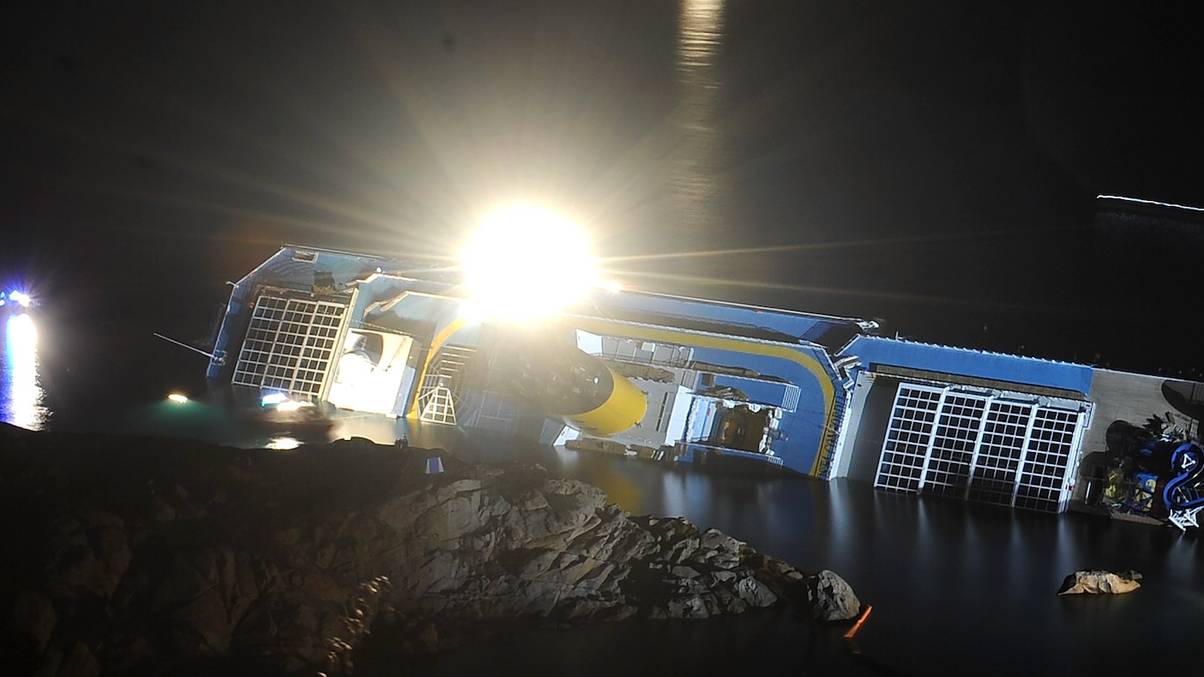
So, here’s a head-scratcher for you: How does a gigantic cruise ship, carrying hundreds of souls, end up kissing a rock in shallow waters near a quaint Italian island—and not a single soul thought, “Hey, maybe we shouldn’t veer off the planned route”? Back in January 2012, the Costa Concordia didn’t just take a wrong turn; it capsized, claiming 32 lives. It turns out, the captain, Francesco Schettino, decided to sprinkle a little extra flair on the journey—a ‘maritime salute’—which, spoiler alert, wasn’t part of the approved itinerary. Netflix’s new documentary, Shipwrecked: Nightmare at Sea, digs deep into this nautical misadventure, interviewing survivors, crew, and rescuers to unravel why a perfectly charted voyage went so catastrophically off course. Buckle up—because this isn’t your average cruise story. LEARN MORE
In January 2012, the Costa Concordia cruise ship capsized after crashing into a rock formation in the shallow waters near the Italian island of Giglio, killing 32 people.
However, the deadly accident could’ve been avoided if the ship’s captain, Francesco Schettino, had stuck to the cruise liner’s intended route.
The case was recently revisited after Netflix released Shipwrecked: Nightmare at Sea, a documentary which retraces the doomed vessel’s final journey and features interviews from surviving passengers, staff, first responders and investigators.
Why did the Costa Concordia deviate from its intended route?
At the heart of the investigation into the Costa Concordia’s sinking was the key question: why did the ship deviate from its authorised route?
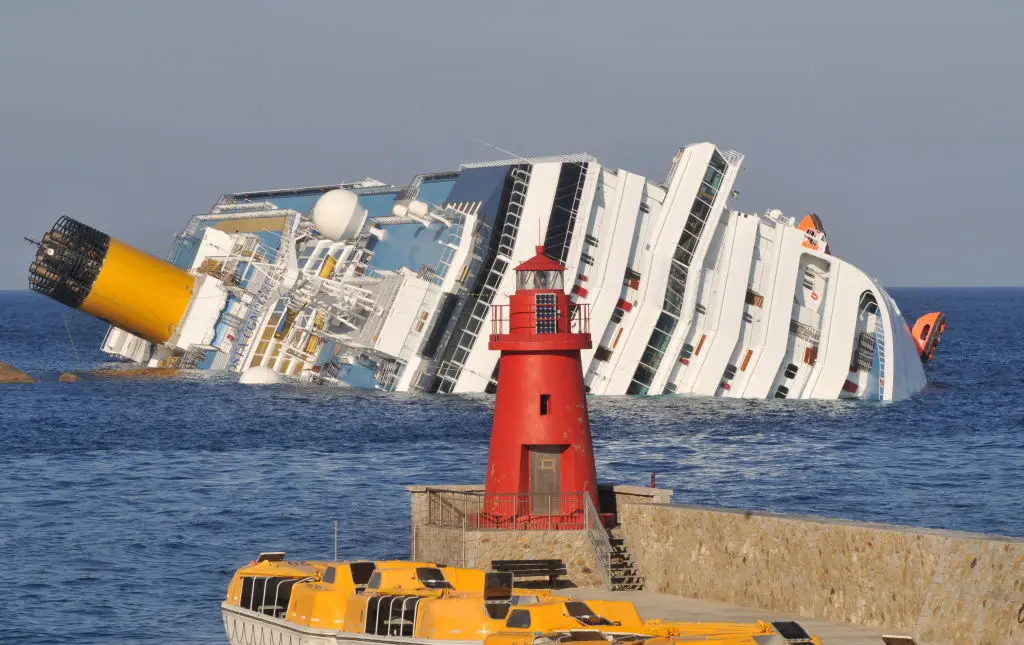
A total of 33 people would die in the accident, including passengers, crew and a rescue diver (Laura Lezza/Getty Images)
The ship’s route was planned to take passengers on a seven-day voyage around Italy, France and Spain, a well-travelled route it had been taking for the past six years.
During his testimony, the ship’s captain Francesco Schettino was grilled over his decision not to follow the pre-arranged route.
It was claimed that Schettino had decided to change the ship’s course in order to perform a ‘maritime salute’, a gesture of respect where the vessel sounds its horn, according to the testimony of hotel manager Manrico Giampedroni.
He said the request had come from the cruise’s head waiter, as his mother and sister both lived on the island.
It was also suggested that Schettino had wanted to impress passengers by showing them an up-close view of the island’s rocky coastline. Meanwhile, other witnesses claimed to have seen the captain saluting a person ashore, thought to be a retired captain.
It wasn’t unheard of for cruise ships to perform salutes either, with Schettino telling a judge during his testimony that he didn’t need to use a navigation system as he ‘knew those seabeds’ already, according to a report from The Wall Street Journal.
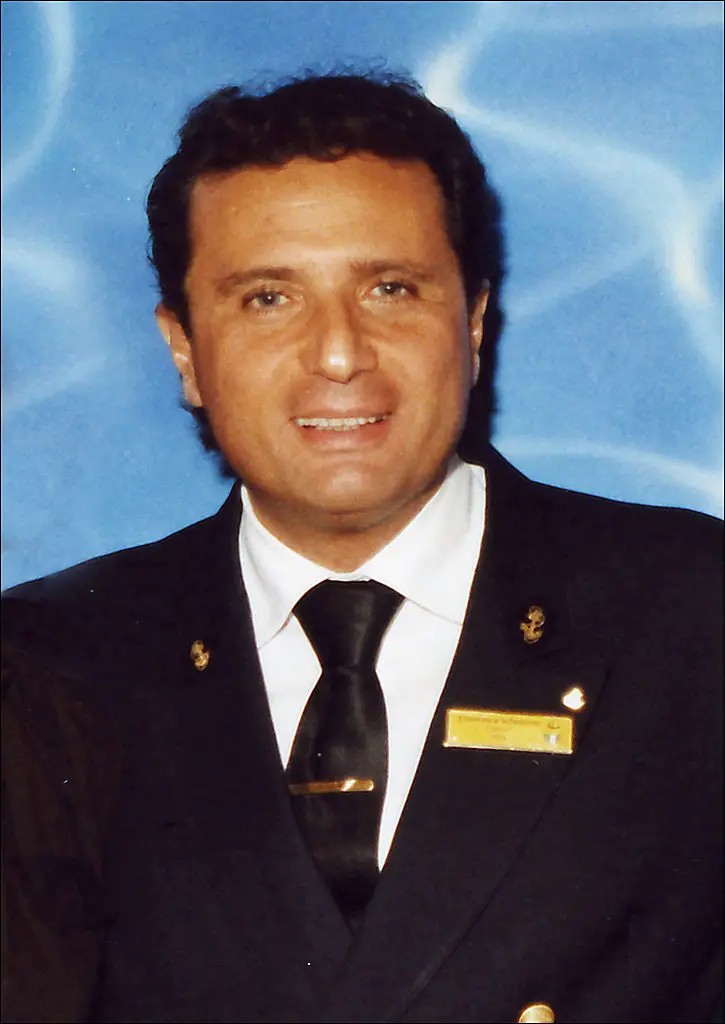
Captain Schettino had changed the course to perform a marine salute (Photonews via Getty Images)
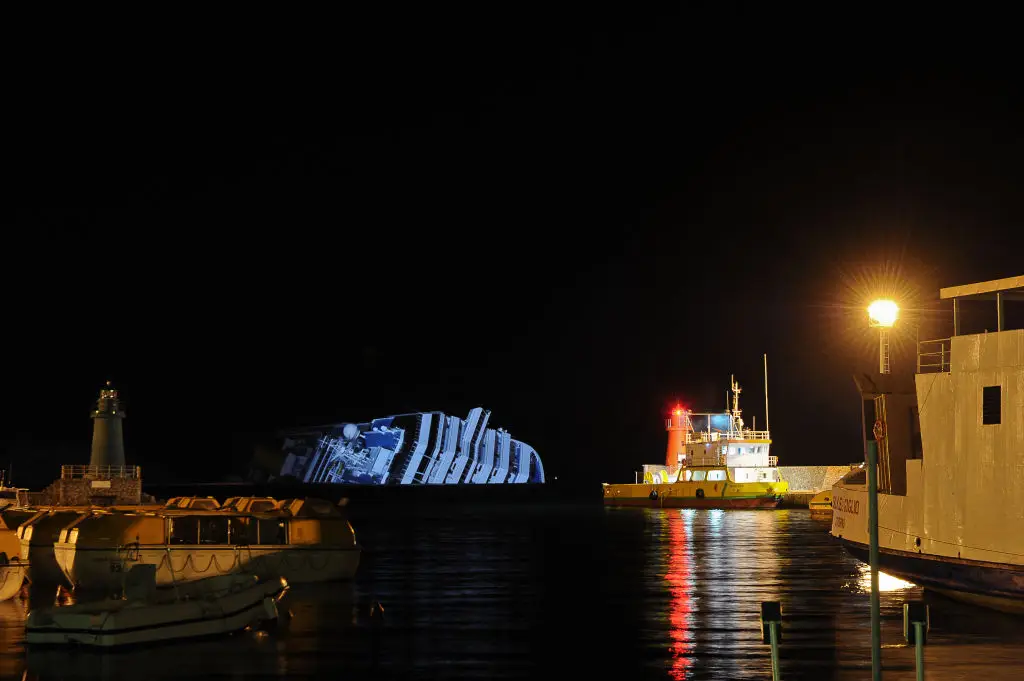
The captain also waited an hour after hitting the rocks before sending out a distress signal (ANDREAS SOLARO/AFP via Getty Images)
However, a miscommunication on the bridge would lead to a crew member to steer the boat in the incorrect direction. The crew were able to correct the mistake but couldn’t avoid the rocky seafloor, with the left side slamming into the rocks and causing a 174-foot tear.
The hole would cause the vessel to tilt to one side and eventually sink into the water, with passenger evacuation not taking place until the Costa Concordia was already on one side.
A total of 27 passengers and five crew members would die in the accident. The death toll would later rise to 33, after a diver passed away from injuries sustained during a rescue mission.
Maritime salute was an ‘unapproved, unauthorised manoeuvre’
Costa Cruises’ chairman and chief executive Pier Luigi Foschi would later reveal that Schettino’s plan to perform a maritime salute had not been approved by the company, telling reporters at a press conference shortly after the accident that the route had been programmed in correctly.
“This route was put in correctly,” he said.
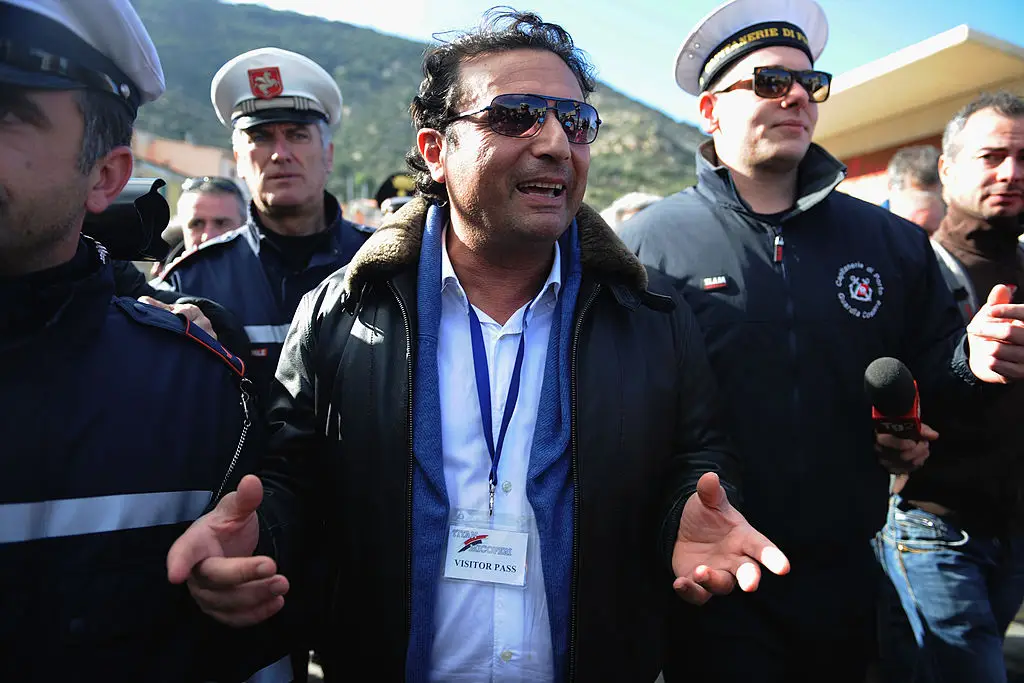
Francesco Schettino received a 16-year prison sentence for his actions (Laura Lezza/Getty Images)
“The fact that it left from this course is due solely to a manoeuvre by the commander that was unapproved, unauthorised and unknown to Costa.”
He also said that an alarm sounded when a vessel went off course.
What happened to the Costa Concordia captain?
Schettino would ultimately be found guilty of manslaughter, causing the shipwreck and abandoning ship, being sentenced to 16 years in prison.
He has made numerous appeals and requests for early release over the years – all of which have been rejected.

Supa Ant 6x8ft. Welding Blanket Fireproof (Pack of 2) - Heavy Duty Weld Fire Blanket Tools - Welders Cover for Men Curtain with Gloves - Large Welding Gear for Welder Accessories
(as of October 18, 2026 01:00 GMT +00:00 - More infoProduct prices and availability are accurate as of the date/time indicated and are subject to change. Any price and availability information displayed on [relevant Amazon Site(s), as applicable] at the time of purchase will apply to the purchase of this product.)
Skater Trainer Wheels - Beginners get Skateboard Tricks Fast, Safe and Fun | Viral accessory gift - Helps beginners stay excited about their new skateboard - Kids & parents love these
$25.95 (as of October 18, 2026 01:00 GMT +00:00 - More infoProduct prices and availability are accurate as of the date/time indicated and are subject to change. Any price and availability information displayed on [relevant Amazon Site(s), as applicable] at the time of purchase will apply to the purchase of this product.)
Rhythm Superfoods Kale Chips, Zesty Nacho, Organic and Non-GMO, 2.0 Oz (Pack of 4), Vegan/Gluten-Free Superfood Snacks
(as of October 18, 2026 01:00 GMT +00:00 - More infoProduct prices and availability are accurate as of the date/time indicated and are subject to change. Any price and availability information displayed on [relevant Amazon Site(s), as applicable] at the time of purchase will apply to the purchase of this product.)
KiddyCare Diaper Caddy Organizer Cart for Nursery Baby Basket Gift for Boy/Girl | Diaper Caddy for Changing Table Basket Organizer with Dividers | Caddy for Baby Stuff Breast Pump Caddy - Regular
$9.99 (as of October 18, 2026 01:00 GMT +00:00 - More infoProduct prices and availability are accurate as of the date/time indicated and are subject to change. Any price and availability information displayed on [relevant Amazon Site(s), as applicable] at the time of purchase will apply to the purchase of this product.)