The Mysterious Rise and Sudden Fall of Chariots: Uncovering the Forgotten Secrets of Ancient Warfare
Ever wonder why ancient warriors seemed obsessed with riding around on horse-drawn chariots, instead of just hopping directly on their horses? I mean, it’s like opting for a tandem bicycle when you could just zoom solo on a mountain bike. Chariots were the big deal in battlefields across Egypt, Persia, Greece, and beyond—until one day, as if swayed by some ancient trendsetters from the Eurasian steppe, cavalry took center stage and chariots faded like a quirky fashion faux pas. What made horseback soldiers so irresistible that they rendered their wheeled counterparts nearly extinct by 300 B.C.E.? Was it because horses back then were just too scrawny to pull chariots without breaking a sweat? Or did the steppe nomads simply have a knack for turning their trusty steeds into ultimate solo-warrior machines? Spoiler alert: It’s a mix of rugged horse genetics, inventive ancient warfare hacks, and a lesson in adaptability that’s almost too cool to be true. Hang tight—this isn’t just history; it’s a wild ride through wheels, hooves, and a showdown of epic proportions.
Chariots were a key tool in warfare for many ancient civilizations, but the use of cavalry rose as European and Middle Eastern societies noticed how effectively the people of the Eurasian steppe fought on horseback.
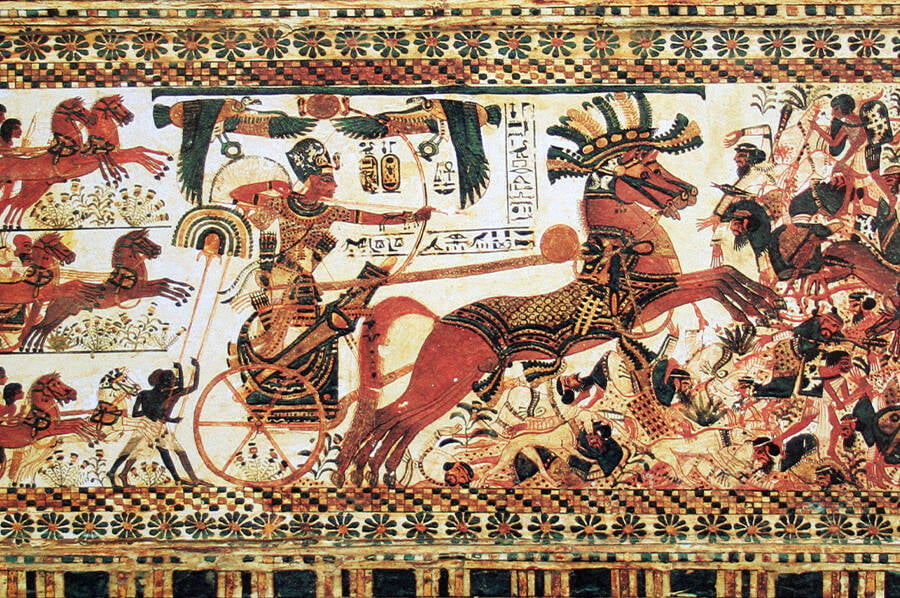
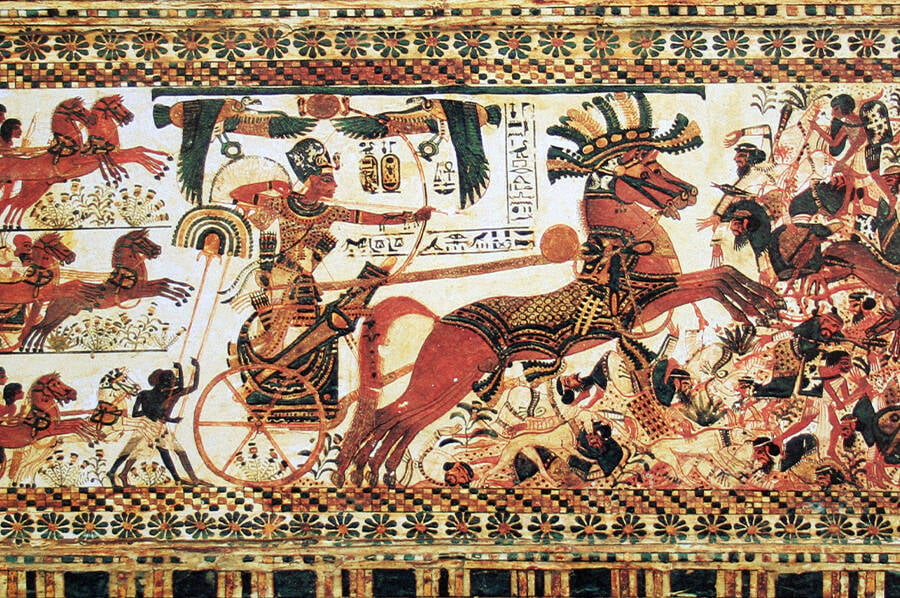
Public DomainA 3,300-year-old depiction of King Tut riding a war chariot into battle.
Artwork from ancient civilizations often depicts warriors on horse-drawn chariots rather than simply riding horseback. But why?
Chariot warfare was one of the most pervasive military tactics of the ancient world. Egyptians, Assyrians, Persians, Celts, Greeks, and various Chinese dynasties utilized chariots in battle. But at the same time, warriors of the Eurasian steppe — such as the ancestors of the Mongols — fought just as fiercely with horses alone. And by roughly 300 B.C.E., chariots had all but vanished from the battlefield.
So, why were chariots more common in some civilizations than others? And what happened to make them obsolete?
One Theory About Chariot Warfare
In a video posted by TikTok user David Lu (@david_the_greatest_) that currently has over 143,000 views, Lu says that chariots became so popular due to the limitations of horses in Europe at the time.
“Horses used to be a lot smaller and weaker, and it was a lot harder to control the horse without technologies like the saddle and stirrup,” Lu explains. “So, to solve this problem, you need two guys on the horse: one guy who could just focus on controlling it, and one guy who would shoot you. Then, put them on wheels to make it easier on the small horse, and you get a chariot.”
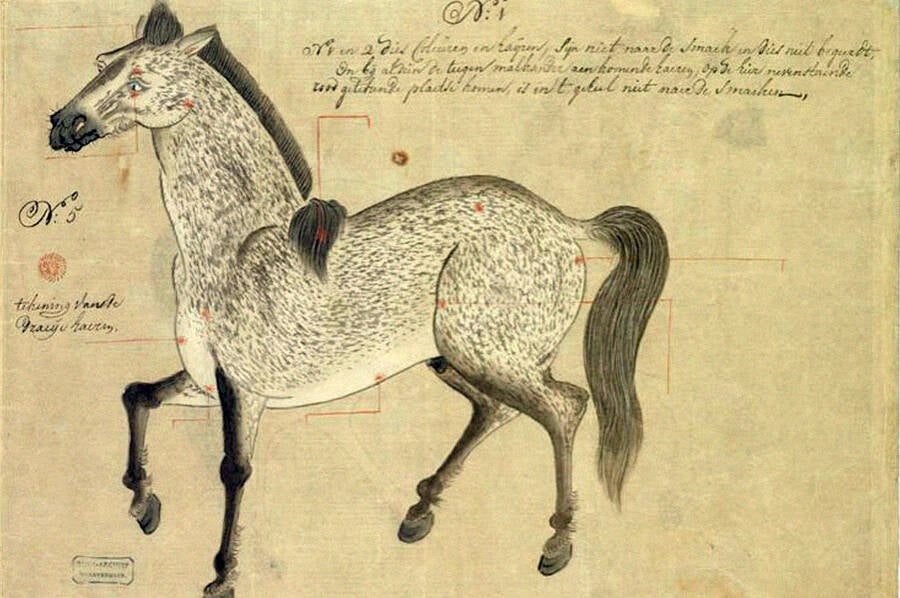
Public Domain
An 18th-century illustration of a Persian horse.
In contrast to their Western counterparts, people of the Eurasian steppe did not typically use chariots. According to Lu, their lives were largely nomadic, and their sustenance generally came from grazing livestock. As such, chariot warfare did not make sense for them, as maintaining the vehicles would have been a challenge.
Instead, the people of the steppe took a different approach. They bred their horses to be sturdier and developed special weapons that could be used by a single individual on horseback, meaning there was no need for additional riders.
These nomads became particularly skilled in horseback warfare — so much so that other civilizations started to take note, especially as their villages were raided. In response, many societies abandoned their smaller horses in favor of larger ones from the steppe or began breeding their own horses to be sturdier.
“And, by around 300 B.C.E., China, Egypt, Persia, and most other civilizations on the continent abandoned the chariots,” Lu summarizes.
The Truth About The Decline Of Chariots
This is one theory of why chariot warfare became obsolete, and it’s certainly a fascinating one. Many of its details are true. Ancient horses were often smaller than modern breeds, and chariot crews did often divide their duties between two people. Indeed, over time, mounted warriors from the Eurasian steppe convinced neighboring civilizations that cavalry could be faster and more flexible than chariots — even though this “convincing” could be pretty violent.
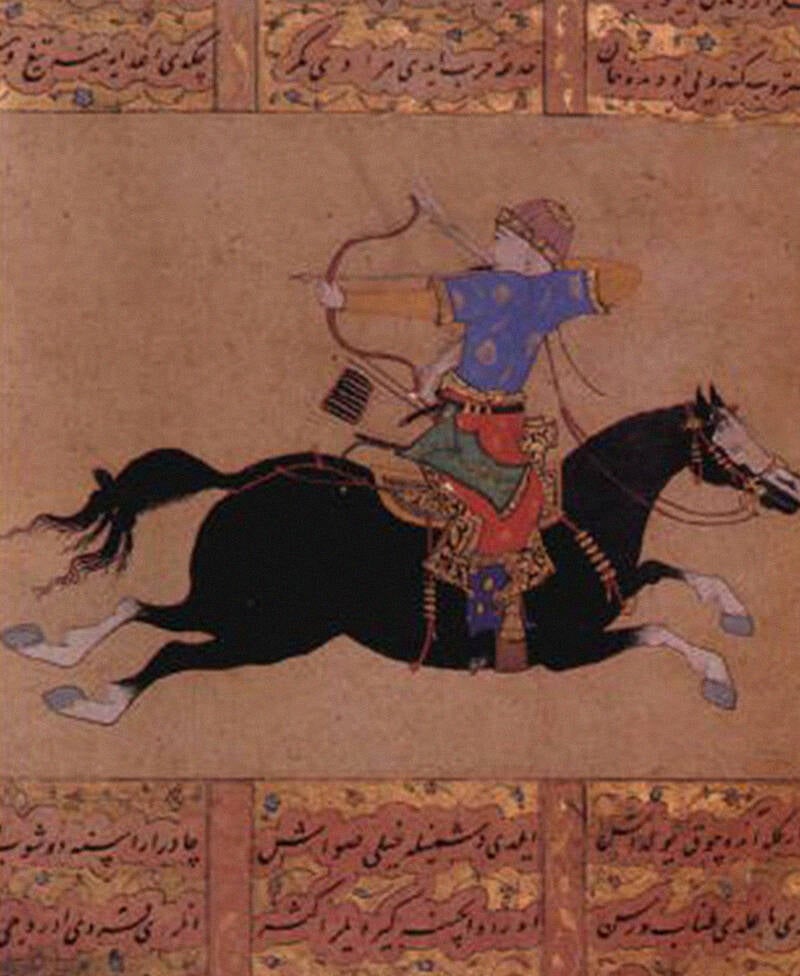
Public DomainA depiction of an Ottoman archer on horseback.
That said, it wasn’t as simple as “the West had chariots, but Eurasia had better horses.”
To start, Eurasia did have chariots. According to a 2020 study published in the journal Antiquity, there’s evidence for light, horse-drawn chariots being used by the Sintashta culture near the Ural Mountains around 2000 B.C.E. Experts believe that many societies used chariots not only for warfare but for hunting, transportation, and ritual as well.
Not only that, but while many ancient cultures in the West had chariots, there’s plenty of evidence that they utilized mounted cavalry, too.
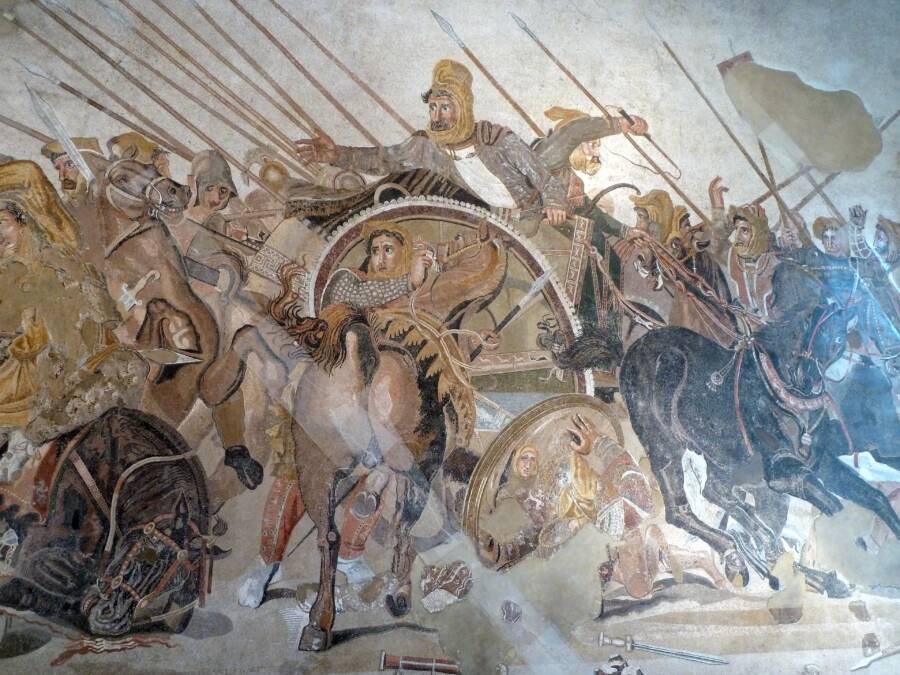
Dave & Margie Hill/Kleerup/Wikimedia CommonsKing Darius III of Persia rides a chariot during a battle against Alexander the Great.
What’s clear, however, is that there was something special about the horses of the steppe and the way that their riders navigated with them. For example, King Wuling of Zhao in China reportedly observed mounted archers and instructed his soldiers to not only adopt their practices but their clothing as well.

Skater Trainer Wheels - Beginners get Skateboard Tricks Fast, Safe and Fun | Viral accessory gift - Helps beginners stay excited about their new skateboard - Kids & parents love these
$25.95 (as of October 23, 2026 01:01 GMT +00:00 - More infoProduct prices and availability are accurate as of the date/time indicated and are subject to change. Any price and availability information displayed on [relevant Amazon Site(s), as applicable] at the time of purchase will apply to the purchase of this product.)
RIVER OF GOODS Stained Glass Magna Carta LED Ceiling Fan - 52" L x 52" W - Tiffany Style - Flush Mount Ceiling Fan with Remote - Teal
(as of October 23, 2026 01:01 GMT +00:00 - More infoProduct prices and availability are accurate as of the date/time indicated and are subject to change. Any price and availability information displayed on [relevant Amazon Site(s), as applicable] at the time of purchase will apply to the purchase of this product.)
The Door Balancer Eliminates The Need for Door Props, Door Stops and Door Wedges
(as of October 23, 2026 01:01 GMT +00:00 - More infoProduct prices and availability are accurate as of the date/time indicated and are subject to change. Any price and availability information displayed on [relevant Amazon Site(s), as applicable] at the time of purchase will apply to the purchase of this product.)
Supa Ant 6x8ft. Welding Blanket Fireproof (Pack of 2) - Heavy Duty Weld Fire Blanket Tools - Welders Cover for Men Curtain with Gloves - Large Welding Gear for Welder Accessories
(as of October 23, 2026 01:01 GMT +00:00 - More infoProduct prices and availability are accurate as of the date/time indicated and are subject to change. Any price and availability information displayed on [relevant Amazon Site(s), as applicable] at the time of purchase will apply to the purchase of this product.)