Mysterious Lights Ignite Alien Invasion Fears Across Britain—What’s Really Flying Above?
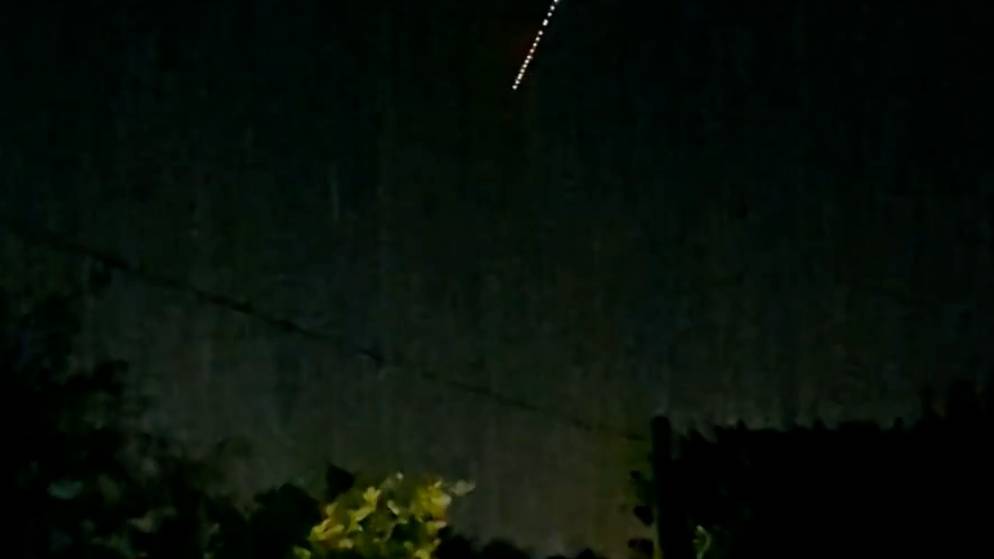
So, picture this – Brits looking up at the night sky on a chill Saturday evening only to see a bizarre string of lights cutting across the heavens like some cosmic conga line. Panic? Absolutely. Conspiracy theories of an alien takeover? You bet. Social media exploded with people wondering if we were witnessing UFOs, missile drills, or just the universe playing tricks on us. Spoiler alert: those mysterious dots weren’t extraterrestrial invaders nor high-tech missiles but rather Elon Musk’s Starlink satellites doing their thing, blazing a trail above the UK. Who knew our sky could become the latest tech runway? But, this shiny spectacle also brings up some serious head-scratchers about the future safety and sustainability of our planet’s orbital neighborhood. Intrigued yet? Let’s dive deeper. LEARN MORE
Brits feared aliens may have finally been coming down to planet Earth to take over humanity as we know it as a line of bizarre lights lit up the sky above the UK on Saturday (22 August).
The long line of illuminous lights caught the attention of people on X who immediately rushed to question whether UFOs and other lifeforms were shortly to make their arrival.
Some questioned the lights could have even been missiles – except it wasn’t what it seemed.
Videos posted by various accounts on X showed the long line of white spots lighting up the sky on Saturday night, causing mass confusion with those on social media.
“What tf did I just see in the sky? ( UK ) Is this aliens? missiles?” one user questioned. Another meanwhile posted: “Very VERY strange flight pattern over Glasgow tonight??? I’m not a UFO guy but….!”
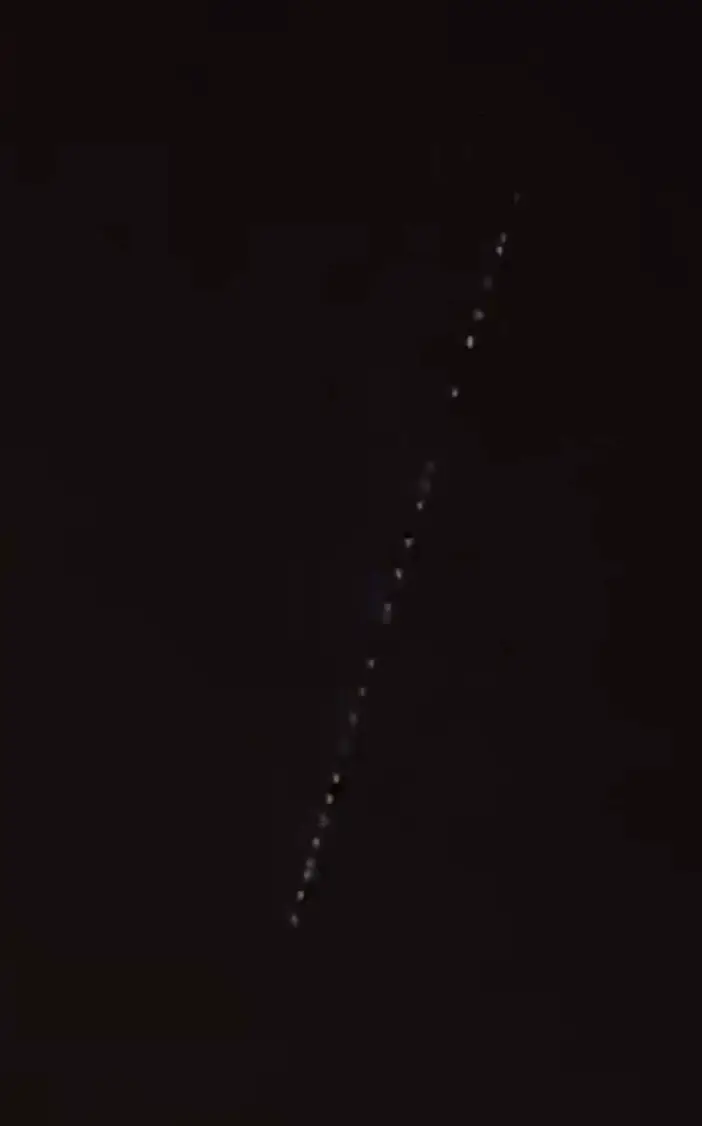
They formed a long line of dots in the sky (@JackAitchison15/X)
A third, also sharing a video, wrote: “What on earth was this in the night sky. straight line of slow moving lights that disappear. Ufo??”
Other users responded suggested an ‘alien invasion’ as one replied: “I saw it from Northampton in the east mids, was well confused” and another said “Anybody else in Glasgow see that big line of lights in the sky about 15 minutes ago ? What the f*** was that ?”
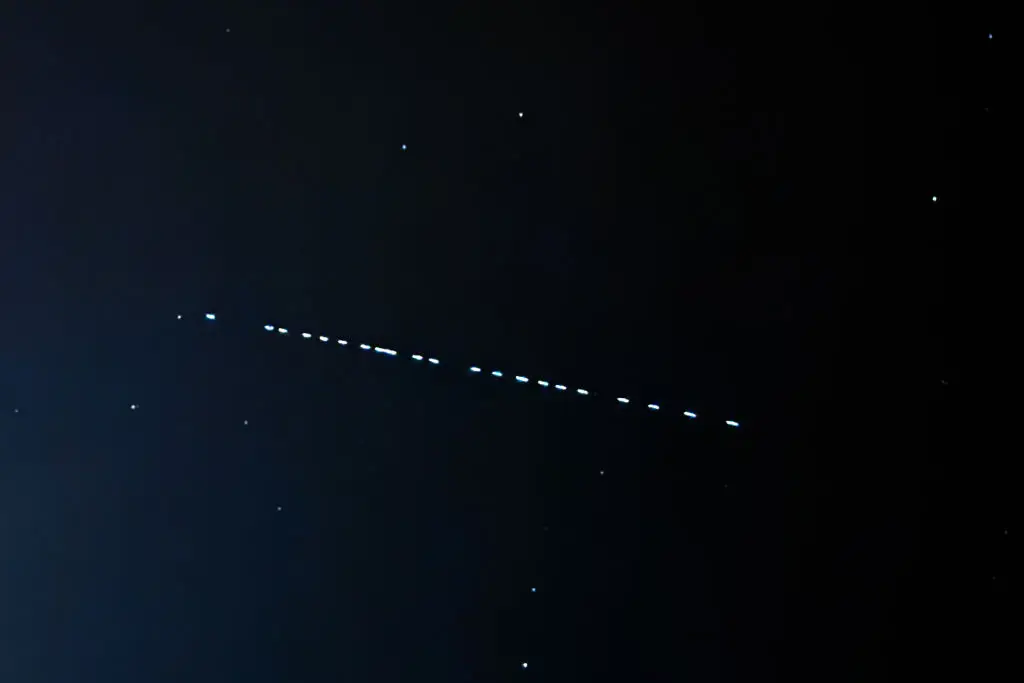
The satellites form a line (Jakub Porzycki/NurPhoto via Getty Images)
It became clear pretty quickly that the lights, forming in a straight linear pattern, were in fact Elon Musk’s Starlink satellites and that planet Earth is not welcoming alien lifeforms… just yet.
Other social media users were quick to point this out too, as one wrote: “The first time I saw it was two days after the first lockdown and the train was much much longer so I genuinely thought we were being invaded.”
Another clarified: “Starlink friend! Got me thinking the same thing years ago. They always form in a line like that.”
What are the SpaceX Starlink satellites?
The SpaceX satellites form as part of a huge network of small satellites orbiting Earth that are able to provide internet access from space.
They receive internet signals from stations based on the ground and transmit them them to users’ Starlink dishes.
Starlink satellites tend to operate in low Earth orbit, roughly 550 km (340 miles) above Earth. Each satellite only covers a small area, so there are thousands of them in order to be able to provide continuous coverage.
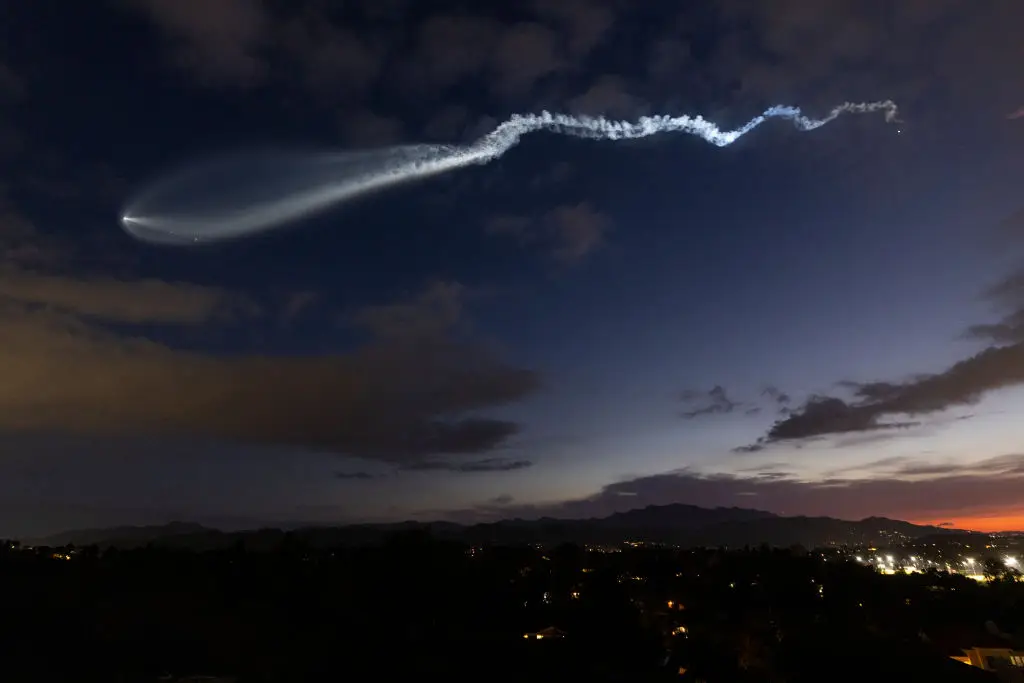
A Falcon 9 rocket launching the satellites into the sky (Kevin Carter/Getty Images)
After being launched in Falcon 9 rockets, the satellites appear as a long train of bright dots moving across the night sky.
Safety concerns over satellites in orbit
Earlier this year, there were concerns raised about the potential impact on human health, with satellites ‘falling’ out of the sky.
It’s thought there are currently around 9,000 satellites in low Earth orbit. However, the revolutionary technology has prompted a number of growing safety concerns, including contributing to the possibility of the Kessler syndrome theory.

SpaceX (Justin Sullivan/Getty Images)
Vice president of Starlink engineering at SpaceX, Michael Nicolls, then announced plans to lower nearly half of the satellites over the course of this year, from an altitude of around 550 kilometres to around 480 kilometres.
He shared the plans on social media, revealing the ‘significant reconfiguration’ of the constellation would ‘increase space safety in a number of ways.’
Nicolls explained that atmospheric density decreases as solar minimum approaches, meaning the ballistic decay — the natural process where objects de-orbit and re-enter Earth’s atmosphere — increases at any given altitude.
Therefore, spacecrafts will take less time to deorbit through atmospheric drag at lower altitudes, if they are unable to actively deorbit, particularly as solar minimum — a period of lowest activity in the Sun’s roughly 11-year solar cycle — approaches.
Another benefit, which links back to growing fears around the Kessler syndrome theory, is a reduction in congestion.

Scientists think we’re close to Kessler syndrome coming to fruition (Getty Stock Photo)
The Kessler syndrome theory was thought up by NASA scientists Donald Kessler and Burton Cour-Palais back in 1978, and follows the idea that objects orbiting Earth in close proximity to the planet will become so crowded that a chain reaction of collisions could begin.
And from there, it might not stop, destroying satellites essential to maintaining humanity as we know it – from crop production and internet connections to international travel and phone calls.
In the worst-case scenario, the area of space described as low Earth orbit will then become uninhabitable by new satellites due to the rings of debris whizzing around the planet.
“Spent rockets, satellites and other space trash have accumulated in orbit increasing the likelihood of collision with other debris,” NASA has explained.

1MORE Triple Driver in-Ear Earphones Hi-Res Headphones with High Resolution, Bass Driven Sound, MEMS Mic, in-Line Remote, High Fidelity for Smartphones/PC/Tablet - Silver
$69.99 (as of October 25, 2026 01:02 GMT +00:00 - More infoProduct prices and availability are accurate as of the date/time indicated and are subject to change. Any price and availability information displayed on [relevant Amazon Site(s), as applicable] at the time of purchase will apply to the purchase of this product.)
Joking Hazard Enlarged Box Empty Box for Card Storage
$12.00 (as of October 25, 2026 01:02 GMT +00:00 - More infoProduct prices and availability are accurate as of the date/time indicated and are subject to change. Any price and availability information displayed on [relevant Amazon Site(s), as applicable] at the time of purchase will apply to the purchase of this product.)
1MORE Triple Driver In-Ear Headphones - Silver - Wired - Adult - In Ear - 18 grams - 90 days limited warranty
(as of October 25, 2026 01:02 GMT +00:00 - More infoProduct prices and availability are accurate as of the date/time indicated and are subject to change. Any price and availability information displayed on [relevant Amazon Site(s), as applicable] at the time of purchase will apply to the purchase of this product.)
RIVER OF GOODS Mid-Century Modern Transitional LED Bronze Chrome Ceiling Fan - 52" L x 52" W - Rich Barnwood/Light Driftwood Fan Blades - Metallic Ceiling Fan with Light and Fabric Shade
(as of October 25, 2026 01:02 GMT +00:00 - More infoProduct prices and availability are accurate as of the date/time indicated and are subject to change. Any price and availability information displayed on [relevant Amazon Site(s), as applicable] at the time of purchase will apply to the purchase of this product.)