Actors Dig for Movie Props in Poland — Unearth Napoleon’s Lost Relics Instead!
Imagine gearing up for a treasure hunt and bumping—not into fiction, but an actual piece of history! That’s exactly what happened when a spunky group of actors, dabbling in archaeology to pre-game for their upcoming flick, waded into the muddy moat of Poland’s Pielaszkowice Palace. What started as mere method acting spiraled delightfully out of script when they unearthed an intact 19th-century cavalry cuirass, seemingly waiting centuries for its curtain call. Now, I can’t help but wonder—who misplaced this heavy-duty fashion statement, and what stories must it tell about the Napoleonic Wars and daring duels? Between the film preparations and this real-life relic revealing whispers of battlefield glories and palace intrigues, it’s a find that’s as thrilling as any plot twist! Ready to dive deeper? LEARN MORE
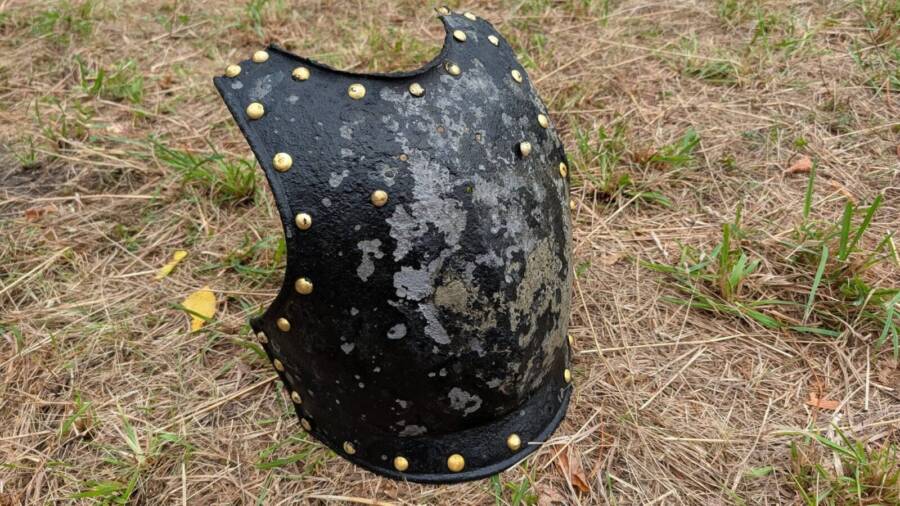
While excavating at Pielaszkowice Palace, the actors and the archaeologists accompanying them uncovered an intact piece of cavalry armor from the 19th century.
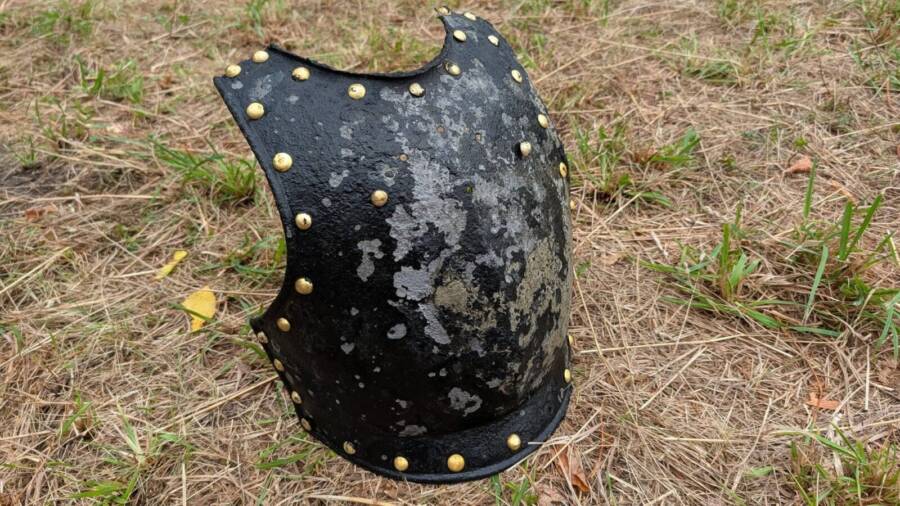
Muzeum Domu Śląskiego w ZiębicachA group of actors preparing for a movie stumbled upon a piece of 19th-century cavalry armor in the moat of a Polish palace.
A group of actors in Poland recently joined an archaeological dig in the muddy moat of an historic palace near Kostomłoty in order to prepare for an upcoming movie about treasure hunting. The goal was to gain a sense of what the experience was like before they acted it out themselves.
However, they gained something more than just acting experience when they stumbled upon a real piece of 19th-century cavalry armor. This stunning find, hidden in the moat for centuries, sheds new light on the rich legacy of Pielaszkowice Palace and its place in the history of the Napoleonic Wars.
The Fortuitous Discovery Of 19th-Century Cavalry Armor At Poland’s Pielaszkowice Palace
Writer Joanna Lamparska of the Hi!History YouTube channel organized this treasure hunt with help from experienced excavators. The actors that joined them on this expedition were preparing for an adaptation of the famous Polish novel Satan from the Seventh Grade by Kornel Makuszyński.
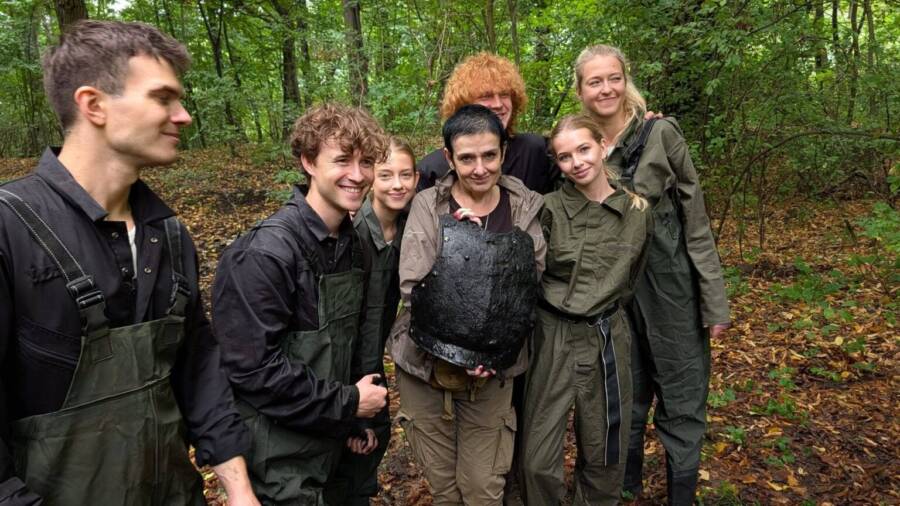
Muzeum Domu Śląskiego w ZiębicachThe actors were treasure hunting to prepare for an upcoming film adaptation of the Polish novel Satan from the Seventh Grade.
The novel tells the story of a mystery surrounding treasure associated with one of Napoleon’s soldiers. Pielaszkowice Palace, located in southwestern Poland, has a strong real-life connection to the story of Napoleon and his armies, so it served as an apt location for the actors to understand what a real treasure hunt like those described in the novel would feel like.
But this practice run suddenly turned real when Wiesław Andrysiak of the DRACO History Explorers Association pulled a piece of 19th-century armor from the palace’s muddy moat.
“It’s an incredible find that miraculously survived to this day,” Lamparska said.
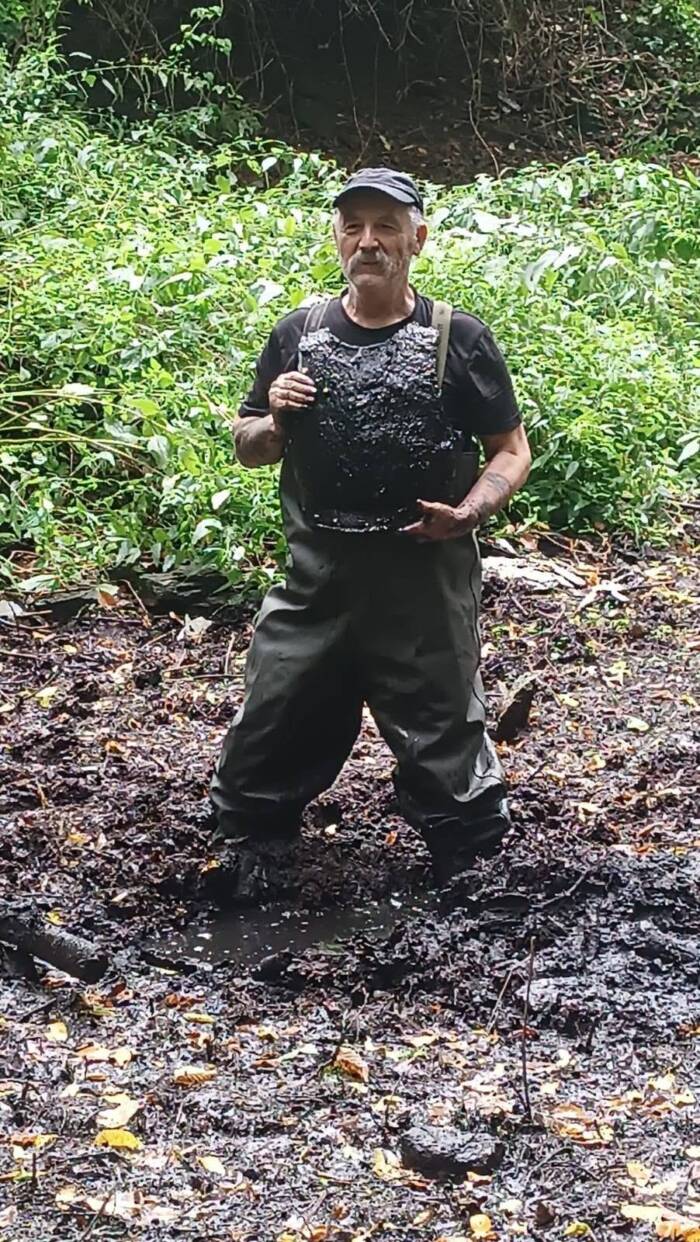
Muzeum Domu Śląskiego w ZiębicachLikely belonging to either a Prussian of French cavalryman, this 19th-century cuirass had been lost for decades.
This breastplate, or cuirass, was worn on the torso and made to defend against sword and lance blows while also lending its wearer an appearance designed to intimidate the enemy.
The armor was found in the thick silt of the palace moat, where it might have simply been discarded and lost for two centuries, although researchers are still unclear on how exactly the armor ended up where it did.
In addition to this piece of chest armor, the team also uncovered sections of park sculptures and metal fittings, while this moat perhaps contains even more relics from the palace’s rich history.
What This Find Reveals About The Palace’s Rich History
In 1813, during the Napoleonic Wars, Pielaszkowice Palace carved out its place in history as the location where a truce between Napoleon’s forces and the allied Russian and Prussian armies was signed.
This ceasefire came about after the battles of Lützen and Bautzen gave both sides time to re-strategize. However, the agreement lasted just nine weeks before fighting began anew. In the following months, Austria joined the allied coalition and the scales tipped in favor of those armies, causing Napoleon to eventually suffer a major defeat at Leipzig.
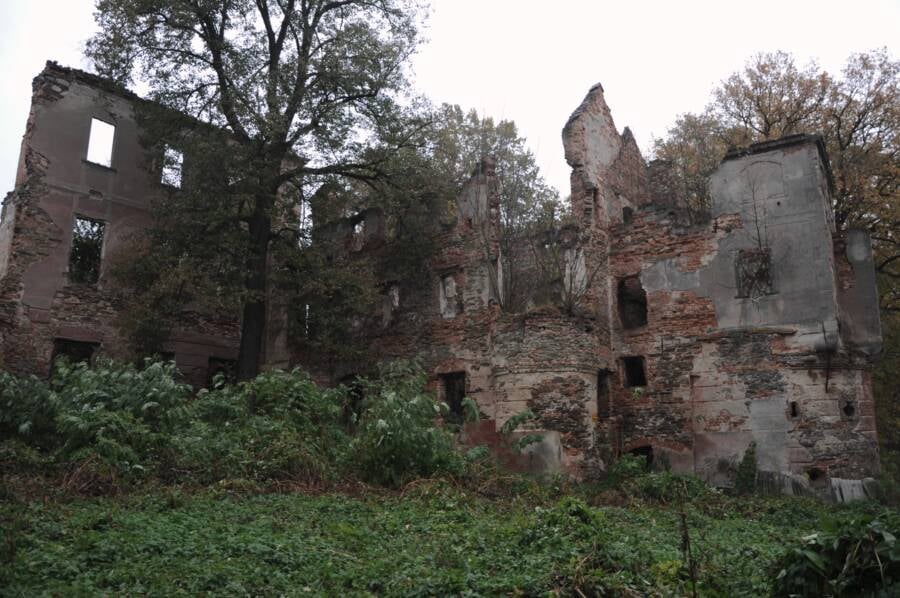
Wikimedia CommonsPielaszkowice Palace was an important site during the Napoleonic era, and was later heavily looted by the Red Army toward the end of the World War II.
Although the palace holds an important place in the history of the Napoleonic Wars, this does not necessarily mean that the cavalry armor found in the moat will be identified as an artifact from that time.
According to the Muzeum Domu Śląskiego w Ziębicach, we currently know that the find is a 19th-century cuirass likely coming from somewhere in Germany, but its precise age and military affiliation will only become clearer after further study takes place.
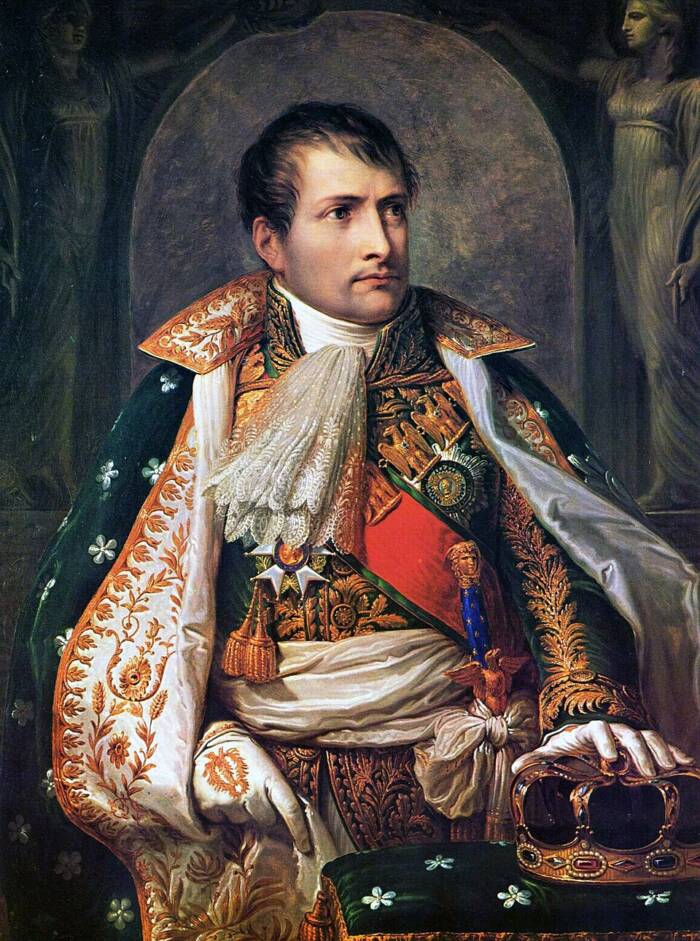
Wikimedia CommonsThe 1813 truce between Napoleon’s army and the allied Prussian and Russian armies was signed at Pielaszkowice Palace.
Long after the Napoleonic era, the palace experienced another round of tumult amid the waning months of World War II. In 1945, the palace was looted by the Red Army, and several historical accounts describe objects from the residence being thrown into the moat.

RIVER OF GOODS Coastal 52 Inch Wooden Bead LED Ceiling Fan, Brown
(as of October 25, 2026 01:02 GMT +00:00 - More infoProduct prices and availability are accurate as of the date/time indicated and are subject to change. Any price and availability information displayed on [relevant Amazon Site(s), as applicable] at the time of purchase will apply to the purchase of this product.)
Fire Cloak - 1500F CE Certified Emergency Fire Blanket for Home & Kitchen | 500GSM Fabric & 0.5mm Thick - Silicon Coated 100% Fiberglass Essentials in House, Warehouse Office - 55"L x 70"W by Supa Ant
$83.99 (as of October 25, 2026 01:02 GMT +00:00 - More infoProduct prices and availability are accurate as of the date/time indicated and are subject to change. Any price and availability information displayed on [relevant Amazon Site(s), as applicable] at the time of purchase will apply to the purchase of this product.)
Skater Trainer Wheels - Beginners get Skateboard Tricks Fast, Safe and Fun | Viral accessory gift - Helps beginners stay excited about their new skateboard - Kids & parents love these
$28.99 (as of October 25, 2026 01:02 GMT +00:00 - More infoProduct prices and availability are accurate as of the date/time indicated and are subject to change. Any price and availability information displayed on [relevant Amazon Site(s), as applicable] at the time of purchase will apply to the purchase of this product.)
Joking Hazard Enlarged Box Empty Box for Card Storage
$12.00 (as of October 25, 2026 01:02 GMT +00:00 - More infoProduct prices and availability are accurate as of the date/time indicated and are subject to change. Any price and availability information displayed on [relevant Amazon Site(s), as applicable] at the time of purchase will apply to the purchase of this product.)