Ancient Troy’s Lost Melody: Bone Flute Unearthed That Could Rewrite the Soundtrack of the ‘Iliad’ and ‘Odyssey’
Imagine stumbling upon the first-ever musical instrument unearthed in a place as legendary as Troy—yes, that Troy, the one tied to the epic tales of the Trojan War. After a whopping 160 years of digging, archaeologists finally hit a high note with the discovery of a 2,800-year-old bone flute buried in the ancient city’s soil. It’s like finding a mixtape from the past, offering a surprising new rhythm to Troy’s archaeological soundtrack. But here’s the kicker: could this fragile little flute actually echo the sounds Homer might’ve imagined when penning the Iliad? While we can’t say for sure, this find definitely plucks a fresh string in our understanding of a society that’s fascinated us for centuries. And just when you thought Troy’s story couldn’t get any more captivating, the discovery of a 4,500-year-old humanoid idol alongside the flute promises to unravel layers of cultural mysteries long buried beneath those ancient ruins. So, ready to hear the music of Troy in a whole new light?
The first musical instrument ever discovered in Troy, the flute adds a new chapter to the archaeological record of this iconic ancient city in northwestern Turkey.

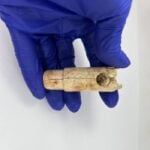
Turkish Ministry of Culture and TourismFor the first time in 160 years of excavations, archaeologists unearthed a musical instrument at Troy: a flute made of bone.
Archaeologists excavating the ancient city of Troy in Turkey discovered a bone flute that dates back about 2,800 years. This marks the first time that a musical instrument has ever been found in the city’s 160 years’ worth of excavations.
Archaeologists hope that the discovery of the flute, as well as a 4,500-year-old humanoid idol, will shed light on the cultural traditions of Troy, the ancient settlement best known as the site of the mythic Trojan War.
The Discovery Of A 2,800-Year-Old Bone Flute Among The Ruins Of Troy
The bone flute was unearthed in what’s known as the site’s Archaic layer, suggesting that this instrument dates back to about the eighth century B.C.E.
This pivotal period in classical antiquity is roughly when the first Olympic Games took place and when legend says Romulus and Remus founded Rome. Also at this point in time, Troy was beginning to rise back into importance following centuries of decline.

Turkish Ministry of Culture and TourismThe bone flute dates back 2,800 years, around the time of the Iliad.
According to the announcement of the discovery made by the Turkish Ministry of Culture and Tourism, the bone flute’s head has been preserved, while its body has been lost to history.
Dr. Rüstem Aslan, the director of the Troy excavations, emphasized the discovery’s importance.
“We know about musical instruments from many depictions elsewhere. However, this is the first time a bone flute has been encountered in the history of Troy excavations,” Aslan said.

Turkish Ministry of Culture and TourismThe head of a 4,500-year-old humanoid idol (right) was also unearthed, but experts aren’t sure about its purpose.
In addition to the bone flute, archaeologists also found the head of a 4,500-year-old humanoid idol.
The object was unearthed in a fire-damaged archaeological layer dating back to Troy II, or the city’s Early Bronze Age phase of occupation. During this period, Troy was a fortified settlement, well-connected to other civilizations across western Anatolia due to its position near the Dardanelles Strait.
Now, researchers hope that these artifacts can offer insight into the relatively little understood cultural traditions of ancient Troy.
How These Finds Could Shed Light On The Culture Of Troy In The Time Of The Iliad
An unprecedented sort of entry in Troy’s archaeological record, the bone flute will hopefully serve as a window into the folkways and culture of everyday people living in Troy 2,800 years ago.
Archaeologists noted that the age of the musical instrument is particularly relevant, as it dates back to the same period associated with the legendary Greek poet Homer.

Wikimedia CommonsThe ancient city of Troy was allegedly the site of the legendary Trojan War, as described in Homer’s Iliad.
The composition of Homer’s epics the Iliad and the Odyssey is generally dated to the eighth century B.C.E. — just like the bone flute. However, the precise dating of Homer’s works remains under debate.
The Iliad tells the tale of the legendary Trojan War — including the use of the famed Trojan Horse — which occurred (if it actually happened) in Troy. Meanwhile, the Odyssey narrates the story of how the Greek hero Odysseus journeyed home after the war.
In Book 10 of the Iliad, Homer describes the Greek king Agamemnon standing over the Trojan plain, marveling “at the many fires that burned before the face of Ilios, and at the sound of flutes and pipes, and the din of men.”

Turkish Ministry of Culture and TourismResearchers hope that the bone flute and idol head will shed new light on the cultural traditions of ancient Troy.
If it in fact occurred at all, the Trojan War is usually thought to have taken place around 1200 B.C.E. When Homer was writing about it some four centuries later, he may have included flute-playing in the narrative because it was popular in his time — even if it may not have been popular 400 years earlier.

White Leaf Baby Food Pouches, Toddler Snack, Mango + Carrot + Banana + Pear | 24 Pack, Organic No Added Sugar, Non-GMO, BPA-Free Regeneratively Farmed, Squeeze Puree Smoothie Pouch for Adults & Children
$69.95 (as of October 24, 2026 01:02 GMT +00:00 - More infoProduct prices and availability are accurate as of the date/time indicated and are subject to change. Any price and availability information displayed on [relevant Amazon Site(s), as applicable] at the time of purchase will apply to the purchase of this product.)
Supa Ant Canning Supplies Starter Kit (Food Grade) - Canning Kits Set for Beginners - 3 Pcs. Including Wide Mouth Jar Funnel, Magnetic Lid Lifter, Stainless Steel Jar Lifter (Assembled in USA) Blue
$9.99 (as of October 24, 2026 01:02 GMT +00:00 - More infoProduct prices and availability are accurate as of the date/time indicated and are subject to change. Any price and availability information displayed on [relevant Amazon Site(s), as applicable] at the time of purchase will apply to the purchase of this product.)
Joking Hazard Enlarged Box Empty Box for Card Storage
$12.00 (as of October 24, 2026 01:02 GMT +00:00 - More infoProduct prices and availability are accurate as of the date/time indicated and are subject to change. Any price and availability information displayed on [relevant Amazon Site(s), as applicable] at the time of purchase will apply to the purchase of this product.)
Supa Ant 6x8ft. Welding Blanket Fireproof (Pack of 2) - Heavy Duty Weld Fire Blanket Tools - Welders Cover for Men Curtain with Gloves - Large Welding Gear for Welder Accessories
(as of October 24, 2026 01:02 GMT +00:00 - More infoProduct prices and availability are accurate as of the date/time indicated and are subject to change. Any price and availability information displayed on [relevant Amazon Site(s), as applicable] at the time of purchase will apply to the purchase of this product.)




















Post Comment