Hidden for Millennia: Pompeii Cupboard Reveals Untouched Treasures Frozen in Time Since Vesuvius Eruption
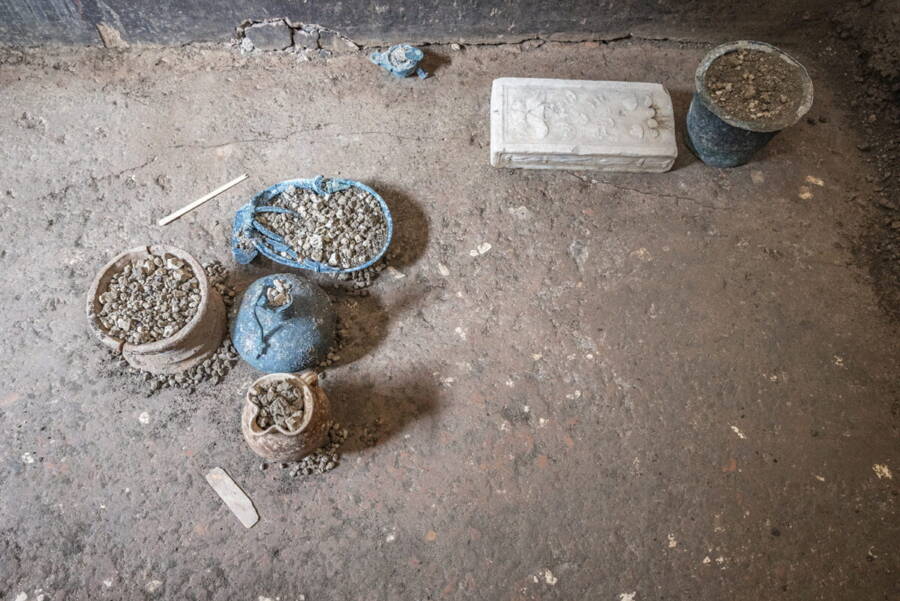
Ever wonder what everyday chaos looked like right before an ancient city met its fiery doom? Imagine opening a cupboard that’s been locked tight for nearly 2,000 years—and inside, you find tweezers, a pestle for mixing makeup, a glass perfume bottle, and an incense burner, frozen in time beneath the ashes of Mount Vesuvius’s wrath. It’s like stumbling upon a frozen snapshot of daily life, a bizarre jumble of personal treasures and kitchenware abandoned in a frantic escape. These artifacts from Pompeii’s House of Cornelius Maximus don’t just whisper stories—they shout secrets about the ordinary lives of Romans moments before disaster swept through their streets. As someone fascinated by how the tiniest details paint the grandest pictures, I find these relics utterly spellbinding. How many stories does one forgotten cupboard hold? Dive in and see for yourself!
Among the items once held in this cupboard were tweezers, a pestle for mixing makeup, a glass perfume bottle, and an incense burner.

Archaeological Park of PompeiiArchaeologists discovered dozens of personal objects in a Pompeii cupboard that had gone untouched for nearly 2,000 years.
When Mount Vesuvius erupted in 79 C.E., the bustling ancient city of Pompeii, near the Bay of Naples, was wiped from the face of the Earth. The city was completely buried under a layer of ash, leaving victims’ bodies frozen in time, and preserving buildings and frescoes to this day.
Archaeologists have since uncovered a wealth of artifacts from this lost city — and some of the recent discoveries rank among the most powerful finds made here in recent years. Researchers found the remains of an ancient cupboard and the many personal objects it once contained, including coins, jewelry, and cooking pots — all of which could shed unprecedented light on the daily lives of ordinary Pompeiians just before disaster struck.
The Discovery Of A Cupboard In Pompeii That Had Gone Untouched For Nearly 2,000 Years
The remains of the wooden cupboard were found during excavations of a house on Via dell’Abbondanza, one of the ancient city’s main streets, according to a statement from the Archaeological Park of Pompeii.

Archaeological Park of PompeiiArchaeologists found an imprint of a wooden cabinet in the house on Via dell’Abbondanza.
This residence has become known as the House of Cornelius Maximus, based on analysis of inscriptions found here.
However, according to Reuters, site director Gabriel Zuchtriegel said that the team “cannot reconstruct with certainty the identity of whoever lived in the house, but these fragments bring us closer to their daily life.”
The residence’s entrance was first excavated in 1912, but deeper investigations have recently begun as a part of a new restoration project in this area of the site.
According to the archaeologists’ article on the discovery, the room where the cupboard was found also has intricate wall paintings that may have come from a workshop that had been uncovered on a nearby street.

Archaeological Park of PompeiiResearchers discovered around 24 miniature charms that once adorned a type of necklace traditionally worn by children.
In the area around the imprint of the cupboard, researchers made many exciting discoveries. One of the most poignant was a necklace consisting of about 24 miniature charms. These tiny amulets made from bone, clay, glass, and rock depict everything from hands and feet to pinecones and bunches of grapes, as well as the gods Bes and Mercury.
These necklaces are known as crepundia, coming from the Latin word “crepare,” meaning “to make noise,” because these tiny charms would rattle when the jewelry was worn.

Archaeological Park of PompeiiThese kinds of pendants rattled when they were worn, so they were often given to children to keep them from getting lost.
Crepundia were typically worn by Roman children both for spiritual protection and for the sounds they made, which made it easier for adults to keep track of them. Long afterward, necklaces like these were often some of the only possessions that most adult Romans would have kept from childhood.
What These Personal Artifacts Could Reveal About Life In Pompeii Before The Eruption Of Mount Vesuvius
Other artifacts from the cupboard paint a clear portrait of everyday life in ancient Pompeii at the time of Mount Vesuvius’ eruption.
Archaeologists found tweezers, a pestle for creating makeup, a small glass bottle that could have been used for perfume or ointment, and an incense burner. They also unearthed various ceramic vessels and cookware.

Archaeological Park of PompeiiExcavations revealed 38 bronze coins, which were likely left behind as their owner fled from the eruption.
Excavations also revealed 38 bronze coins that were found inside a small woven container. The fact that both money and personal items with presumed sentimental value were left behind in the cupboard suggests that the house’s inhabitants had to flee in an instant after Vesuvius erupted, without even the time to collect their most valuable possessions.

RIVER OF GOODS Alabaster LED Mesh Caged Ceiling Fan - 52" L X 52" W - White/Oak Wood-Grain Blades
(as of November 5, 2026 01:06 GMT +00:00 - More infoProduct prices and availability are accurate as of the date/time indicated and are subject to change. Any price and availability information displayed on [relevant Amazon Site(s), as applicable] at the time of purchase will apply to the purchase of this product.)
RIVER OF GOODS LED Boho Ceiling Fan with Hand Woven Brown/Natural Rope - Macrame Knot Work and Hemp Rope Style Eclectic Cottage Decor - 52" L x 52" W - Rich Barnwood/Light Driftwood Fan Blades
(as of November 5, 2026 01:06 GMT +00:00 - More infoProduct prices and availability are accurate as of the date/time indicated and are subject to change. Any price and availability information displayed on [relevant Amazon Site(s), as applicable] at the time of purchase will apply to the purchase of this product.)
Kinsa Smart,Fever, Digital Medical Baby, Kid and Adult Termometro - Accurate, Fast, FDA Cleared Thermometer for Oral, Armpit or Rectal Temperature Reading - QuickCare
$18.94 (as of November 5, 2026 01:06 GMT +00:00 - More infoProduct prices and availability are accurate as of the date/time indicated and are subject to change. Any price and availability information displayed on [relevant Amazon Site(s), as applicable] at the time of purchase will apply to the purchase of this product.)
RIVER OF GOODS Stained Glass Magna Carta LED Ceiling Fan - 52" L x 52" W - Tiffany Style - Flush Mount Ceiling Fan with Remote - Teal
(as of November 5, 2026 01:06 GMT +00:00 - More infoProduct prices and availability are accurate as of the date/time indicated and are subject to change. Any price and availability information displayed on [relevant Amazon Site(s), as applicable] at the time of purchase will apply to the purchase of this product.)


















Post Comment