Countdown to Catastrophe: Did 1960 Scientists Unveil the Ultimate Friday the 13th Doom Date?
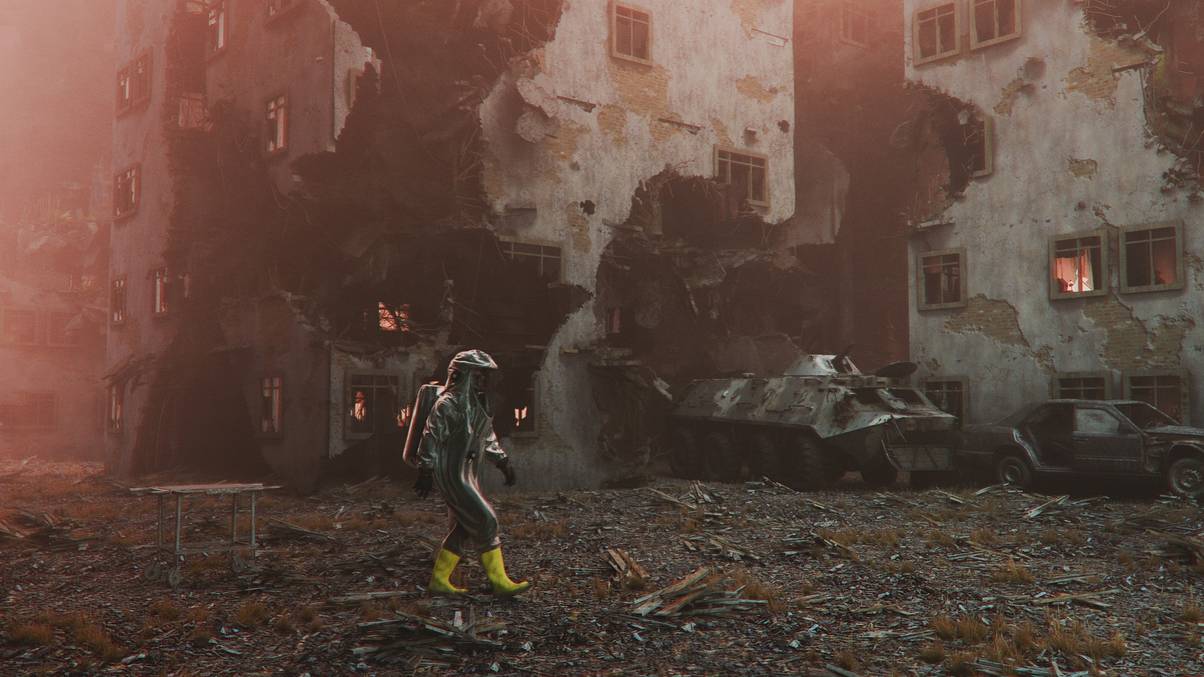
So, it turns out that an Austrian physicist named Heinz von Foerster, decades ago, pinned down an exact doomsday: tomorrow, of all days. Now, I don’t know about you, but being told the human race might squeeze itself out of existence on a Friday the 13th definitely ups the ante on superstition, right? Von Foerster’s “doomsday equation”—crunched from how fast our population doubled back in the day—painted a future where we’d be so jam-packed we’d basically pop from the pressure. He even gave us a bleak prognosis: our great-great-grandchildren won’t starve, they’ll be squeezed to death. Ouch. But here’s the kicker—his math kinda forgot to think about the slow-down in population growth that’s actually happening. So while it sounds like we’re booked for a cosmic squeeze play, the real story might be less about numbers and more about what humans are actually capable of doing to themselves next. Curious? Yeah, me too.
Decades ago a scientist predicted that one day in particular would be the moment the human race was wiped out, and it’s tomorrow.
Friday 13th is already a sinister enough date for the superstitious, and the third and final one to come in 2026 has been tipped as the moment all comes crashing down.
That’s according to Austrian physicist Heinz von Foerster, who calculated his ‘doomsday equation’ based off 24 estimates of the world’s population growth and seeing how long it took for the planetary population to double.
He’d spotted that the growth rate had increased rapidly and claimed that if the time between the world’s population doubling continued to shrink then before long there’d be so many people on the planet that we’d all have the life squeezed out of us.
“Our great-great-grandchildren will not starve to death; they will be squeezed to death,” he warned in his study.
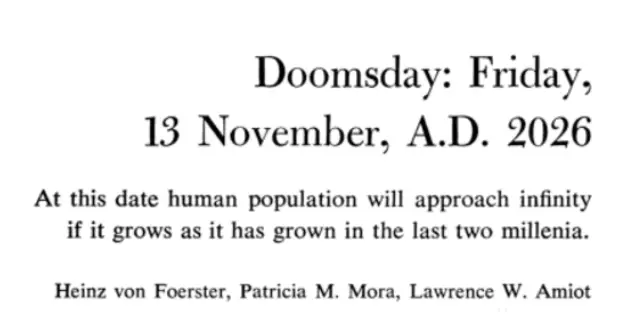
Tomorrow was supposed to be doomsday, but it doesn’t look likely (Heinz von Foerster)
‘This ever-faster race to self-destruction’
So, are we all about to be squeezed into oblivion? I don’t know about you but I feel like I’ve got space enough not to be crushed and unless something drastic happens before tomorrow that doesn’t look likely to change.
That’s because von Foerster’s predictive models to calculate the doomsday equation failed to take something into account, that the rate of population increase would slow down after the point he took his measurements and picked 13 Friday, 2026 has extinction day.
The physicist won’t have been too disappointed that he looks to be wrong, as he wrote that he hoped ‘at some time, somehow, something will happen that will stop this ever-faster race to self-destruction’.
Back when he was calculating his date for doomsday the world’s population was doubling at a rate of every 32 years and that time was shrinking, now it’s slowed to doubling every 83 years.
As such the prospect that there’ll be so many people we reach exponential growth and basically hit an infinite number of humans that results in us being wiped out by tomorrow seems highly doubtful.
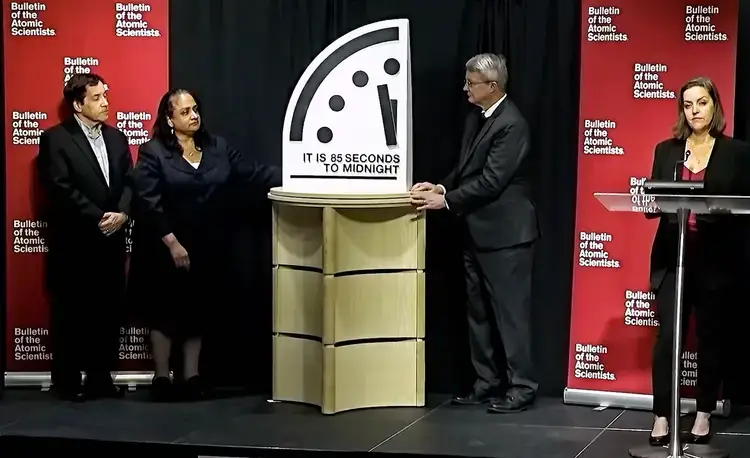
Even if the ‘doomsday equation’ ended up being wrong the Doomsday Clock ticks closer to midnight (YouTube/Bulletin of the Atomic Scientists)
Doomsday has never been closer
Instead, the real threat to our survival is less likely to be that there are so many humans and more that humans can do so much more.
Our destructive capabilities have reached new heights as technology has progressed and it’s taking a significant toll on both the planet and our future prospects.
Climate disaster is one possible way humanity could screw itself out of a future, while the prospect of us finally using all those destructive weapons we’ve got stockpiled continues to loom as the Doomsday Clock is the closest it has ever been to midnight.
Besides, the end of the world is far less likely to be one sudden moment where we hit the endpoint and all die, and will probably involve the slow collapse of civilisation after the big destructive event.
You may have heard of ‘black sky events’, moments which would knock critical infrastructure such as the internet, electricity or the water supply out of action.
It’s far more likely that humanity would scrabble around in the aftermath of catastrophe for a while trying to survive while the modern world we’ve built no longer functions properly.
Most of these events only last a few days at most before things get repaired and restored, but if the world ends and there’s nobody to put it back together then everything people have known about their lives could be destroyed.

Kinsa Smart,Fever, Digital Medical Baby, Kid and Adult Termometro - Accurate, Fast, FDA Cleared Thermometer for Oral, Armpit or Rectal Temperature Reading - QuickCare
$18.94 (as of November 12, 2026 01:10 GMT +00:00 - More infoProduct prices and availability are accurate as of the date/time indicated and are subject to change. Any price and availability information displayed on [relevant Amazon Site(s), as applicable] at the time of purchase will apply to the purchase of this product.)
Rhythm Superfoods Kale Chips, Zesty Nacho, Organic and Non-GMO, 2.0 Oz (Pack of 4), Vegan/Gluten-Free Superfood Snacks
(as of November 12, 2026 01:10 GMT +00:00 - More infoProduct prices and availability are accurate as of the date/time indicated and are subject to change. Any price and availability information displayed on [relevant Amazon Site(s), as applicable] at the time of purchase will apply to the purchase of this product.)
Fire Cloak - 1500F CE Certified Emergency Fire Blanket for Home & Kitchen | 500GSM Fabric & 0.5mm Thick - Silicon Coated 100% Fiberglass Essentials in House, Warehouse Office - 55"L x 70"W by Supa Ant
$83.99 (as of November 12, 2026 01:10 GMT +00:00 - More infoProduct prices and availability are accurate as of the date/time indicated and are subject to change. Any price and availability information displayed on [relevant Amazon Site(s), as applicable] at the time of purchase will apply to the purchase of this product.)
Skater Trainer Wheels - Beginners get Skateboard Tricks Fast, Safe and Fun | Viral accessory gift - Helps beginners stay excited about their new skateboard - Kids & parents love these
$28.99 (as of November 12, 2026 01:10 GMT +00:00 - More infoProduct prices and availability are accurate as of the date/time indicated and are subject to change. Any price and availability information displayed on [relevant Amazon Site(s), as applicable] at the time of purchase will apply to the purchase of this product.)





















Post Comment