Is Your Vaping Habit Slowly Destroying Your Lungs? New Study Reveals Shocking Truth

So, you thought vaping was the harmless sidekick in your quest to ditch cigarettes? Well, buckle up, because a fresh-off-the-press pilot study is tossing a curveball—suggesting those puffs might be quietly plotting some serious, irreversible lung damage. Imagine losing air capacity without even noticing at first; these researchers tracked young vapers over a year and saw significant drops in lung function—yep, real numbers that should make any vape enthusiast pause. Dr. Mina Makaryus, leading the charge, insists this isn’t just a little blip but a potential red flag flashing ‘wake-up call’ to all who puff away, hinting at long-term risks akin to chronic conditions like COPD. Makes you wonder—are we trading one bad habit for another with a sneaky side of health jeopardy? As vaping laws tighten and health experts raise eyebrows, maybe it’s time to rethink what’s really in those clouds.
A new study has found that vaping could be doing more harm than you think, with one doctor saying it should serve as a ‘wake-up call’.
Many people take up vaping as a way to ditch cigarettes, but while experts agree that vaping is less harmful than smoking, it isn’t completely risk-free.
Early findings from a new study on the effects of prolonged vaping have shown that it could cause ‘irreversible’ lung damage down the line, leaving them at risk of long-term respiratory illnesses.
The pilot study was headed up by Dr. Mina Makaryus, director of the Asthma Center at Northwell Health’s North Shore University Hospital and Long Island Jewish Medical Center and published in the journal Tobacco Control.
The researchers analysed the results of lung function tests on a group of 22 e-cig users aged between 21 and 35 at the start of the study and again around 12 months later.
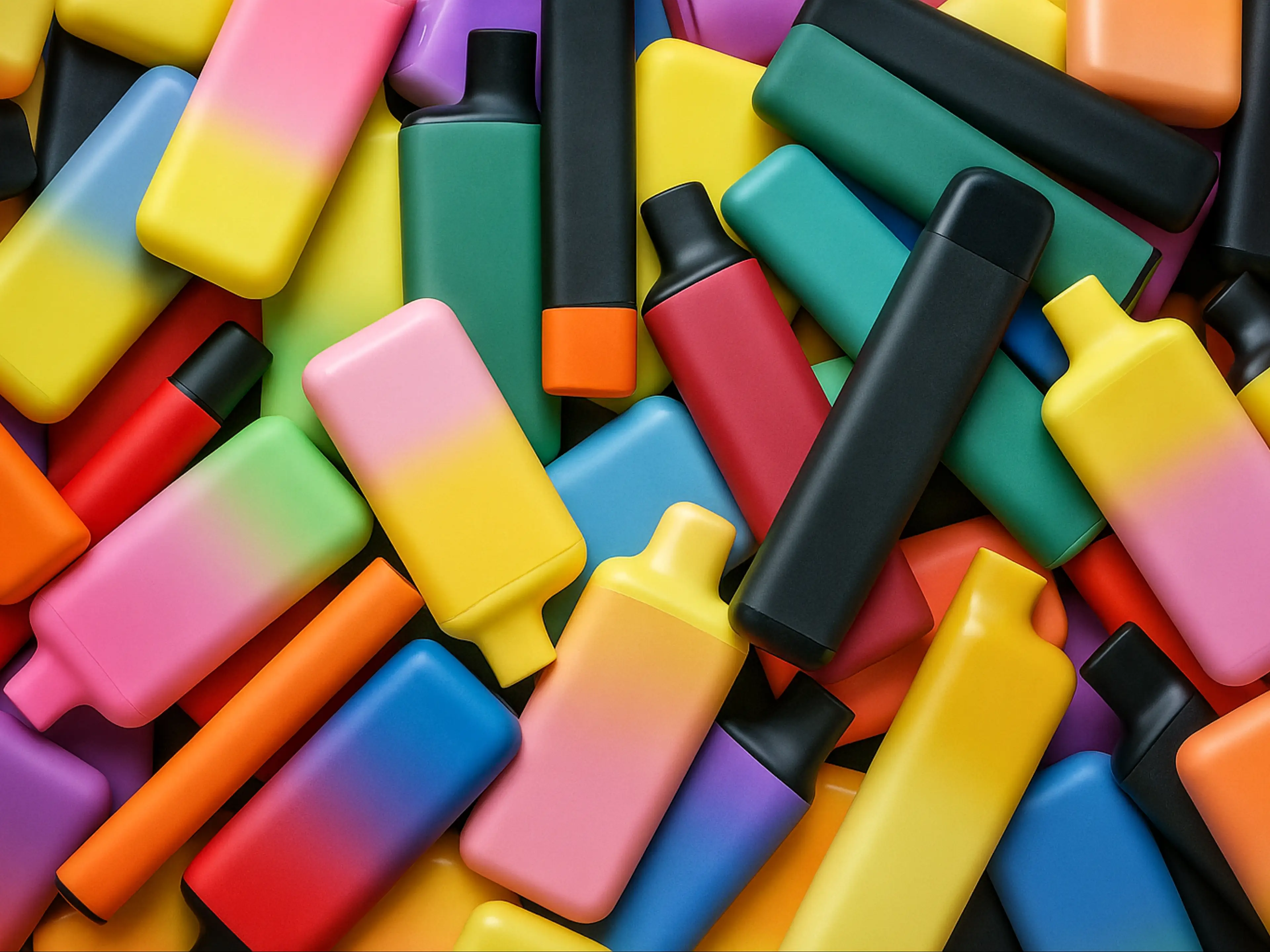
The author of the study said it should serve as a ‘wake-up call’ (Getty stock image)
They looked at the participants FEV1, a measure of how much air can be blown out of the lungs in one breath, and found a ‘significant reduction’ in FEV1 after a year.
The results showed that for those who vaped five to nine times a day, their FEV1 dropped by 100 millilitres, and those who vaped more frequently – 30 or more times a day – had a drop of 240 millilitres.
Speaking to The New York Post, Dr. Makaryus said: “I think vapers should take this little pilot study as a wake-up call that vaping may not be as safe as once assumed.”
And it’s thought that the impact isn’t just a short term one.
A consistent decline in lung function can increase the risk of developing conditions such chronic obstructive pulmonary disease (COPD), which is not curable.
“Although it’s over just one year, I think the fact that they saw a statistically significant decline in lung function over that period of time tells me that if you study these patients over a longer period of time, one would expect that the lung function may continue to decline,” Makaryus said.
“I think the concern that we have when we see studies like this… is that long-term use of these vaping substances that are being inhaled into our lungs and causing damage to our lung function… may result in irreversible lung injuries similar to COPD.”
The team behind the study have stressed that further research is required and noted that it had a small sample size.
However, the authors say the study is the ‘first indicator of the potential of prolonged e-cigarette use posing a COPD risk’.
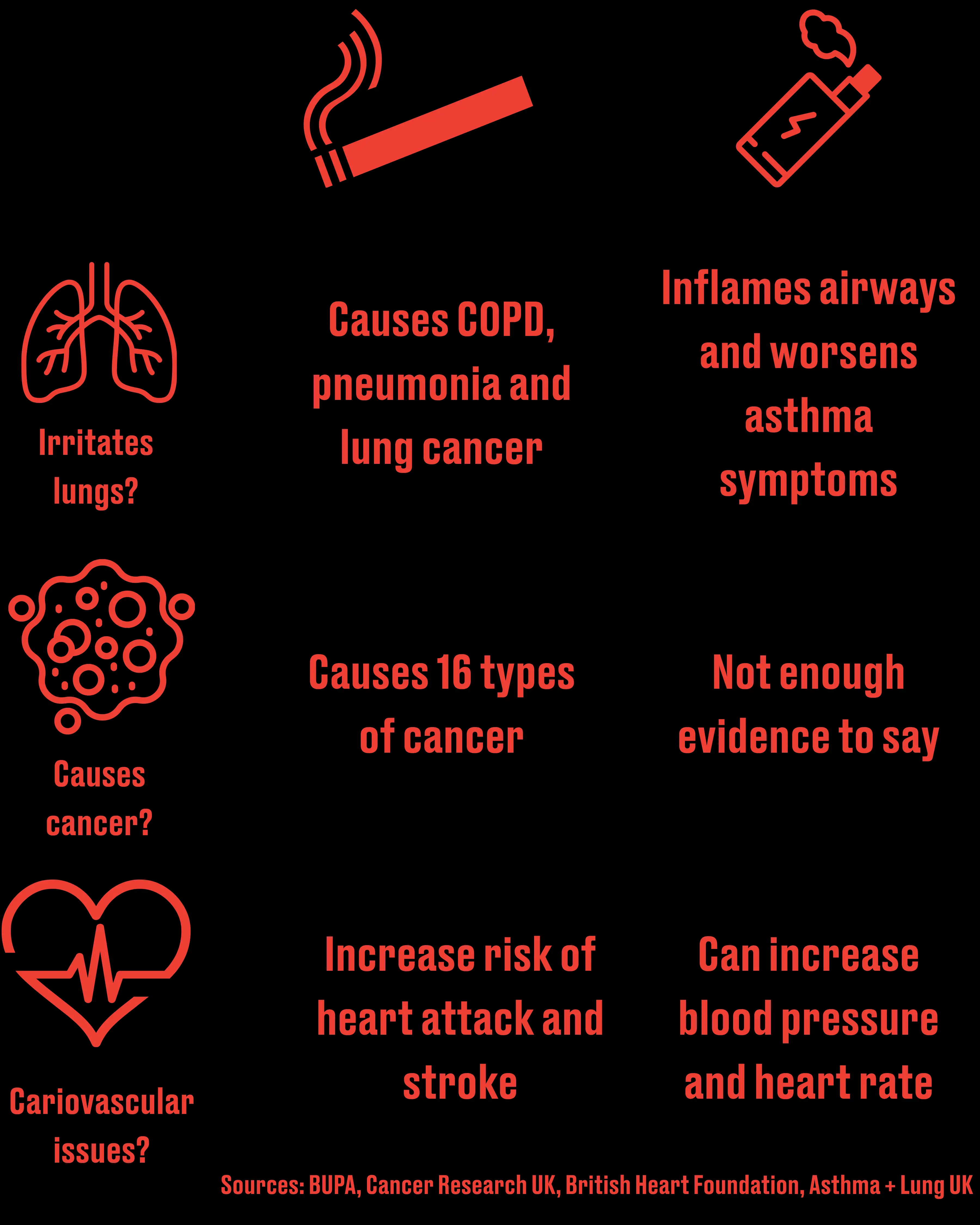
(LADbible)
A separate study from earlier this year, showed that smokers and vapers are almost 50 percent more likely to have elevated blood pressure than someone who does neither of these habits.
According to the authors, the two groups ‘had significantly higher prevalence of elevated blood pressure’.
Following the release of that study Vikram Niranjan, a public health specialist and epidemiologist, wrote in The Conversation urging people not to take up the habit.
“If you have never smoked, don’t vape. If you do smoke and want to quit, patches, gum, medication and proper support remain the best-evidenced options,” he wrote.
“Vaping may have a role as a short-term bridge – but not as a permanent habit, and not for anyone who wouldn’t otherwise have been a smoker.
“The warning signs are there. The question is whether we act on them before the long-term consequences become impossible to ignore.”
According to the NHS, nicotine vaping is less harmful than smoking and is ‘one of the most effective tools for quitting smoking’.
Yet the health service notes that vaping is ‘not completely harmless and we don’t know yet what the long-term effects may be’.
You must be 18 or older to buy vapes in Britain, as all disposable vapes are fully banned after the Tobacco and Vapes Bill became law in April 2026.
RIVER OF GOODS Mid-Century Modern Transitional LED Bronze Chrome Ceiling Fan - 52" L x 52" W - Rich Barnwood/Light Driftwood Fan Blades - Metallic Ceiling Fan with Light and Fabric Shade
(as of November 17, 2026 01:11 GMT +00:00 - More infoProduct prices and availability are accurate as of the date/time indicated and are subject to change. Any price and availability information displayed on [relevant Amazon Site(s), as applicable] at the time of purchase will apply to the purchase of this product.)
Joking Hazard Enlarged Box Empty Box for Card Storage
$12.00 (as of November 17, 2026 01:11 GMT +00:00 - More infoProduct prices and availability are accurate as of the date/time indicated and are subject to change. Any price and availability information displayed on [relevant Amazon Site(s), as applicable] at the time of purchase will apply to the purchase of this product.)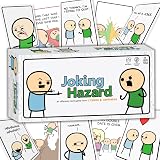
Joking Hazard by Cyanide & Happiness - 360+ Funny & Inappropriate Comic Cards, Hilarious Party Games | Includes Add-Your-Own-Words Cards
$24.95 (as of November 17, 2026 01:11 GMT +00:00 - More infoProduct prices and availability are accurate as of the date/time indicated and are subject to change. Any price and availability information displayed on [relevant Amazon Site(s), as applicable] at the time of purchase will apply to the purchase of this product.)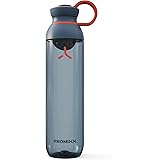
PROMIXX FORM Sports Water Bottle - Premium BPA Free Water Bottle for Fitness Sports & Outdoors - Sustainable Drinks Bottle with Measurement Markers and Leakproof Lid - 760ml / 26oz (Midnight Blue)
$18.46 (as of November 17, 2026 01:11 GMT +00:00 - More infoProduct prices and availability are accurate as of the date/time indicated and are subject to change. Any price and availability information displayed on [relevant Amazon Site(s), as applicable] at the time of purchase will apply to the purchase of this product.)


















Post Comment