Michigan Mother Uncovers Shocking Truth Behind Late Down Syndrome Diagnosis at 23
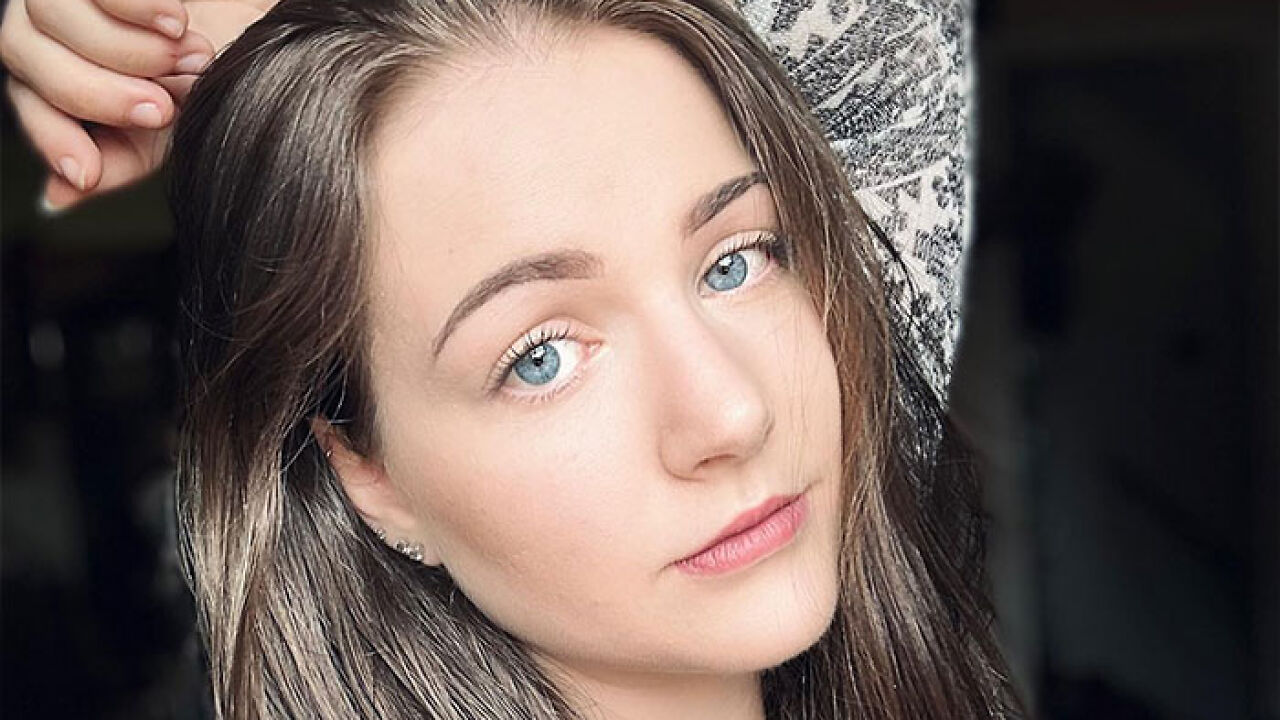
How do you go through 23 years of life without knowing you’ve got Down syndrome? Ashley Zambelli did just that — navigating through a labyrinth of health hiccups and learning puzzles, all while the real puzzle piece was hiding in plain sight. It wasn’t until pregnancy tests kept ringing alarm bells that the doctors finally pulled back the curtain on a rare form of mosaic Down syndrome, a condition sneaky enough to slip under routine tests. Imagine the mix of relief and bewilderment when Ashley finally got her answer — it was like finally solving a life-long riddle! And yet, in the age of social media, her story stirred skepticism, reminding us how complex and varied genetic conditions can be. Curious to dive deeper into Ashley’s incredible journey and what mosaic Down syndrome really means? LEARN MORE
A woman spent the first 23 years of her life unaware that she had Down syndrome, and only discovered the genetic condition after several of her pregnancies raised questions doctors could no longer ignore.
Ashley Zambelli, a mother from Michigan, had experienced various health and learning difficulties growing up, but none of them had led to a clear diagnosis.
- Ashley Zambelli spent 23 years without knowing the reason behind her unusual health struggles until a series of pregnancy tests led doctors to investigate further.
- After receiving the diagnosis, Ashley was overjoyed to finally have an explanation.
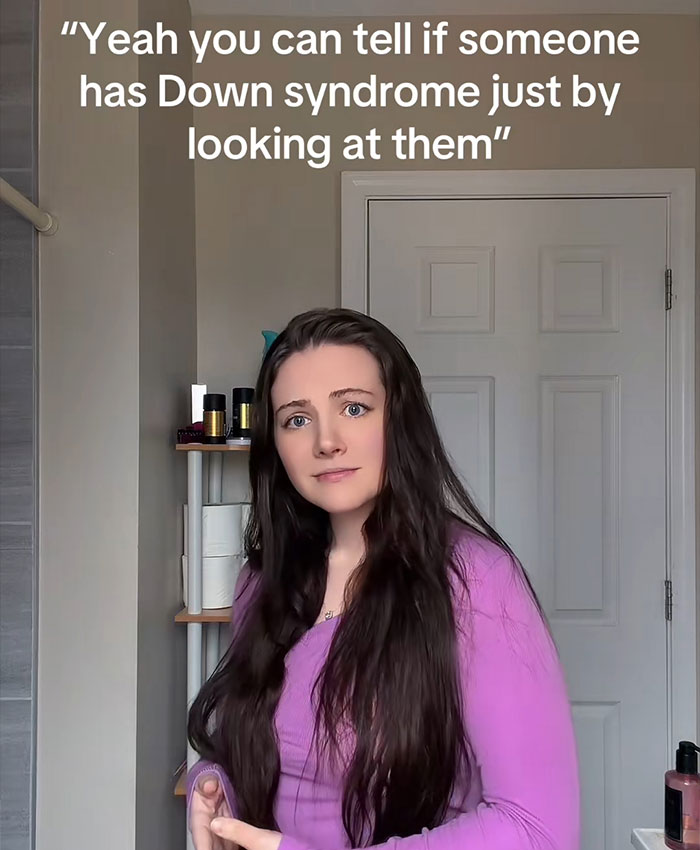
- Despite her diagnosis, some people online still question her experience, wondering whether she even has the traits associated with Down syndrome.
In February 2023, while pregnant with her third child, Zambelli finally received an answer to questions that had puzzled doctors for years.
“She doesn’t look like she has it, but it all makes sense now. I’d better get checked myself,” reacted one netizen upon learning the details.
Ashley Zambelli discovered her unexpected diagnosis in adulthood after three pregnancies involved Trisomy 21

In 2019, Ashley experienced a miscarriage, and genetic testing of the pregnancy tissue revealed that the baby had Trisomy 21.
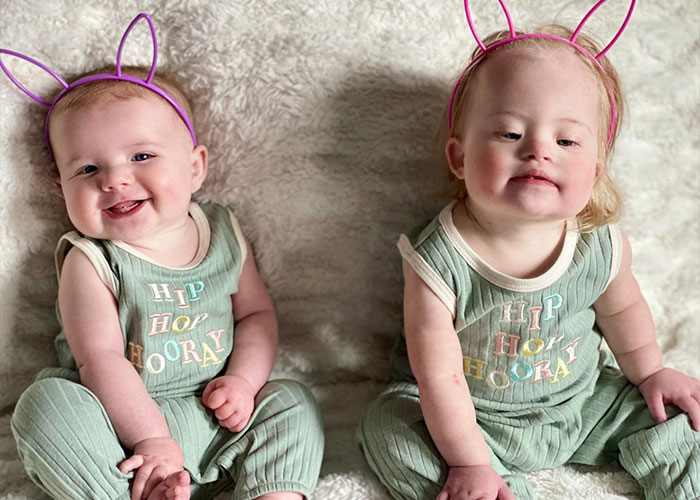
She later welcomed her first daughter, Lillian, in December 2020, who was also born with Down syndrome.
Her second daughter, Evelyn, born in December 2021, did not have the condition.
When Zambelli became pregnant again in 2023, prenatal screening indicated that her third child, Katherine, was also at high risk of having Trisomy 21.
The repeated results raised concerns for her OB/GYN.
Speaking to Metro in August 2026, Ashley recalled, “But the third time it happened with Katherine, alarm bells started ringing for my OBGYN, as she’d never had a patient with that many positive results before.”

Her doctor referred her for genetic counseling and further testing to determine whether she or her husband carried an underlying chromosomal abnormality.
Zambelli’s initial blood tests revealed nothing unusual.
However, doctors remained suspicious and ordered a buccal smear, a test that examines cells collected from inside the cheek.
The results revealed that approximately 3% of the sampled cells carried an extra copy of chromosome 21, confirming a condition called mosaic Down syndrome.
The rare form of Down syndrome can go undetected because it does not affect every cell
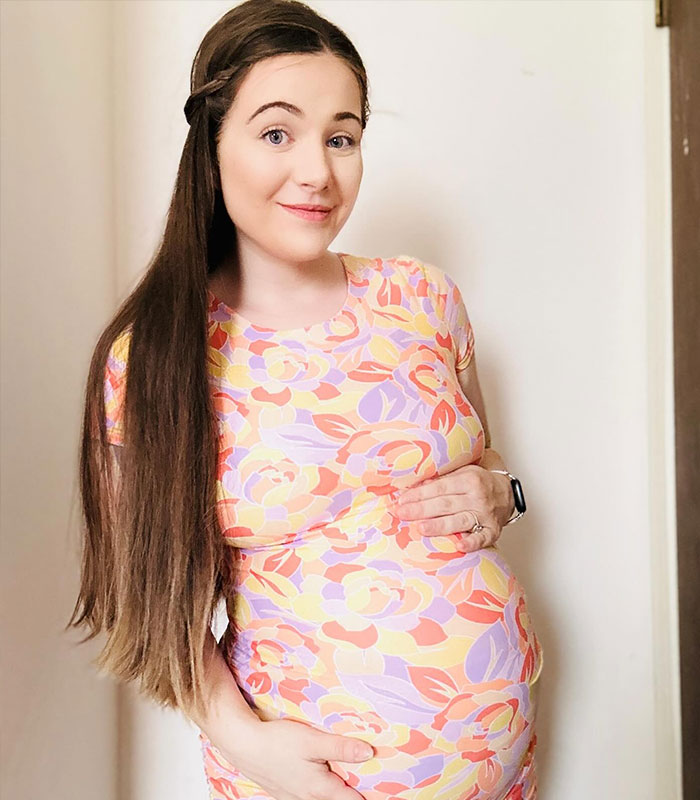
Ashley was 23 and around 28 weeks pregnant when she received the diagnosis in February 2023.
Down syndrome is a genetic condition caused by the presence of an extra copy of chromosome 21. However, not everyone with the condition has the same type.
Mosaic Down syndrome is a rare form in which a person has a mixture of cells.

Some have the usual 46 chromosomes, while others have 47 because they contain an extra copy of chromosome 21.
According to the National Down Syndrome Society, people with mosaic Down syndrome may have “fewer characteristics associated” with the condition than those with other forms.
However, effects can vary considerably depending on the individual and how affected cells are distributed throughout the body.
This variation can also make the condition harder to identify.
Someone with mosaic Down syndrome may have subtle physical characteristics or developmental differences that do not immediately prompt doctors to investigate the possibility of Down syndrome.
That was the case for Ashley. She said she did not have the more commonly recognized physical characteristics associated with the condition.
“The only thing I have is that my ears are smaller and they sit a little lower, but nobody ever sees my ears,” she told Metro.
Her childhood was not entirely free of health problems, however.
From around the age of 12, she experienced frequent kneecap dislocations, jaw dysfunction, low muscle tone, difficulties with learning and memory, and a persistently high heart rate.

RIVER OF GOODS Coastal 52 Inch Wooden Bead LED Ceiling Fan, Brown
(as of November 23, 2026 01:14 GMT +00:00 - More infoProduct prices and availability are accurate as of the date/time indicated and are subject to change. Any price and availability information displayed on [relevant Amazon Site(s), as applicable] at the time of purchase will apply to the purchase of this product.)
White Leaf Baby Food Pouches, Toddler Snack, Mango + Carrot + Banana + Pear | 24 Pack, Organic No Added Sugar, Non-GMO, BPA-Free Regeneratively Farmed, Squeeze Puree Smoothie Pouch for Adults & Children
$69.95 (as of November 23, 2026 01:14 GMT +00:00 - More infoProduct prices and availability are accurate as of the date/time indicated and are subject to change. Any price and availability information displayed on [relevant Amazon Site(s), as applicable] at the time of purchase will apply to the purchase of this product.)
The Door Balancer Eliminates The Need for Door Props, Door Stops and Door Wedges
(as of November 23, 2026 01:14 GMT +00:00 - More infoProduct prices and availability are accurate as of the date/time indicated and are subject to change. Any price and availability information displayed on [relevant Amazon Site(s), as applicable] at the time of purchase will apply to the purchase of this product.)
Joking Hazard by Cyanide & Happiness - 360+ Funny & Inappropriate Comic Cards, Hilarious Party Games | Includes Add-Your-Own-Words Cards
$17.47 (as of November 23, 2026 01:14 GMT +00:00 - More infoProduct prices and availability are accurate as of the date/time indicated and are subject to change. Any price and availability information displayed on [relevant Amazon Site(s), as applicable] at the time of purchase will apply to the purchase of this product.)



















Post Comment