Michigan Mother Uncovers Shocking Truth Behind Late Down Syndrome Diagnosis at 23

Zambelli said she was “happy to finally have an explanation” for her lifelong health struggles

“My heart always racing. I was always getting out of breath,” she previously recalled. “Doctors knew something was going on with me; they just didn’t know what.”
Mosaic Down syndrome can sometimes be missed by routine blood testing because the extra chromosome may not be present in the particular blood cells examined.
Testing another type of tissue, such as cheek cells, can help identify mosaicism that a blood sample does not reveal.
Importantly, the percentage of affected cells in one sample does not necessarily represent the proportion throughout the entire body.
The distribution can differ between tissues, which is one reason the condition can present so differently from one person to another.
Although receiving a Down syndrome diagnosis in adulthood might have come as a shock to some people, Zambelli described her immediate reaction as happiness.
“I was at the hospital with my daughter Lillian when I found out,” the 26-year-old told the outlet. “She was having some tests done, and I got off the phone just as a nurse was coming in, and I was so happy.”

“I’ve never seen so much concern on somebody’s face. She didn’t understand why I was so pleased to have been diagnosed with Down syndrome. I struggled to explain it to her, but I was just so glad to finally have an answer.”
For the Michigan-based mother, the diagnosis finally connected several health problems that had previously seemed unrelated.
“I almost feel like I can understand more of what they are going through and how their brain processes things — it takes me longer to process things too, so I can just relate with them a little better,” she told Metro.
The mother of four is now raising awareness about mosaic Down syndrome through her social media content

“People need to not see genetic testing as a bad thing. It’s a tool to be prepared.”
Zambelli has also faced skepticism from people who believe she does not look as though she has Down syndrome.
She has used her social media platforms to explain that the condition has different forms and does not look the same in everyone.

Ashley, now 26, lives in Michigan with her husband, Taylor, and their four children: Lillian, Evelyn, Katherine, and their son, Damian.
Two of her children, Lillian and Katherine, have Trisomy 21, while Evelyn and Damian do not have the condition.
Her diagnosis also helped explain why several of her pregnancies had been affected.

Because some of her reproductive cells carry an extra copy of chromosome 21, she has said she has an approximately 50% chance of passing the extra chromosome on during each pregnancy.
When the extra chromosome is passed on through an egg cell, the child typically has Trisomy 21 rather than the same mosaic pattern as the parent.
Today, Zambelli shares her family’s experiences and answers questions about mosaic Down syndrome on her social media.
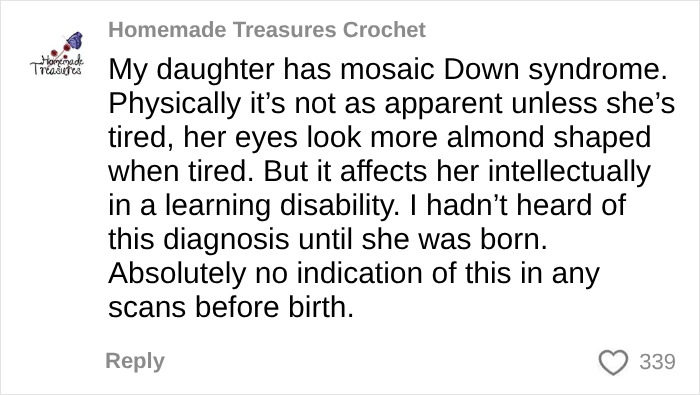
“There are different levels of severity. Some are almost unnoticeable, and you wouldn’t be able to tell,” one netizen wrote












Total votes ·
Thanks! Check out the results:
Total votes ·
Subscribe to Access
Exclusive Polls

Thank you! You’ve successfully subscribed to newsletters!

RIVER OF GOODS Stained Glass Magna Carta LED Ceiling Fan - 52" L x 52" W - Tiffany Style - Flush Mount Ceiling Fan with Remote - Teal
(as of November 23, 2026 01:14 GMT +00:00 - More infoProduct prices and availability are accurate as of the date/time indicated and are subject to change. Any price and availability information displayed on [relevant Amazon Site(s), as applicable] at the time of purchase will apply to the purchase of this product.)
The Door Balancer Eliminates The Need for Door Props, Door Stops and Door Wedges
(as of November 23, 2026 01:14 GMT +00:00 - More infoProduct prices and availability are accurate as of the date/time indicated and are subject to change. Any price and availability information displayed on [relevant Amazon Site(s), as applicable] at the time of purchase will apply to the purchase of this product.)
RIVER OF GOODS Alabaster LED Mesh Caged Ceiling Fan - 52" L X 52" W - White/Oak Wood-Grain Blades
(as of November 23, 2026 01:14 GMT +00:00 - More infoProduct prices and availability are accurate as of the date/time indicated and are subject to change. Any price and availability information displayed on [relevant Amazon Site(s), as applicable] at the time of purchase will apply to the purchase of this product.)
Rhythm Superfoods Kale Chips, Zesty Nacho, Organic and Non-GMO, 2.0 Oz (Pack of 4), Vegan/Gluten-Free Superfood Snacks
(as of November 23, 2026 01:14 GMT +00:00 - More infoProduct prices and availability are accurate as of the date/time indicated and are subject to change. Any price and availability information displayed on [relevant Amazon Site(s), as applicable] at the time of purchase will apply to the purchase of this product.)




















Post Comment