Ancient Australian Dingo Unearthed in Mysterious Aboriginal Ceremony That Spanned Centuries
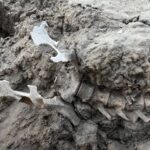
Ever heard of feeding a dingo… after it’s been dead for half a millennium? Yeah, me neither—until I stumbled across this wild tale of the Barkindji people in Australia. Picture this: for 500 years, generation after generation made the trek to an ancient dingo’s grave just to leave offerings of mussel shells, sort of like an eternal fast-food run for a beloved four-legged ancestor. This wasn’t just about respect—archaeologists uncovered signs the dingo lived a surprisingly long, well-cared-for life, patched up from serious injuries with some First Nations TLC. So next time you think about pet loyalty, ask yourself: who’s really feeding whom—even centuries after the last breath? Curious about how this story unravels through bones, burials, and tradition? LEARN MORE.
For 500 years, generation after generation of the local Barkindji people would ritualistically “feed” the dingo by regularly placing offerings of mussel shells on its grave.

Amy WayThe bones of the dingo, which was buried here somewhere between 916 and 963 years ago.
In 2000, the ancient burial of a dingo was discovered alongside a river in Australia’s Kinchega National Park. This wasn’t all that unusual, as dingo remains have been found here before. But a closer look at this particular burial revealed that the animal had been cared for by local First Nations people both after it was injured and in the wake of its death.
What’s more, the dingo was not forgotten for centuries afterward. Archaeologists found that First Nations people continued to ceremonially “feed” the dingo for years with regular offerings of mussel shells, underlining the importance of these creatures to the region’s Indigenous communities.
The Discovery Of The Ancient Dingo Grave In Australia’s Kinchega National Park
According to a study published in Australian Archaeology, the dingo grave was first documented in 2000, after roadwork cut into the edge of a burial heap in Australia’s Kinchega National Park. It was identified by an Indigenous man named Uncle Badger Bates, alongside park ranger Dan Witter. And though the dingo’s skull was lost after flooding in 2021, an excavation in 2023 set out to finally excavate its remains.
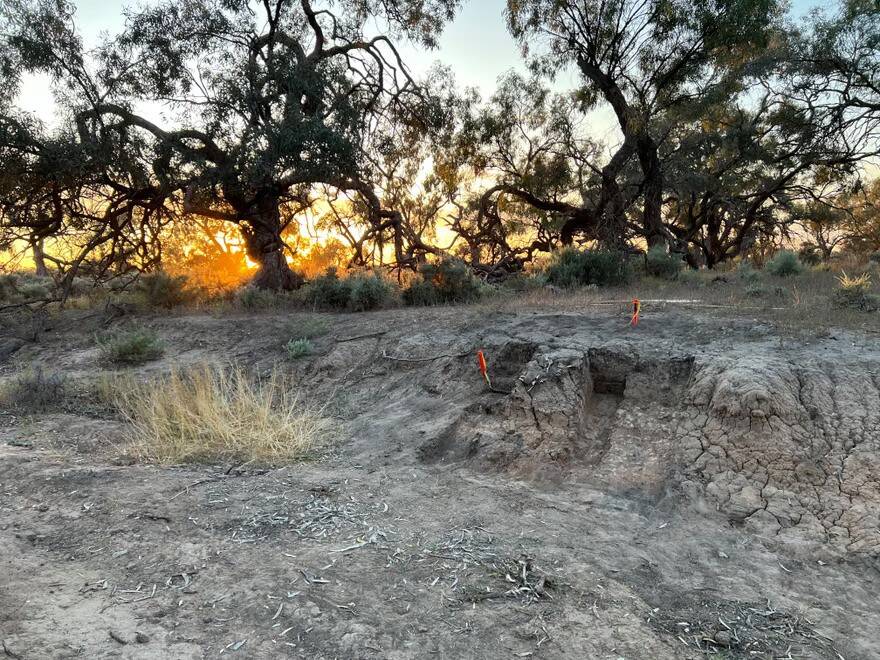
Amy WayThe dingo burial was found in Australia’s Kinchega National Park in 2000, and excavated in 2023.
The archaeologists found that this male dingo had been buried by the Barkindji people between 963 and 916 years ago. It was between the age of four and seven years old when it died — an advanced age for a dingo — and its heavily worn teeth suggested it had a long life and regular meals.
What’s more, the dingo’s bones showed signs of healed traumatic injuries. The animal had suffered from broken ribs and a broken lower leg, likely caused by a kangaroo kick, yet had seemingly survived because of human intervention and care.
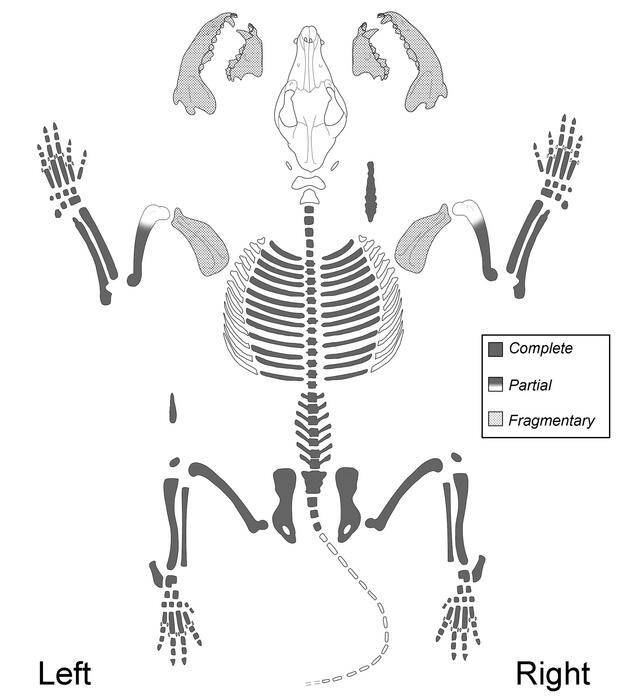
A sketch of the dingo skeleton. Its ribs and legs had been broken, then healed, suggesting that local Indigenous people cared for it after it was injured.
“What stands out about Garli [the Barkindji word for dingo] is that he was old and well cared for,” said lead study author Loukas Koungoulos of the University of Western Australia. “The healed injuries, worn teeth and careful burial tell us this animal lived a long life alongside people, and that his death was marked intentionally and with respect.”
He added: “Dingoes like this garli weren’t simply tolerated around camps. They were tamed, lived with people and were embedded in daily life.”
Indeed, the dingo had clearly been cared for in life. But the archaeologists also found that the Barkindji had continued to care for it after it died.
How The Barkindji People Cared For The Dingo’s Remains After It Died
Archaeologists found that the dingo was interred in a “purpose-built” burial mound after it died — and for the next 500 years, the animal was ceremonially “fed.” Subsequent generations left small offerings at the grave, in the form of river mussel shells, as a type of “ritual feeding.”
According to Barkindji Elders, this ritual may have honored the dingo as an ancestor. And even 1,000 years later, the Barkindji remained involved in the documentation of the dingo’s grave, as archaeologists partnered with Dave Doyle, a Barkindji custodian, and Barb Quayle, a Barkindji Elder, who also helped excavate the animal’s remains.
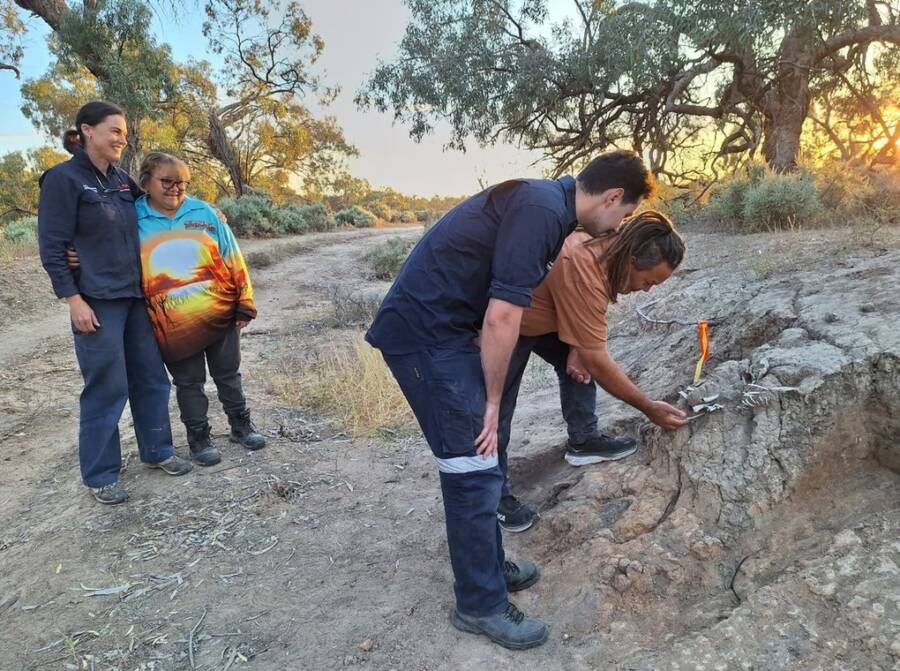
Amy WayBarkindji custodian David Doyle picks up the first bone from the dingo burial.
“While Barkindji people have always known about this cultural practice, this discovery is really powerful because it provides new details on the depth of that relationship between Barkindji people and dingoes,” said project lead Amy Way, an archaeologist at the Australian Museum and a lecturer at the University of Sydney.
She continued: “If garli were buried with the same care and respect we see for human ancestors, including mothers and elders, it tells us these animals were profoundly valued and loved.”
After reading about the dingo that was lovingly buried by the Barkindji people in Australia almost 1,000 years ago — then ritually fed for 500 years after its death — discover the disturbing true story behind “a dingo ate my baby,” which became a comedic punchline in the 1990s. Then, go inside the tragic death of “Crocodile Hunter” Steve Irwin.

RIVER OF GOODS Alabaster LED Mesh Caged Ceiling Fan - 52" L X 52" W - White/Oak Wood-Grain Blades
(as of October 24, 2026 01:02 GMT +00:00 - More infoProduct prices and availability are accurate as of the date/time indicated and are subject to change. Any price and availability information displayed on [relevant Amazon Site(s), as applicable] at the time of purchase will apply to the purchase of this product.)
Supa Ant Canning Supplies Starter Kit (Food Grade) - Canning Kits Set for Beginners - 3 Pcs. Including Wide Mouth Jar Funnel, Magnetic Lid Lifter, Stainless Steel Jar Lifter (Assembled in USA) Blue
$9.99 (as of October 24, 2026 01:02 GMT +00:00 - More infoProduct prices and availability are accurate as of the date/time indicated and are subject to change. Any price and availability information displayed on [relevant Amazon Site(s), as applicable] at the time of purchase will apply to the purchase of this product.)
Supa Ant 6x8ft. Welding Blanket Fireproof (Pack of 2) - Heavy Duty Weld Fire Blanket Tools - Welders Cover for Men Curtain with Gloves - Large Welding Gear for Welder Accessories
(as of October 24, 2026 01:02 GMT +00:00 - More infoProduct prices and availability are accurate as of the date/time indicated and are subject to change. Any price and availability information displayed on [relevant Amazon Site(s), as applicable] at the time of purchase will apply to the purchase of this product.)
Skater Trainer Wheels - Beginners get Skateboard Tricks Fast, Safe and Fun | Viral accessory gift - Helps beginners stay excited about their new skateboard - Kids & parents love these
$28.99 (as of October 24, 2026 01:02 GMT +00:00 - More infoProduct prices and availability are accurate as of the date/time indicated and are subject to change. Any price and availability information displayed on [relevant Amazon Site(s), as applicable] at the time of purchase will apply to the purchase of this product.)