Ancient Egyptian Princesses Wielded Deadly Daggers and Arrows—Secrets of 3,700-Year-Old Weapons Revealed!
You ever wonder if ancient Egyptian princesses were more “badass huntress” than “delicate royal ornament”? Well, turns out, these ladies weren’t just sitting pretty in their tombs. Back in the 1890s, six mummies wrapped up with bows, daggers, and a whole arsenal were stashed away at Dahshur — and forgotten for over a century. Fast forward to 2020, and a fresh dive into their bones and gear reveals these princesses weren’t just about the royal bling; their weapon wear and bone scars tell a story of serious skill in hunting and archery. Yeah, those arrows and daggers? Not just props for the afterlife — these women were the real deal, pulling bowstrings and wielding weapons like champs, rewriting what we thought about ancient Egyptian royal women forever. Curious how they turned the “princess” gig into a huntress’s lifestyle? Stick around, you’re in for a wild ride.
The wear and tear on both these weapons and the princesses’ bones indicates that these young women may have been highly skilled hunters and archers.
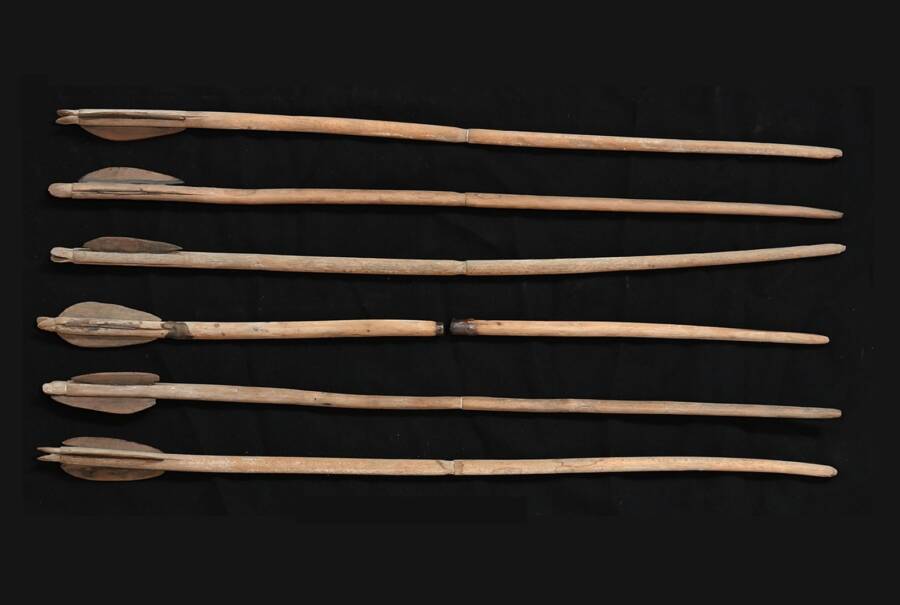
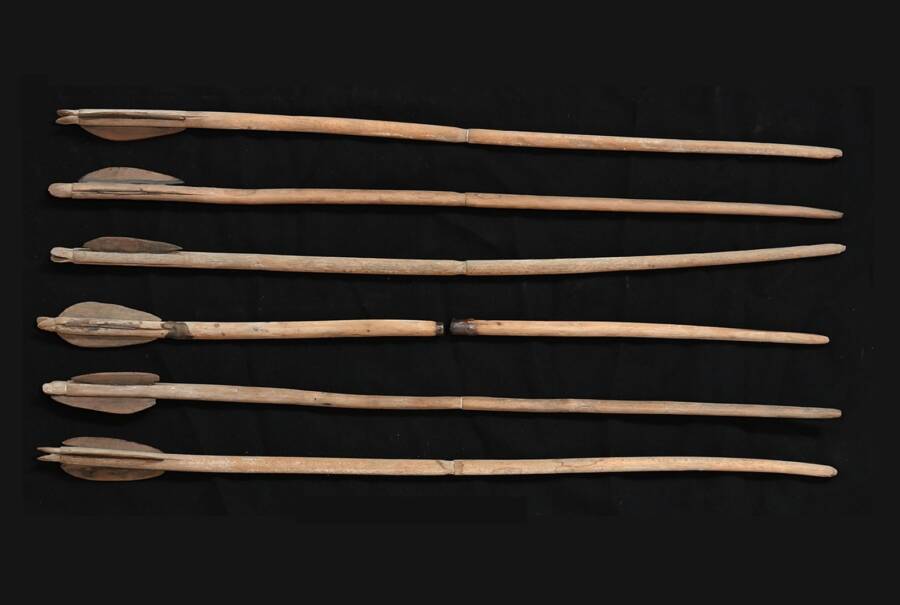
Eman Shawky/Frontiers in Environmental ArchaeologyThese arrows found with Princess Noub Hotep suggest that she may have been a capable archer.
In the 1890s, at the height of Egyptomania, six ancient mummies were found buried with a slew of weapons at Dahshur, an Egyptian funerary complex made up of pyramids and shaft tombs. Around 20 years later, the bodies were delivered to the Egyptian Museum in Cairo, left in a box, and forgotten for the next hundred-plus years.
The bodies were rediscovered at the museum in 2020, and, since then, researchers have concluded that the weapons laid beside the six bodies — identified as four princess sisters, along with another princess known as Noub-Hotep, and King Hor — were not simply ceremonial. Both these weapons and the bones of the princesses showed wear and tear suggesting that these royal women were actually skilled hunters and archers.
The Four Ancient Egyptian Princesses Found Buried With Their Deadly Weapons
The four rediscovered sisters were daughters of Pharaoh Amenemhat II: Princess Ita, Princess Khenmet, Princess Itaweret, and an anonymous woman cautiously identified as the fourth daughter, Princess Sathathormeryt. The remains generally date back about 3,700 years.
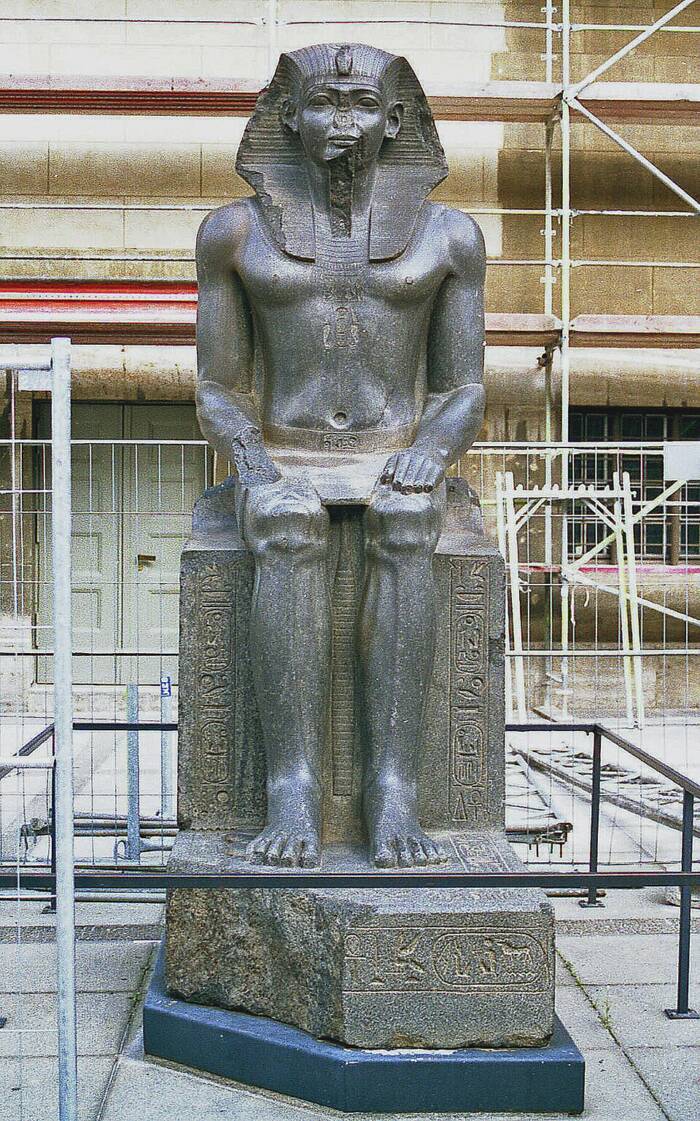
Wikimedia CommonsThe study analyzed the remains of the four daughters of pharaoh Amenemhat II, whose statue is pictured here.
The princesses were found buried along with a large arsenal of weapons, namely bows and daggers — grave goods that were traditionally associated with ancient Egyptian men. Meanwhile, Princess Noub-Hotep and King Hor were also buried with similar objects.
Since the first discovery of the mummies in the 1890s, these weapons were considered by archaeologists as “purely symbolic or ‘votive’ tokens for the afterlife,” Dr. Zeinab Hashesh of Beni-Suef University, lead author of the recent study, told ScienceAlert.
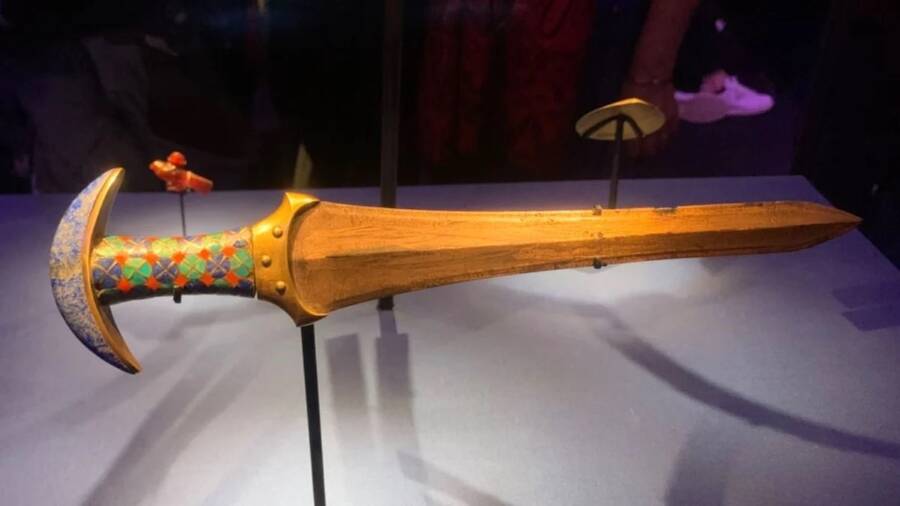
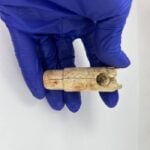
DCHNwam/FlickrPrincess Ita was buried alongside this dagger, which researchers believe she habitually used in her daily life.
But in the study, published in Frontiers in Environmental Archaeology, researchers were able to debunk this previously-held belief about the weapons by analyzing the bones of the mummies.
Princess Ita was found to have been between 28 and 34 years old when she died, with “strong upper-body muscle attachments,” which suggested to researchers that she was skilled in using maces or daggers. Princess Khenmet was in her late 30s or 40s with “very robust ligament attachments.”
Researchers found that Princess Itaweret, aged between 20 and 34, suffered broken ribs and foot fractures, and that her skeleton revealed she was a skilled archer.
In particular, the researchers explained that the “pronounced development in the upper limbs” of the mummies is associated with repetitive, high-intensity motions, like pulling a bowstring.
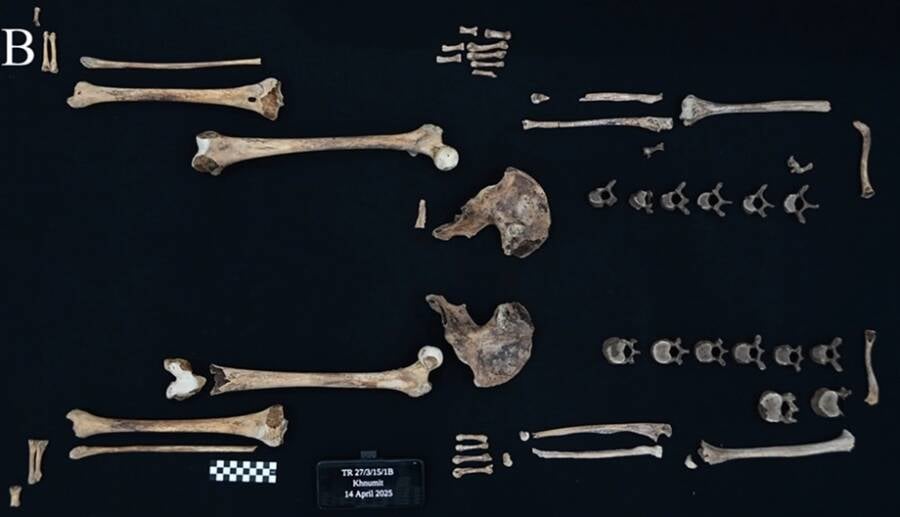
Frontiers in Environmental ArchaeologyA selection of the bones unearthed at Dahshur.
Furthermore, the researchers argued that the injuries sustained by Princess Itaweret were likely caused by falls or other impacts associated with an active lifestyle of hunting or military training.
“This directly explains the presence of bows, arrows, and maces in the women’s tombs; these were not just symbolic gifts but tools they actively used,” Hashesh said in a statement.
What This Study Reveals About Life For Royal Women In Ancient Egypt
Though these mummies languished in obscurity for more than a century, the researchers believe their study is shedding important light on the lives of these individuals buried some 3,700 years ago.
Elite families were typically thought to have led sedentary lifestyles, but that was not the case for these royal women. The physical training that the princesses underwent might have been linked to ancient Egyptian beliefs about spirituality and the afterlife — that with the right training, it might be possible for the body to survive after death.
“In the elite sphere of Dahshur, these princesses were viewed as active ritual agents. They were not imitating men; rather, their royal blood and their role in the ‘machine for surviving death’ required them to be disciplined, powerful actors capable of wielding skilled force,” Hashesh told ScienceAlert.

RIVER OF GOODS Alabaster LED Mesh Caged Ceiling Fan - 52" L X 52" W - White/Oak Wood-Grain Blades
(as of October 24, 2026 01:02 GMT +00:00 - More infoProduct prices and availability are accurate as of the date/time indicated and are subject to change. Any price and availability information displayed on [relevant Amazon Site(s), as applicable] at the time of purchase will apply to the purchase of this product.)
Supa Ant Canning Supplies Starter Kit (Food Grade) - Canning Kits Set for Beginners - 3 Pcs. Including Wide Mouth Jar Funnel, Magnetic Lid Lifter, Stainless Steel Jar Lifter (Assembled in USA) Blue
$9.99 (as of October 24, 2026 01:02 GMT +00:00 - More infoProduct prices and availability are accurate as of the date/time indicated and are subject to change. Any price and availability information displayed on [relevant Amazon Site(s), as applicable] at the time of purchase will apply to the purchase of this product.)
RIVER OF GOODS Stained Glass Magna Carta LED Ceiling Fan - 52" L x 52" W - Tiffany Style - Flush Mount Ceiling Fan with Remote - Teal
(as of October 24, 2026 01:02 GMT +00:00 - More infoProduct prices and availability are accurate as of the date/time indicated and are subject to change. Any price and availability information displayed on [relevant Amazon Site(s), as applicable] at the time of purchase will apply to the purchase of this product.)
The Door Balancer Eliminates The Need for Door Props, Door Stops and Door Wedges
(as of October 24, 2026 01:02 GMT +00:00 - More infoProduct prices and availability are accurate as of the date/time indicated and are subject to change. Any price and availability information displayed on [relevant Amazon Site(s), as applicable] at the time of purchase will apply to the purchase of this product.)