Ancient Mystery Solved: How Human Blood Preserved China’s Huashan Rock Art for Millennia
Ever wonder what it takes for a 2,000-year-old painting to outlast scorching summers, relentless typhoons, and even the occasional nosy archaeologist wielding electric drills? Spoiler alert: it’s not just vintage charm or ancient elbow grease. The secret sauce—brace yourself—is a blend of lime, red clay, and blood from women who’d just given birth. Yes, you read that right. Imagine mixing maternity with mortar, turning age-old art into a near-indestructible masterpiece that’s left scientists scratching their heads and echoing, “Wait, blood? Seriously?” This isn’t your average paint-by-numbers scenario—it’s a fascinating peek into a crafty ancient civilization’s ritualistic genius and their maternal magic, literally cemented into rock. Trust me, this story will make you look at rock art—and childbirth—in a whole new light. LEARN MORE
These paintings are bound to the rock so well that scientists had to use electric drills to scrape off samples for testing, which revealed that the paint contained lime, red clay, and blood from women who’d just given birth.
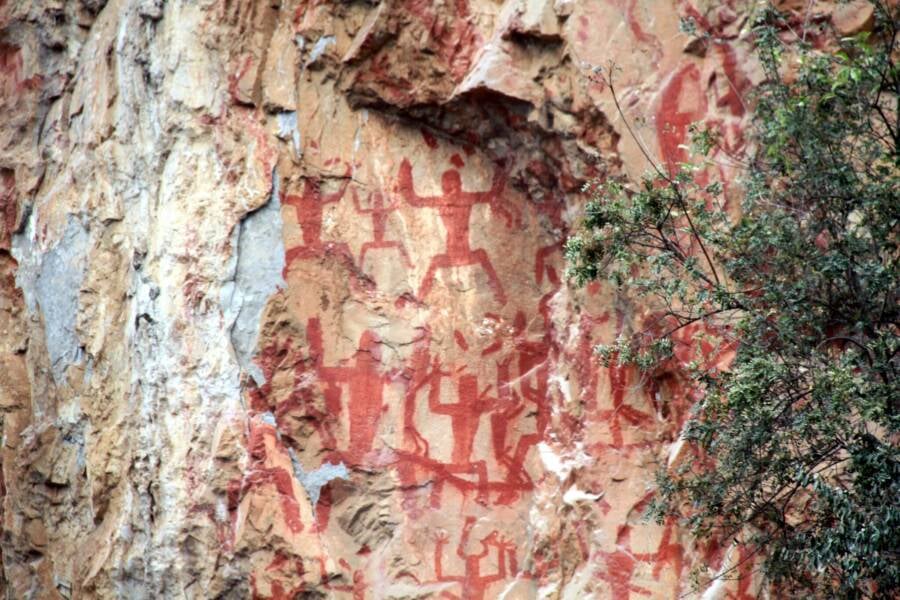
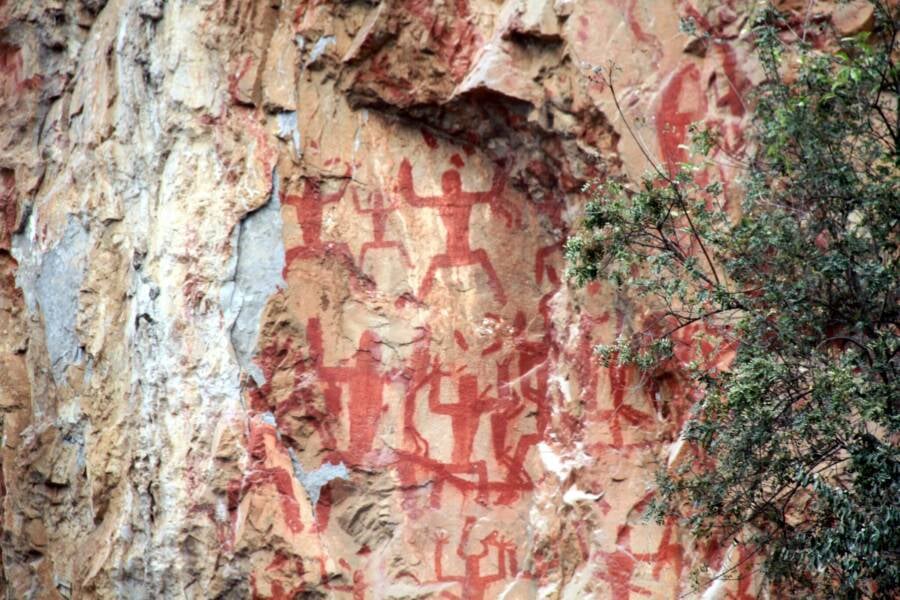
Public DomainThe extremely well-preserved state of the 2,000-year-old Huashan Rock Art in southern China has long baffled archaeologists — but they just discovered that its secret ingredient is human blood.
The famous Huashan Rock Art stretches across more than 160 miles along the Zuojiang River valley in southern China. Declared a UNESCO World Heritage Site in 2016, this impressive collection of red paintings adorns the valley’s cliffs with depictions of human and animal figures, boats, weapons, and bronze drums.
Most of these paintings were made at least 2,000 years ago, somewhere between the 5th century B.C.E. and the 2nd century C.E. Meanwhile, this region of China sees temperatures higher than 100°F in the summer, as well as typhoons and torrential rainstorms. Nevertheless, they remain astonishingly intact to this day.
So, experts have long been left wondering how these paintings survived so well for so long? Now, researchers say that it’s because they were painted with human blood taken from women who’d just given birth.
Researchers Discover That The Secret To The Huashan Rock Art’s Preservation Is Human Blood
The more than 80 painted sites known as the Huashan Rock Art have generally been attributed to the ancient Luoyue people. The main site, the Mt. Huashan panel, has been shown to contain about 1,900 identifiable figures across approximately 86,000 square feet.
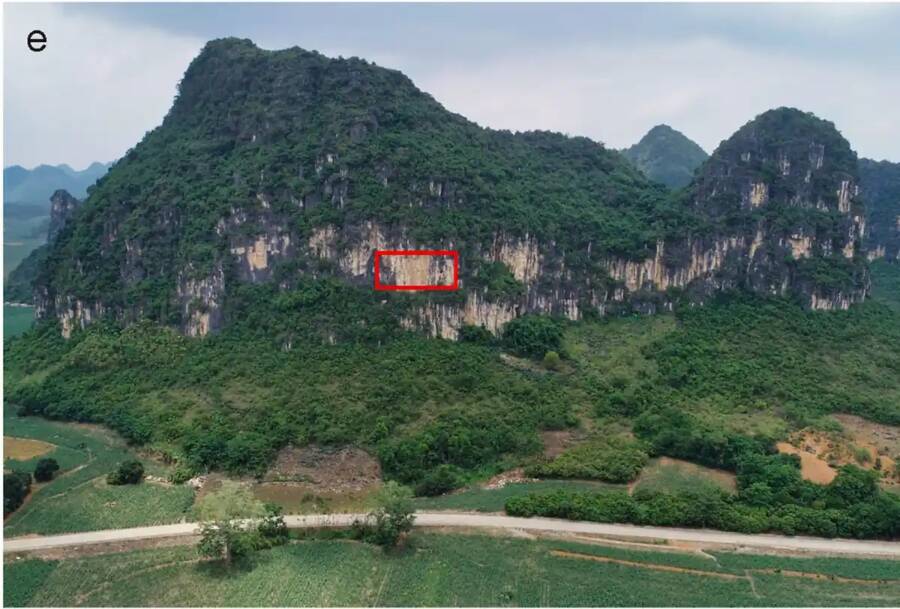
M. Wu et al. 2026The climate in this region is harsh, with intense heat, typhoons, and heavy rainfall — but these paintings have stayed intact for two millennia.
For many years, the extraordinary preservation of the paintings has perplexed archaeologists, given this river valley’s harsh climate. Ordinary organic paint, like plant gums or animal glue, would normally deteriorate under conditions such as these.
But now, researchers from Shandong University and the Guangxi Museum of Anthropology may have finally solved this mystery. After analyzing fragments from the Gaoshan, Daningshan, and Tunpingshan rock art sites, the team published their findings in the Journal of Archaeological Science, which revealed that they were created via a far more sophisticated process than previously thought.
The researchers found that the painters used a mortar made of lime, clay, and blood that fused to the limestone cliffs as calcium carbonate crystals after reacting with the air. The mortar was so well-fused that, for some fragments, researchers had to drill the paintings off the limestone.
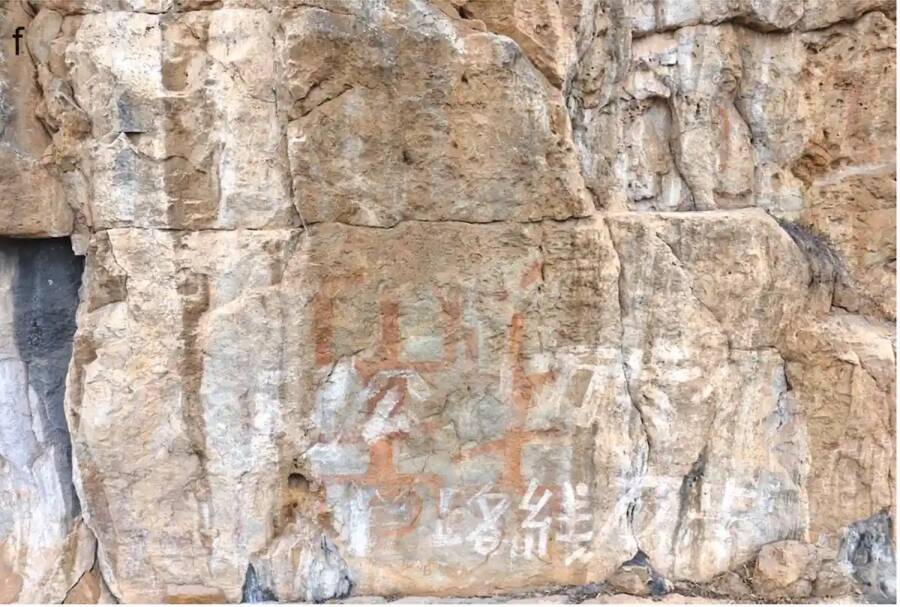
M. Wu et al. 2026Researchers found that the paint was made with a mortar consisting of lime, red clay, and human blood.
In other words, this rock art did not simply consist of dried paint, but instead a pigmented composite more closely resembling cement.
The most shocking element of this composite was of course the blood, which came from both animals and humans. The human portion contained two proteins that were linked to pregnancy, breastfeeding, and female reproductive biology.
Therefore, the team concluded that these proteins likely came from women who had very recently given birth, and that the blood came from routine postpartum bleeding.
However, the researchers preached some caution, as these proteins are not completely unique to women and childbirth.
What This Study Reveals About Rock Art In Ancient China
If the source of the blood in the paintings is childbirth, the researchers point to that practice as perhaps having social and ritual functions for the Luoyue, a society that has been described as matrilineal in historical Chinese texts.
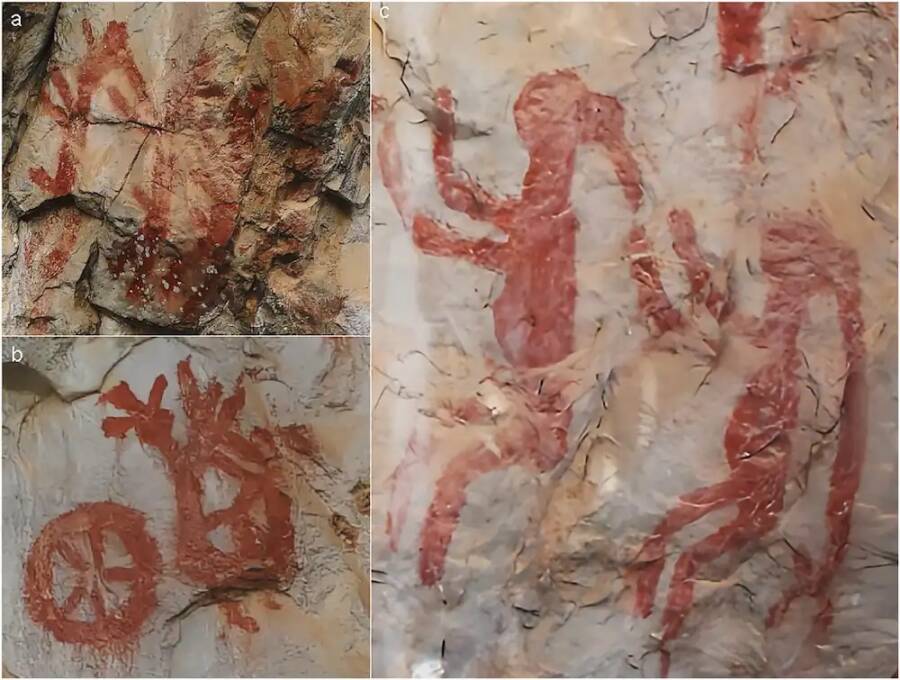
M. Wu et al. 2026The Huashan Rock Art features a number of images associated with reproduction and fertility.
The paintings themselves have likewise been interpreted as ritualistic and ceremonial. The strong presence of bronze drums and other sacred objects in the paintings, as well as the compositions of the human figures, point to scenes of collective rites, rather than the quotidian daily lives of individuals.
Joking Hazard by Cyanide & Happiness - 360+ Funny & Inappropriate Comic Cards, Hilarious Party Games | Includes Add-Your-Own-Words Cards
$24.95 (as of October 25, 2026 01:02 GMT +00:00 - More infoProduct prices and availability are accurate as of the date/time indicated and are subject to change. Any price and availability information displayed on [relevant Amazon Site(s), as applicable] at the time of purchase will apply to the purchase of this product.)
RIVER OF GOODS Stained Glass Magna Carta LED Ceiling Fan - 52" L x 52" W - Tiffany Style - Flush Mount Ceiling Fan with Remote - Teal
(as of October 25, 2026 01:02 GMT +00:00 - More infoProduct prices and availability are accurate as of the date/time indicated and are subject to change. Any price and availability information displayed on [relevant Amazon Site(s), as applicable] at the time of purchase will apply to the purchase of this product.)
RIVER OF GOODS LED Boho Ceiling Fan with Hand Woven Brown/Natural Rope - Macrame Knot Work and Hemp Rope Style Eclectic Cottage Decor - 52" L x 52" W - Rich Barnwood/Light Driftwood Fan Blades
(as of October 25, 2026 01:02 GMT +00:00 - More infoProduct prices and availability are accurate as of the date/time indicated and are subject to change. Any price and availability information displayed on [relevant Amazon Site(s), as applicable] at the time of purchase will apply to the purchase of this product.)
Joking Hazard Enlarged Box Empty Box for Card Storage
$12.00 (as of October 25, 2026 01:02 GMT +00:00 - More infoProduct prices and availability are accurate as of the date/time indicated and are subject to change. Any price and availability information displayed on [relevant Amazon Site(s), as applicable] at the time of purchase will apply to the purchase of this product.)