Ancient Mystery Unveiled: Roman-Era Infants Wrapped in Priceless Purple Cloth Found in England
Imagine stumbling upon the burial site of two infants, tucked away in York some 1,700 years ago—and they’re wrapped in the kind of cloth that screamed “ultimate luxury” back in the Roman Empire. Yep, we’re talking Tyrian purple, the ancient world’s Fabergé egg of dyes, painstakingly harvested from sea snails and valued more than its weight in gold. Now, here’s the real kicker: historians have long nodded along, thinking Romans simply didn’t openly mourn babies who died young—heck, it was basically a big no-no. So why on earth were these babies swathed in such outrageously expensive fabric? Were these infants VIPs in their own right, or is there some other mysterious story being whispered through the gypsum that encased their tiny remains? It’s a compelling puzzle wrapped in purple — and one that’s rewriting what we thought we knew about grief and status in Roman Britain. Ready to dive into this ancient enigma?
These infants were interred in York some 1,700 years ago, but who exactly they were and why they were buried with such expensive cloth remain a mystery.
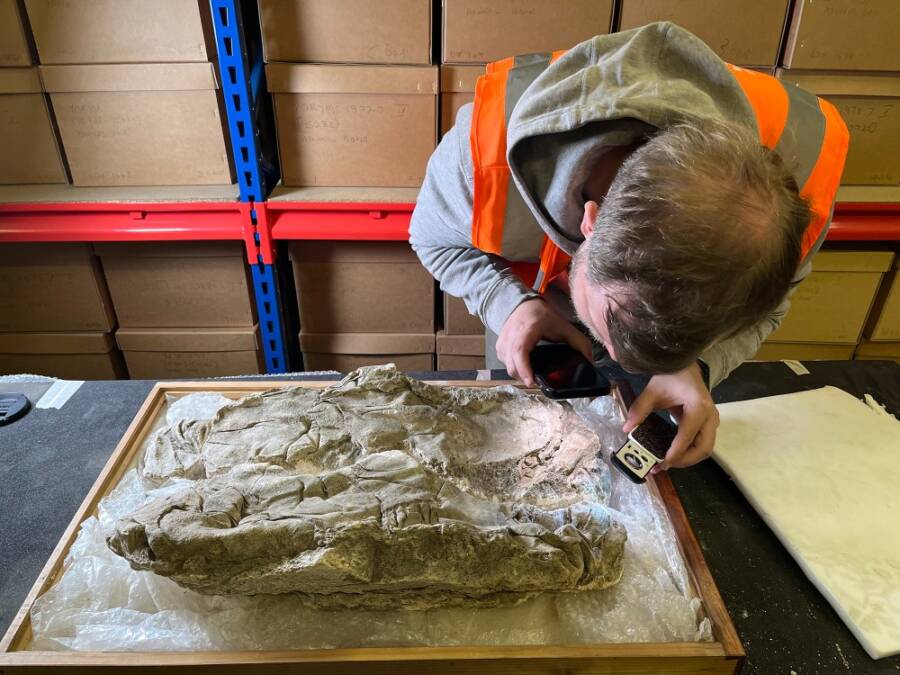
University of YorkThe infants were encased in gypsum, a common burial practice in the Roman era.
During the Roman era, there was perhaps no surer way to display wealth and importance than wearing a garment made with Tyrian purple, the ancient Mediterranean’s most expensive dye. Researchers were thus surprised to find traces of this dye, extracted from sea snails, on cloth from the burials of two unknown infants uncovered in York, England.
This discovery is astounding for two reasons. For one thing, it’s the first time that traces of Tyrian purple have ever been found on textiles in York. For another, historians largely believe that Romans did not mourn babies who died young and, indeed, it was forbidden for parents to mourn babies publicly.
But the Roman infants wrapped in Tyrian purple challenge this theory. The characteristics of their burials suggest that they were not only mourned after their deaths, but that they were also given the highest honor that their families could afford.
The Roman-Era Infants Found In York, Wrapped In Tyrian Purple
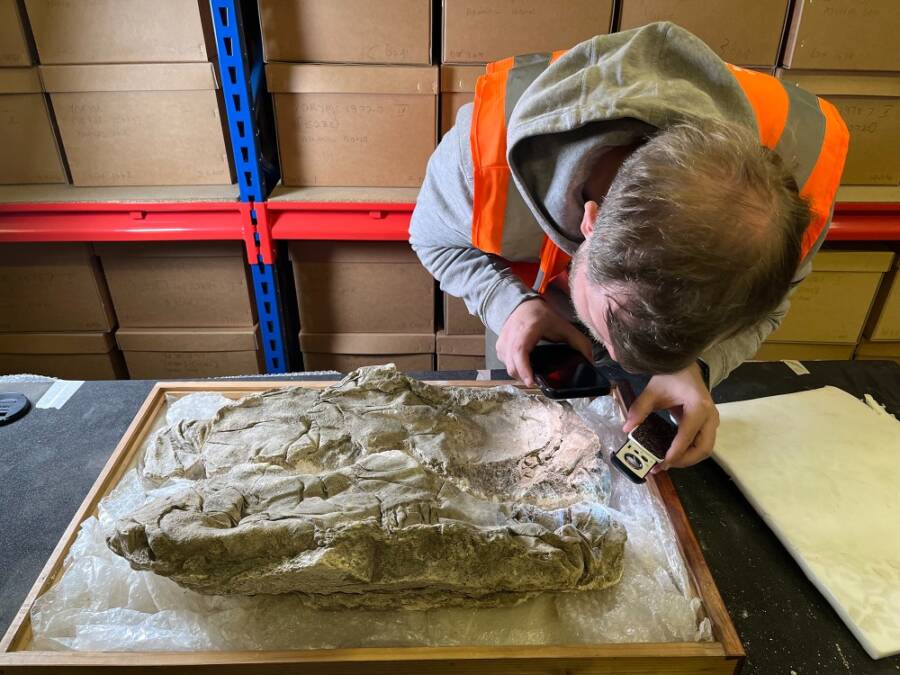
According to a statement from the University of York, the discovery of the Roman-era infants wrapped in Tyrian purple was made during an examination of 1,700-year-old gypsum burials held in the collections of York Museums Trust. In Roman times, gypsum was often poured over the shrouded dead before burial. It would gradually harden, preserving chemical traces of dyes, as well as impressions and fragments of fabric.
In this case, this process preserved traces of Tyrian purple dye, which researchers with the Seeing the Dead project found in two gypsum burials. In one, an infant was wrapped in textiles and placed between the legs of two adults in a stone sarcophagus. In the other, an infant was wrapped in a cloak or a shawl, overlaid with “a fine textile of Tyrian purple and gold threads” and buried in a lead coffin. According to the researchers, the Tyrian purple cloth would have been visible before the lid of the coffin was closed.
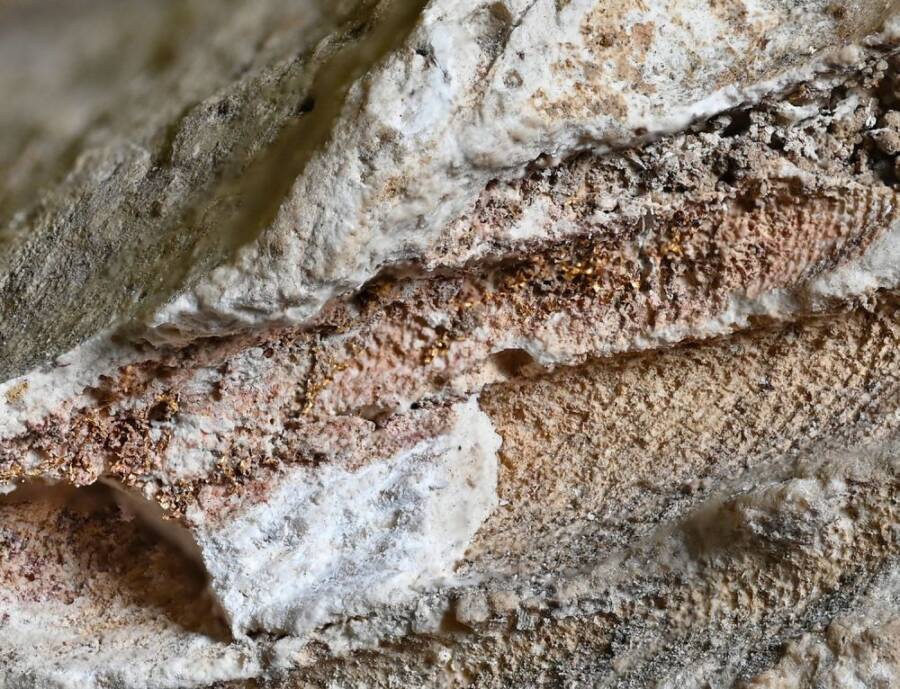
Seeing the Dead/University of YorkTraces of Tyrian purple dye are still visible, as are the golden threads that once adorned the textile.
This discovery is astounding on several levels. As the Seeing the Dead project noted, “the combination of purple and gold means that [the textile] is of the highest possible status and luxury in the Roman empire.” Not only is it the first time that Tyrian purple has been found in York, but it’s also exceeding rare to find it in the context of an infant burial. While Tyrian purple was found at the burial of a 10-year-old child in Naintré, France, historians have long believed that Romans did not mourn children who died in infancy.
But the Tyrian purple in this instance both suggests that Roman families did mourn their very young and, even in the far-flung reaches of the Roman Empire, they had access to expensive luxurious goods.
“This remarkable discovery tells us a lot about the importance of children in Roman York,” said Maureen Carroll, Project Director from the Department of Archaeology at the University of York, “and the willingness of the family to give their baby the best possible send-off in tragic circumstances.”
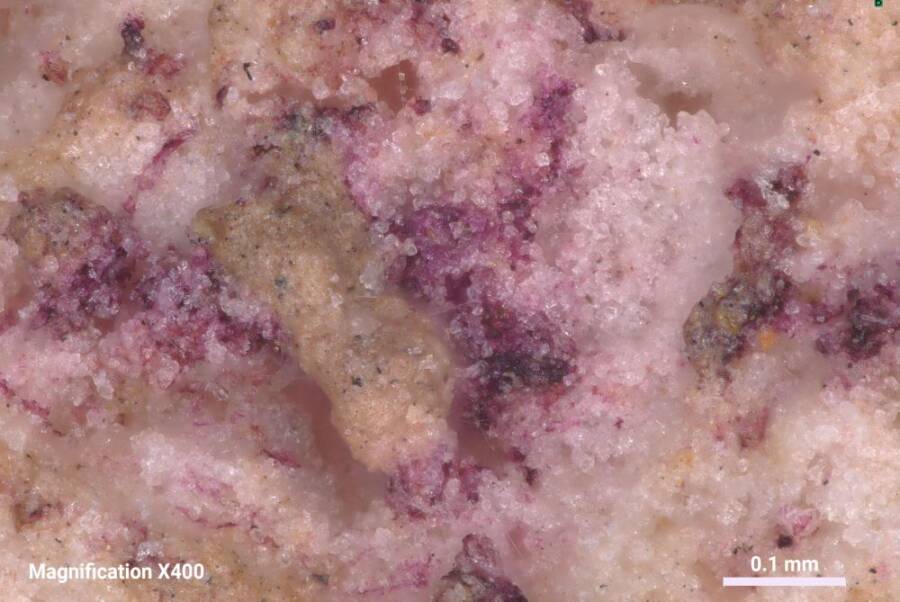
Sarah Hitchens/Seeing the Dead/University of YorkA close-up of the Tyrian purple remnants found at the burial in York.
This find also gives experts a greater understanding of Tyrian purple, the most elusive and coveted dye in ancient Rome.
The Astonishing Story Of Tyrian Purple In The Ancient Mediterranean
According to Greek myth, Tyrian purple was first discovered by Hercules, whose dog bit a sea snail at a beach, and emerged with a purple muzzle. When a nymph saw the dog’s stained fur, she demanded a cloak of the same hue — and Tyrian purple was born.
Focusing on history as opposed to myth, Tyrian purple was produced in the Phoenician city of Tyre (in present-day Lebanon) starting around the 16th century B.C.E. It was produced by collecting thousands of murex sea snails, then crushing them whole or painstakingly cutting out their mucous glands. The snails were then salted, fermented, cooked, and reduced for 10 days, at which points the dye-makers would test the color. According to Pliny the Elder, the best quality of Tyrian purple had the “color of clotted blood, and is of a blackish hue to the sight.”

White Leaf Baby Food Pouches, Toddler Snack, Mango + Carrot + Banana + Pear | 24 Pack, Organic No Added Sugar, Non-GMO, BPA-Free Regeneratively Farmed, Squeeze Puree Smoothie Pouch for Adults & Children
$69.95 (as of October 24, 2026 01:02 GMT +00:00 - More infoProduct prices and availability are accurate as of the date/time indicated and are subject to change. Any price and availability information displayed on [relevant Amazon Site(s), as applicable] at the time of purchase will apply to the purchase of this product.)
Skater Trainer Wheels - Beginners get Skateboard Tricks Fast, Safe and Fun | Viral accessory gift - Helps beginners stay excited about their new skateboard - Kids & parents love these
$28.99 (as of October 24, 2026 01:02 GMT +00:00 - More infoProduct prices and availability are accurate as of the date/time indicated and are subject to change. Any price and availability information displayed on [relevant Amazon Site(s), as applicable] at the time of purchase will apply to the purchase of this product.)
Fire Cloak - 1500F CE Certified Emergency Fire Blanket for Home & Kitchen | 500GSM Fabric & 0.5mm Thick - Silicon Coated 100% Fiberglass Essentials in House, Warehouse Office - 55"L x 70"W by Supa Ant
$83.99 (as of October 24, 2026 01:02 GMT +00:00 - More infoProduct prices and availability are accurate as of the date/time indicated and are subject to change. Any price and availability information displayed on [relevant Amazon Site(s), as applicable] at the time of purchase will apply to the purchase of this product.)
Supa Ant Canning Supplies Starter Kit (Food Grade) - Canning Kits Set for Beginners - 3 Pcs. Including Wide Mouth Jar Funnel, Magnetic Lid Lifter, Stainless Steel Jar Lifter (Assembled in USA) Blue
$9.99 (as of October 24, 2026 01:02 GMT +00:00 - More infoProduct prices and availability are accurate as of the date/time indicated and are subject to change. Any price and availability information displayed on [relevant Amazon Site(s), as applicable] at the time of purchase will apply to the purchase of this product.)