Ancient Sea Creature Fossil Defies Time: Soft Tissue Intact After 450 Million Years—What Secrets Does It Hold?
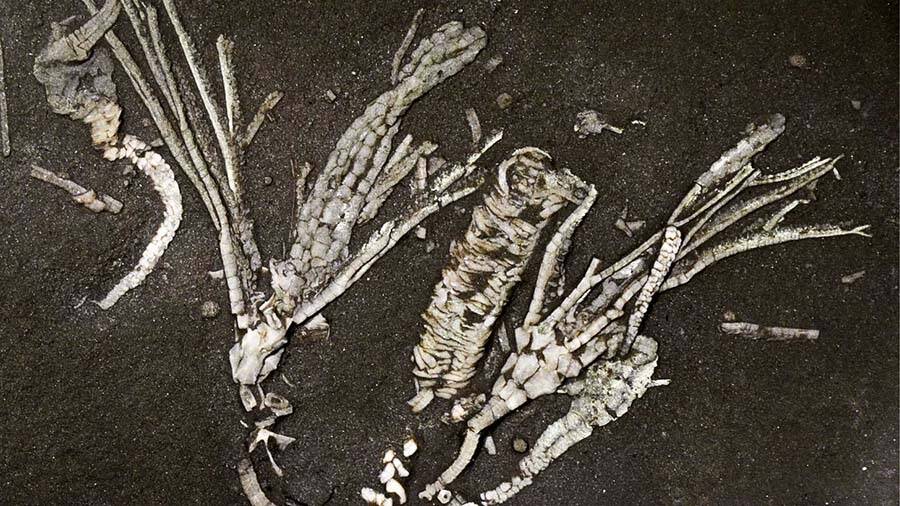
Imagine discovering a starfish-like creature chilling in Earth’s oceans a staggering 450 million years ago—yeah, that’s 200 million years before dinosaurs even made their dramatic entrance on the scene. This isn’t just any fossil find; it’s a crinoid with intact soft tissue—talk about a rare gem, since most fossils are just the rock-solid leftovers like bones or shells. Soft tissue? That’s like finding a vinyl record in mint condition from the Stone Age of music! What’s wild is these delicate tube feet, once thought to be just tiny limbs, actually tell a whole story about eating habits and prehistoric ocean vibes. Ever wonder what ancient feeding strategies looked like, eons before T-Rex? This discovery cracks open a new chapter on the early evolution of marine life, showing us a world that’s both alien and fascinatingly familiar. Now, if this fossil could talk, imagine the tales it’d spin about the primeval seas and the lives that once thrived beneath the waves. Ready to dive deeper into this prehistoric ocean mystery? LEARN MORE
A whopping 200 million years older than the earliest dinosaurs, this fossil holds the remains of a crinoid, a starfish-like sea creature that thrived in Earth’s oceans before the first animals and plants had even expanded onto dry land.
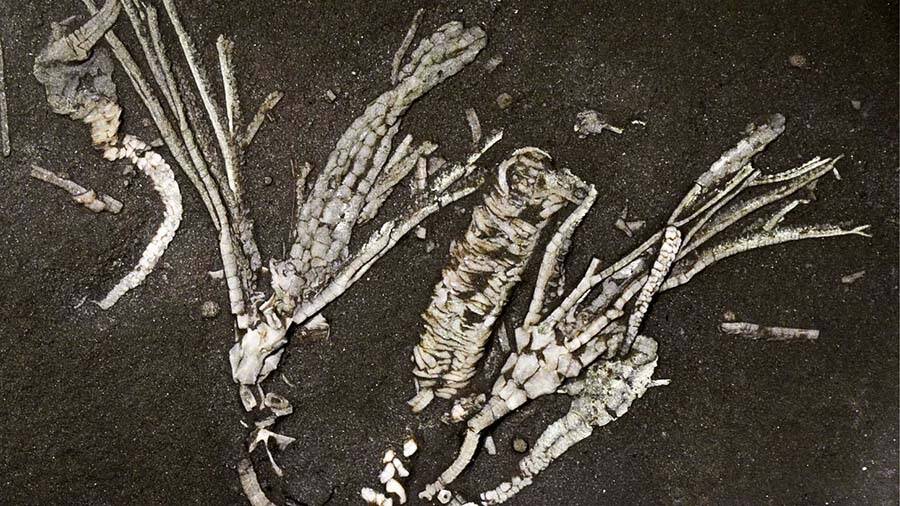
University of OklahomaPaleontologists discovered intact soft tissue from a crinoid that lived 450 million years ago.
In the prehistoric animal kingdom, before dinosaurs walked the Earth, and even before any animals and plants occupied dry land, starfish-like creatures known as crinoids thrived in some of the planet’s earliest marine ecosystems.
Scientists just discovered a 450-million-year-old fossilized crinoid that still has some of its soft tissue intact. This is extremely rare, as fossils almost always preserve only the animal’s bones, teeth, or hard shells. But this astonishing crinoid’s soft tissue will give researchers unprecedented insight into the evolution of life in Earth’s prehistoric oceans some 200 million years before the dinosaurs.
The 450-Million-Year-Old Crinoid Found With Soft Tissue Intact
Paleontologists at the University of Oklahoma made the discovery of the soft tissue while studying a fossil of a Dendrocrinus simcoensis being held at a small Montréal museum called the Musée de paléontologie et de l’évolution. The museum simply hadn’t been aware of the importance of this specimen that had long been sitting in their collection.
Only one other crinoid fossil has ever been found with preserved soft tissue, and this discovery is older by a significant margin.
Dr. Lena Cole, a paleontologist at the university, said in a statement that the discovery was “truly one in a million,” as millions of crinoid fossils have been found, but only two have ever had intact soft tissue.
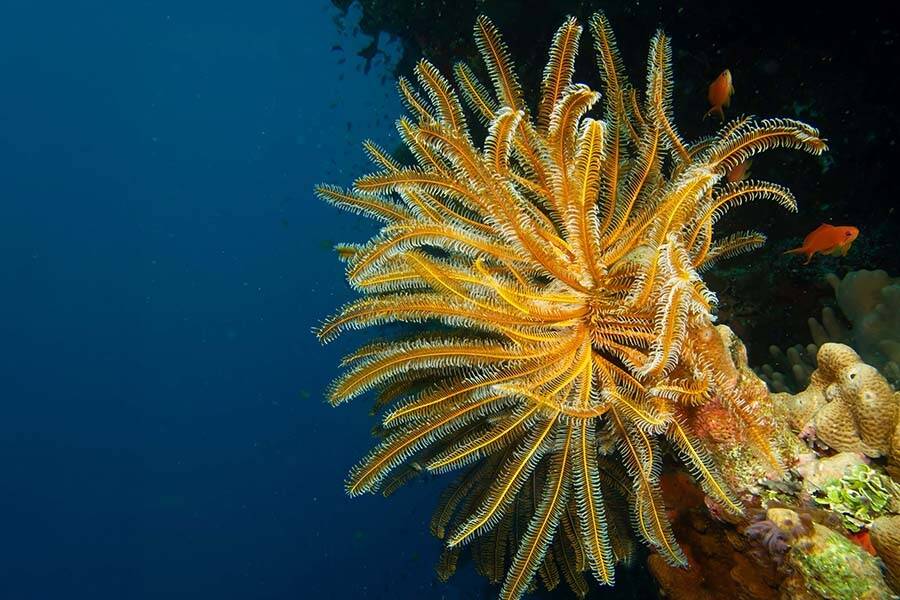
University of OklahomaFeather stars, found in today’s oceans, are modern crinoids.
Crinoids are echinoderms, sea animals with rough, spiny surfaces and radial symmetry. They are sometimes called sea lilies for their flower-like appearance, and appear in today’s oceans as feather stars. The bodies of crinoids are mostly made up of chalky, calcium carbonate plates that allow them to fossilize well. But this merely aids in fossilizing the animal’s hard tissue, while the preservation of soft tissue requires highly specific and rare conditions.
“After an animal dies, soft tissues like skin, eyes, or internal organs are the first things to decay,” said Dr. Cole. “Most fossils are only made up of hard parts like bones, teeth, or shells. Soft tissues are only preserved when the environment acts almost like a natural refrigerator or vacuum‑sealer — conditions that are incredibly rare.”
The researchers identified the soft tissue preserved in this fossil as the crinoid’s tube feet. Despite what the name might imply, tube feet do not allow crinoids to stand, but instead to eat.
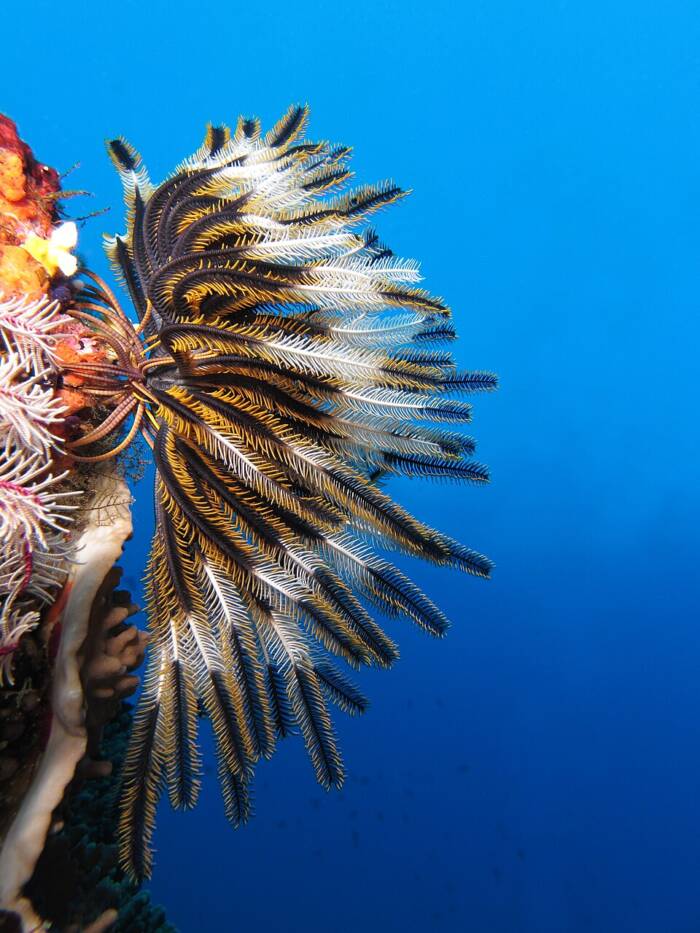
Wikimedia CommonsResearchers identified the soft tissue as tube feet, which crinoids use to eat.
Crinoids use their tube feet, which line the edges of their fans, to capture plankton. As the crinoids move their feathery fans through the ocean, particles of plankton get trapped and stuck to the tube feet and are then moved down to their mouths from there.
Tube feet are remarkably diverse in size and shape depending on how each crinoid has evolved based on its specific ecology.
“Since crinoid tube feet are used for feeding, you can think of them in a similar way to how we think about teeth in mammals,” said Dr. David Wright, another University of Oklahoma paleontologist. “Differences in their structure tell us about what kinds of environments a species lived in and how it fed.”
What This Crinoid Discovery Could Reveal About Planet Earth’s Prehistoric Oceans
Although paleontologists have been able to piece together prehistoric ecosystems with hard tissue fossils, the preserved soft tissue reveals much more about how crinoids’ biology worked and evolved.
“Comparisons with living crinoids show that the anatomy of this ancient species was very different,” Dr. Cole said. “This gives us new insight into how crinoids evolved and how their feeding strategies changed over hundreds of millions of years.”

Rhythm Superfoods Kale Chips, Zesty Nacho, Organic and Non-GMO, 2.0 Oz (Pack of 4), Vegan/Gluten-Free Superfood Snacks
(as of October 18, 2026 01:00 GMT +00:00 - More infoProduct prices and availability are accurate as of the date/time indicated and are subject to change. Any price and availability information displayed on [relevant Amazon Site(s), as applicable] at the time of purchase will apply to the purchase of this product.)
Supa Ant Canning Supplies Starter Kit (Food Grade) - Canning Kits Set for Beginners - 3 Pcs. Including Wide Mouth Jar Funnel, Magnetic Lid Lifter, Stainless Steel Jar Lifter (Assembled in USA) Blue
$9.99 (as of October 18, 2026 01:00 GMT +00:00 - More infoProduct prices and availability are accurate as of the date/time indicated and are subject to change. Any price and availability information displayed on [relevant Amazon Site(s), as applicable] at the time of purchase will apply to the purchase of this product.)
KiddyCare Diaper Caddy Organizer Cart for Nursery Baby Basket Gift for Boy/Girl | Diaper Caddy for Changing Table Basket Organizer with Dividers | Caddy for Baby Stuff Breast Pump Caddy - Regular
$9.99 (as of October 18, 2026 01:00 GMT +00:00 - More infoProduct prices and availability are accurate as of the date/time indicated and are subject to change. Any price and availability information displayed on [relevant Amazon Site(s), as applicable] at the time of purchase will apply to the purchase of this product.)
1MORE Triple Driver in-Ear Earphones Hi-Res Headphones with High Resolution, Bass Driven Sound, MEMS Mic, in-Line Remote, High Fidelity for Smartphones/PC/Tablet - Silver
$61.59 (as of October 18, 2026 01:00 GMT +00:00 - More infoProduct prices and availability are accurate as of the date/time indicated and are subject to change. Any price and availability information displayed on [relevant Amazon Site(s), as applicable] at the time of purchase will apply to the purchase of this product.)