Bill Gates Invests in Groundbreaking Alzheimer’s Detection Method That Could Change Everything Years Before Symptoms Appear
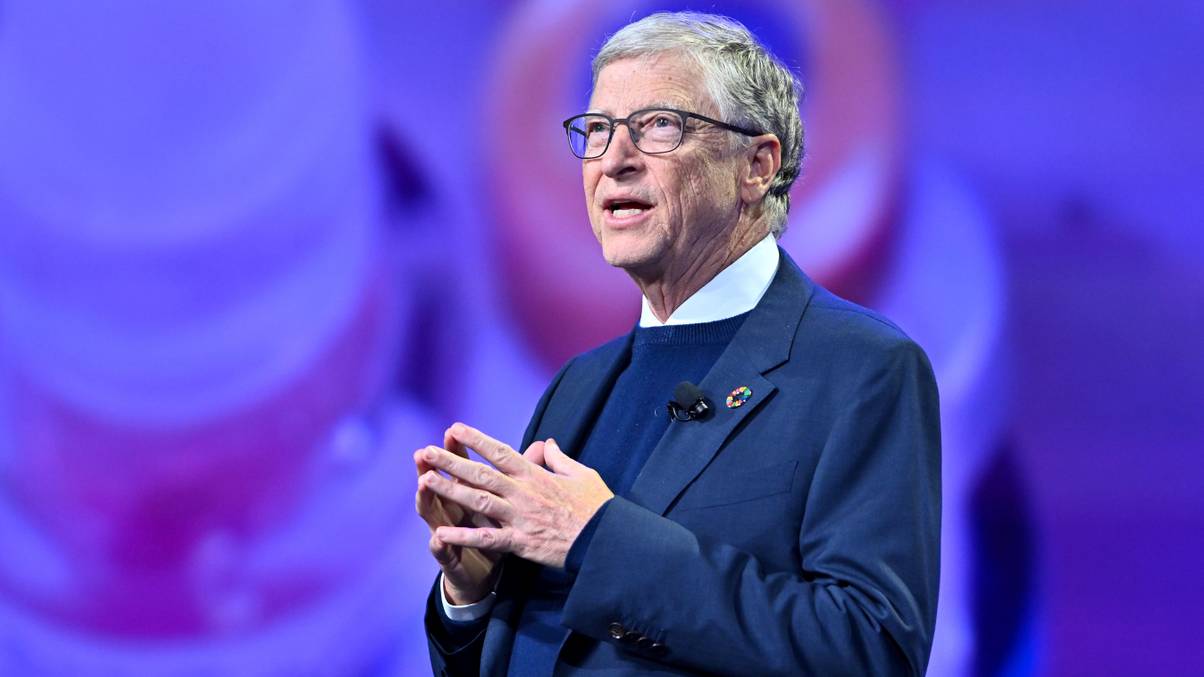
So, here’s a curious thought: Could the next time you stumble over a word or slow down mid-sentence actually be your brain flashing a subtle neon sign about its health? Bill Gates sure seems to think so. The Microsoft titan recently threw his considerable weight behind a study by Dr. Marziye Eshghi that’s sniffing out early dementia clues in our speech patterns—all those tiny quirks in vocabulary, pitch, and speed that most of us wouldn’t even notice. And get this: they’re using AI to catch nuances that slip right past human ears, spotting the early whispers of cognitive decline years before it sets in. It’s like your voice might just be the new crystal ball for Alzheimer’s risk. Mind-boggling, huh? As Gates put it, this could be “one of the most fascinating fields of research” today. Curious to find out how your daily chit-chat might reveal more than you think? LEARN MORE.
Bill Gates has shared his support for research which suggests that changes to a person’s speech patterns can be an early indicator of dementia.
Taking to X, the billionaire Microsoft founder highlighted a recent study led by Dr Marziye Eshghi which had been published in The New York Times. Dr Eshghi’s study, which is being conducted at Mass General Brigham University of Health Professions in Boston, examines whether or not minor changes to our speech can indicate future cognitive decline.
The study examines hundreds of speech patterns, including a person’s vocabulary, pitch and speaking speed, by running it through an AI model to detect minor changes.
“We are seeing differences that humans can’t see or can’t really detect by their ears, but it’s there years and years before cognitive decline,” Dr Eshghi said of the work.

Minor changes to our speech could be a pre-warning of cognitive decline (Getty Stock Images)
Preliminary results suggested the method of testing was more reliable than cognitive testing in elderly patients.
His research is combined with brain imaging and testing for tests for certain proteins in the blood, known as Alzheimer’s biomarkers.
The study has been labelled ‘one of the most fascinating fields of research’ by Gates on social media, with the 71-year-old writing: “It turns out that speech may be a window into brain health and Alzheimer’s risk.
“To me, it’s one of the most fascinating fields of research right now.”
Are changes to our speech an early indicator of Alzheimer’s disease?
Changes to a person’s speech have long been linked as a symptom of Alzheimer’s disease.
Back in 2017, Alzheimers Research UK published a study which found a link between adults suffering from mild memory and thinking problems to changes in their everyday speech.
More recently, the Fisher Centre for Alzheimer’s published findings that changes to the ‘pitch, volume or clarity’ of your speech is an early warning sign of dementia in older adults.
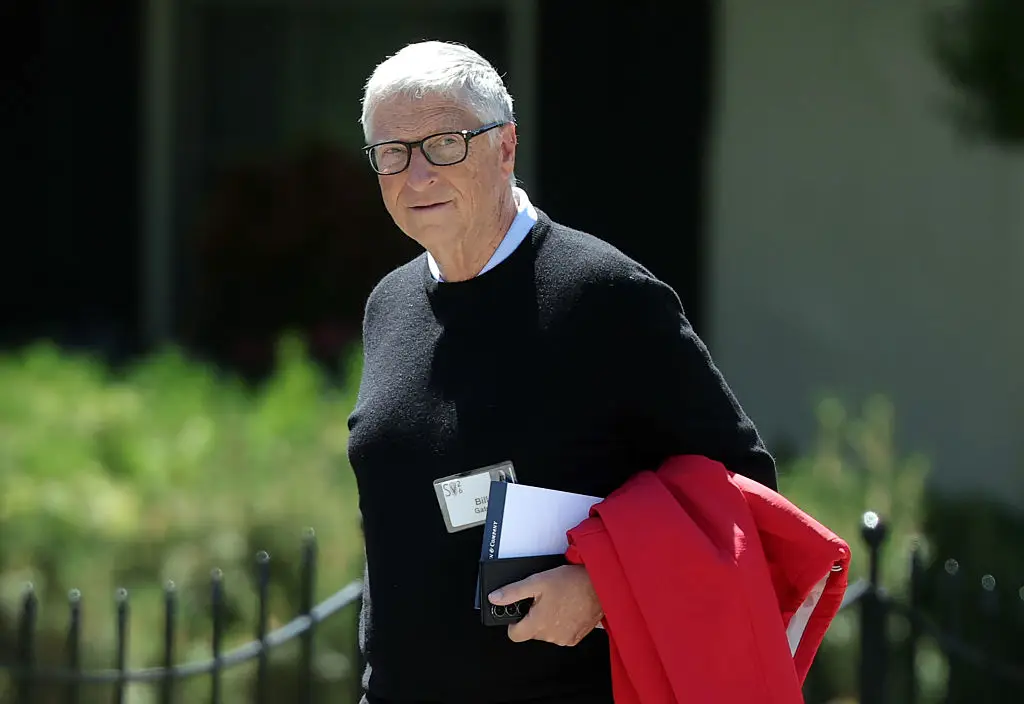
Bill Gates has shown his support for the research (Kevin Dietsch/Getty Images)
The risk was revealed to be the greatest in those who had a voice disorder but no hearing loss.
In Dr Eshghi’s research, her team are focusing on individuals who are at a higher risk of Alzheimer’s but haven’t started showing symptoms.
“It’s really a window into brain health,” Dr. Marilu Gorno Tempini, director of the language neurobiology laboratory at the University of California, explained, adding that researcher’s ability to analyse speech and language allows us a ‘detailed brain function and cognition that was unheard of before’.
The research also noted that speech tracking could be helpful in identifying people who are at a greater risk of developing Alzheimer’s, particularly those who also have Alzheimer’s biomarkers.
“[The study] illustrates the potential of speech measurements to capture subtle differences that are not reflected in a change in overall cognitive status,” Dr Eshghi added.

Fire Blanket - 1500F CE Certified Emergency Fire Blanket for Home & Kitchen | 500GSM Fabric & 0.5mm Thick - 100% Fiberglass Fire Extinguisher for Car,Warehouse Office - 2pc (47x47 inches) by Supa Ant
$45.43 (as of November 22, 2026 01:14 GMT +00:00 - More infoProduct prices and availability are accurate as of the date/time indicated and are subject to change. Any price and availability information displayed on [relevant Amazon Site(s), as applicable] at the time of purchase will apply to the purchase of this product.)
1MORE Triple Driver In-Ear Headphones - Silver - Wired - Adult - In Ear - 18 grams - 90 days limited warranty
(as of November 22, 2026 01:14 GMT +00:00 - More infoProduct prices and availability are accurate as of the date/time indicated and are subject to change. Any price and availability information displayed on [relevant Amazon Site(s), as applicable] at the time of purchase will apply to the purchase of this product.)
White Leaf Baby Food Pouches, Toddler Snack, Mango + Carrot + Banana + Pear | 24 Pack, Organic No Added Sugar, Non-GMO, BPA-Free Regeneratively Farmed, Squeeze Puree Smoothie Pouch for Adults & Children
$69.95 (as of November 22, 2026 01:14 GMT +00:00 - More infoProduct prices and availability are accurate as of the date/time indicated and are subject to change. Any price and availability information displayed on [relevant Amazon Site(s), as applicable] at the time of purchase will apply to the purchase of this product.)
Joking Hazard by Cyanide & Happiness - 360+ Funny & Inappropriate Comic Cards, Hilarious Party Games | Includes Add-Your-Own-Words Cards
$17.47 (as of November 22, 2026 01:14 GMT +00:00 - More infoProduct prices and availability are accurate as of the date/time indicated and are subject to change. Any price and availability information displayed on [relevant Amazon Site(s), as applicable] at the time of purchase will apply to the purchase of this product.)



















Post Comment