Christa Pike’s Lawyers Unveil Shocking Health Crisis and Dark Secrets Behind Failed Act

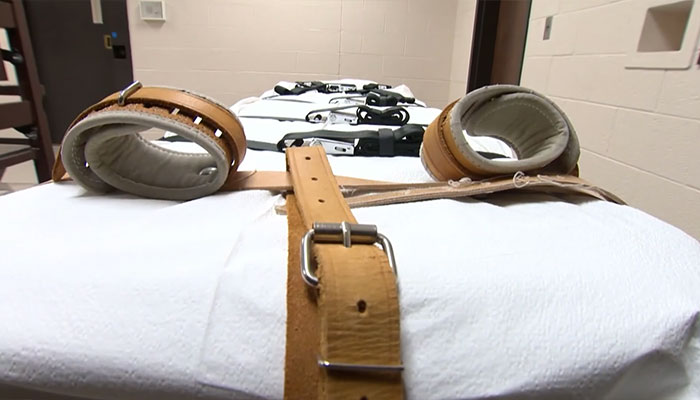
What do you do when a lethal injection—meant to bring about a swift, final end—decides to take a rain check? Meet Christa Pike, a woman whose grim past took a wild twist on September 30, 2026. Convicted in ‘96 for the chilling slaying of 19-year-old Colleen Slemmer, Pike faced the ultimate penalty. But things didn’t go as planned when the state administered not one, but two doses of pentobarbital… and she lived. Yes, lived. In a case where justice and medicine danced an unsettling tango, Pike’s botched execution paints a haunting portrait of what happens when the designed finality falters. Now, the same hands that determined her fate scramble to preserve her life, revealing a cascade of medical complications, legal battles, and raw human tension. Strange to think—is it possible for death to stumble? Let’s unravel the layers behind this extraordinary saga. LEARN MORE.
Christa Pike was 18 when she and her then-boyfriend, Tadaryl Shipp, lured 19-year-old Colleen Slemmer, a fellow Jobs Corps worker from Knoxville, Tennessee, into a remote wooded area on the University of Tennessee Agricultural campus.
Pike then tormented Slemmer and took her life because she “just felt mean that day,” and later admitted to the horrific crime in court.
- Christa Pike took the life of 19-year-old Colleen Slemmer in 1995 and was sentenced to have her life taken.
- She was administered two doses of lethal injection on September 30, 2026, but then had to be taken out of the prison in an ambulance.
- Her lawyers previously argued that her medical conditions could cause Pike unnecessary suffering as she breathed her last.
Pike was convicted of first-degree homicide and sentenced to capital punishment in 1996, while Shipp received life in prison with the possibility of parole.
On September 30, 2026, Pike received two doses of pentobarbital, a powerful sedative. However, Pike lived.
Now the same state that resolved to take her life is trying to save her, as attorneys have provided an update on her health condition.
Christa Pike remains “unconscious” after botched capital punishment attempt

When Pike was heard “breathing” and “snoring” even 40 minutes after the second dose of pentobarbital, emergency services were called, and she was rushed from Riverbend Maximum Security Institution to a local Nashville hospital.
On Thursday, October 2, her legal team filed an emergency motion Friday in Davidson County Chancery Court seeking an order requiring the Tennessee Department of Correction to preserve all relevant evidence related to the botched capital punishment attempt.
The filing noted that as of the night before, Pike was “critically ill, intubated, on a ventilator, and remains unconscious.”


The lawyers also said in the document that Pike’s arms were “swollen, burned, and blistered” when she was taken to the hospital, and at least seven needles were used to gain IV access.
They claimed that “at no point did any member of the exe**tion team realize that the IV lines were not correctly placed or that the veins had blown and that the pentobarbital was, in whole or in part, entering Ms. Pike’s body.”
“Hospital staff is working to save Ms. Pike’s life and to clear the pentobarbital from her system,” the motion further stated.
Pike’s attorneys, Stephen Ferrell and Luke Ihnen, told TMZ, “We are working closely with those closest to Christa to respect her wishes, safeguard her privacy, and protect her rights as a patient during this extraordinarily difficult time. We ask that the public and the media respect that privacy as well.”
Pike’s lawyers previously argued that Pike suffered from certain conditions, which would make the lethal injection procedure riskier and subject her to “unnecessary and superadded pain and suffering, terror, and disgrace.”
Christa Pike’s medical conditions could have impeded the lethal injection procedure, a doctor said
Dr. Joel Zivot, an anaesthesiologist advising Pike’s defense team, opined that two doses of pentobarbital were enough to have taken Pike’s life had it entered her bloodstream in normal circulation.
The fact that she survived points to the possibility that the pentobarbital in the blood “was never high enough” to have caused demise, he said, adding that the blisters on her arm indicate a ruptured vein from failed IV channeling attempts.
Instead of entering Pike’s bloodstream, the pentobarbital was more likely to have spread across the tissue under her skin, Dr. Zivot said.

Regarding the possibility that the pentobarbital used was degraded, Zivot explained that, if so, it could be due to factors, including poor manufacturing or improper storage.
Pike suffered from thrombocytosis, which may have also played a role, forming blood clots at the injection site that would potentially block pentobarbital from entering her veins. She also had small veins, which made IV administration challenging.

PROMIXX FORM Protein Shaker Bottle - A Premium Shaker Bottle for Protein Shakes Infusions and Hydration - Durable Gym Shaker Bottle, Leakproof Lid, Odorless - 26oz (Graphite Gray)
$12.99 (as of October 24, 2026 01:02 GMT +00:00 - More infoProduct prices and availability are accurate as of the date/time indicated and are subject to change. Any price and availability information displayed on [relevant Amazon Site(s), as applicable] at the time of purchase will apply to the purchase of this product.)
RIVER OF GOODS Coastal 52 Inch Wooden Bead LED Ceiling Fan, Cream
(as of October 24, 2026 01:02 GMT +00:00 - More infoProduct prices and availability are accurate as of the date/time indicated and are subject to change. Any price and availability information displayed on [relevant Amazon Site(s), as applicable] at the time of purchase will apply to the purchase of this product.)
Fire Blanket - 1500F CE Certified Emergency Fire Blanket for Home & Kitchen | 500GSM Fabric & 0.5mm Thick - 100% Fiberglass Fire Extinguisher for Car,Warehouse Office - 2pc (47x47 inches) by Supa Ant
$53.45 (as of October 24, 2026 01:02 GMT +00:00 - More infoProduct prices and availability are accurate as of the date/time indicated and are subject to change. Any price and availability information displayed on [relevant Amazon Site(s), as applicable] at the time of purchase will apply to the purchase of this product.)
RIVER OF GOODS Coastal 52 Inch Wooden Bead LED Ceiling Fan, Brown
(as of October 24, 2026 01:02 GMT +00:00 - More infoProduct prices and availability are accurate as of the date/time indicated and are subject to change. Any price and availability information displayed on [relevant Amazon Site(s), as applicable] at the time of purchase will apply to the purchase of this product.)




















Post Comment