Could Bill Gates’ Daughter Face Shocking Penalties in Cookie Stuffing Scandal?

So, here we are, folks—Phoebe Gates, daughter of the legendary Bill Gates, might be knee-deep in what’s being called a “cookie stuffing” scandal. Sounds like a techie snack gone bad, right? But no, this isn’t about crumbs on your keyboard; it’s a potentially serious legal mess that experts say could land her with a federal wire fraud charge, carrying up to 20 years in the slammer. Phoebe co-founded Phia, a digital shopping assistant that promises savvy savings with AI-powered coupon magic—but behind the scenes, it’s alleged that they’ve been taking credit for sales they never actually drove. It’s like showing up to a party and claiming you brought the cake when you didn’t even RSVP. A legal eagle breaks down what might be coming her way, comparing past cookie stuffing fiascos where entrepreneurs did end up behind bars. So, what’s next in this digital drama? Could the daughter of one of tech’s biggest names face hard time, or is this just a pricey slip-up? Buckle up. LEARN MORE
The alleged ‘cookie stuffing’ controversy involving Phoebe Gates could land her in a lot of legal trouble, according to this expert.
A lawyer has weighed up the possible punishments that the daughter of Bill Gates and Melinda French might face if the claims about her engaging in the deceptive practice are proven.
Legal eagles said that it would be classed as federal wire fraud, which carries a maximum sentence of 20 years in prison.
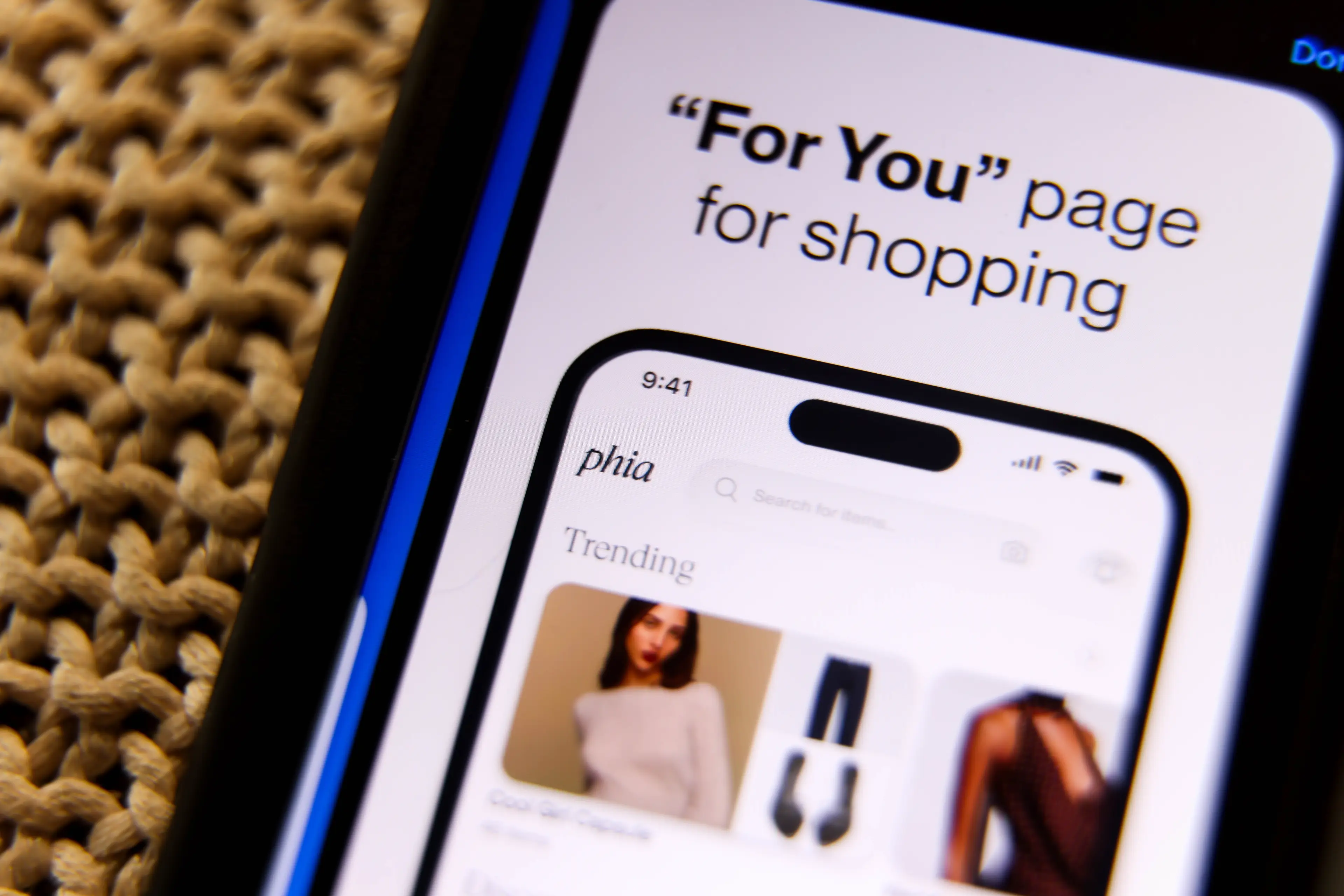
Gates is the co-founder of Phia, a digital shopping assistant company which she launched alongside Sophia Kianni in April 2025.
It promises to provide consumers with the ‘lowest price every time’ without the hassle of sifting through a slew of websites, as the AI-powered browser extension ‘applies the best coupon codes at checkout’.

Phoebe Gates and Sophia Kianni are alleged to have been aware of the ‘cookie stuffing’ since December (Kimberly White/Getty Images for TechCrunch)
According to Phia, it generates revenue ‘through affiliate links from our trusted secondhand partners’.
“Every time you make a purchase using our suggested links, we receive a small commission at no extra cost to you,” it states.
This commission is tracked with cookies – but according to a bombshell report from Bloomberg, Phia has been taking credit for sales that it did not generate, which is known as ‘cookie stuffing’.
Citing ‘internal communications and people with knowledge of the matter’ as its sources, the publication alleged that Gates and Kianni were aware of this since December 2025.
Conflictingly, Phia said it had only been aware of the alleged cookie stuffing scandal ‘within the last 24 hours’.
What could happen next?
Although the firm has not been charged with any criminal wrongdoing, attorneys have explained that the allegations amount to federal wire fraud in the US.
According to Washington law firm Burnham & Gorokhov, this white collar crime can ‘carry long prison terms even for people with little or no criminal history’. The maximum penalty is 20 years imprisonment.
The severity of the punishment is often dictated by the loss sustained to the victim and the ‘gain’ to the defendant.
“The loss component can have a profound impact on sentencing, and often means the difference between probation and prison,” Burnham & Gorokhov states.
(Michael Nagle/Bloomberg via Getty Images)
Speaking to the New York Post, legal expert Star Kashman explained that prosecutors would have to prove that Phia’s founders knowingly engaged in the fraudulent practice.
The founding partner of Cyber Law Firm said: “This can’t be a careless or negligent error. Wire fraud would have to paint a picture of a knowing scheme that is organised to defraud these individuals of their money.”
She reckons that the ‘likely penalty’ would be a financial one, while saying that she thinks it is ‘very unlikely’ Gates would be imprisoned for two decades.
Kashman added: “Even with intent, prosecution is never automatic.”
Still, the attorney said there is potential for the case to be brought to court if the cookie stuffing allegations are proven.
Previous high-profile ‘cookie stuffing’ cases and the sentences
In the past, various entrepreneurs have ended up behind bars for ‘cookie stuffing’.
Shawn Hogan, 2014
Hogan, the CEO of online marketing company Digital Imprint, was sentenced to five months in prison after defrauding eBay of $28 million.
He was fined $25,000 and handed three years probation.
He managed to force tracking code on eBay users without their knowledge, which would credit Digital Imprint for any purchases they made.
Brian Dunning, 2014
Dunning, who owned online marketing company Kessler’s Flying Circus, was sentenced to 15 months in prison.
He admitted to smuggling code onto users’ devices via free applications they could download from his website that would take credit for any eBay sales they made within a set period of time.
He made between $200,000 and $400,000 in commissions from fraudulent purchases.
Christopher Kennedy, 2012
Kennedy created software called SauceKit, which would enable eBay affiliates to ‘cookie stuff’.
He claimed one client had made $10,000 in one month for using the software.
It all came crashing down, however, and Kennedy reached a plea agreement to serve a six-month prison sentence, along with three years supervised release, and pay eBay $407,934.39 in restitution.
Phia’s statement
A spokesperson for the firm said that ‘any features causing misattributions were immediately removed over a month ago on July 7’.
“We are reviewing every transaction, we are fully committed to and have already begun issuing all transaction reversals to brand partners as a result of any misattribution, and we are hiring a head of compliance to make sure something like this never happens again,” a statement from Phia said.
“We will learn from this and want to ensure our users have the best possible shopping experience, with features like our new digital closet and more to come.”
LADbible Group has approached Phia for further comment.

RIVER OF GOODS Stained Glass Bird Accent Lamp - 8" W x 13.5" H - Tiffany Style Table Lamps for Home, Office Desk, Bedroom, Nightstand - Blue Jay Decor
$79.99 (as of October 24, 2026 01:02 GMT +00:00 - More infoProduct prices and availability are accurate as of the date/time indicated and are subject to change. Any price and availability information displayed on [relevant Amazon Site(s), as applicable] at the time of purchase will apply to the purchase of this product.)
1MORE Triple Driver In-Ear Headphones - Silver - Wired - Adult - In Ear - 18 grams - 90 days limited warranty
(as of October 24, 2026 01:02 GMT +00:00 - More infoProduct prices and availability are accurate as of the date/time indicated and are subject to change. Any price and availability information displayed on [relevant Amazon Site(s), as applicable] at the time of purchase will apply to the purchase of this product.)
RIVER OF GOODS Alabaster LED Mesh Caged Ceiling Fan - 52" L X 52" W - White/Oak Wood-Grain Blades
(as of October 24, 2026 01:02 GMT +00:00 - More infoProduct prices and availability are accurate as of the date/time indicated and are subject to change. Any price and availability information displayed on [relevant Amazon Site(s), as applicable] at the time of purchase will apply to the purchase of this product.)
Supa Ant 6x8ft. Welding Blanket Fireproof (Pack of 2) - Heavy Duty Weld Fire Blanket Tools - Welders Cover for Men Curtain with Gloves - Large Welding Gear for Welder Accessories
(as of October 24, 2026 01:02 GMT +00:00 - More infoProduct prices and availability are accurate as of the date/time indicated and are subject to change. Any price and availability information displayed on [relevant Amazon Site(s), as applicable] at the time of purchase will apply to the purchase of this product.)