Giant 12-Foot ‘Sharkzilla’ Sighting off New York Ignites Bizarre Nuclear Mutation Speculations

So, imagine cruising off New York’s coastline and suddenly spotting a nearly 12-foot-long mako shark, affectionately nicknamed Sharkzilla — yes, Sharkzilla! Naturally, this behemoth has stirred up a whirlpool of wild theories, including the eyebrow-raising idea that she’s some sort of mutant, thanks to decades-old leaking nuclear waste. Can you picture a supercharged shark, turbocharged by radioactive leaks, leaving giant marks on humpback whales, seals, and tons of tuna? Well, that’s exactly the drama that unfolded during Discovery Channel’s Shark Week special, Sharkzilla Takes New York. But here’s the kicker: after a nail-biting chase and some serious testing, experts revealed our scaly friend isn’t radioactive at all — just a pregnant mako with some seriously killer hunting skills. So, is Sharkzilla NYC’s way of reminding us that monster sharks might just be making a grand comeback? Dive into this fishy tale and find out if science or sci-fi is biting back. LEARN MORE
A huge mako shark, dubbed Sharkzilla by experts due to her super-size, sparked a wild theory that she mutated from a nuclear waste leak.
The shark measures almost 12-foot and has been spotted in the waters of New York’s coastline.
The giant shark has left her mark on several marine animals, including reportedly chomping a 24-inch bite into a humpback whale, inflicting a 22-inch wound into a seal, and chewing up a 400-pound tuna.
The shark recently featured in the Discovery Channel’s Shark Week in an episode titled Sharkzilla Takes New York.
The show centred on experts hoping to track down the huge beast with local shark scientist Craig O’Connell saying the attacks could prove that enormous sharks are making a return to the area.
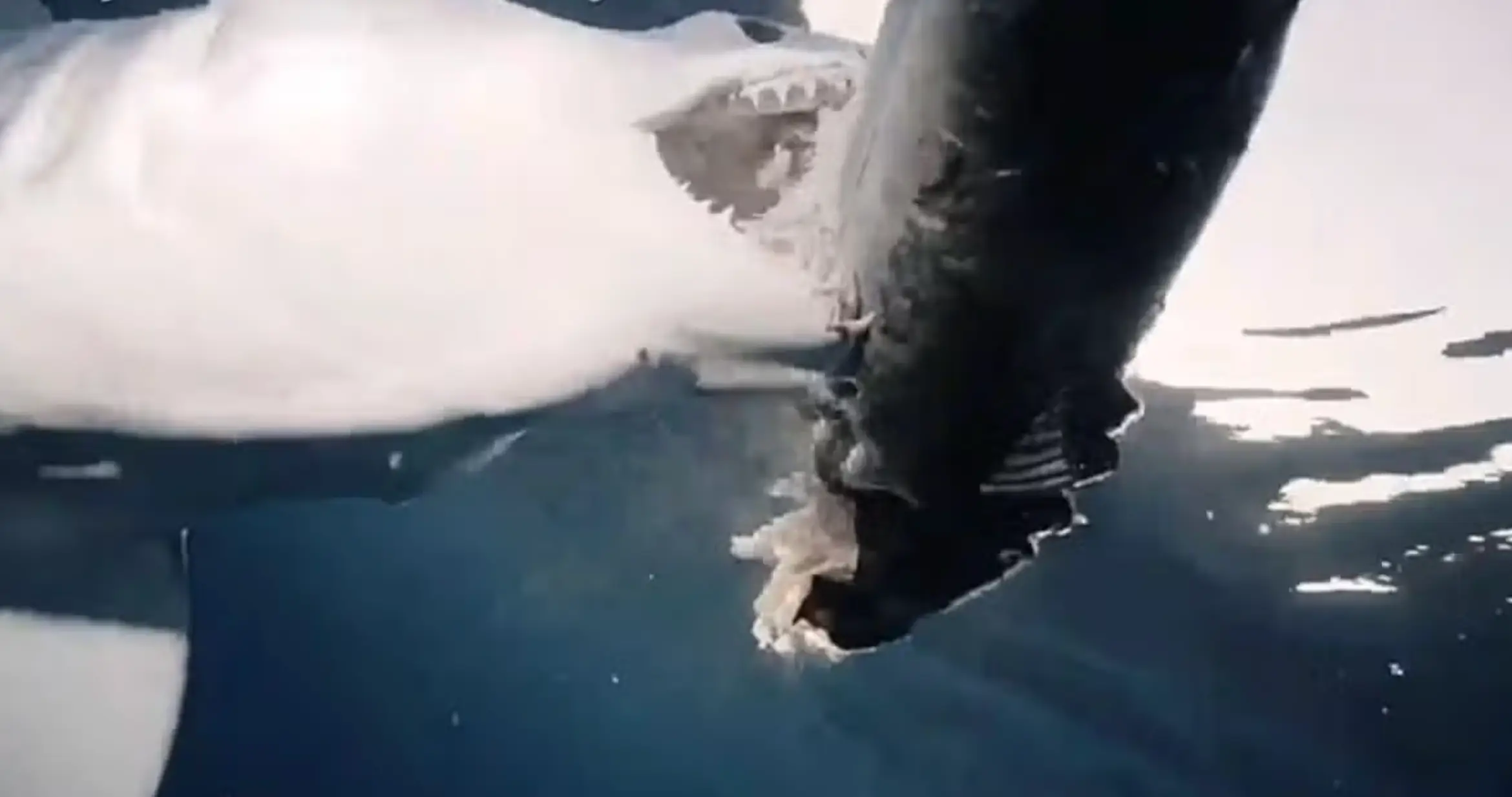
The huge shark has been hunting in the waters off the New York coast (The Discovery Channel)
O’Connell said: “In the past, this is the place you came to catch monster sharks. There are so many records right here off the shores of Montauk.
“All these monster sharks were completely fished out. They’re gone.
“But all the evidence we are seeing is telling me that all these big sharks might be back. I know those big sharks are out there, and we are going to find them.”
The team wanted to find the shark, tag it, and then collect tissue samples for radioactive testing.
He also floated a slightly more bizarre theory, claiming that decades-old barrels of nuclear waste could have an impact on the wildlife that lives in an underwater canyon off the coast, The Daily Mail reports.
“In the late 1960s, they dumped 15,000 barrels of nuclear waste in the Hudson Canyon,” O’Connell added.
“Ten years later, they went out to check on these barrels, and they were all leaking.”
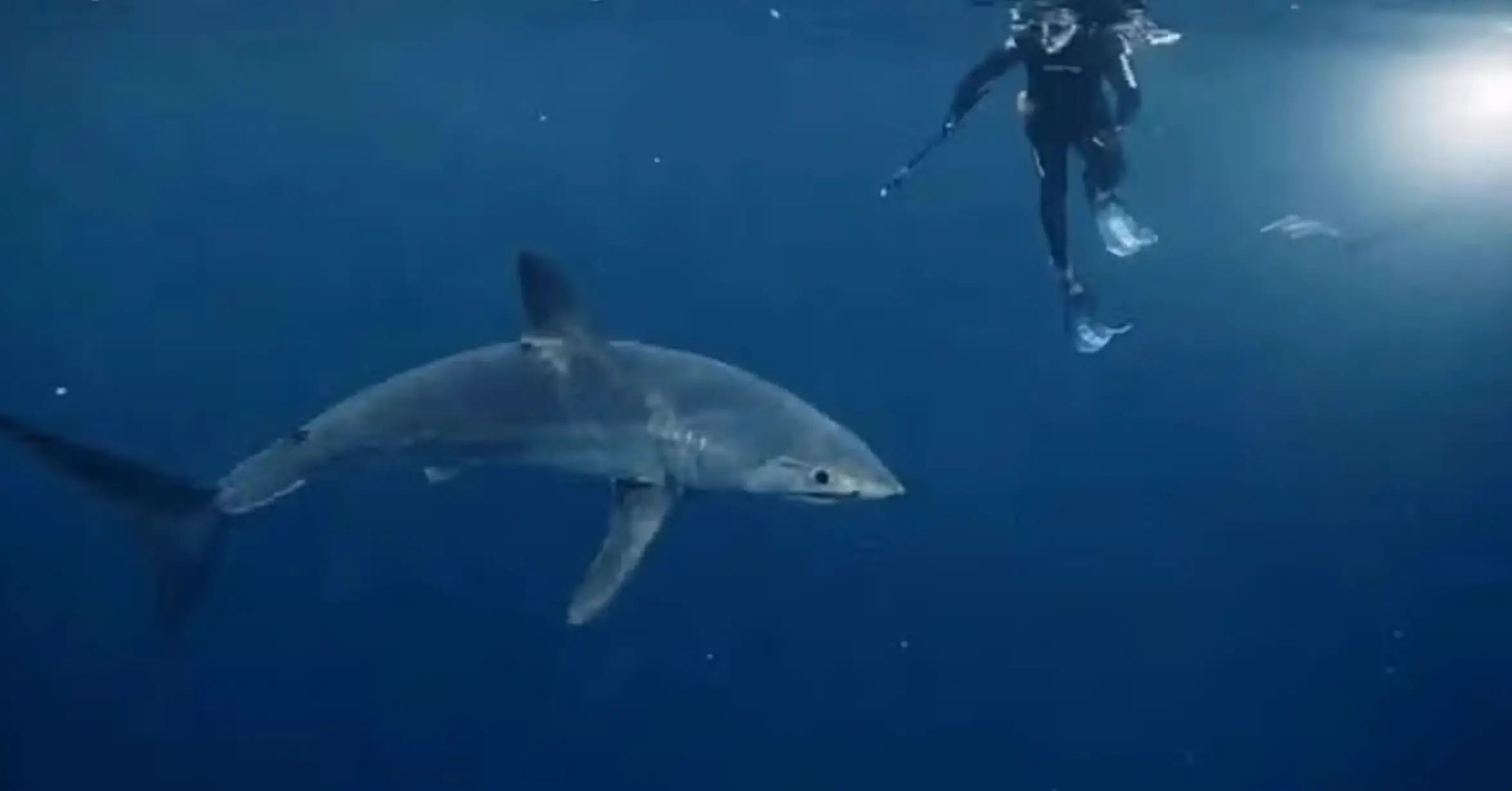
The giant mako shark prompted a wild theory (The Discovery Channel)
O’Connell noted that the theory was unproven and highly controversial, but continued: “Radioactive leaks could be impacting wildlife, even top predators.
“If animals are subjected to nuclear waste, this could cause genetic mutations and abnormal growth. If this predator is genetically altered, it could be faster, stronger and deadlier than any predator on Earth. We are calling it Sharkzilla.”
After a nail-biting search to track down Sharkzilla, O’Connell and the team eventually found her and were able to get samples for testing.
The test results ultimately revealed there was no evidence to suggest that Sharkzilla was radioactive, with the experts agreeing that she was most likely a pregnant mako shark who just happened to be blessed with exceptionally fast and extremely deadly hunting skills.
During the team’s underwater investigation, they discovered that the area is a breeding ground for makos, with the mothers likely going on big hunts to feed their young pups.
Mako sharks can grow up to more than 13-feet in length and weigh more than 1,250-pounds.
The species is classified as endangered by the International Union for Conservation of Nature.
Despite looking scary, mako sharks rarely come into contact with humans as they live far out in the open ocean, so attacks are very rare.
Between 1980 and 2024, there were just 10 recorded attacks, three of which were fatal.
Supa Ant Fire Blanket -Certified 1200F Extra Thick, Glow in The Dark | Glow in The Dark Emergency Supplies 500gsm, 0.5mm Thick Wearable Fire Blankets for Home. Emergency Blanket with Cape & Hood
$83.99 (as of October 7, 2026 00:56 GMT +00:00 - More infoProduct prices and availability are accurate as of the date/time indicated and are subject to change. Any price and availability information displayed on [relevant Amazon Site(s), as applicable] at the time of purchase will apply to the purchase of this product.)
RIVER OF GOODS Coastal 52 Inch Wooden Bead LED Ceiling Fan, Brown
(as of October 7, 2026 00:56 GMT +00:00 - More infoProduct prices and availability are accurate as of the date/time indicated and are subject to change. Any price and availability information displayed on [relevant Amazon Site(s), as applicable] at the time of purchase will apply to the purchase of this product.)
Joking Hazard Enlarged Box Empty Box for Card Storage
$12.00 (as of October 7, 2026 00:56 GMT +00:00 - More infoProduct prices and availability are accurate as of the date/time indicated and are subject to change. Any price and availability information displayed on [relevant Amazon Site(s), as applicable] at the time of purchase will apply to the purchase of this product.)
Skater Trainer Wheels - Beginners get Skateboard Tricks Fast, Safe and Fun | Viral accessory gift - Helps beginners stay excited about their new skateboard - Kids & parents love these
$28.99 (as of October 7, 2026 00:56 GMT +00:00 - More infoProduct prices and availability are accurate as of the date/time indicated and are subject to change. Any price and availability information displayed on [relevant Amazon Site(s), as applicable] at the time of purchase will apply to the purchase of this product.)