Inside the Deadly Ghost Town Where Breathing Feels Like Fire and the Earth Slowly Tears Itself Apart
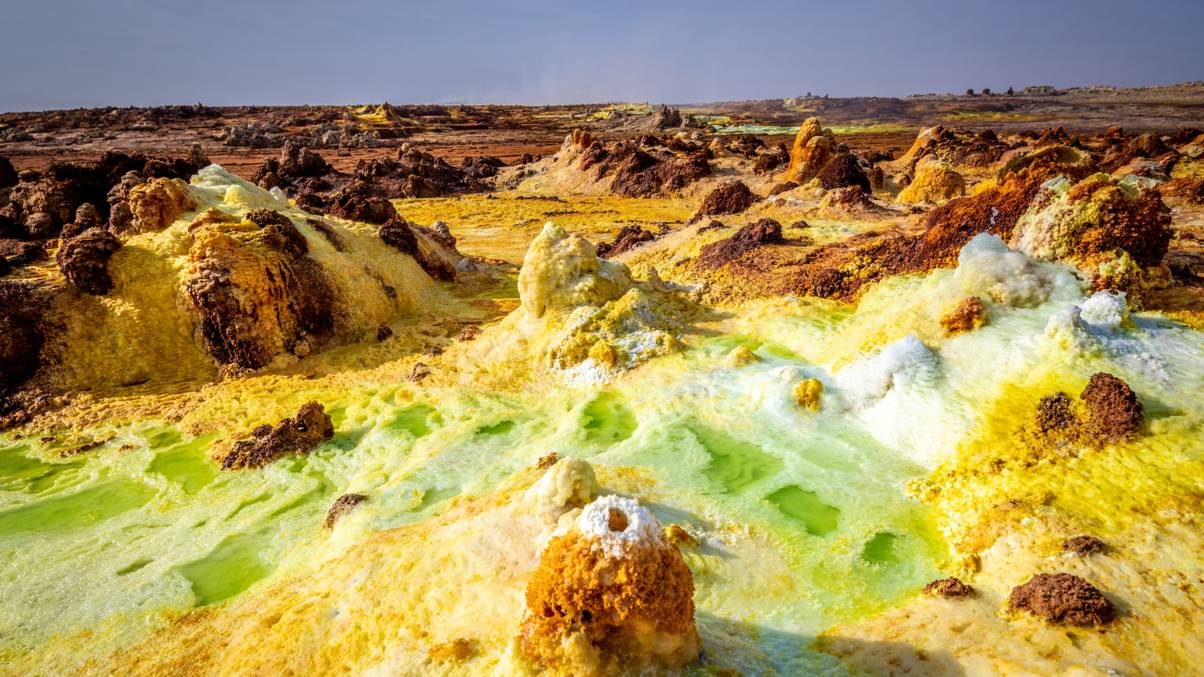
Imagine stepping into a place so hostile, the very air feels like it’s out to get you—where even the hardiest plants and critters wave a white flag. That’s exactly where a guy from the YouTube channel Fearless & Far decided to wander, donning gas masks like modern-day explorers in a sci-fi flick. We’re talking about Dallol in Ethiopia’s Danakil Depression—a geological battleground where intense heat, lethal chemicals, and shifting tectonic plates create a cocktail so toxic that not even the toughest microbes dare to crash the party. Life often surprises us by thriving in extreme spots—from deep-sea hydrothermal vents to icy tundras—but here, it seems Earth’s limits are drawing a hard line. Makes you wonder, if life can’t survive in this inferno on our own planet, what hope does it have out there on distant worlds? Dive into the deadly beauty of one of Earth’s most unforgiving environments and see what happens when nature pushes past all limits.
A man went on a trip to one of the most hostile environments on Earth, where the very air is hostile to life.
YouTube channel Fearless & Far made a trip to the spot, donning gas masks as they navigated the treacherous area.
There are plenty of places on earth where life has pushed back against the odds to survive in the most extreme circumstances.
Hydrothermal vents on the deep ocean floor pump chemicals from the deep inside the Earth into the cold water around them, and which despite seeming to be highly toxic are in fact oases of life in the deep ocean, showing just how resilient life can be.
But despite this, there is still a limit, as is shown by Dallol in Ethiopia, where lethal temperatures and geological processes create a lethal cocktail of chemicals and heat.
The YouTubers headed out there to take a look at the place, where hydrothermal activity has led to the mixture of salts, gases, and heat which proves so hostile to practically all life, never mind just human.
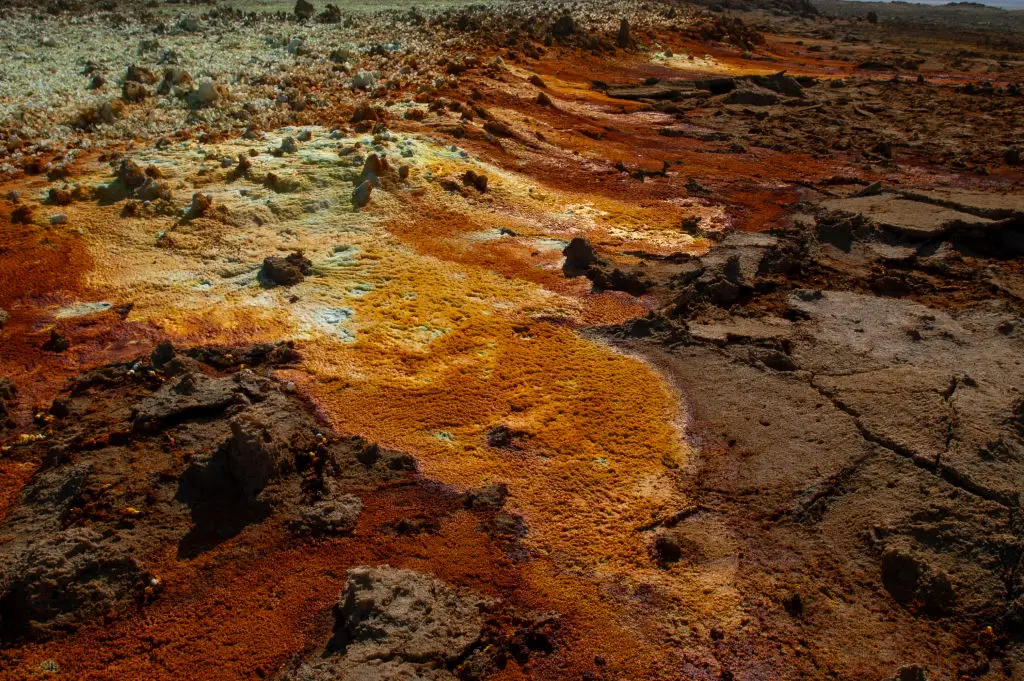
The area is incredibly hostile (Getty)
It’s located in the Ethiopian Danakil depression, which the YouTuber described as being on three tectonic plates moving away from each other, as though ‘the Earth is literally pulling itself apart’.
And if you wanted a picture of just how hostile this environment is, scientists even carried out scans on the area to see if any life at all could survive there.
Needless to say there are no large animals, no reptiles or mammals to be seen, though the YouTube crew said they did have to contend with some insects flying about.
But in the pools themselves surely there must be something on the microbial level? A particularly stubborn bacterium which insists on continuing to exist despite everything around it being completely hostile to life?
Scientists carried out tests, and in the toxic waters themselves, there is not even that.
Purificación López-García is a biologist at the French National Centre for Scientific Research, and a co-author on a study of the waters, and told CNN: “After analysing many more samples than in previous works, with adequate controls so as not to contaminate them and a well-calibrated methodology, we have verified that there’s no microbial life in these salty, hot and hyperacid pools or in the adjacent magnesium-rich brine lakes.”
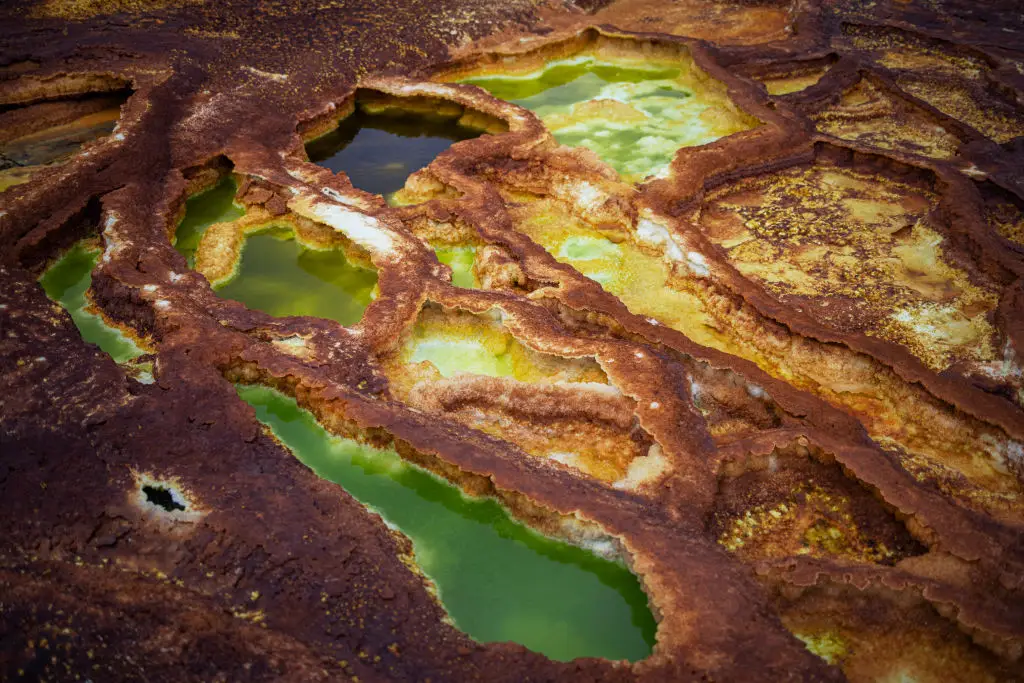
Scientists exmained the pools themselves, and found not even micro-organisms (MICHELE SPATARI/AFP via Getty Images)
That’s not to say that the area is entirely devoid of life though.
“What does exist is a great diversity of halophilic archaea (a type of primitive salt-loving microorganisms) in the desert and the saline canyons around the hydrothermal site, but neither in the hyperacid and hypersaline pools themselves, nor in the so-called Black and Yellow lakes of Dallol, where magnesium abounds,” said López-García.
“And all this despite the fact that microbial dispersion in this area, due to the wind and to human visitors, is intense.”
Extreme environments like Dallol can be useful to scientists trying to establish whether life is possible on other planets, as they show just how far life can be pushed to the limit and still persist.

RIVER OF GOODS Stained Glass Magna Carta LED Ceiling Fan - 52" L x 52" W - Tiffany Style - Flush Mount Ceiling Fan with Remote - Teal
(as of October 12, 2026 00:58 GMT +00:00 - More infoProduct prices and availability are accurate as of the date/time indicated and are subject to change. Any price and availability information displayed on [relevant Amazon Site(s), as applicable] at the time of purchase will apply to the purchase of this product.)
RIVER OF GOODS Coastal 52 Inch Wooden Bead LED Ceiling Fan, Cream
(as of October 12, 2026 00:58 GMT +00:00 - More infoProduct prices and availability are accurate as of the date/time indicated and are subject to change. Any price and availability information displayed on [relevant Amazon Site(s), as applicable] at the time of purchase will apply to the purchase of this product.)
RIVER OF GOODS Alabaster LED Mesh Caged Ceiling Fan - 52" L X 52" W - White/Oak Wood-Grain Blades
(as of October 12, 2026 00:58 GMT +00:00 - More infoProduct prices and availability are accurate as of the date/time indicated and are subject to change. Any price and availability information displayed on [relevant Amazon Site(s), as applicable] at the time of purchase will apply to the purchase of this product.)
Fire Blanket - 1500F CE Certified Emergency Fire Blanket for Home & Kitchen | 500GSM Fabric & 0.5mm Thick - 100% Fiberglass Fire Extinguisher for Car,Warehouse Office - 1pc (74x74 inches) by Supa Ant
$50.00 (as of October 12, 2026 00:58 GMT +00:00 - More infoProduct prices and availability are accurate as of the date/time indicated and are subject to change. Any price and availability information displayed on [relevant Amazon Site(s), as applicable] at the time of purchase will apply to the purchase of this product.)




















Post Comment