Living Near Golf Courses May Triple Your Risk of Parkinson’s—The Shocking Discovery Behind It

Ever wonder if living next to a perfectly manicured golf course comes with a hidden price? Sure, it’s all lush greens and the occasional rogue golf ball crashing through your window, but new science suggests there might be more sneaky trouble lurking beneath those fairways. A 2025 study from the Mayo Clinic and University of Kansas Medical Center dropped a bombshell: folks living just a mile or two from golf courses are nearly twice as likely to be diagnosed with Parkinson’s disease. Yep, you read that right. The culprit? It seems those pristine greens might be hiding a cocktail of pesticides and herbicides that could be slowly stirring up trouble for nearby residents. So, next time you admire that emerald expanse, you might want to pause and think—what invisible hazards are sprinklers really spreading?
Scientists found that the pesticides and herbicides used on golf courses may cause Parkinson’s disease in residents who live within several miles of the greens.

Jorge Zapata/UnsplashPesticides, herbicides, and fungicides used on golf course greens may be linked to Parkinson’s disease.
If you live near a golf course, you have more to worry about than flyaway balls breaking your window. According to a 2025 study from experts at the Mayo Clinic and University of Kansas Medical Center, among others, living near a golf course is associated with higher risks of Parkinson’s disease.
Breaking down the study in a viral social media post, Dr. Lee Howard explains that the research shows that people who live one to two miles from a golf course are 198 percent more likely to receive a Parkinson’s diagnosis in their lifetime than people who don’t reside near a golf course. The reason, he says, may have something to do with how those pristine greens are maintained.
Is There A Link Between Golf Courses And Parkinson’s Disease?
The 2025 study looked at data over 24 years. Using age- and sex-controlled measures across the population, researchers studied rates of Parkinson’s in people who live near golf courses. Specifically, they identified 419 people who were diagnosed with Parkinson’s disease and compared them with 5,113 controls.
They found that the closer someone lives to a golf course, the more likely they are to develop Parkinson’s. While the odds are highest closest to the golf course, they are still elevated several miles away. Using a linear model, this meant that for every mile further from a golf course someone lived, their odds of developing Parkinson’s went down by nine percent.
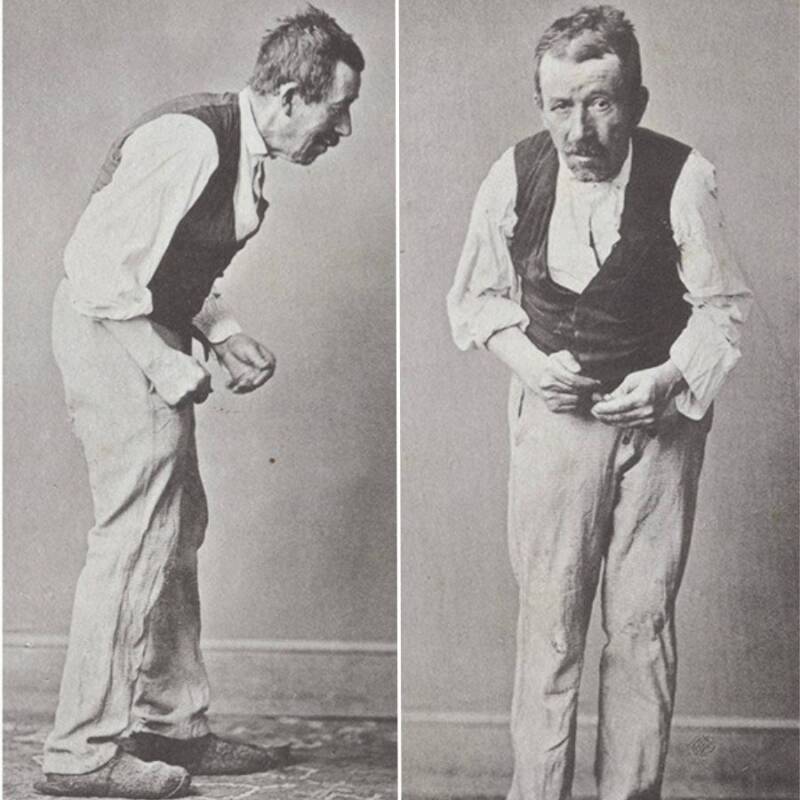
Public DomainA French patient named Pierre D. became one of the first people to be officially diagnosed with Parkinson’s disease in the 1870s.
Is there a reason for this? In Dr. Howard’s telling, it appears as though “golf courses are major meccas of toxins causing Parkinson’s disease.”
While the paper does not come to this conclusion directly, it does hint that toxins from the golf course may play a role in why this association was so pronounced.
To get an idea of what may be causing this correlation, researchers looked not only at the distance one lived from a golf course, but also at the source of their water. Those who lived within water service areas with a golf course had almost double the odds of developing Parkinson’s compared with those who lived in water service areas without golf courses. This could be consistent with pesticide exposure through groundwater, though that does not definitively explain what caused the cases of Parkinson’s.
However, this research isn’t the only study that has linked Parkinson’s disease to pesticides.
Is There A Link Between Pesticides And Parkinson’s?
One of the limits of a study like this is Parkinson’s itself. The disease may begin biologically 10 to 15 years before someone is diagnosed, and there are numerous other factors at play that could not be measured in such a study.
That said, other studies have linked pesticide exposure and Parkinson’s disease.
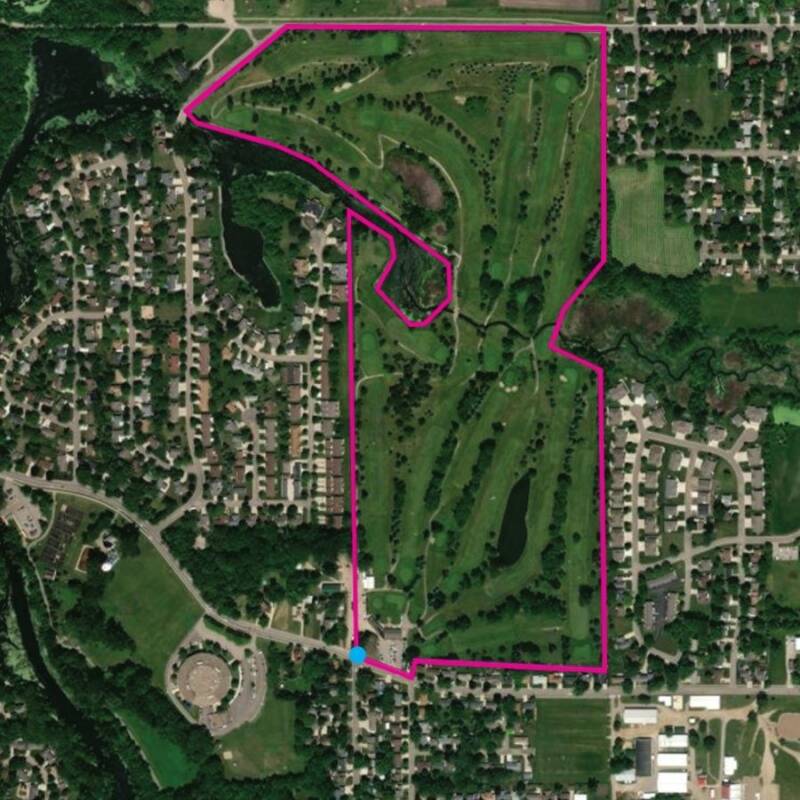
Krzyzanowski, et al./JAMA Network Open (2025)One of the golf courses analyzed in the study.
The study notes that chlorpyrifos, MCPP, 2,4-D, maneb, organophosphates, and organochlorines can all be found on golf courses. Some of these pesticides, herbicides, and fungicides have previously been linked to Parkinson’s.
For example, a December 2025 study compared 829 people with Parkinson’s to 824 people without the disease. From there, they estimated how much chlorpyrifos exposure they’d had based on where they lived and worked. People with long-term residential exposure had 2.5 times the risk of developing Parkinson’s.
Another study from 2009 compared 368 people who had recently developed Parkinson’s to 341 people without the disease. Using California pesticide use records and maps, researchers estimated whether maneb or paraquat had been sprayed within 500 meters of their homes between 1974 and 1999.

Courtney Cook/UnsplashFurther study is needed to confirm a definitive link between golf courses and Parkinson’s disease.
The study concluded that exposure to either maneb or paraquat alone was associated with about 2.3 times the odds of developing Parkinson’s, while exposure to both together was associated with roughly 4.2 times the odds. It should be noted that the EPA says paraquat is not to be used on golf courses.
RIVER OF GOODS Stained Glass Magna Carta LED Ceiling Fan - 52" L x 52" W - Tiffany Style - Flush Mount Ceiling Fan with Remote - Teal
(as of October 25, 2026 01:02 GMT +00:00 - More infoProduct prices and availability are accurate as of the date/time indicated and are subject to change. Any price and availability information displayed on [relevant Amazon Site(s), as applicable] at the time of purchase will apply to the purchase of this product.)
KiddyCare Diaper Caddy Organizer Cart for Nursery Baby Basket Gift for Boy/Girl | Diaper Caddy for Changing Table Basket Organizer with Dividers | Caddy for Baby Stuff Breast Pump Caddy - Regular
$9.99 (as of October 25, 2026 01:02 GMT +00:00 - More infoProduct prices and availability are accurate as of the date/time indicated and are subject to change. Any price and availability information displayed on [relevant Amazon Site(s), as applicable] at the time of purchase will apply to the purchase of this product.)
RIVER OF GOODS Coastal 52 Inch Wooden Bead LED Ceiling Fan, Brown
(as of October 25, 2026 01:02 GMT +00:00 - More infoProduct prices and availability are accurate as of the date/time indicated and are subject to change. Any price and availability information displayed on [relevant Amazon Site(s), as applicable] at the time of purchase will apply to the purchase of this product.)
Kinsa Smart,Fever, Digital Medical Baby, Kid and Adult Termometro - Accurate, Fast, FDA Cleared Thermometer for Oral, Armpit or Rectal Temperature Reading - QuickCare
$18.94 (as of October 25, 2026 01:02 GMT +00:00 - More infoProduct prices and availability are accurate as of the date/time indicated and are subject to change. Any price and availability information displayed on [relevant Amazon Site(s), as applicable] at the time of purchase will apply to the purchase of this product.)