Man’s First Job Interview in Nearly Four Decades Turns Bizarre—What He Said Will Shock You
Ever wonder if getting a job today feels like trying to win a game where the rules keep changing and half the players don’t even know what game they’re playing? Well, welcome to the wild ride of the modern job market, where layoffs fly faster than you can say “AI,” and if you’re not practically besties with technology, you might as well be invisible. For those of us with a few more birthdays under our belts, landing a job these days can feel like trying to outrun a cheetah with flip-flops. But here’s the kicker—even if you’re seasoned and skilled, one wrong word at that interview can slam the door shut faster than you can blink. That’s exactly what happened to one man who dusted off his old resume for the first time in nearly four decades—and ended up embodying every “boomer” stereotype in the book. Curious how this bizarre tale unfolded and why ageism still throws shade on older job seekers? Buckle up and dive into the story that’s got the internet buzzing—plus learn some real talk on navigating the elephant in the room. LEARN MORE.
Finding a job nowadays is arguably harder than ever. Layoffs are happening left and right, the job market is incredibly competitive, and if you haven’t accepted AI into your life, you’re going to be seen as obsolete. So landing a new position is even more challenging for people from older generations, who now have to compete with recent college grads who have been using computers since before they could talk.
But no matter how much experience you have, you still have to be a polite and considerate candidate. Otherwise, you’ll ruin your chances the second you open your mouth. One man learned this lesson the hard way after attending his first job interview in decades. Below, you’ll find the full story that his daughter-in-law shared online, as well as some of the replies invested readers left her.
Finding a job for older adults is significantly harder than for younger people

Image credits: Sora Shimazaki (not the actual photo)
This son set up an interview for his father at the company where he works to help, which he completely wasted with his Boomer mindset

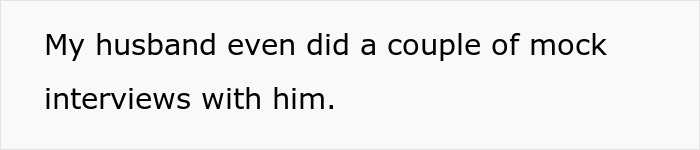
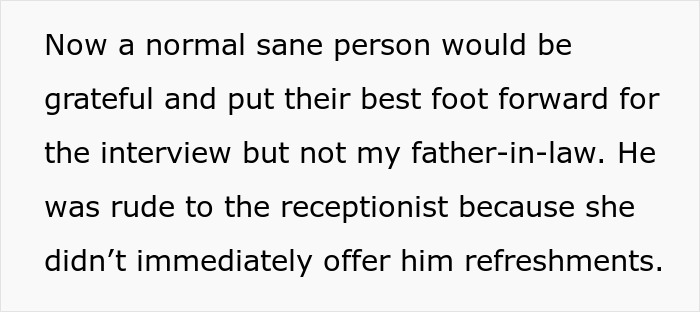
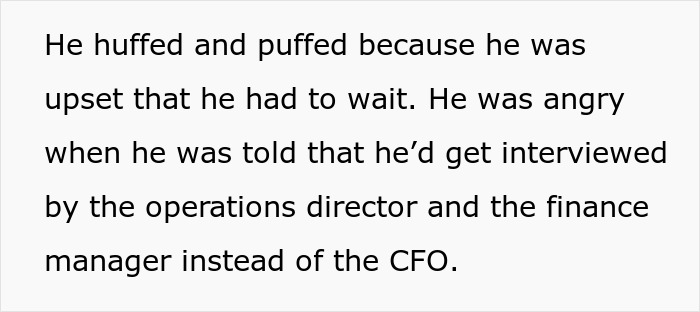

Image credits: Gustavo Fring (not the actual photo)
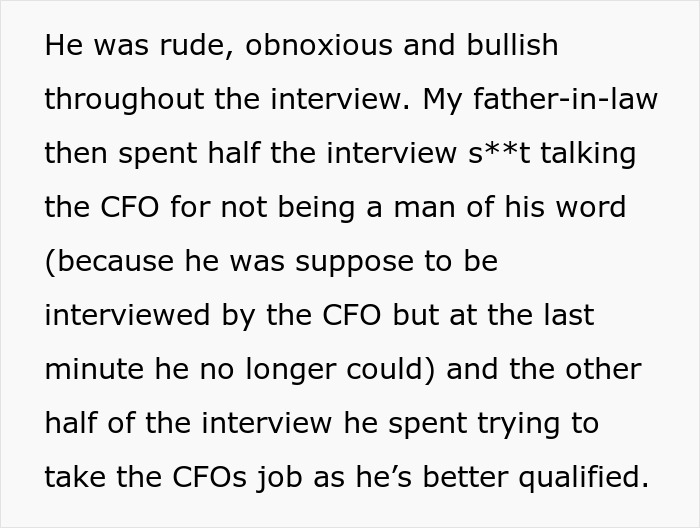
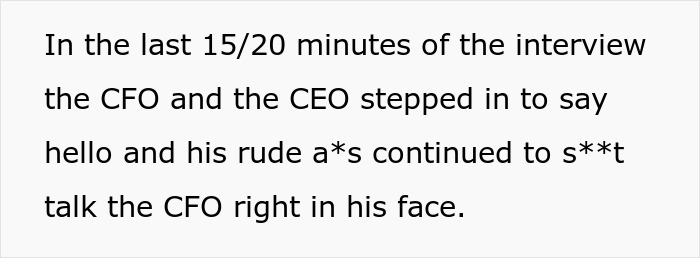
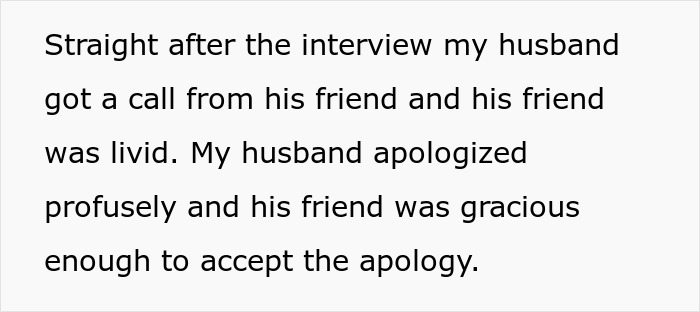
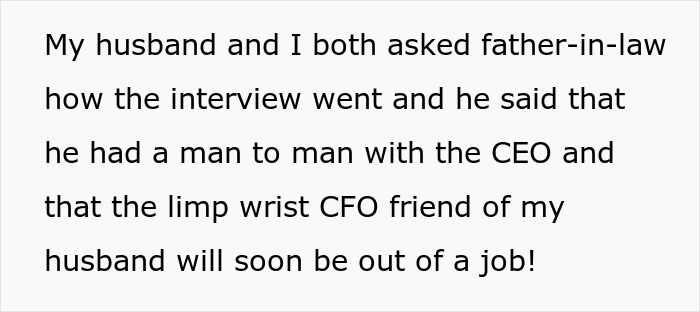
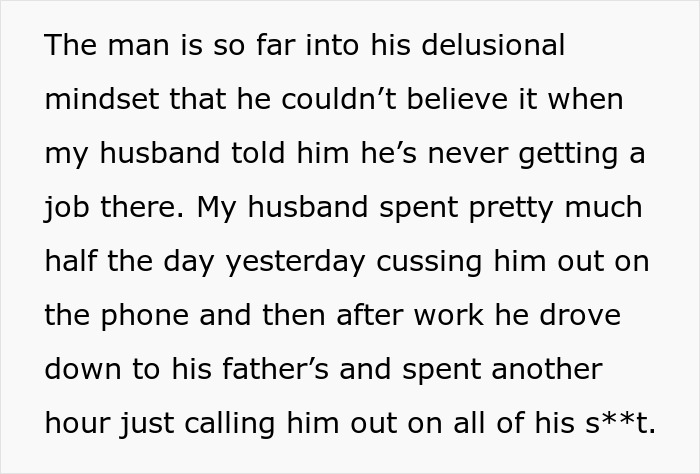
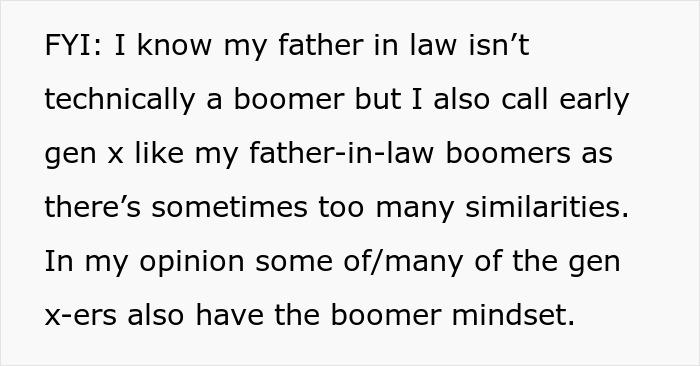
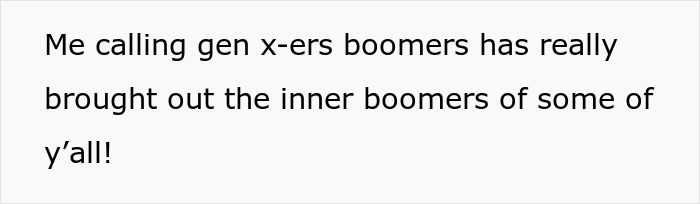
Image source: dat_woman_over_there
The odds that an older employee would be employed are 42% lower than for young people

Image credits: SHVETS production (not the actual photo)
Half of people in their 50s lose their jobs at least once, and if an older person is laid off, they are significantly more likely to suffer long-term unemployment than other age groups. In fact, the odds that an older employee would be employed are 42% lower than for younger people.
Age discrimination is a big part of it, with 74% claiming that they have seen or experienced it. This number is at its highest since the American Association of Retired Persons started tracking this data in 2003. Even though the Age Discrimination in Employment Act protects U.S. workers against discrimination based on age, the odds are often against older job seekers.
One of these odds is automatic tracking systems that sort résumés according to dates and missing skills. If, for example, digital skills aren’t listed, their CV can be immediately rejected, even though these abilities are easily taught.
In addition, older workers may be at a disadvantage, as some might feel less confident in finding work, especially because of their age. Therefore, they might put less effort into their search, thinking, “Why bother? No one’s going to hire me anyway.”
To find a job, some older adults try to hide any signs of their maturity and age

Image credits: RDNE Stock project (not the actual photo)
One piece of advice that older job seekers might get to be more successful in their search is to hide any suggestions of their maturity and age. In one study, researchers sent out 8,000 fake résumés to hiring managers and tracked their eye movements. It was found that their eyes were pausing at years of employment history and the year potential workers got their education. In general, they spent more time looking at the CVs of younger individuals.
For this reason, some don’t even bother applying to positions where they ask for a graduation date in their online job offers or even avoid including graduation and work dates in their résumés. Others purposely color their hair before interviews and put their social media and information on their CVs to show employers that they’re up to date with modern trends.
Another useful recommendation is to apply to companies committed to hiring older workers. More than 1,000 organizations, like Humana, Microsoft, Marriott International, and McDonald’s, have signed on to the AARP Employer Pledge program and promised to boost older employees reemployment.
Some red flags of age-exclusive workplaces are if their website and advertisements only showcase employees in their 20s and 30s. And if a hiring person asks too many questions about age—either in an application or an interview—that should be considered a bad sign.
The Door Balancer Eliminates The Need for Door Props, Door Stops and Door Wedges
(as of October 14, 2026 00:59 GMT +00:00 - More infoProduct prices and availability are accurate as of the date/time indicated and are subject to change. Any price and availability information displayed on [relevant Amazon Site(s), as applicable] at the time of purchase will apply to the purchase of this product.)
Fire Blanket - 1500F CE Certified Emergency Fire Blanket for Home & Kitchen | 500GSM Fabric & 0.5mm Thick - 100% Fiberglass Fire Extinguisher for Car,Warehouse Office - 5pc (40"x40") by Supa Ant
$92.95 (as of October 14, 2026 00:59 GMT +00:00 - More infoProduct prices and availability are accurate as of the date/time indicated and are subject to change. Any price and availability information displayed on [relevant Amazon Site(s), as applicable] at the time of purchase will apply to the purchase of this product.)
KiddyCare Diaper Caddy Organizer Cart for Nursery Baby Basket Gift for Boy/Girl | Diaper Caddy for Changing Table Basket Organizer with Dividers | Caddy for Baby Stuff Breast Pump Caddy - Regular
$8.95 (as of October 14, 2026 00:59 GMT +00:00 - More infoProduct prices and availability are accurate as of the date/time indicated and are subject to change. Any price and availability information displayed on [relevant Amazon Site(s), as applicable] at the time of purchase will apply to the purchase of this product.)
White Leaf Baby Food Pouches, Toddler Snack, Mango + Carrot + Banana + Pear | 24 Pack, Organic No Added Sugar, Non-GMO, BPA-Free Regeneratively Farmed, Squeeze Puree Smoothie Pouch for Adults & Children
$69.95 (as of October 14, 2026 00:59 GMT +00:00 - More infoProduct prices and availability are accurate as of the date/time indicated and are subject to change. Any price and availability information displayed on [relevant Amazon Site(s), as applicable] at the time of purchase will apply to the purchase of this product.)