Massive Explosion of 4,500kg Chemical Stockpile Sparks Fears of Toxic Dust Threatening US Communities

Ever wonder what happens when you mix nearly five tons of explosives with a side of public health concerns? Well, the US Army just rolled up its sleeves and blew the question right out of the park—literally. At the Iowa Army Ammunition Plant in Middletown, a controlled detonation of over 9,700 pounds of barely-holding-it-together lead azide exploded Wednesday morning. Now, before you start picturing a mad scientist’s lab, remember—this wasn’t some reckless fireworks show. Military experts declared it the only safe move after the barrels’ rapid decay over eight months made transporting or neutralizing the volatile stuff a dangerous gamble. But here’s the kicker: while they aimed for safety, the operation stirred up a hornet’s nest of worry about toxic lead particles soaring through the air—because, yeah, lead is about as friendly as a rattlesnake in a sleeping bag, especially for kids and expectant moms. It’s a delicate dance between explosive urgency and environmental caution, and just maybe, it’s the kind of problem you don’t want to let linger. Curious about the fallout and the high-stakes decision-making behind the blast?
The US Army has detonated nearly five tons of toxic explosives in Iowa, despite public health and safety concerns.
The controlled explosion took place at around 10am local time on Wednesday (25 November) at the Iowa Army Ammunition Plant in Middletown.
A routine safety inspection identified severe degradation affecting 68 barrels containing more than 9,700 pounds (4.54 metric tonnes) of lead azide, a highly sensitive explosive used in military ammunition.
Military officials said the deteriorating condition of the material made transporting or chemically neutralising the explosives too dangerous, leaving an on-site detonation as the only viable option.
“The barrels of lead azide have deteriorated rapidly over the past eight months,” said Colonel Aaron Teller, commander of the 71st Explosive Ordnance Disposal group.
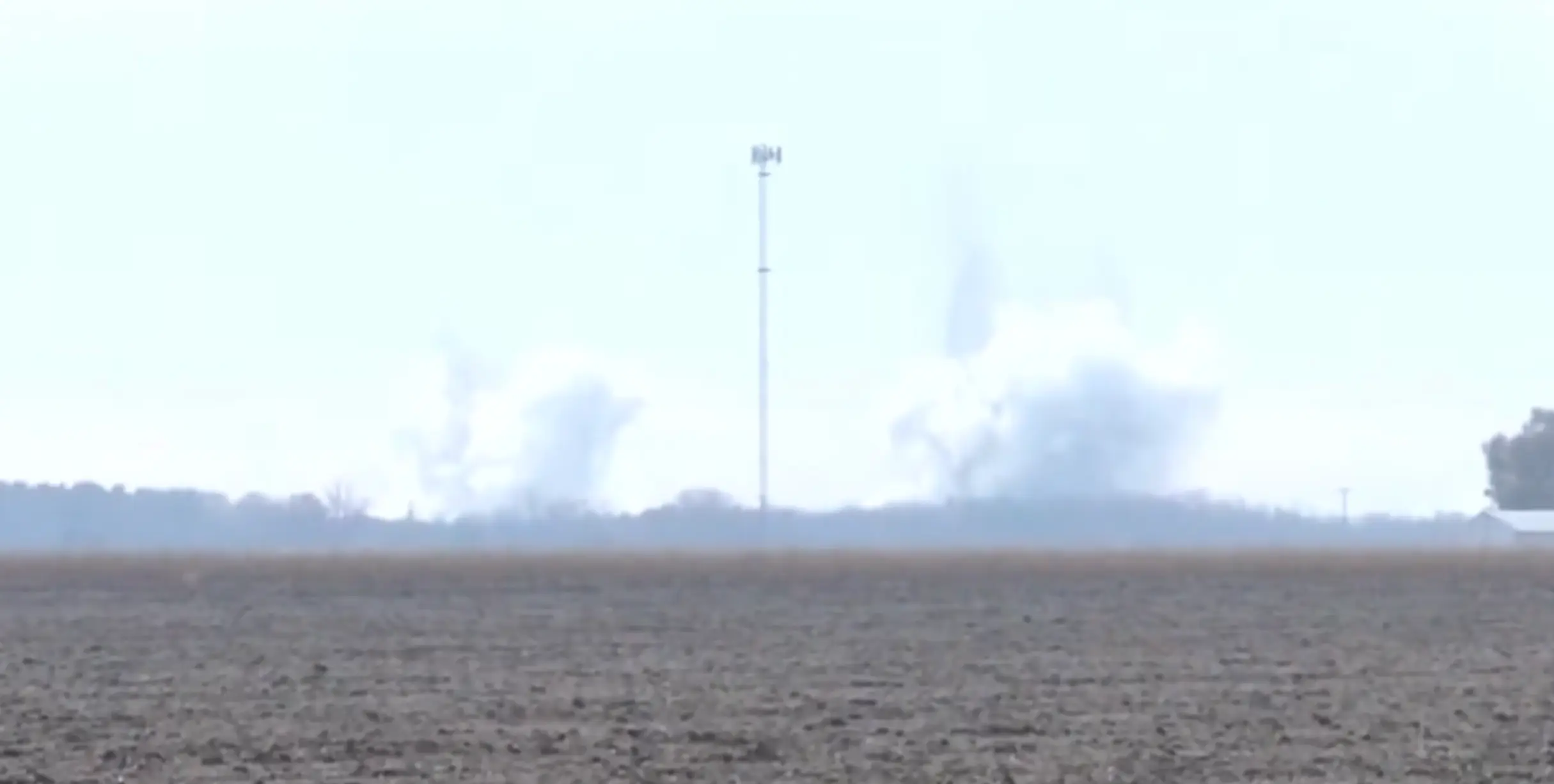
The US Army carried out the controlled detonation on Wednesday (CSPAN)
US President Donald Trump backed the controlled detonation on Monday but initially ordered the military to delay the operation until a federal appeals court and Iowa’s incoming governor, Rob Sand, had given their approval.
Writing on Truth Social, Trump said the controlled explosion was the safer option and warned of potentially devastating consequences if the unstable explosives were left in storage.
“I feel the proper course is to get rid of this longterm problem,” he said on Truth.
“Inaction is no longer an option,” added Major General Eric Shirley, commanding general of US Army Sustainment Command.

Two explosions occurred inside the concrete storage bunkers (CSPAN)
However, the operation has sparked widespread concern over the potential release of toxic lead particles into the atmosphere.
Lead is a powerful neurotoxin that can cause permanent damage to the brain and nervous system, with young children and pregnant women particularly vulnerable to exposure.
Forecasts published ahead of the explosion suggested airborne particles could travel up to 100 miles southwest of the facility, potentially reaching communities in northern Missouri.
“Lead azide is a very sensitive primary explosive. It’s very sensitive to heat, shock, and friction,” said Robert Cekada, the Bureau of Alcohol, Tobacco, Firearms & Explosives (ATF) director.
“Everyone that we’ve spoken to, through their experience, has determined that this is the only safe path forward for not only the surrounding community of Middletown and the surrounding areas, but also the personnel that are tasked with mitigating this threat here on base. Lead azide is a very, very dangerous explosive, and what we’re concerned with now, the fluctuation in temperatures is just as dangerous as the freezing temperatures. It’s just a matter of time when we have an uncontrolled detonation.”

1MORE Triple Driver In-Ear Headphones - Silver - Wired - Adult - In Ear - 18 grams - 90 days limited warranty
(as of November 26, 2026 01:17 GMT +00:00 - More infoProduct prices and availability are accurate as of the date/time indicated and are subject to change. Any price and availability information displayed on [relevant Amazon Site(s), as applicable] at the time of purchase will apply to the purchase of this product.)
RIVER OF GOODS Alabaster LED Mesh Caged Ceiling Fan - 52" L X 52" W - White/Oak Wood-Grain Blades
(as of November 26, 2026 01:17 GMT +00:00 - More infoProduct prices and availability are accurate as of the date/time indicated and are subject to change. Any price and availability information displayed on [relevant Amazon Site(s), as applicable] at the time of purchase will apply to the purchase of this product.)
RIVER OF GOODS Coastal 52 Inch Wooden Bead LED Ceiling Fan, Cream
(as of November 26, 2026 01:17 GMT +00:00 - More infoProduct prices and availability are accurate as of the date/time indicated and are subject to change. Any price and availability information displayed on [relevant Amazon Site(s), as applicable] at the time of purchase will apply to the purchase of this product.)
1MORE Triple Driver in-Ear Earphones Hi-Res Headphones with High Resolution, Bass Driven Sound, MEMS Mic, in-Line Remote, High Fidelity for Smartphones/PC/Tablet - Silver
(as of November 26, 2026 01:17 GMT +00:00 - More infoProduct prices and availability are accurate as of the date/time indicated and are subject to change. Any price and availability information displayed on [relevant Amazon Site(s), as applicable] at the time of purchase will apply to the purchase of this product.)




















Post Comment