Meet the 60-Foot Ocean Predator With Bone-Crushing Jaws That Dominated the Cretaceous Seas—And We Just Discovered It.
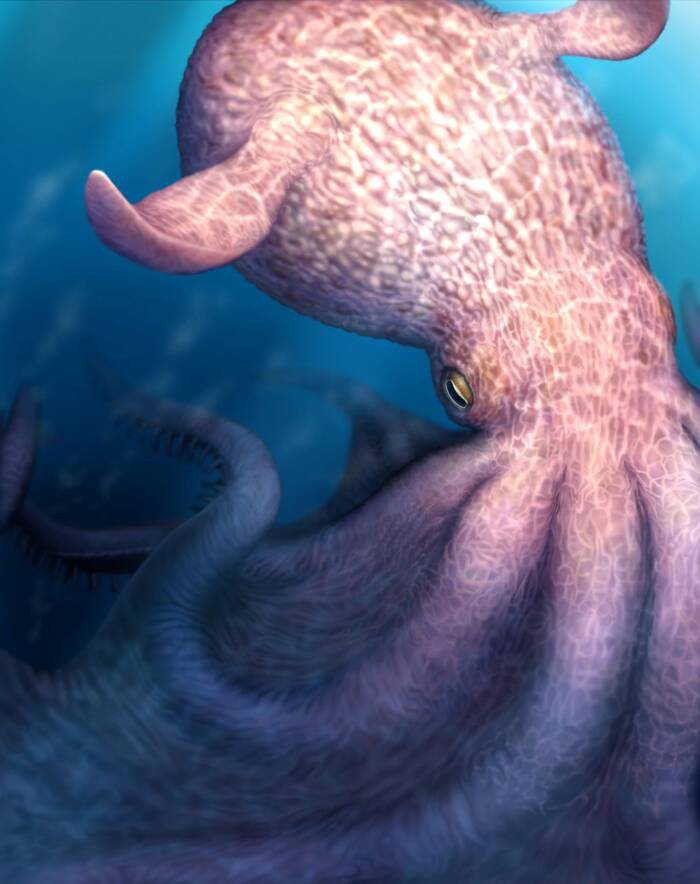
Imagine a sea monster so colossal that it rivals the legendary megalodon—a creature so massive it could easily wrap its tentacles around a city bus and still have room to spare. Meet Nanaimoteuthis haggarti, the prehistoric giant octopus that swam the ancient oceans near what we now call Japan and western Canada some 72 million years ago. Forget bedtime stories about the Kraken; this was the real deal, an apex predator with jaws capable of crunching through bone and a size that would make even the fiercest sharks quake in their fins. Ever wondered what lurked beneath the waves before the age of dinosaurs’ exit interview? This octopus not only survived but ruled, turning the seas into its personal hunting ground. Intrigued by such monstrous myths turned scientific marvel? Buckle up, because the tale of Nanaimoteuthis haggarti is as jaw-dropping as the fossilized beak that tipped off researchers to its staggering existence. LEARN MORE
Nanaimoteuthis haggarti inhabited the oceans near present-day Japan and western Canada until about 72 million years ago, and measured up to 62 feet long — as large as most megalodons.
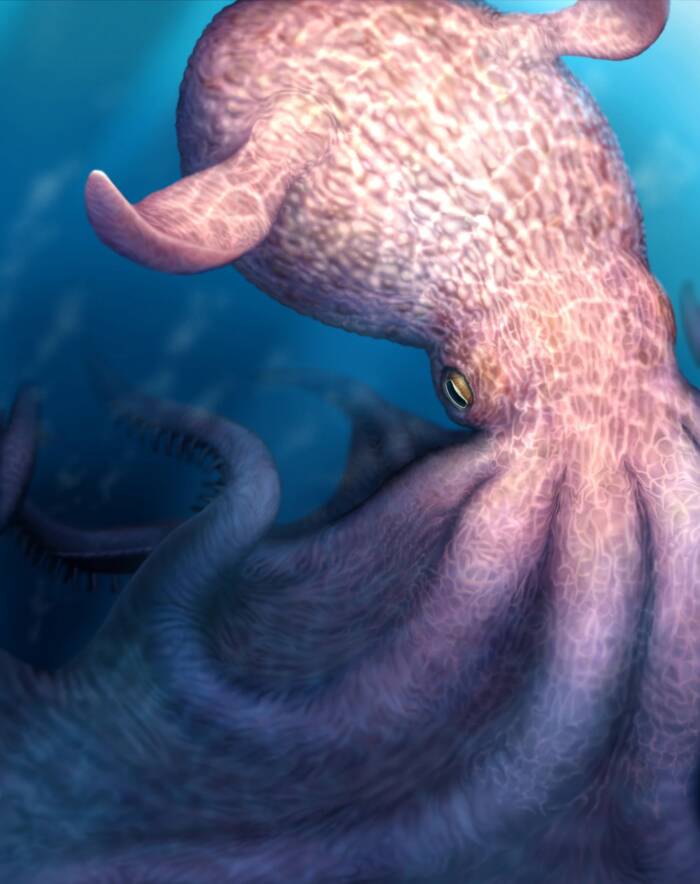
Yohei Utsuki/Department of Earth and Planetary Sciences, Hokkaido UniversityAn illustration of the fearsome apex predator known as Nanaimoteuthis haggarti.
Stories have long been told about the Kraken, the fearsome giant sea monster of centuries-old myth that could wrap its tentacles around an entire ship and drown scores of sailors in the process. And while the Kraken may be make-believe, a group of scientists have just made new findings about a prehistoric giant octopus from the Late Cretaceous that could grow to similarly monstrous proportions.
The octopus, known as Nanaimoteuthis haggarti, lived between 86 and 72 million years ago. Scientists now believe that it could grow to be 62 feet long — bigger than the average city bus and as large as most megalodons. What’s more, researchers also suggest it was an apex predator capable of devouring sharks using jaws that could crush bone.
New Analysis Of Fossils Taken From These Giant Prehistoric Octopuses
The new insights about Nanaimoteuthis haggarti, which were detailed in a study published in Science, were made by a group of researchers from Japan and Germany.
They set out to study the size of octopuses during the Cretaceous Period (145 million to 66 million years ago), but needed to be creative in their approach. This is because soft-bodied invertebrates like octopuses leave little trace in the fossil record. So, researchers instead looked for these creatures’ hard beaks, which are more able to become fossilized.
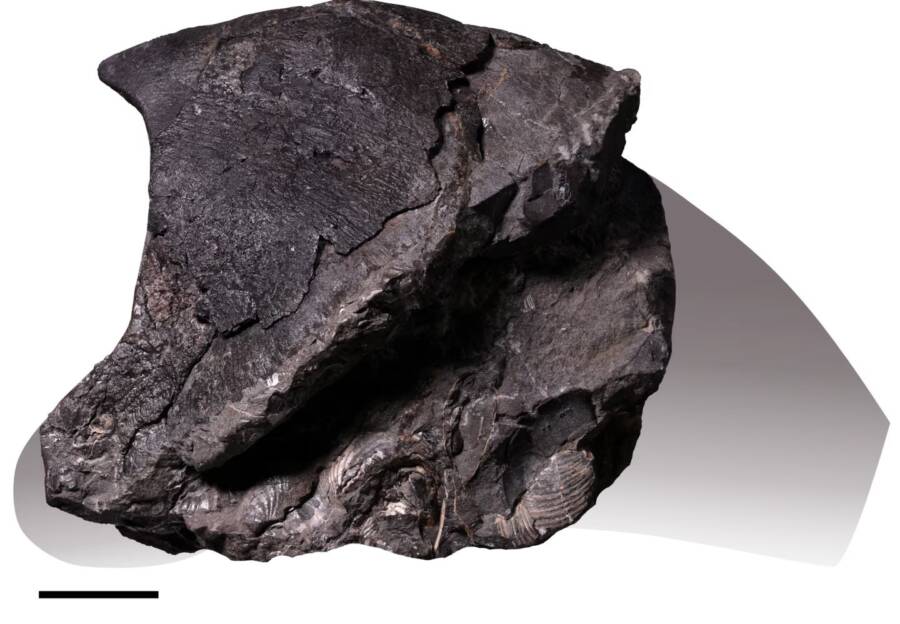
Hokkaido UniversityThe lower jaw of an adult N. Haggarti octopus, which suggests that the octopus itself could grow to an impressive size, up to 62 feet in length.
Paleontologists started with 15 fossilized beaks from Late Cretaceous deposits in Japan and Vancouver Island in Canada, and also used artificial intelligence to detect fossilized octopus jaws in Japanese sediment samples. With this method, they were able to identify 12 additional jaws, all of which they examined to determine the size of the octopuses themselves.
What they found was truly astounding. The researchers identified two species of octopus (previously thought to be vampire squids) known as N. jeletzkyi and N. haggarti. N. jeletzkyi lived roughly 100 and 72 million years ago, and was about the same size as today’s giant Pacific octopus (roughly 10 feet to 25 feet long). But N. haggarti, which lived between 86 and 72 million years ago, was even bigger: researchers believe that it could have grown to between 23 to 62 feet, making it one of the largest marine animals of its day.
These new insights about the size of octopuses during the Late Cretaceous period are impressive. But scientists are also intrigued by the jaws themselves, which suggest that N. haggarti was an apex predator.
How Nanaimoteuthis haggarti Dominated Ocean Life Tens Of Millions Of Years Ago
As part of their study, the researchers also looked at the octopuses’ jaws. They found that while the jaws of younger octopuses were intact, the jaws of the older octopuses were badly chipped and cracked. According to the study, some of the jaws had lost up to 10 percent of their total length.
This suggests that the octopuses were capable of eating “hard prey” consisting of shells and bones. This prey could have included ammonites and bony fish, as well as even larger marine animals like sharks, plesiosaurs, and mosasaurs.
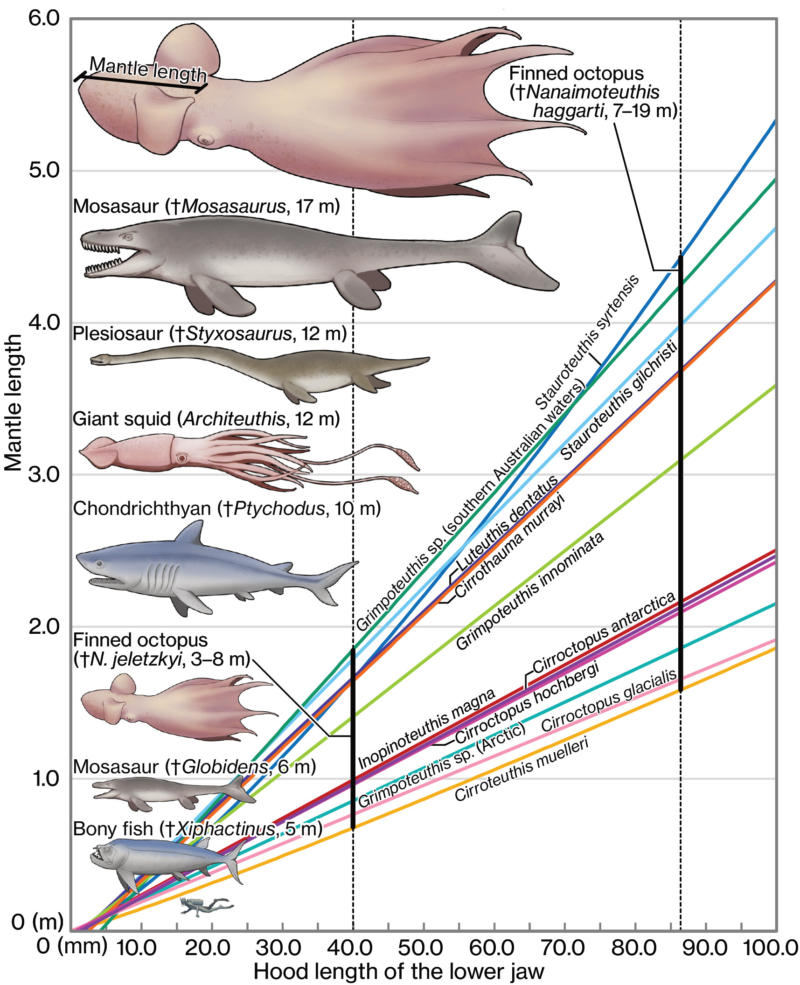
ScienceThe enormous size of Nanaimoteuthis as compared to those of other formidable sea creatures from both the prehistoric era and the present.
“This extensive wear suggests dynamic crushing of hard skeletons,” the researchers wrote. “With a calculated total length of [23 to 62 feet], these octopuses may represent the largest invertebrates thus described, rivaling contemporaneous giant marine reptiles. Our findings show that powerful jaws, and the loss of superficial skeletons, convergently transformed cephalopods and marine vertebrates into huge, intelligent predators.”

The Door Balancer Eliminates The Need for Door Props, Door Stops and Door Wedges
(as of October 24, 2026 01:02 GMT +00:00 - More infoProduct prices and availability are accurate as of the date/time indicated and are subject to change. Any price and availability information displayed on [relevant Amazon Site(s), as applicable] at the time of purchase will apply to the purchase of this product.)
1MORE Triple Driver in-Ear Earphones Hi-Res Headphones with High Resolution, Bass Driven Sound, MEMS Mic, in-Line Remote, High Fidelity for Smartphones/PC/Tablet - Silver
$69.99 (as of October 24, 2026 01:02 GMT +00:00 - More infoProduct prices and availability are accurate as of the date/time indicated and are subject to change. Any price and availability information displayed on [relevant Amazon Site(s), as applicable] at the time of purchase will apply to the purchase of this product.)
Supa Ant Canning Supplies Starter Kit (Food Grade) - Canning Kits Set for Beginners - 3 Pcs. Including Wide Mouth Jar Funnel, Magnetic Lid Lifter, Stainless Steel Jar Lifter (Assembled in USA) Blue
$9.99 (as of October 24, 2026 01:02 GMT +00:00 - More infoProduct prices and availability are accurate as of the date/time indicated and are subject to change. Any price and availability information displayed on [relevant Amazon Site(s), as applicable] at the time of purchase will apply to the purchase of this product.)
RIVER OF GOODS LED Boho Ceiling Fan with Hand Woven Brown/Natural Rope - Macrame Knot Work and Hemp Rope Style Eclectic Cottage Decor - 52" L x 52" W - Rich Barnwood/Light Driftwood Fan Blades
(as of October 24, 2026 01:02 GMT +00:00 - More infoProduct prices and availability are accurate as of the date/time indicated and are subject to change. Any price and availability information displayed on [relevant Amazon Site(s), as applicable] at the time of purchase will apply to the purchase of this product.)