Mystery Deepens: 37 Souls Entombed in Enigmatic Giant ‘Death Jar’ Baffle Archaeologists
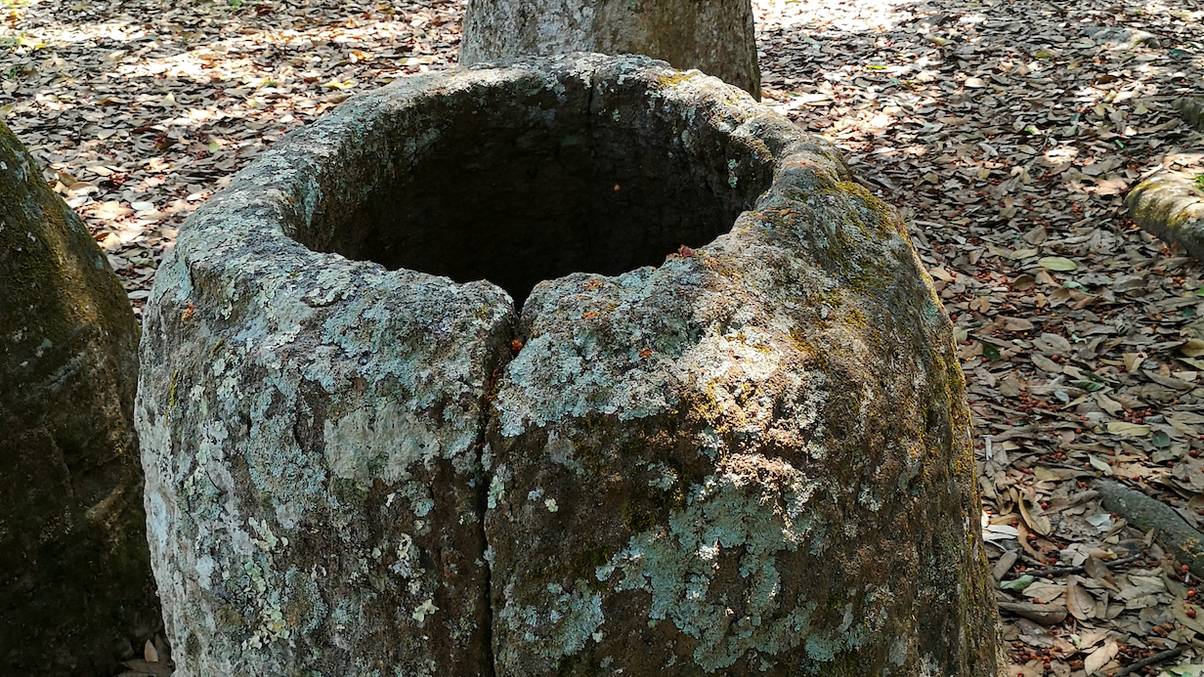
Archaeologists have uncovered something so bizarre it even made them pause and scratch their heads—imagine a burial ground where people were laid to rest not in coffins, but inside giant stone jars. Nestled in the puzzling Xieng Khouang Plateau of northern Laos, the Plain of Jars has been baffling experts for over a century. Initially shrouded in mystery, these colossal jars—some towering several feet high—have now been revealed to hold secrets far more intricate than anyone imagined. Could these megalithic containers have served as ancient cemeteries, or did they play a role in some cryptic ritual no one yet fully understands? What’s truly fascinating is that, for the first time, non-burnt human bones were found inside one such jar, hinting at a complex mortuary tradition stretching back to the 9th century AD. It’s like opening a thousand-year-old Pandora’s box—full of ashes, bones, beads, and unanswered questions about the people who lived there. And honestly, isn’t it wild to think that after all this time, we’re still piecing together the puzzles of their final rites? Dive into the mystery and uncover what these enigmatic jars could mean for our understanding of ancient human customs.
Archeologists have been finding interesting things about our history for so long you might think it has become hard to shock them – but after finding a burial ground containing bodies in some sort of jarred structure, it’s safe to say they were left scratching their heads.
Northern Laos‘s Xieng Khouang Plateau is probably one of the most confusing places to find historical sites.
But the Plain of Jars takes things to the next level.
The site is dated more than a thousand years ago and was initially something that was a bit of a mystery to those who were looking into their purpose.
However, after nearly 100 years of thinking, they’ve now figured out exactly what they were created to do.
A hint archaeologist was privy to was that some of the jars had been found containing ashes and burnt bones.
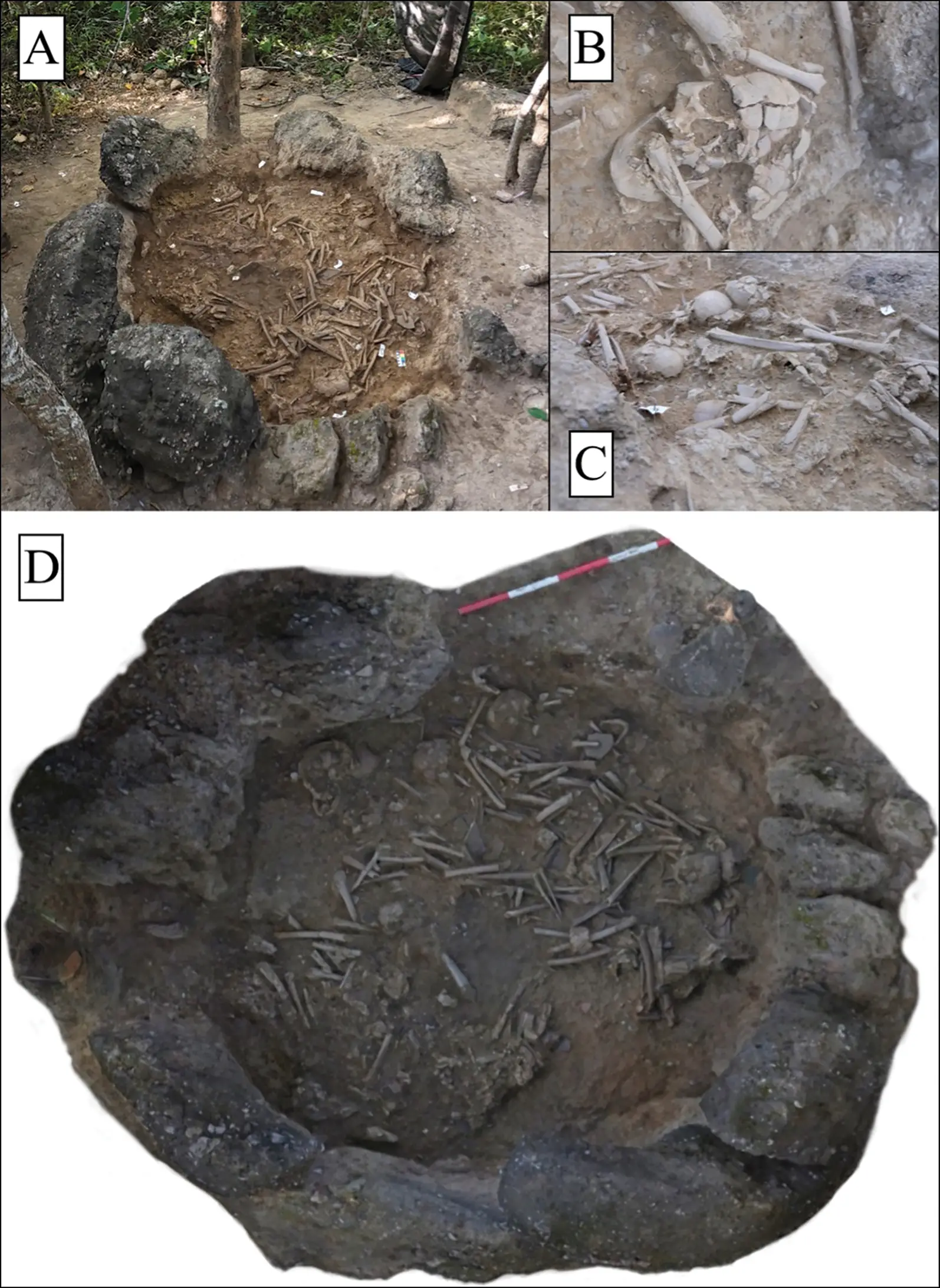
Archaeologists found a strange jar structure in Laos (University of Cambridge)
But this heavy four-foot high, seven-foot wide, megalithic stone jar contained none of that, and this time was home to the remains of 37 people who are thought to have lived over 1000 years ago.
“We were very excited because it was the first time we found non-burnt bones inside a jar,” Nicholas Skopal, an archaeologist and lead author of the study, per the National Geographic.
Dubbed ‘Jar 1’, dating techniques theorize it was in use between A.D. 890 and 1160, suggesting ancient people used it over several generations.
Skopal went on to reveal that the jar may have been a burial space, where large bones and skulls were set near the outer edges, in some sort of ancient funerary process.
Taking them between 2022 and 2024 to fully excavate it, the researchers ended up discovering tools like an iron knife, a copper bell, stone slabs, glass beads and shards of earthenware.
According to Skopal, the beads ‘could have been some sort of offering for the deceased, like a necklace or something like that.’
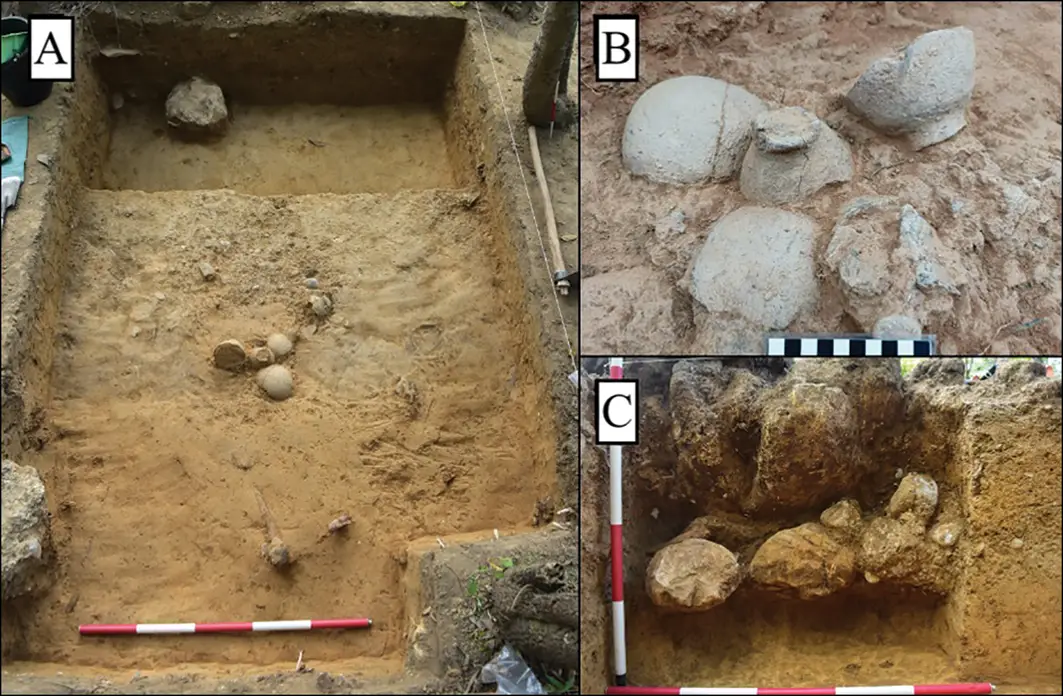
Beads were also found in the jar, leading researchers to believe it was part of an offering (University of Cambridge)
However, Kelly Brandão, an archaeologist with the University of São Paulo and Mamirauá Institute at Tefé says there’s no way to tell for certain right now that this was the only use.
“We can’t know for sure if the vase was really made with the burial objective in sight,” she said. “This finding alone would be astonishing, but it would be equally astonishing to find out they were made for other uses. The team certainly has a lot of work ahead to answer this question.”
As for Skopal, he believes the jars were used in a process.
First, individual jars were used for each body, so they could decompose.
Once the skin came off, he thinks the bones were then collected and placed ‘as secondary bundles into the larger jar’ which could have been used as an ossuary – a final resting place.
But with more teeth of people than their skulls, it’s still a working theory.
“That’s a really interesting factor,” Skopal said, adding that it ‘shows how complex this mortuary ritual is.’
“We have no idea of who these people were and where they lived,” Skopal went on to say. “The problem is getting DNA [at the Plain of Jars] is really hard due to the tropical climate—but fingers crossed!”

The Door Balancer Eliminates The Need for Door Props, Door Stops and Door Wedges
(as of October 7, 2026 00:56 GMT +00:00 - More infoProduct prices and availability are accurate as of the date/time indicated and are subject to change. Any price and availability information displayed on [relevant Amazon Site(s), as applicable] at the time of purchase will apply to the purchase of this product.)
1MORE Triple Driver in-Ear Earphones Hi-Res Headphones with High Resolution, Bass Driven Sound, MEMS Mic, in-Line Remote, High Fidelity for Smartphones/PC/Tablet - Silver
$69.99 (as of October 7, 2026 00:56 GMT +00:00 - More infoProduct prices and availability are accurate as of the date/time indicated and are subject to change. Any price and availability information displayed on [relevant Amazon Site(s), as applicable] at the time of purchase will apply to the purchase of this product.)
PROMIXX FORM Sports Water Bottle - Premium BPA Free Water Bottle for Fitness Sports & Outdoors - Sustainable Drinks Bottle with Measurement Markers and Leakproof Lid - 760ml / 26oz (Midnight Blue)
$17.79 (as of October 7, 2026 00:56 GMT +00:00 - More infoProduct prices and availability are accurate as of the date/time indicated and are subject to change. Any price and availability information displayed on [relevant Amazon Site(s), as applicable] at the time of purchase will apply to the purchase of this product.)
Joking Hazard by Cyanide & Happiness - 360+ Funny & Inappropriate Comic Cards, Hilarious Party Games | Includes Add-Your-Own-Words Cards
$17.47 (as of October 7, 2026 00:56 GMT +00:00 - More infoProduct prices and availability are accurate as of the date/time indicated and are subject to change. Any price and availability information displayed on [relevant Amazon Site(s), as applicable] at the time of purchase will apply to the purchase of this product.)