Mystery in the Bolivian Cloud Forests: Scientists Unveil a Stunning New Cat Species After a Century of Silence
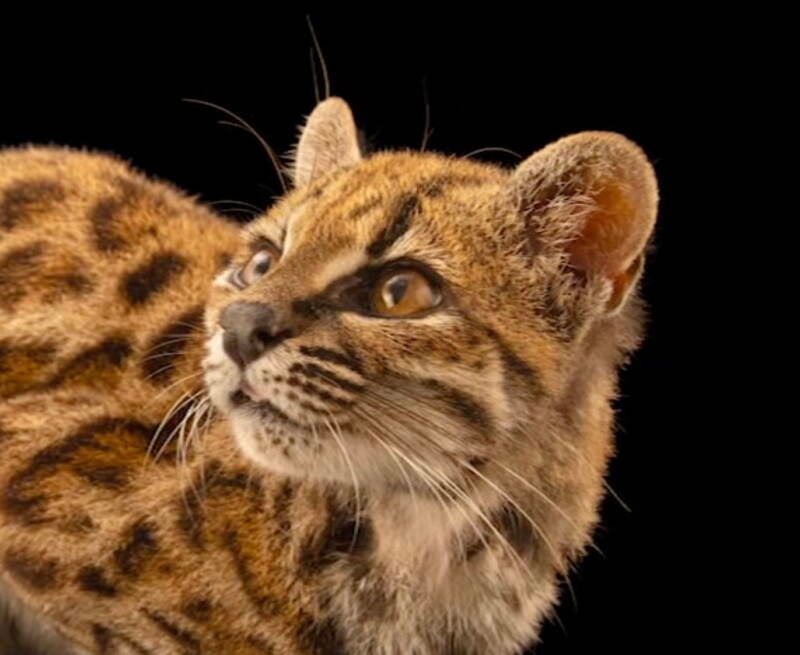
Ever wonder if the tiniest tiger might just be lurking in your neighborhood? Enter the tilcayo tiger, or Leopardus tilcayo—a pint-sized feline phenom weighing in at a mere three pounds and stretching about 18 inches long . With its light brown fur decorated in quirky, irregular spots, this little charmer isn’t your run-of-the-mill housecat; it’s the first new wild cat species discovered since 1923! Native to Bolivia’s misty Yungas cloud forests, the tilcayo was only unveiled to science after someone nonchalantly dropped it off at a wildlife sanctuary, mistaking it for an ordinary kitty. How crazy is that? To think, while we’ve been busy naming Instagram influencers, a whole new cat species was casually hanging out waiting for its debut. Could this be a hint that Mother Nature still keeps a few secrets up her sleeve? Let’s dive into the wonder of the tilcayo tiger and why it might just change the way we see cats forever.
Known as Leopardus tilcayo, or the tilcayo tiger, this three-pound cat measures 18 inches long and has light brown fur with irregularly-shaped spots.

Joel Sartore/National Geographic/YouTubeThe “tilcayo tiger” is the first new cat species that’s been identified in the wild since 1923.
A new cat species has been found for the first time in more than a century. The tilcayo cat, or Leopardus tilcayo, is native to the Yungas cloud forests of Bolivia, and was discovered by scientists after it turned up in a local wildlife sanctuary, where someone dropped it off just thinking it was an ordinary housecat.
Before now, the last living cat species to have been discovered after being previously unknown to science was the Uruguayan pampas cat, first identified in 1923.
The Discovery Of Leopardus tilcayo, The First New Cat Species That’s Been Found In 100 Years
Paola Nogales-Ascarrunz, a biologist, conservationist, and National Geographic Explorer, first laid eyes on this brand-new cat after staff at the Senda Verde Wildlife Sanctuary reported that a peculiar feline had been dropped off there. The cat first arrived there in 2017, when a local man turned him over because he could no longer take care of him — all the while thinking that this was a normal domestic cat.

Wikimedia CommonsThe tilcayo cat is native to the Yungas cloud forests of Bolivia.
The cat, a ten-year-old male, measures about 18 inches long and weighs around three pounds, making it smaller than the average housecat.
“Its fur is light brown … with irregularly shaped rosettes across its body,” Nogales-Ascarrunz told Reuters.
But though we of course have a full rundown of its appearance, not much is known about the cat’s behavior and lifestyle, as it has only been examined in captivity. However, scientists have found remains of rodents in its scat samples, perhaps pointing to a diet of small mammals. It’s also been suggested by camera-trap footage that the cats are more active at night.

Joel Sartore/National Geographic/YouTubeThe cat, at around 18 inches long and three pounds in weight, is smaller than an average domestic cat.
When christening this new creature, scientists kept the name “tilcayo,” which is the moniker that local communities had already been using to refer to it for decades.
“It’s our way of honoring their ancestral knowledge and connection to this animal,” Nogales-Ascarrunz told Discover Wildlife.
Where This Brand-New Tilcayo Species Fits Within The “Cryptic” Class Of Tiger Cats
The discovery of this new cat species — detailed in a study in the journal Current Biology — has also paved the way for a redrawing of the wider family tree associated with the tiger cat species.
Tiger cats are a “cryptic” collection of species, which means that they are not easily distinguished by their physical features, and have long been considered to be a single species based on their similar appearances.
“Tiger cats have been enigmatic for decades,” Eduardo Eizirik, who worked with Nogales-Ascarrunz, said to Discover Wildlife.
In 2013, scientists had identified the already-found tiger cat specimens into two species: the northern (L. tigrinus) and southern tiger cat (L. guttulus). Then, in 2017, the eastern tiger cat (L. emiliae) was posited as a distinct species, and the clouded tiger cat (L. pardinoides) was proposed as a subspecies in 2024.
And, most recently, when the researchers analyzed DNA from 38 cats sampled from across South America, as well as eight museum specimens, the team confirmed the presence of at least five separate wild cat species under the tiger cat umbrella: L. tilcayo, L. guttulus, L. emiliae, L. pardinoides, and L. tigrinus; and a new Peruvian subspecies, L. tigrinus antisuyo.

Joel Sartore/National Geographic/YouTubeIn addition to identifying this new species, researchers also found at least five distinct subspecies within the tiger cat group.
According to the genetic analysis, the lineage of the newly-announced tilcayo cat species from Bolivia separated from that of the other tiger cats around 1.4 million years ago, meaning that it’s had an entirely separate evolutionary history.

1MORE Triple Driver In-Ear Headphones - Silver - Wired - Adult - In Ear - 18 grams - 90 days limited warranty
(as of October 15, 2026 00:59 GMT +00:00 - More infoProduct prices and availability are accurate as of the date/time indicated and are subject to change. Any price and availability information displayed on [relevant Amazon Site(s), as applicable] at the time of purchase will apply to the purchase of this product.)
1MORE Triple Driver in-Ear Earphones Hi-Res Headphones with High Resolution, Bass Driven Sound, MEMS Mic, in-Line Remote, High Fidelity for Smartphones/PC/Tablet - Silver
$69.99 (as of October 15, 2026 00:59 GMT +00:00 - More infoProduct prices and availability are accurate as of the date/time indicated and are subject to change. Any price and availability information displayed on [relevant Amazon Site(s), as applicable] at the time of purchase will apply to the purchase of this product.)
RIVER OF GOODS Stained Glass Bird Accent Lamp - 8" W x 13.5" H - Tiffany Style Table Lamps for Home, Office Desk, Bedroom, Nightstand - Blue Jay Decor
$79.99 (as of October 15, 2026 00:59 GMT +00:00 - More infoProduct prices and availability are accurate as of the date/time indicated and are subject to change. Any price and availability information displayed on [relevant Amazon Site(s), as applicable] at the time of purchase will apply to the purchase of this product.)
RIVER OF GOODS Stained Glass Magna Carta LED Ceiling Fan - 52" L x 52" W - Tiffany Style - Flush Mount Ceiling Fan with Remote - Teal
(as of October 15, 2026 00:59 GMT +00:00 - More infoProduct prices and availability are accurate as of the date/time indicated and are subject to change. Any price and availability information displayed on [relevant Amazon Site(s), as applicable] at the time of purchase will apply to the purchase of this product.)





















Post Comment