Mystery Unveiled: Ancient Roman Guardian Spirit Statue Discovered Near Hadrian’s Wall Sparks New Questions
Imagine stumbling upon a 1,600-year-old statue, buried beneath the ancient rubble of a Roman military fortress, only to discover it’s the face of a Genius—a protective spirit believed to bring prosperity and security. Now, here’s a thought: if these Geniuses had such a knack for guarding Roman soldiers, did they also have a sense of humor? Because, let’s face it, keeping an empire safe wasn’t exactly a walk in the Colosseum. Unearthed at Vindolanda, just shy of Hadrian’s Wall, this astonishing find isn’t just any relic—it’s a time capsule of faith, fortune, and the everyday lives of Roman military families. Well-preserved and clutching symbols of abundance and ritual, this little guardian offers a rare peek into how spirituality and soldiering intertwined on the edge of an empire about to fall. Curious to find out who this ancient sentinel really was and what secrets it holds?
Researchers excavating the ruins of the Roman military fortress at Vindolanda believe the ancient sculpture depicts a Genius, a protective spirit that was said to bring prosperity and security.
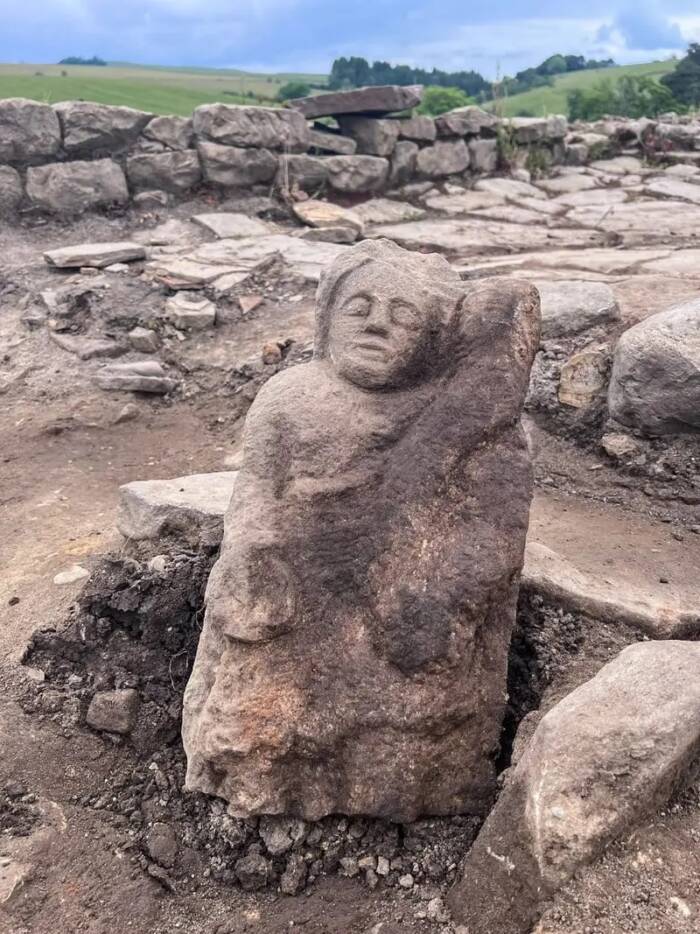
Vindolanda Charitable TrustArchaeologists uncovered a 1,600-year-old statue depicting a Genius, a type of protective spirit from the Roman era.
A team of archaeologists in England just found an ancient Roman statue of a Genius, a type of guardian spirit, underneath the remains of a 1,600-year-old military barracks.
Uncovered at the Roman military fortress near Hadrian’s Wall known as Vindolanda, this relic could reveal more than ever before about the role that Geniuses played in religious life in Roman Britain, specifically among those in the military.
The Ancient Roman Guardian Statue Discovered At Vindolanda
Vindolanda archaeological director Andrew Birley made the discovery while excavating a barracks from the fourth century C.E. An abnormally round flagstone caught his eye, and when he carefully turned it over, he was met with the well-preserved face of a Genius statue, untouched for 1,600 years — not long before the Roman Empire fell.
The statue’s face was extremely well-preserved due to the statue’s burial away from the elements. The piece was so intact that researchers could also see that the figure is holding a cornucopia, which symbolizes abundance and prosperity, as well as a patera, a shallow dish used in ritual offerings. This imbued the statue with great religious meaning.
The sculpture was likely carved locally by a sculptor in Vindolanda, or perhaps by a stonemason at a nearby Roman fort, such as the one at Lanchester in County Durham.
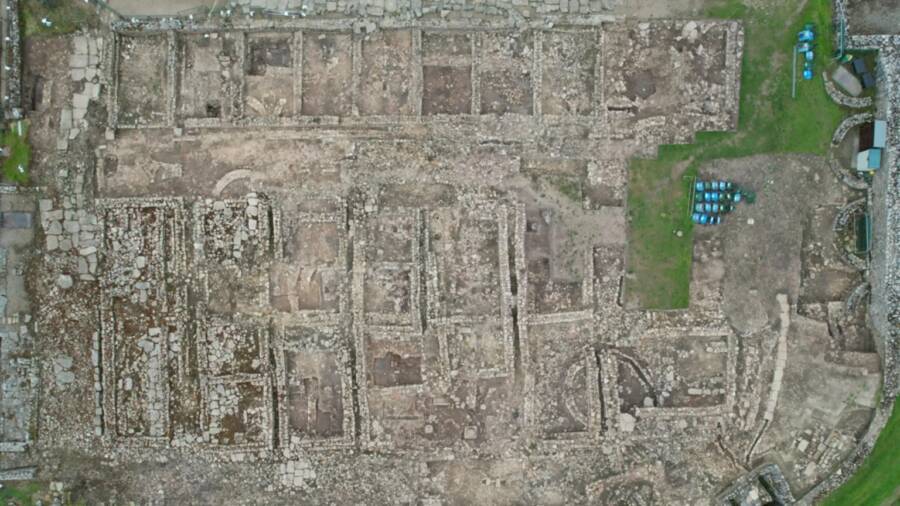
Vindolanda Charitable TrustThe statue was likely a part of a domestic shrine inside a military household at this Roman fortress.
This rare discovery is also notable because Birley is a third-generation Vindolanda archaeologist. His grandfather, Eric Birley, established the first excavation projects at Vindolanda almost a century ago. Now, after his father worked the site as well, Birley is continuing on the work of revealing all there is to know about this historic site’s ancient past.
“I have been fortunate enough to have worked at the site for many years and made some wonderful discoveries along the way, but I was completely unprepared for what I found on the other side of this stone,” Birley said in a statement. “It was an extraordinary moment, one that we were able to share with the team of archaeologists and volunteers whose hard work makes discoveries like this possible. My first thought was simply, ‘Who on earth am I looking at?’”
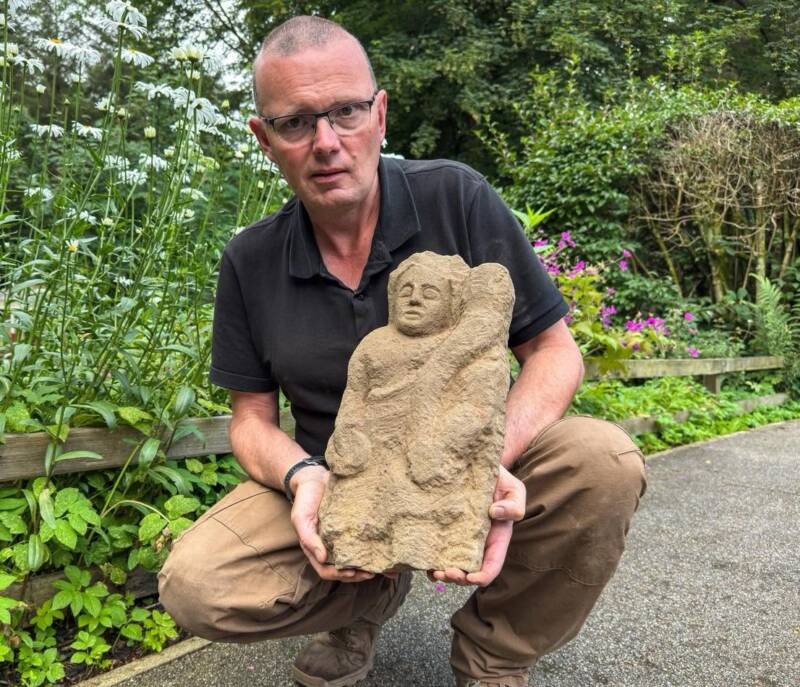
Vindolanda Charitable TrustDr. Andrew Birley, a third-generation archaeologist at the Vindolanda site, discovered the statue.
The Vindolanda site is closely connected to Hadrian’s Wall, and, after sending photographs of the statue to that site’s researchers, it was determined that the statue depicted a type of spirit called a Genius.
How This Rare Discovery Sheds Light On Religious Practices In Roman Britain
After the initial examination, the team theorized that the sculpture was part of a domestic shrine, likely connected to the military fort at Vindolanda. This would make sense because a Genius was often invoked by the Romans to ensure security, prosperity, and good fortune — both in the household and on the battlefield.
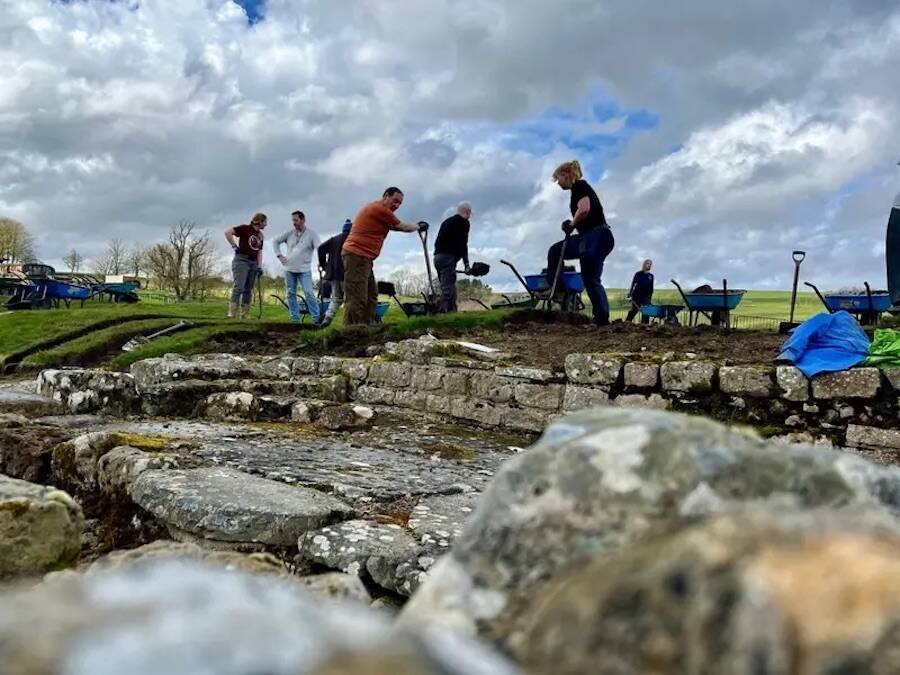
Vindolanda Charitable TrustAfter further conservation and study, the team at Vindolanda hope to put the find in the site’s museum.
Inscriptions dedicated to a Genius, or other references to these protective spirits, can be found fairly often at archaeological sites connected to Roman Britain, indicating the far-reaching spread of Genius worship across the empire’s territories.
However, intact sculptures depicting a Genius are much more rare, which certainly underlines the importance of this new discovery made at Vindolanda. This is all the more true because the piece’s finer details have been kept intact thanks to natural protection from wind, water, and erosion.
Furthermore, because this relief was found beneath military barracks at a Roman fortress, it could also provide fresh insight into the religious lives of Roman soldiers and their families who lived at Vindolanda during the final centuries of the empire’s reign in Britain.

Skater Trainer Wheels - Beginners get Skateboard Tricks Fast, Safe and Fun | Viral accessory gift - Helps beginners stay excited about their new skateboard - Kids & parents love these
$28.99 (as of October 7, 2026 00:56 GMT +00:00 - More infoProduct prices and availability are accurate as of the date/time indicated and are subject to change. Any price and availability information displayed on [relevant Amazon Site(s), as applicable] at the time of purchase will apply to the purchase of this product.)
RIVER OF GOODS Coastal 52 Inch Wooden Bead LED Ceiling Fan, Brown
(as of October 7, 2026 00:56 GMT +00:00 - More infoProduct prices and availability are accurate as of the date/time indicated and are subject to change. Any price and availability information displayed on [relevant Amazon Site(s), as applicable] at the time of purchase will apply to the purchase of this product.)
Supa Ant 6x8ft. Welding Blanket Fireproof (Pack of 2) - Heavy Duty Weld Fire Blanket Tools - Welders Cover for Men Curtain with Gloves - Large Welding Gear for Welder Accessories
(as of October 7, 2026 00:56 GMT +00:00 - More infoProduct prices and availability are accurate as of the date/time indicated and are subject to change. Any price and availability information displayed on [relevant Amazon Site(s), as applicable] at the time of purchase will apply to the purchase of this product.)
Rhythm Superfoods Kale Chips, Zesty Nacho, Organic and Non-GMO, 2.0 Oz (Pack of 4), Vegan/Gluten-Free Superfood Snacks
(as of October 7, 2026 00:56 GMT +00:00 - More infoProduct prices and availability are accurate as of the date/time indicated and are subject to change. Any price and availability information displayed on [relevant Amazon Site(s), as applicable] at the time of purchase will apply to the purchase of this product.)