Secrets Unearthed: The Bahamas Reveal Shipwrecks Tied to Legendary Caribbean Pirates
So, picture this: divers, for the very first time, get the green light to plunge into Nassau Harbour—and what do they find? Not just your run-of-the-mill shipwrecks, but actual relics tied to the genuine pirates of the Caribbean. Yup, things like cannons ready to roar, musket balls primed for mayhem, and—wait for it—over a hundred tobacco pipes, complete with royal crests and unicorns! It’s almost like stumbling onto a long-lost episode of history’s wildest reality show. Now, this isn’t just some dusty museum tale; these artifacts offer a tangible peek into the high-seas shenanigans of the Golden Age of Piracy. So, ever wondered what those notorious buccaneers really left behind beyond the clichés and Hollywood swagger? Dive in—you might be surprised what’s lurking beneath the waves. LEARN MORE
For the first time ever, divers gained permission to explore Nassau Harbour, allowing them to uncover wrecks and artifacts linked to the real pirates of the Caribbean — including everything from cannons to musket balls to more than 100 tobacco pipes.

Wreckwatch TVArchaeologists discovered a burnt hull linked to the real pirates of the Caribbean in Nassau Harbour.
Because there’s been little concrete evidence to illustrate the lives of the real pirates of the Caribbean that terrorized these seas three centuries ago, most of us can only just picture Captain Jack Sparrow. However, recent discoveries made by a team of marine archaeologists in the Bahamas may have just now changed that.
For the first time ever, researchers have discovered shipwrecks in Nassau Harbour from the late 17th and early 18th centuries that are linked to the real pirates of the Caribbean.
The Shipwrecks Found In Nassau Harbour That Date Back To The Golden Age Of Piracy
In late 2025, the researchers gained the first-ever permission to dive in a restricted area of Nassau Harbour. They found six shipwrecks and were able to trace three back to the golden age of piracy that lasted from roughly the 1680s to the 1720s.
The archaeologists found a charred wooden hull weighed down by a pile of stones used as ballast — weight put on ships to balance and lower their center of gravity.

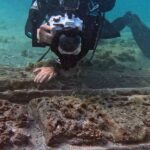
Wreckwatch TVThis is the first time that divers have ever been allowed to explore the waters of Nassau Harbour.
This discovery represents a rare window into the peak period of piracy in the Caribbean. During this era, pirates would steal valuable cargo and weapons, then often burn the plundered ship to destroy the evidence of their crimes.
“Burning ships to the waterline was an infamous tactic to hide felony from authorities. The Nassau hull shows all the signs of pirate mischief,” Dr. Michael Pateman, the mission’s co-director, told The Guardian.
At another site around 20 miles east of Nassau, the archaeologists also found what they described as “a calling card of pirate attacks,” including an iron cannon, a heap of 25 musket balls, and a stone for sharpening swords. These dangerous instruments were classic weapons of choice for pirates of the golden age, along with swivel guns and pivot-mounted cannons.
Under the Nassau bridge, the team also discovered well-preserved glass wine bottles, rigging, and bricks and crates from a ship’s cooking galley. The haul also included 143 clay tobacco pipes — decorated with a unicorn, horse, crown, and England’s royal crest — which the team dated back to 1740s London.

Wreckwatch TVResearchers believe that the tobacco pipes that they found were made in London during the 1740s.
Because the Nassau seabed had been heavily gouged and dug out by dredging, the team said the discoveries exceeded their expectations. But what can these historic finds teach us about the real pirates of the Caribbean?
What These Wrecks Could Reveal About The Real-Life Pirates Of The Caribbean
In the late 17th century, as European colonialism flourished, many lucrative trade routes sprang up across the Atlantic. This, along with the rise of a class of experienced sailors that had trained and fought in European wars, laid a perfect foundation for the golden age of piracy.
These Nassau waters in particular served as an infamous hideout for buccaneers, privateers, and outlaws during these decades, including “Pirate King” Henry Avery, Blackbeard, “Calico” Jack Rackham, Mary Read, Henry Morgan, and Anne Bonny.

Public domainAn 18th-century illustration of one of history’s most famous pirates, “Pirate King” Henry Avery with his ship, the Fancy.
The researchers said the charred hull they found could belong to Henry Avery’s ship, the Fancy, which was burned in 1695, after Avery pulled off the biggest heist in pirate history. He stole precious metals and jewels like gold, silver, sapphires, emeralds, and diamonds from Mughal Empire ships, estimated to be worth well over $100 million in today’s money. The hull found by the researchers was held together by wooden treenails, a shipbuilding method common during Avery’s prime.
The remnants of pirate weapons found here could also suggest that this ship was the infamous Fancy.
1MORE Triple Driver in-Ear Earphones Hi-Res Headphones with High Resolution, Bass Driven Sound, MEMS Mic, in-Line Remote, High Fidelity for Smartphones/PC/Tablet - Silver
$69.99 (as of October 26, 2026 01:02 GMT +00:00 - More infoProduct prices and availability are accurate as of the date/time indicated and are subject to change. Any price and availability information displayed on [relevant Amazon Site(s), as applicable] at the time of purchase will apply to the purchase of this product.)
RIVER OF GOODS Stained Glass Magna Carta LED Ceiling Fan - 52" L x 52" W - Tiffany Style - Flush Mount Ceiling Fan with Remote - Teal
(as of October 26, 2026 01:02 GMT +00:00 - More infoProduct prices and availability are accurate as of the date/time indicated and are subject to change. Any price and availability information displayed on [relevant Amazon Site(s), as applicable] at the time of purchase will apply to the purchase of this product.)
Fire Cloak - 1500F CE Certified Emergency Fire Blanket for Home & Kitchen | 500GSM Fabric & 0.5mm Thick - Silicon Coated 100% Fiberglass Essentials in House, Warehouse Office - 55"L x 70"W by Supa Ant
$83.99 (as of October 26, 2026 01:02 GMT +00:00 - More infoProduct prices and availability are accurate as of the date/time indicated and are subject to change. Any price and availability information displayed on [relevant Amazon Site(s), as applicable] at the time of purchase will apply to the purchase of this product.)
Kinsa Smart,Fever, Digital Medical Baby, Kid and Adult Termometro - Accurate, Fast, FDA Cleared Thermometer for Oral, Armpit or Rectal Temperature Reading - QuickCare
$18.94 (as of October 26, 2026 01:02 GMT +00:00 - More infoProduct prices and availability are accurate as of the date/time indicated and are subject to change. Any price and availability information displayed on [relevant Amazon Site(s), as applicable] at the time of purchase will apply to the purchase of this product.)