The Countdown Begins: Scientists Brace for a Mysterious Star Explosion That Could Change Everything—But When?
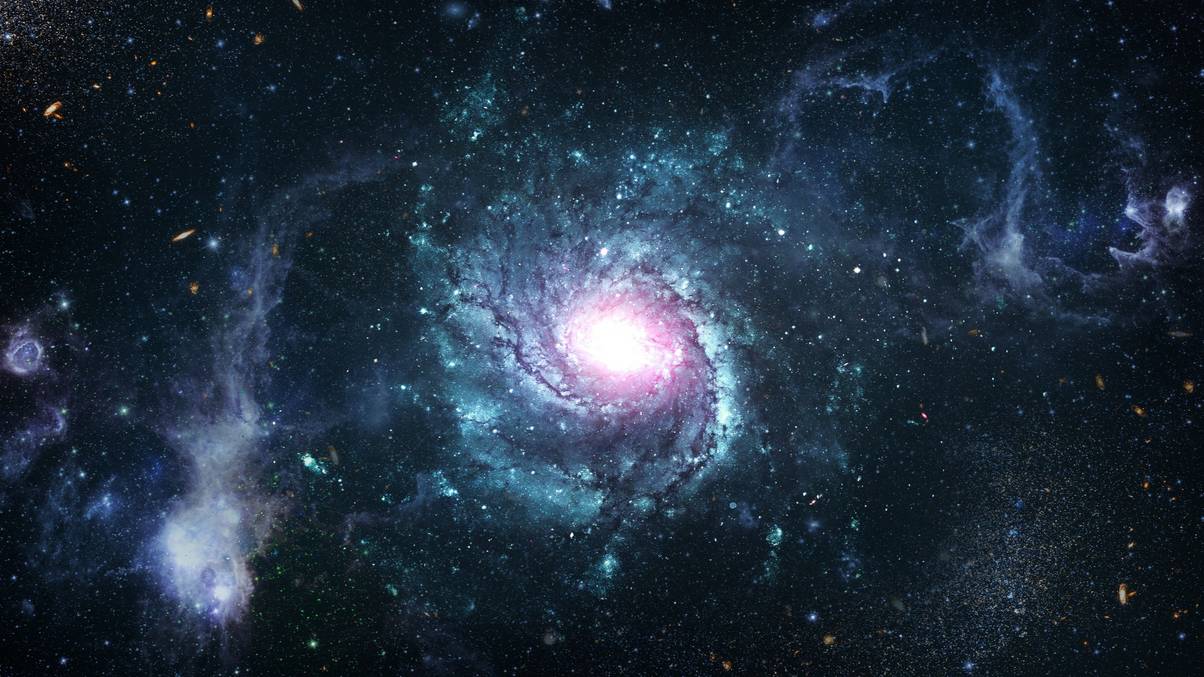
Ever found yourself staring up at the night sky, feeling utterly tiny in the grand cosmic ballet, and wondering if we’ll ever get a new celestial diva stealing the show? Well, stargazers have been biting their nails, waiting for a fresh burst of light that’s about to crash our cosmic party. It’s not just any twinkle, mind you — we’re talking about a ‘Blaze Star,’ a temperamental duo of a white dwarf and a red giant locked in an 80-year tango that’s about to deliver a fireworks display a thousand times brighter than usual. And nope, this isn’t some distant sci-fi plot — thanks to beefed-up tech like NASA’s James Webb Space Telescope, even your grandma’s old telescope should catch the action. Scientists can’t promise the exact date (because space likes to keep us on our toes), but if history’s any guide, this stellar explosion is knocking on our door, probably before we hit 2030. If you’re wondering if you should set a reminder or just keep an eye on the sky every night, spoiler alert: you definitely should. Because once this cosmic flare lights up, it’s a show you won’t want to miss — and then you’ll have to wait nearly a century for an encore. So, grab your telescope, keep it close, and get ready for one heck of a light show. LEARN MORE
Looking up at the night sky is already a spectacular experience when you consider everything that exists outside of the Earth but for years now, stargazers in particular have been waiting for a ‘new light’ to appear.
You might be wondering what’s powerful enough to lead to a completely new light in our sky, when scientists and astronomers have spent thousands of years identifying exactly what’s up in space.
Thanks to new powerful technology such as the James Webb Space Telescope at NASA, we’re able to see further than ever before, but even your most basic telescopes are expected to pick up ‘Blaze Star” T. Coronae Borealis’ (T CrB).
Unlike some of the other lights we see in our night sky, T CrB isn’t just a single star, but instead consists of a white dwarf star and a red giant. Essentially, over a period of around 80 years, the white dwarf strips material from the red giant until things turn critical, leading to a cataclysmic explosion which will produce a flare of light around 1,000 times its usual brightness – something known as a nova explosion.
Considering the interest in events such as the recent solar eclipse, this is also something that’s been in the diaries of stargazers for several years now, but scientists still aren’t able to provide an exact date. However, they remain confident that it’s going to ‘happen soon’.
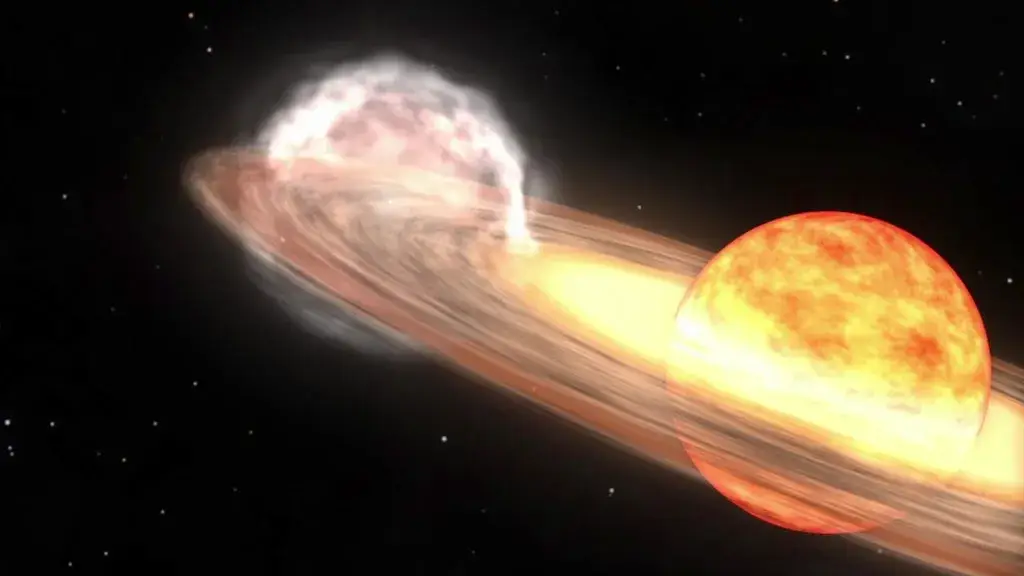
How the process is currently looking (NASA)
Bradley Schaefer of the Louisiana State University Department of Physics and Astronomy told Space.com: “Everyone is very confident on this. But we cannot make high-accuracy measures of the rate of gas falling onto the surface of the white dwarf, and we do not have a high accuracy measure of the trigger mass for the big hydrogen bomb.
“The exact date of the upcoming T CrB eruption depends primarily on how fast the gas coming from its companion star is accumulating on the surface of the white dwarf.
“When some specific trigger mass has accumulated, then T CrB will erupt. For the last 80 years, we have been watching the gas pile up on the white dwarf surface, and we know that it must be near the trigger threshold.”
Considering the last eruption occurred 80 years ago in 1946, which is how long the life cycle of the T CrB usually lasts, it’s easy to see why astronomers think it’s pretty imminent, with Elizabeth Hays, lab chief at Astroparticle Physics Laboratory suggesting that she’d be surprised if it gets to 2030 before we see anything occur.
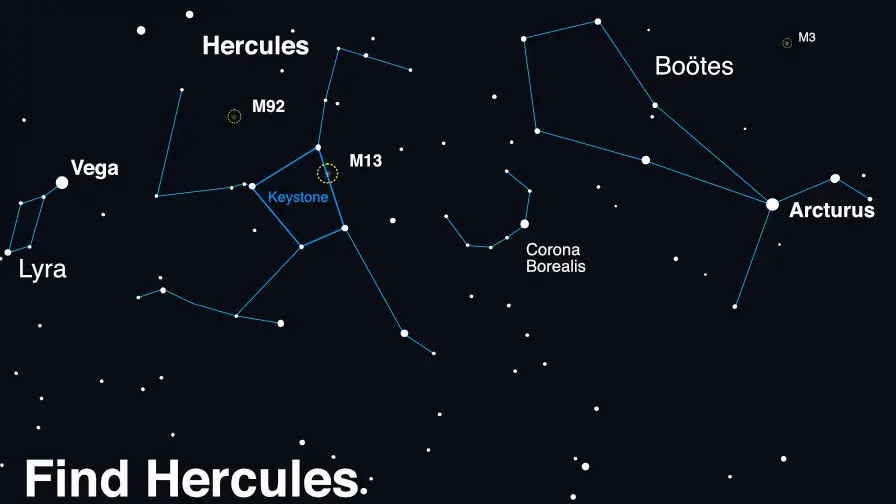
Corona Borealis can be seen on this map (NASA)
When it does finally happen, it should last for a while before life cycle begins again, meaning you’d have to wait until the 2100’s until you see it again, so it’s probably not one you want to miss.
Schaefer added: “The world’s amateur astronomers have been doing an awesome job of keeping T CrB under hair-trigger monitoring roughly every minute or two, so when T CrB has brightened by around one magnitude, then alerts will spread around the world within minutes.”
So basically, as long as you keep your telescopes close for the next four years, you’re likely to witness something pretty spectacular.

KiddyCare Diaper Caddy Organizer Cart for Nursery Baby Basket Gift for Boy/Girl | Diaper Caddy for Changing Table Basket Organizer with Dividers | Caddy for Baby Stuff Breast Pump Caddy - Regular
$9.99 (as of November 15, 2026 01:11 GMT +00:00 - More infoProduct prices and availability are accurate as of the date/time indicated and are subject to change. Any price and availability information displayed on [relevant Amazon Site(s), as applicable] at the time of purchase will apply to the purchase of this product.)
1MORE Triple Driver in-Ear Earphones Hi-Res Headphones with High Resolution, Bass Driven Sound, MEMS Mic, in-Line Remote, High Fidelity for Smartphones/PC/Tablet - Silver
(as of November 15, 2026 01:11 GMT +00:00 - More infoProduct prices and availability are accurate as of the date/time indicated and are subject to change. Any price and availability information displayed on [relevant Amazon Site(s), as applicable] at the time of purchase will apply to the purchase of this product.)
Joking Hazard Enlarged Box Empty Box for Card Storage
$12.00 (as of November 15, 2026 01:11 GMT +00:00 - More infoProduct prices and availability are accurate as of the date/time indicated and are subject to change. Any price and availability information displayed on [relevant Amazon Site(s), as applicable] at the time of purchase will apply to the purchase of this product.)
Fire Blanket - 1500F CE Certified Emergency Fire Blanket for Home & Kitchen | 500GSM Fabric & 0.5mm Thick - 100% Fiberglass Fire Extinguisher for Car,Warehouse Office - 2pc (47x47 inches) by Supa Ant
$53.45 (as of November 15, 2026 01:11 GMT +00:00 - More infoProduct prices and availability are accurate as of the date/time indicated and are subject to change. Any price and availability information displayed on [relevant Amazon Site(s), as applicable] at the time of purchase will apply to the purchase of this product.)



















Post Comment