The Forgotten Third Path Medieval European Women Discovered Beyond Marriage and Convent Life Revealed
Ever wonder what happens when women in medieval Europe say, “No, thanks!” to the classic “marry or become a nun” life script? Enter the Beguines — a fascinating brigade of fiercely independent women who didn’t sign up for formal religious vows but still dedicated themselves to prayer and service, living in tight-knit communities called beguinages. Imagine a life where you can devote your days to faith, work, and community, keep your own property, and if the mood strikes, walk away to say “I do” — all without the rigidity of convent life. Quite the medieval mic drop, right? The story of the Beguines is one packed with resilience, intrigue, and a little bit of scandal, thanks to church authorities who weren’t always thrilled about their unconventional spirituality. Curious to dive deeper into these ‘holy women’ who rewrote the rules? LEARN MORE
Beguines didn’t take formal religious vows, but they lived together in communities called beguinages and devoted their lives to prayer and service.
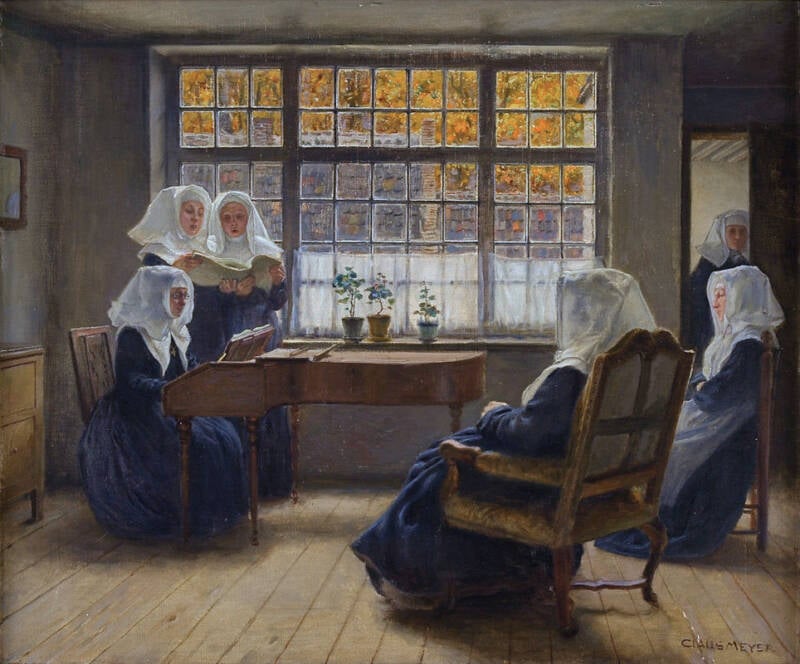
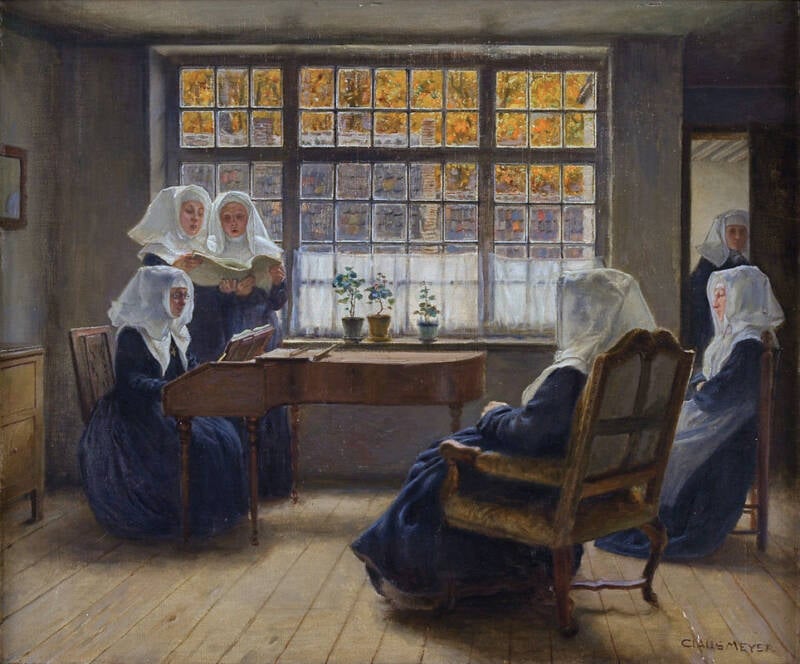
Public DomainMusic Lesson in the Beguine Courtyards, an early 20th-century painting by German artist Claus Meyer.
Contrary to popular belief, women in Europe were engaged in many different parts of the workforce throughout the Middle Ages. They worked in agriculture, domestic services, textile production, brewing, and family businesses. Some even managed properties and businesses entirely by themselves.
However, many of these freedoms were only afforded to women if they were widows or of a certain class. For the most part, once a woman reached a certain age, she was effectively given two options: marry or become a nun.
But these two paths were not for everyone. Some women at the time realized this — and decided to forge a path of their own.
Beguines, The ‘Holy Women’ Of Medieval Europe
In a video with over 312,000 views, TikTok user Neloo Naderi (@neloonaderi) explains the history of the Beguines.
As told by Naderi, beginning in the 1200s, some women began to choose a life that did not involve fully committing themselves to a man or to the church.
“Across cities like Bruges, Gent, and Antwerp, many women began communities known as ‘beguinages,’” Naderi explains. “The women who lived there were called ‘Beguines.’ They built small homes gathered around shared courtyards and gardens.”
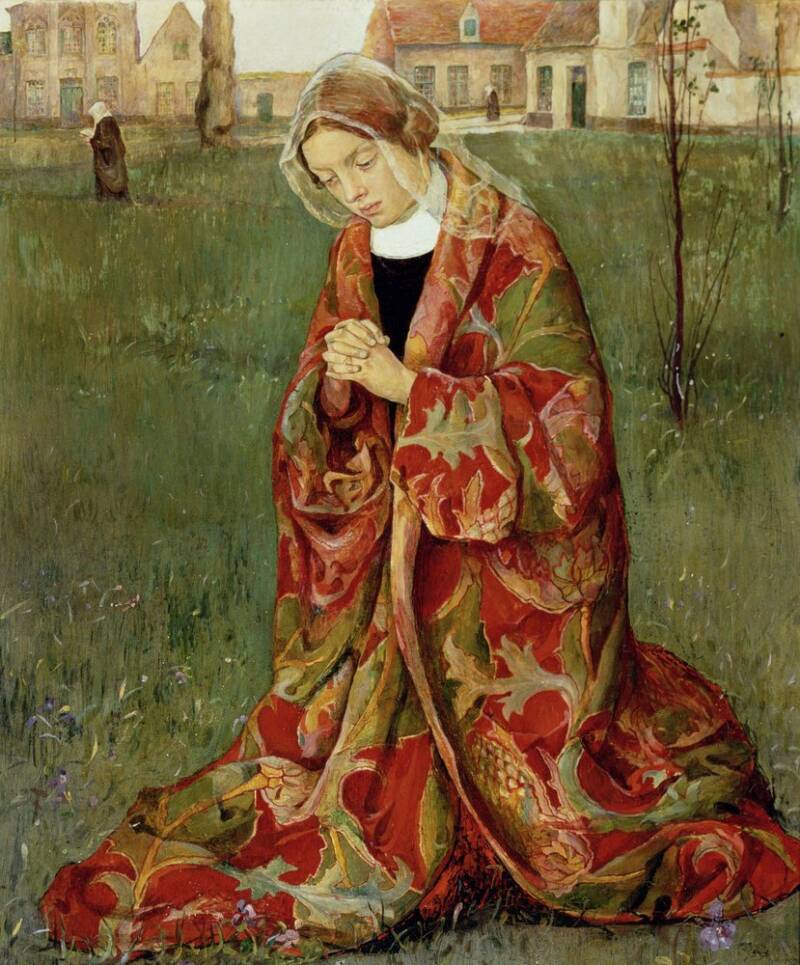
Public DomainAelfred Fahey’s 20th-century depiction of a Beguine praying.
These women connected with their communities and earned a living by doing things like weaving cloth, nursing the sick, and teaching children. When not working, they would live in and care for their beguinage, which was typically composed of houses, churches, other buildings, and green spaces.
Beguines pledged to remain chaste while living in the community, but, unlike nuns, they were not bound by an irrevocable vow. While nuns were committed to a life of poverty, Beguines could retain houses and property. And if a Beguine ever wanted to leave the beguinage and get married, she was free to do so.
“For many women in medieval Europe, this created something entirely new: a life of faith, work, and community, without fully surrendering their independence,” Naderi shares.
But this path wasn’t always easy.
A Challenge For The Beguines
Throughout the 13th century, beguinages began popping up across Germany, northern France, Belgium, and the Low Countries. But while these places could be liberating for the women involved, some people felt threatened by this practice — specifically, members of the church.
This fear culminated in the Council of Vienne, which took place between 1311 and 1312. At this time, certain Beguine groups were accused of holding beliefs that promoted something called “Heresy of the Free Spirit,” according to the book The Beguines of Medieval Świdnica. As such, they were accused of “ensnar[ing] many simple people, leading them into various errors.” And, by linking themselves with the Church, they “generate[d] numerous other dangers to souls under the cloak of sanctity.”
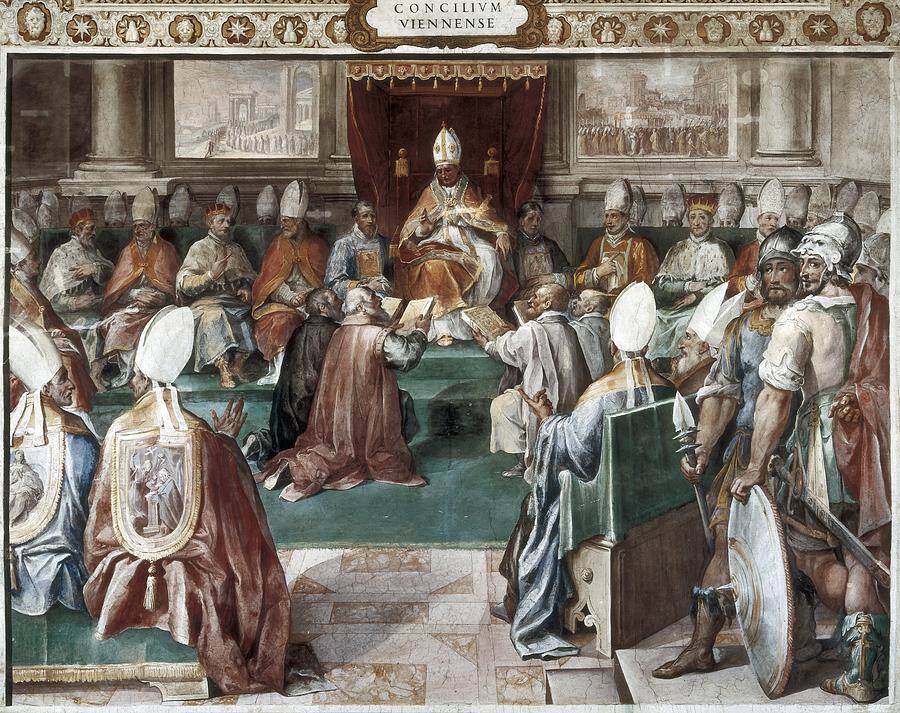
Public DomainPope Clement V summoned the Council of Vienne in 1311 to address religious concerns like the Knights Templar and enact sweeping changes in the Catholic Church.
One of the people affected by the crackdown on Beguines was Marguerite Porete. Porete was a French mystic and the author of a book called The Mirror of Simple Souls, which suggested that a person whose soul was truly filled with love for God could essentially unite with Him. She was placed on trial for heresy and burned at the stake in 1310, and most copies of her book were destroyed.
These events put pressure on Beguines to disband, but this didn’t happen immediately.
What Happened To The Beguines?
This pressure from the Church wasn’t enough to get rid of the Beguines completely. Indeed, many felt that their practice was exempt from the Church’s strict ruling.
Within the ruling was a carveout. A papal bull issued by Pope Clement V after the Council of Vienne read, “Of course we in no way intend by the foregoing to forbid any faithful women, whether they promise chastity or not, from living uprightly in their hospices, wishing to live a life of penance and serving the Lord of hosts in a spirit of humility. This they may do, as the Lord inspires them.”

1MORE Triple Driver in-Ear Earphones Hi-Res Headphones with High Resolution, Bass Driven Sound, MEMS Mic, in-Line Remote, High Fidelity for Smartphones/PC/Tablet - Silver
$69.99 (as of October 8, 2026 00:56 GMT +00:00 - More infoProduct prices and availability are accurate as of the date/time indicated and are subject to change. Any price and availability information displayed on [relevant Amazon Site(s), as applicable] at the time of purchase will apply to the purchase of this product.)
1MORE Triple Driver In-Ear Headphones - Silver - Wired - Adult - In Ear - 18 grams - 90 days limited warranty
(as of October 8, 2026 00:56 GMT +00:00 - More infoProduct prices and availability are accurate as of the date/time indicated and are subject to change. Any price and availability information displayed on [relevant Amazon Site(s), as applicable] at the time of purchase will apply to the purchase of this product.)
RIVER OF GOODS Coastal 52 Inch Wooden Bead LED Ceiling Fan, Cream
(as of October 8, 2026 00:56 GMT +00:00 - More infoProduct prices and availability are accurate as of the date/time indicated and are subject to change. Any price and availability information displayed on [relevant Amazon Site(s), as applicable] at the time of purchase will apply to the purchase of this product.)
RIVER OF GOODS LED Boho Ceiling Fan with Hand Woven Brown/Natural Rope - Macrame Knot Work and Hemp Rope Style Eclectic Cottage Decor - 52" L x 52" W - Rich Barnwood/Light Driftwood Fan Blades
(as of October 8, 2026 00:56 GMT +00:00 - More infoProduct prices and availability are accurate as of the date/time indicated and are subject to change. Any price and availability information displayed on [relevant Amazon Site(s), as applicable] at the time of purchase will apply to the purchase of this product.)