The Mysterious Naked Man in Mark’s Gospel: Unraveling a Centuries-Old Biblical Enigma
Here’s a Biblical whodunit for the ages: Amid the fraught chaos of Jesus’ arrest in the Garden of Gethsemane, the Gospel of Mark throws us a curveball—a mysterious young man who makes a hasty exit, leaving behind his linen garment and, well, pretty much everything else. Why mention this fleeting, unnamed figure? Was he truly naked, or symbolically stripped bare? And here’s a kicker: one popular theory argues that this “nude man” is none other than John Mark himself, the Gospel’s presumed author slyly inserting a cameo into his own narrative. Crazy, right? Whether he’s the timid witness or merely a metaphor wrapped in linen, this puzzling character has sparked centuries of debate, inviting us to ponder what secrets the Bible’s margins might hold. Ready to dive into this gripping tale?
One theory suggests that the nude man in the Gospel of Mark is the assumed author, John Mark, himself.
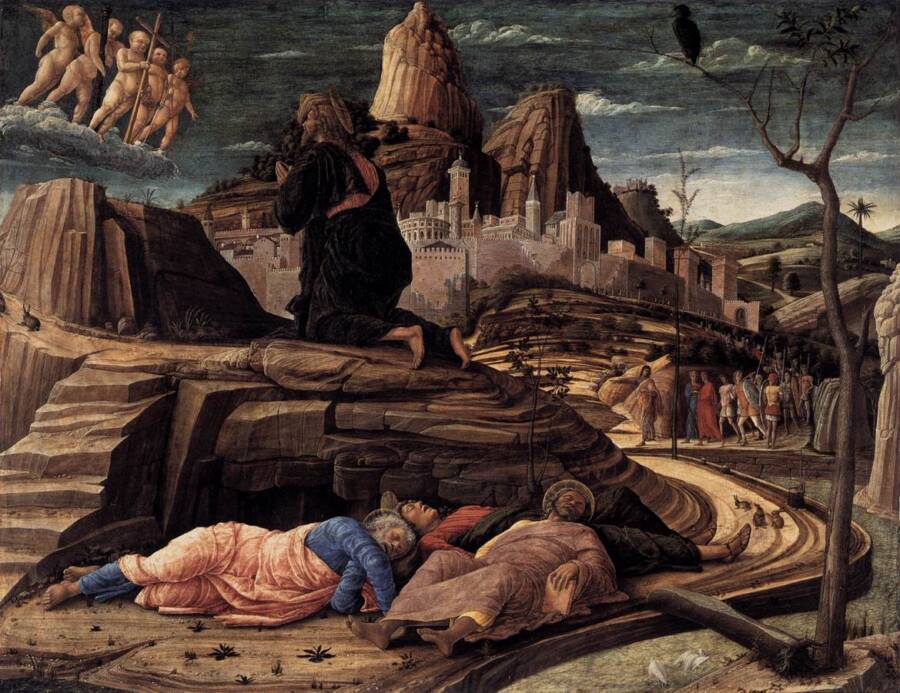
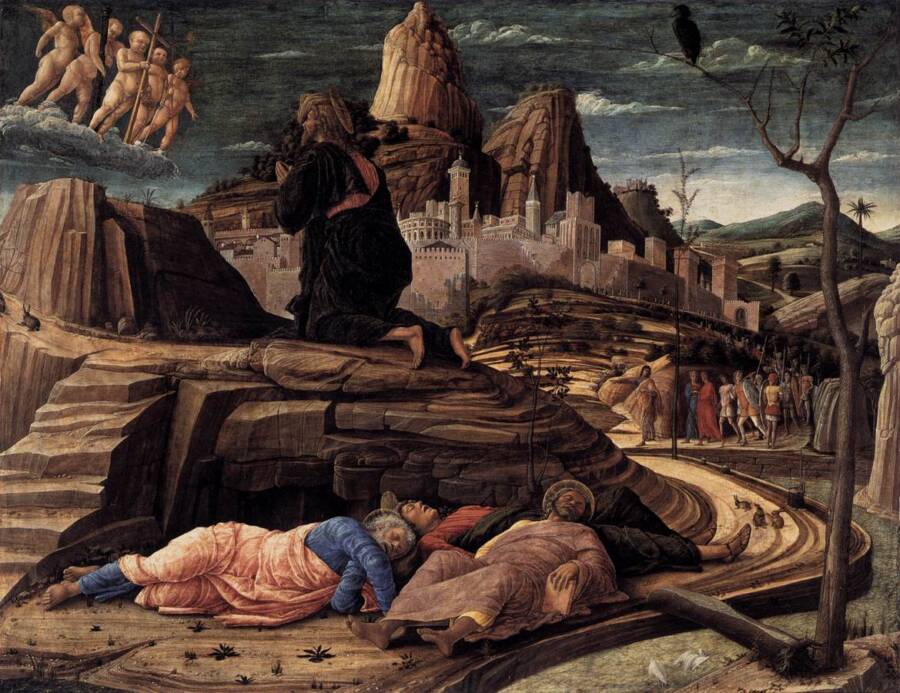
Public DomainJesus praying in the Garden of Gethsemane before his arrest.
The Bible contains four depictions of the arrest of Jesus. Only one of them features a naked man — and for centuries, scholars have been trying to figure out why.
As Jesus is arrested in the Garden of Gethsemane, the Gospel of Mark describes a chaotic scene. Judas has betrayed him, his disciples have abandoned him, and armed men are closing in to take him away.
At that moment, Mark introduces a new character.
“A young man, wearing nothing but a linen garment, was following Jesus,” reads Mark 14:51-52, per the New International Version of the Bible. “When they seized him, he fled naked, leaving his garment behind.”
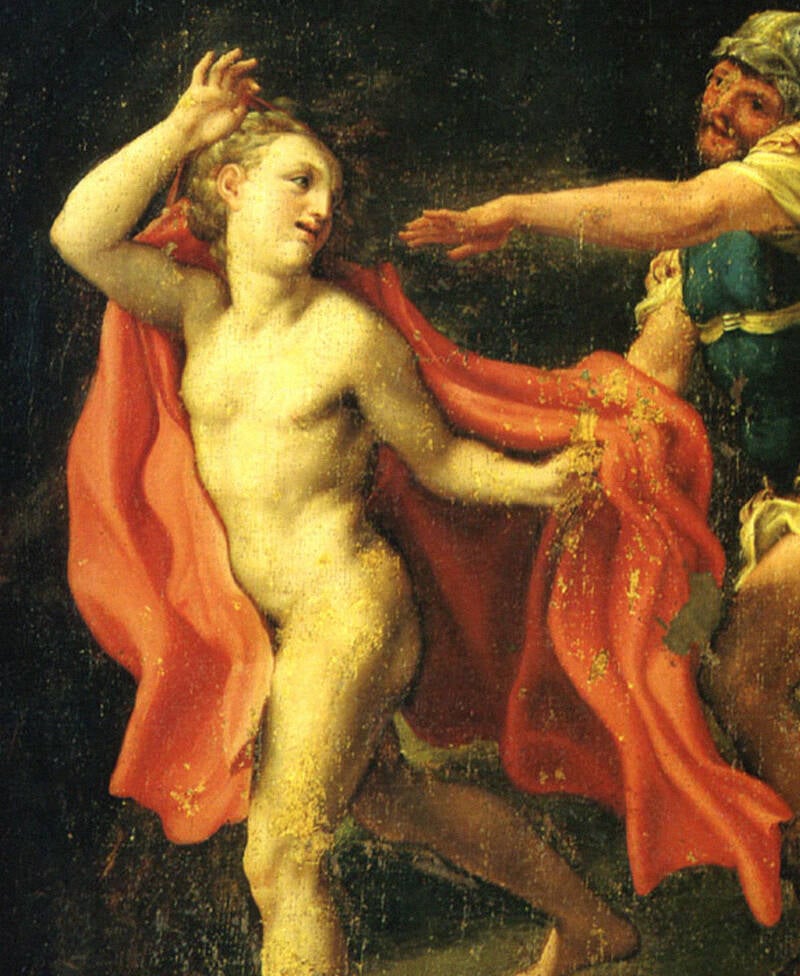
Public DomainAntonio da Correggio’s 16th-century depiction of the naked man mentioned in the Gospel of Mark.
The man does not speak, is never named, and never explicitly appears again. So, who was he? Why was there a reference to his nudity? And more importantly, why did Mark include him at all?
These simple questions have spawned centuries of scholarly debate.
The Mysterious Naked Man In The Gospel Of Mark
First, it should be noted that there is some debate about whether the man was truly naked. In the Greek translation of the Bible, Mark calls the figure a neaniskos, a Greek term meaning “young man,” and describes him as wearing a sindōn, which is a piece of linen fabric that could function as a cloak, garment, or sheet.
While many translations make it certain that the man was truly naked once his garment was removed, there are some who interpret the original Greek to mean that the man was publicly or socially “naked,” even if some minimal undergarment remained after the fabric was removed. This would mean his nudity refers more to humiliation rather than literal nakedness.
Regardless of the extent of the man’s nudity, its placement in this chapter is odd. Without the man, the narrative would transition smoothly from the disciples’ flight to Jesus’ interrogation. Consequently, many scholars believe that the man must have been mentioned for a reason, though their theories about what that reason is differ greatly.
According to one study published in the Journal of the Evangelical Theological Society, the man is John Mark, believed to be the author of the Gospel of Mark — and his presence in the book is an early form of an author cameo.
John Mark is believed by many to be present in the Bible apart from the Gospel of Mark. Specifically, he appears in the Book of Acts, where the house of his mother, Mary, is mentioned as a meeting place for early Christians. In this telling, the house used for the Last Supper belonged to John Mark’s family. Judas may have brought the arresting party to the house first, expecting to find Jesus. Then, when they learned Jesus had gone elsewhere, the group continued on to Gethsemane.
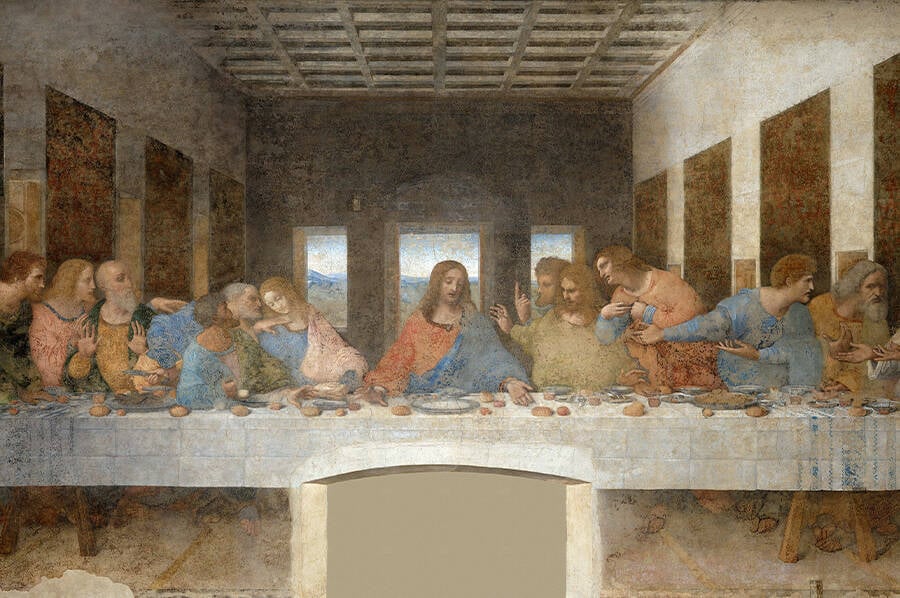
Public DomainSome scholars believe that the house where the Last Supper took place belonged to John Mark’s family.
This explains the nudity. John Mark would have been sleeping in the house and may have been awoken by the commotion outside. He could have then attempted to hurriedly leave the house, only taking enough time to wrap himself in linen before departing. From there, he would observe the arrest of Jesus, then narrowly escape — naked — after someone tried to seize him. John Mark would later recount this story in the Gospel of his own writing.
It’s understandable why many find this theory attractive. It explains the young man’s dress, why he was close enough to witness the arrest, and why Mark would remember the detail when no other writer did. This was apparently so convincing that, centuries later, some Christian writers simply identified the naked man as Mark.
That said, there are some problems with this theory — namely that it’s entirely speculative. The Bible never says that the Last Supper took place at John Mark’s house, nor do any of the Gospels state that Judas went to his house before visiting Gethsemane. There are also questions about whether the Gospel’s author really is the man mentioned in Acts, or if he was actually present at all.

RIVER OF GOODS LED Boho Ceiling Fan with Hand Woven Brown/Natural Rope - Macrame Knot Work and Hemp Rope Style Eclectic Cottage Decor - 52" L x 52" W - Rich Barnwood/Light Driftwood Fan Blades
(as of October 25, 2026 01:02 GMT +00:00 - More infoProduct prices and availability are accurate as of the date/time indicated and are subject to change. Any price and availability information displayed on [relevant Amazon Site(s), as applicable] at the time of purchase will apply to the purchase of this product.)
White Leaf Baby Food Pouches, Toddler Snack, Mango + Carrot + Banana + Pear | 24 Pack, Organic No Added Sugar, Non-GMO, BPA-Free Regeneratively Farmed, Squeeze Puree Smoothie Pouch for Adults & Children
$69.95 (as of October 25, 2026 01:02 GMT +00:00 - More infoProduct prices and availability are accurate as of the date/time indicated and are subject to change. Any price and availability information displayed on [relevant Amazon Site(s), as applicable] at the time of purchase will apply to the purchase of this product.)
KiddyCare Diaper Caddy Organizer Cart for Nursery Baby Basket Gift for Boy/Girl | Diaper Caddy for Changing Table Basket Organizer with Dividers | Caddy for Baby Stuff Breast Pump Caddy - Regular
$9.99 (as of October 25, 2026 01:02 GMT +00:00 - More infoProduct prices and availability are accurate as of the date/time indicated and are subject to change. Any price and availability information displayed on [relevant Amazon Site(s), as applicable] at the time of purchase will apply to the purchase of this product.)
Joking Hazard by Cyanide & Happiness - 360+ Funny & Inappropriate Comic Cards, Hilarious Party Games | Includes Add-Your-Own-Words Cards
$24.95 (as of October 25, 2026 01:02 GMT +00:00 - More infoProduct prices and availability are accurate as of the date/time indicated and are subject to change. Any price and availability information displayed on [relevant Amazon Site(s), as applicable] at the time of purchase will apply to the purchase of this product.)