The Surprising Reason Hannah Fry Says Saying Please and Thank You to AI Could Change Everything
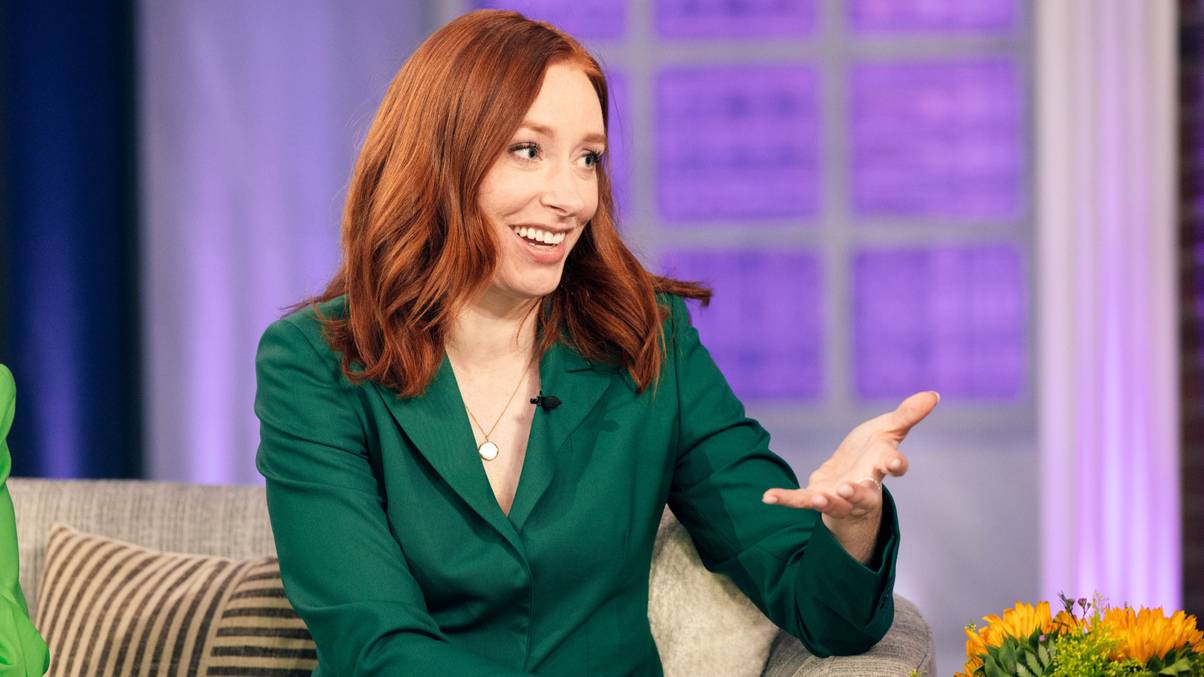
Ever wondered if saying “please” and “thank you” to your chatbot could actually change the game? According to Professor Hannah Fry, it’s not just good manners — it’s a strategy. This math whiz turns the idea of AI on its head, claiming that kindness might just be your best bet at getting AI to play nice — and no, it’s not only to save you when robots decide to pull the apocalypse card. With a wink and a nod, Fry breaks down how talking to chatbots like they’re method actors rather than fact-spitting encyclopedias can make all the difference. So next time you type into ChatGPT, think like a director—plot your role, be polite, and watch the magic unfold. Because if AI mirrors you, maybe a little charm goes a long way after all.
Good manners don’t cost a thing – and according to Professor Hannah Fry, a little kindness goes a long way with AI.
The mathematician, 42, shared some instructions on how she believes you should talk to chatbots to ‘get the most out of’ them.
She reckons that there is ‘actually a really good reason why’ you should be polite, before joking that it’s ‘not just so that AI will spare you when the apocalypse comes’.
Fry, who starred on the latest series of Celebrity Traitors but was banished this week, is somewhat on the fence about how ingrained artificial intelligence has become in everyday life.
It would be fair to say she’s cautiously optimistic about the revolutionary technology – as although she believes it is ‘incredible and world-changing’, she’s aware that it’s not all roses either.

Fry shared her thoughts on why you should be polite when conversing with AI chatbots (Getty Stock Image)
In her latest column for New Scientist, Fry said: “I know that there is some inevitability to machines outpacing the humans, and I know that at its best, AI has a great deal to offer. But at its worst, AI is an engine of extraction.”
But as AI is apparently here to stay, the Cambridge professor reckons you’re best off not treating it with contempt.
In fact, in a video shared to her YouTube channel in March last year, she strongly recommended saying ‘please and thank you’ when conversing with a chatbot.
She explained that in her opinion, there is ‘only one important thing to remember’ when you’re giving AI a prompt – that the systems have become ‘really, really, really good at role playing’.
“So you shouldn’t talk to it like a Google search, or like you’re trying to extract information from it as though it’s Wikipedia,” Fry said.
What Fry recommends
She went on: “Instead, you should talk to it as though it’s an improvisational actor that could be any character imaginable.
“The reason for this is that large language models, they don’t store facts like it’s a database. They generate responses dynamically based on having read everything that humans have ever written and the prompt that you give it.
“That means that AI, the stuff we have now, it doesn’t have a stable identity. It doesn’t have a fixed worldview, it doesn’t have personal beliefs. So if you prompt it in a particular way, it will respond in kind.”
Fry pointed out that what you give is what you get when it comes to the likes of ChatGPT, as it mirrors your persona.
“If you try and prompt it as though it’s a Shakespearean bard, then it will give you a flowery response,” she went on. “If you try and prompt it as though it is an extremely effective and smart scientist, it will give you the relevant response. But if you prompt it as though it is an encyclopaedia, it’s going to try and sound like one. But it’s still just performing a role and you have effectively just restricted what it can do.”
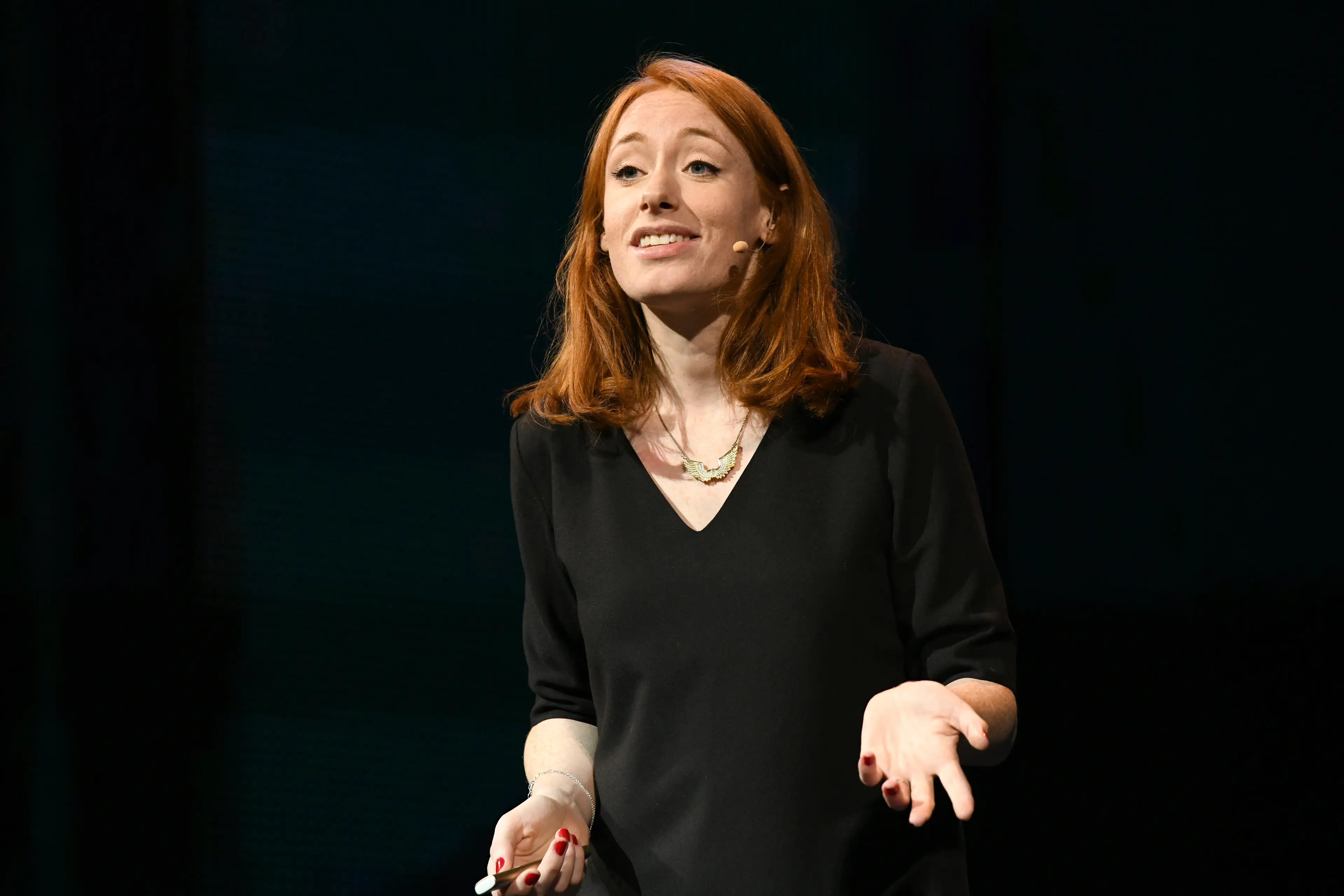
The Celebrity Traitors star’s advice got a mixed response from social media users (Craig Barritt/Getty Images for Onward18)
The maths whizz instead suggested that people should ‘imagine that they are a film director and that you have a character in mind’, before prompting your AI chatbot ‘accordingly’.
Offering an example, Fry went on: “So don’t say, ‘Give me three interesting facts about science‘. Say you are a world renowned scientist with PhDs in biology, chemistry and physics and your nephew says that science is boring.
“You only have a few minutes and you’ve got to give him counterexamples. What extraordinary stories do you use?
“And here is the big idea – if you’re working with a character and you want that character to eagerly help you – whoever they are – it’s probably better to be polite.”
According to some folks in the comment section of the clip, her advice was ‘spot on’ – as when they adapted their queries based on Fry’s instructions, one person said the answers they received were ‘hugely different’.
But others weren’t so keen on the idea of treating AI with the same respect as a fellow human being.
One person said: “This is a PSA: it can’t be bargained with, it can’t be reasoned with, it doesn’t feel pity, remorse or fear.”
Another wrote: “I think being respectful to any system is a good idea from the standpoint of practicing good manners in all things you do anyway. Not to mention presenting a positive model for these data complexities to build off of.”
A third added: “I refuse – in fact, I see better responses when I swear at it.”
A fourth commented: “Thank you for that narrative, I never thought to use that approach.”
And a fifth added: “I’d also add being polite is absolutely free and makes the world a better place.”
Fry released a BBC documentary earlier this year which explored the epic rise of AI and the impact it is having on people, titled AI Confidential with Hannah Fry.
Joking Hazard by Cyanide & Happiness - 360+ Funny & Inappropriate Comic Cards, Hilarious Party Games | Includes Add-Your-Own-Words Cards
$18.79 (as of October 18, 2026 01:00 GMT +00:00 - More infoProduct prices and availability are accurate as of the date/time indicated and are subject to change. Any price and availability information displayed on [relevant Amazon Site(s), as applicable] at the time of purchase will apply to the purchase of this product.)
RIVER OF GOODS Coastal 52 Inch Wooden Bead LED Ceiling Fan, Cream
(as of October 18, 2026 01:00 GMT +00:00 - More infoProduct prices and availability are accurate as of the date/time indicated and are subject to change. Any price and availability information displayed on [relevant Amazon Site(s), as applicable] at the time of purchase will apply to the purchase of this product.)
RIVER OF GOODS Stained Glass Magna Carta LED Ceiling Fan - 52" L x 52" W - Tiffany Style - Flush Mount Ceiling Fan with Remote - Teal
(as of October 18, 2026 01:00 GMT +00:00 - More infoProduct prices and availability are accurate as of the date/time indicated and are subject to change. Any price and availability information displayed on [relevant Amazon Site(s), as applicable] at the time of purchase will apply to the purchase of this product.)
1MORE Triple Driver in-Ear Earphones Hi-Res Headphones with High Resolution, Bass Driven Sound, MEMS Mic, in-Line Remote, High Fidelity for Smartphones/PC/Tablet - Silver
$61.59 (as of October 18, 2026 01:00 GMT +00:00 - More infoProduct prices and availability are accurate as of the date/time indicated and are subject to change. Any price and availability information displayed on [relevant Amazon Site(s), as applicable] at the time of purchase will apply to the purchase of this product.)
















Post Comment