Unearthed in Russia: Mysterious Ancient Warrior’s Grave Reveals Pentagram, Sacrifices, and Secrets Lost to Time
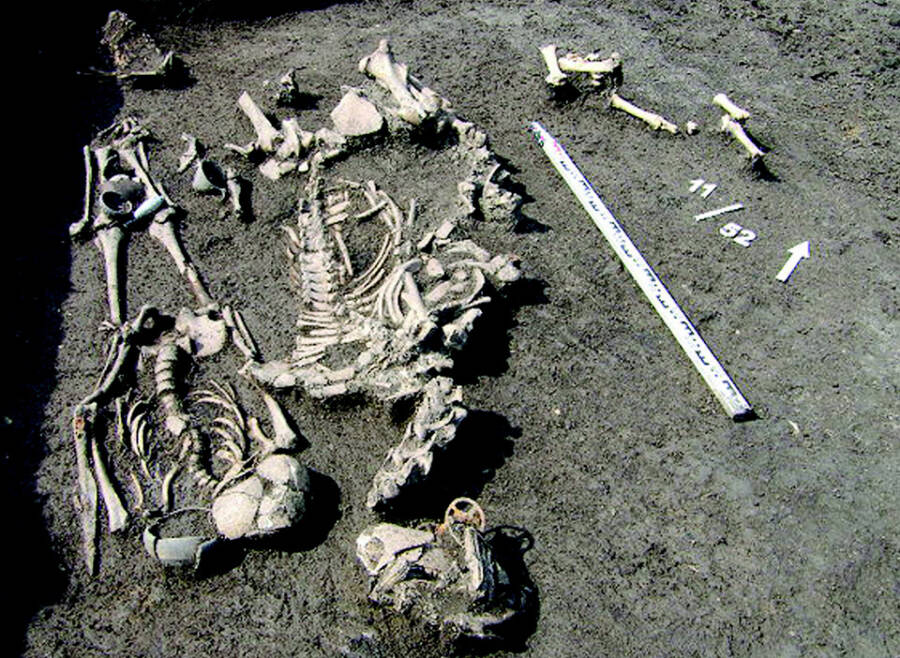
Imagine being the kind of warrior who not only gets buried with his trusty steed and fierce weapons but also rocks a gold coin bearing Alexander the Great’s visage — and a drinking jug etched with a pentagram, no less! Yep, that’s exactly what archaeologists uncovered in the North Caucasus: the 2,000-year-old grave of a young Maeotian fighter, decked out with totemic charms to protect him on his final, otherworldly journey. Sounds like ancient insurance, right? But here’s the kicker — why a coin and a pentagram? Was this warrior hedging his bets between historical prestige and mystical mojo? Researchers are buzzing, hoping these artifacts spill secrets about a society that thrived by the Sea of Azov long before your coffee was invented. Dive in with me as we unravel this enigmatic burial packed with symbolism, animal companions, and some serious ancient bling.
Experts believe that this Maeotian warrior was laid to rest with both a coin featuring the likeness of Alexander the Great and a jug adorned with a pentagram in order to provide him with totemic protection on his journey into the afterlife.

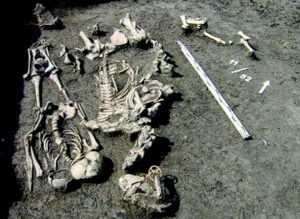
Abramzon et al., Russian Archaeology, 2026This 2,000-year-old burial of a Maeotian warrior also contained the remains of his horse, a pentagram-adorned drinking vessel, and a rare gold coin.
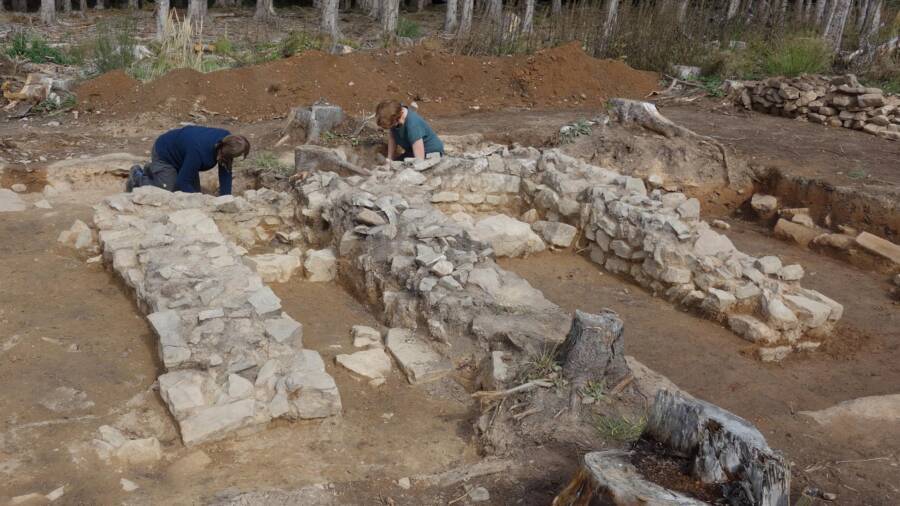
Archaeologists excavating an ancient necropolis in the North Caucasus region of southwestern Russia discovered a young Maeotian warrior’s grave including his horse, his weapons, and various animal offerings.
Two of the warrior’s grave goods in particular have piqued the interest of researchers: a rare gold coin known as a stater that was placed by his jaw, and a drinking vessel with a pentagram etched into its side. Researchers hope that these goods, along with the many other artifacts buried with the young man, will reveal more than ever before about the Maeotian society that flourished along the Sea of Azov more than two millennia ago.
The Maeotian Warrior’s Grave Found At An Ancient Necropolis In Russia
In a recent study of the Vinogradny 1 necropolis, researchers identified a staggering 155 ancient graves at the site. This enormous ancient cemetery sits near the modern-day city of Krymsk, and archaeologists date its construction back to somewhere in the first or second century B.C.E.
The new study largely focuses on a special circular region of about 20 feet in diameter that sits at the center of the necropolis. There, a narrow, six-foot shaft with nine steps leads down to the groundwater level.

Wikimedia CommonsThe necropolis sits in the North Caucasus region of Russia, along the Sea of Azov, pictured here.
On the floor of the shaft, archaeologists found a gold coin, which they interpreted as a votive offering that had been tossed down there to honor the warrior at the time of his interment.
Moreover, this area contained two burials. One of these, labeled Burial 97, contained the complete skeletons of three horses and a bull, as well as remains from a dog, cow, and pig.
The other, labeled Burial 52, is that of the young warrior, who was between 25 and 30 when he died. An adult horse was buried alongside him, including its iron bits and a girth buckle.
The warrior was also buried with various weapons, including an iron spear, javelin, arrow, and a knife, as well as offerings of food.
What The Pentagram Jug And The Warrior’s Other Grave Goods Reveal About Maeotian Customs
The location of the warrior’s grave beneath the necropolis’ special inner circle suggests that he held a prestigious place within this Maeotian community.

Abramzon et al., Russian Archaeology, 2026One of the warrior’s grave goods was a vessel emblazoned with a pentagram, a symbol of protective magic.
Likewise, other valuable objects had been deposited in his grave, including a clay bowl, a handmade vessel, and a glass alabastron, a type of container used for oil or perfume.
But one vessel stood out among the rest: a small, two-handled kanatharos used for drinking — onto which someone had etched a pentagram.
According to the study’s authors, the pentagram served as a symbol of protective magic and was placed upon objects in hopes of saving them from harm. During antiquity, the pentagram was similarly believed to have healing powers.
Other comparable discoveries involving pentagrams have been made in the region surrounding the Sea of Azov, and they’re often connected to the military or to war in one way or another.
This pentagram found in the Maeotian warrior’s burial was likely left there in hopes of providing him with protection as he transitioned from the living world to the afterlife.

Abramzon et al., Russian Archaeology, 2026Archaeologists also found a gold coin, rare for the region, beneath the warrior’s lower jaw.
In addition to the pentagram, a gold coin was found beneath the warrior’s jaw. The coin weighed around eight grams and featured an image of a deified Alexander the Great on one side, and Athena along with Nike in her hand on the other.
Not to be confused with the other stater deposited in the shaft as a sort of offering, this coin was placed directly on the warrior’s body, possibly in his mouth.

Supa Ant Canning Supplies Starter Kit (Food Grade) - Canning Kits Set for Beginners - 3 Pcs. Including Wide Mouth Jar Funnel, Magnetic Lid Lifter, Stainless Steel Jar Lifter (Assembled in USA) Blue
$9.99 (as of October 6, 2026 00:56 GMT +00:00 - More infoProduct prices and availability are accurate as of the date/time indicated and are subject to change. Any price and availability information displayed on [relevant Amazon Site(s), as applicable] at the time of purchase will apply to the purchase of this product.)
1MORE Triple Driver In-Ear Headphones - Silver - Wired - Adult - In Ear - 18 grams - 90 days limited warranty
(as of October 6, 2026 00:56 GMT +00:00 - More infoProduct prices and availability are accurate as of the date/time indicated and are subject to change. Any price and availability information displayed on [relevant Amazon Site(s), as applicable] at the time of purchase will apply to the purchase of this product.)
RIVER OF GOODS Stained Glass Bird Accent Lamp - 8" W x 13.5" H - Tiffany Style Table Lamps for Home, Office Desk, Bedroom, Nightstand - Blue Jay Decor
(as of October 6, 2026 00:56 GMT +00:00 - More infoProduct prices and availability are accurate as of the date/time indicated and are subject to change. Any price and availability information displayed on [relevant Amazon Site(s), as applicable] at the time of purchase will apply to the purchase of this product.)
Supa Ant 6x8ft. Welding Blanket Fireproof (Pack of 2) - Heavy Duty Weld Fire Blanket Tools - Welders Cover for Men Curtain with Gloves - Large Welding Gear for Welder Accessories
(as of October 6, 2026 00:56 GMT +00:00 - More infoProduct prices and availability are accurate as of the date/time indicated and are subject to change. Any price and availability information displayed on [relevant Amazon Site(s), as applicable] at the time of purchase will apply to the purchase of this product.)

















Post Comment