Unveiling the Haunting Secrets Behind Papua New Guinea’s Enigmatic Asaro Mudmen Masks
Ever stumbled upon a group that looks like they just walked out of a haunted swamp party—white clay smeared everywhere, masks sporting bulging eyes and sharp tusks, looking like extras from a horror flick? Meet the Asaro Mudmen of Papua New Guinea. They’re not the berserk warriors their ghostly appearance might suggest, though. In fact, their eerie look—part tribal spectacle, part battlefield tactic—has a story tangled up in legend, mud, and a dash of mischief. But here’s the kicker: their fearsome façade is less about scaring the heck out of enemies and more about keeping tradition bubbling to life… with a little flair thrown in for unsuspecting tourists (and TikTok viewers). Curious how a dash of mud turned into a worldwide spectacle? Let’s dive into the mystique behind these pale “ghosts” and find out why looking scary sometimes pays off in more ways than one.
The Asaro Mudmen of Papua New Guinea cover their bodies in white clay and wear terrifying masks, but they’re not the fearsome warriors that they appear to be.
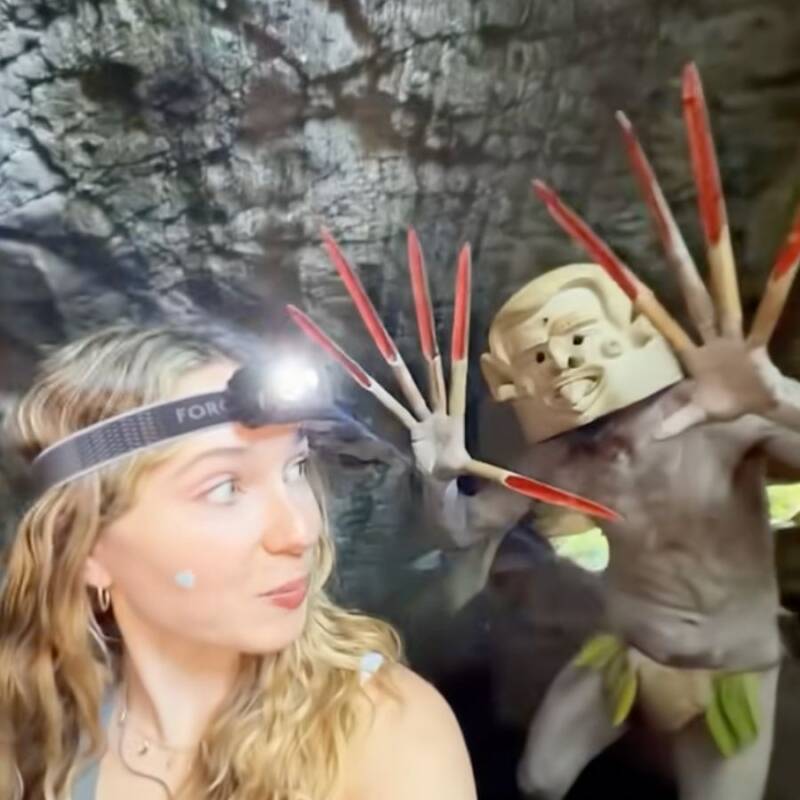
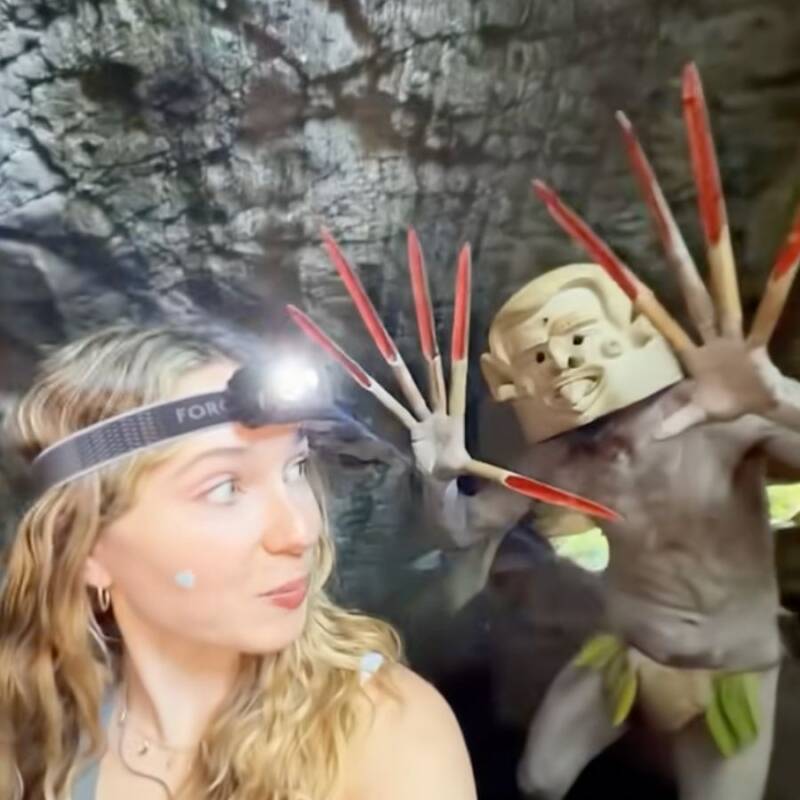
@katie.caf.travel/TikTokKatie Caf documented her experience with the Asaro Mudmen in Papua New Guinea.
If you travel through the highlands of Papua New Guinea, you may encounter a group of men who look like living ghosts. Their bodies are covered in pale clay. Some brandish long claws made of bamboo; others wear grotesque masks complete with bulging eyes, sharp tusks, and twisted horns. These are the Asaro Mudmen, one of Papua New Guinea’s most recognizable cultural fixtures.
Their strange appearance has fascinated outsiders for generations — and, in the age of TikTok, has made the country a destination for adventurers seeking a unique cultural experience.
But who are the Asaro Mudmen, and how did this peculiar tradition develop? A recent video showing the Asaro Mudmen has internet users asking — and the answers are surprising.
An Introduction To The Asaro Mudmen
In a video with over five million views, TikTok user Katie Caf (@katie.caf.travel) shows herself in a cave. Surrounding her are two Asaro Mudmen, both covered in white clay and wearing frightening masks.
According to Caf, this look has a practical purpose. Specifically, she says that these are “warfare, tribal outfits” that the people used to “scare the enemies.”
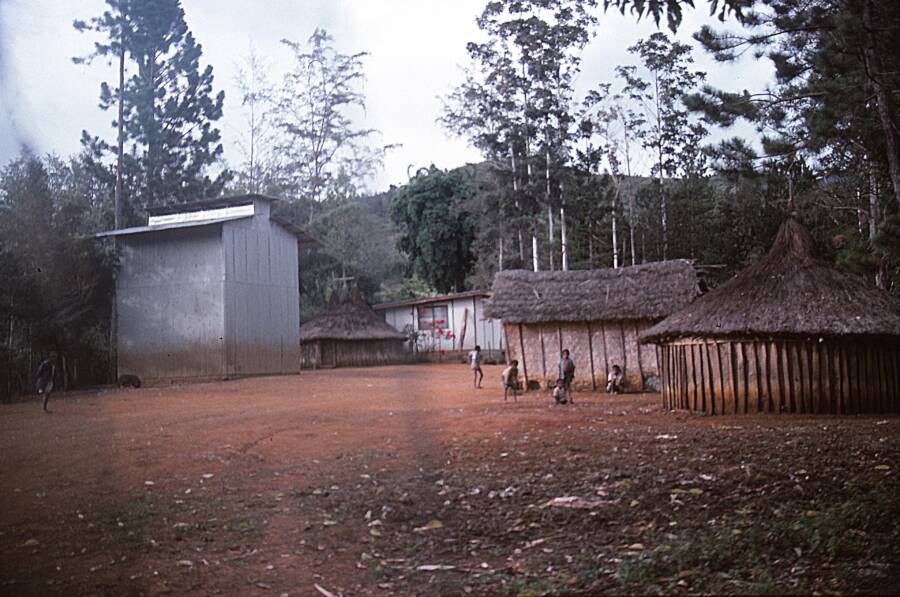
Brian Ireland/Wikimedia CommonsA village in the Asaro Valley of Papua New Guinea.
Whether this is actually the case, however, is a complicated question. According to one telling, the group was once defeated in battle and forced to flee. Seeking refuge, they settled near the Asaro River, which was filled with light mud. Resting on its shores, the people became covered in the mud, giving their skin a pale hue.
By the time they met their enemies once again, their foes were terrified. They believed that they were not seeing men, but ghosts or spirits — and thus, they fled, making the Asaro people the victors and creating a new battle tradition.
Whether this is actually the story of the Mudmen’s origin is debated. Instead, anthropologists say that the modern practice may be a mix of several earlier traditions adapted into a single act.
How Did The Asaro Mudmen Come To Be?
In 1996, anthropologists Ton Otto and Robert Verloop published a study on the history of the Asaro Mudmen based on fieldwork by Verloop and Nick de Heer. To understand the practice, the pair sorted through a variety of oral histories from residents to piece together a coherent narrative. Their work largely relied on the words of Ruipo Okoroho, the acknowledged chairman of the Mudmen.
According to one origin story explored in the study, the Mudmen practice emerged in the village of Komunive. In the late 1800s, a man named Bukiro Pote spent several years in the nearby Watabung area. There, he learned about a practice called bakime, in which a fighter would cover themselves with white sap from the meniha tree before an attack.
This had a largely practical purpose. By painting their face, the attacker could disguise their identity, making it difficult for anyone to recognize them and retaliate against them or their family.
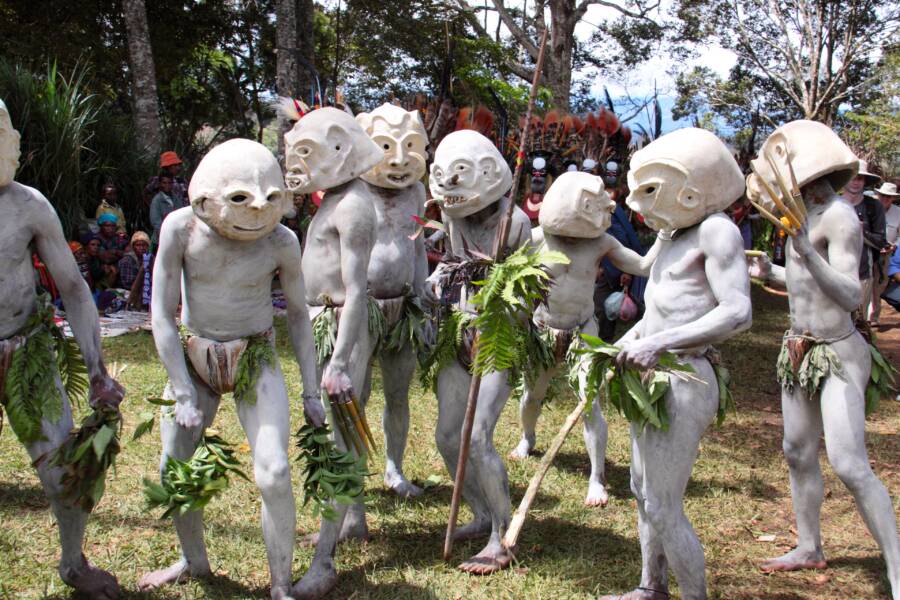
Yves Picq/Wikimedia CommonsThe Asaro Mudmen perform dances for tourists that tell the mythical story behind their masks.
When Bukiro returned home, he began adapting the practice. What came next was called girituwai. In contrast to bakime, girituwai involved creating a mask from a bamboo frame and a bilum bag with holes cut for eyes. From there, mud was smeared across the bag.
In both cases, the face coverings were not normal battle dress. Instead, these looks were only used for targeted attacks. Warfare had specific, traditional regalia; assassinations or retaliatory attacks, in contrast, could employ one of these disguises.
However, this is not the only explanation for the origins of the look. In another telling, an Asaro man lacked a traditional wedding costume. In its place, he decided to wear a mask and cover himself in mud — resulting in wedding guests believing he was a ghost and fleeing.
While it’s unclear when the Asaro people began covering themselves in mud, body painting practices were certainly present in the highlands of Papua New Guinea from an early age. For example, men around Mount Hagen sometimes covered their bodies in charcoal before fighting. This was both to conceal themselves and to appear more formidable. There’s also evidence of people in the area covering their bodies in clay, but this was often done to mourn those who were lost in battle.

Skater Trainer Wheels - Beginners get Skateboard Tricks Fast, Safe and Fun | Viral accessory gift - Helps beginners stay excited about their new skateboard - Kids & parents love these
$28.99 (as of October 26, 2026 01:02 GMT +00:00 - More infoProduct prices and availability are accurate as of the date/time indicated and are subject to change. Any price and availability information displayed on [relevant Amazon Site(s), as applicable] at the time of purchase will apply to the purchase of this product.)
1MORE Triple Driver In-Ear Headphones - Silver - Wired - Adult - In Ear - 18 grams - 90 days limited warranty
(as of October 26, 2026 01:02 GMT +00:00 - More infoProduct prices and availability are accurate as of the date/time indicated and are subject to change. Any price and availability information displayed on [relevant Amazon Site(s), as applicable] at the time of purchase will apply to the purchase of this product.)
PROMIXX FORM Sports Water Bottle - Premium BPA Free Water Bottle for Fitness Sports & Outdoors - Sustainable Drinks Bottle with Measurement Markers and Leakproof Lid - 760ml / 26oz (Midnight Blue)
$18.42 (as of October 26, 2026 01:02 GMT +00:00 - More infoProduct prices and availability are accurate as of the date/time indicated and are subject to change. Any price and availability information displayed on [relevant Amazon Site(s), as applicable] at the time of purchase will apply to the purchase of this product.)
RIVER OF GOODS Alabaster LED Mesh Caged Ceiling Fan - 52" L X 52" W - White/Oak Wood-Grain Blades
(as of October 26, 2026 01:02 GMT +00:00 - More infoProduct prices and availability are accurate as of the date/time indicated and are subject to change. Any price and availability information displayed on [relevant Amazon Site(s), as applicable] at the time of purchase will apply to the purchase of this product.)