When Must a Captain Truly Go Down with Their Ship? The Shocking Truth Behind Maritime Legends Unveiled

So here’s a doozy for you: in 2012, the glamorous cruise ship Costa Concordia didn’t exactly keep its charm — after hitting a reef near Italy’s Giglio island, it capsized in a disaster that shook the world. Fast forward to 2015, and Captain Francesco Schettino found himself convicted not only for causing this tragic shipwreck but also for the jaw-dropping act of abandoning ship before his passengers. Yep, the man famously dubbed ‘Captain Coward’ in the Italian media is now serving 16 years behind bars. But here’s a twist to chew on — is it just a maritime myth that a captain must be the last to leave a sinking ship? Turns out, this old sea tale has teeth in Italian law, where shirking this duty can land you in jail. Netflix’s new documentary, Shipwrecked: Nightmare at Sea, dives deep with never-before-seen footage and haunting survivor stories that peel back the layers of this catastrophe. Intrigued? You should be. LEARN MORE
In 2015, Francesco Schettino was found guilty of multiple manslaughter and was also convicted of causing the shipwreck and abandoning ship before his passengers in the Costa Concordia disaster.
The catastrophe happened in January 2012 when the cruise ship hit a reef and capsized off the Italy’s Giglio island.
Captain Schettino was sentenced to 16 years in prison as a result and nicknamed ‘Captain Coward’ in the Italian media.
A new Netflix documentary, Shipwrecked: Nightmare at Sea, features never-before-seen footage and survivor accounts from the Costa Concordia disaster, including audio from Schettino.
But there has long been confusion over if the ‘captain always goes down with the ship’ is a real thing or just a moral legend. However, Italian law puts jail time on it.
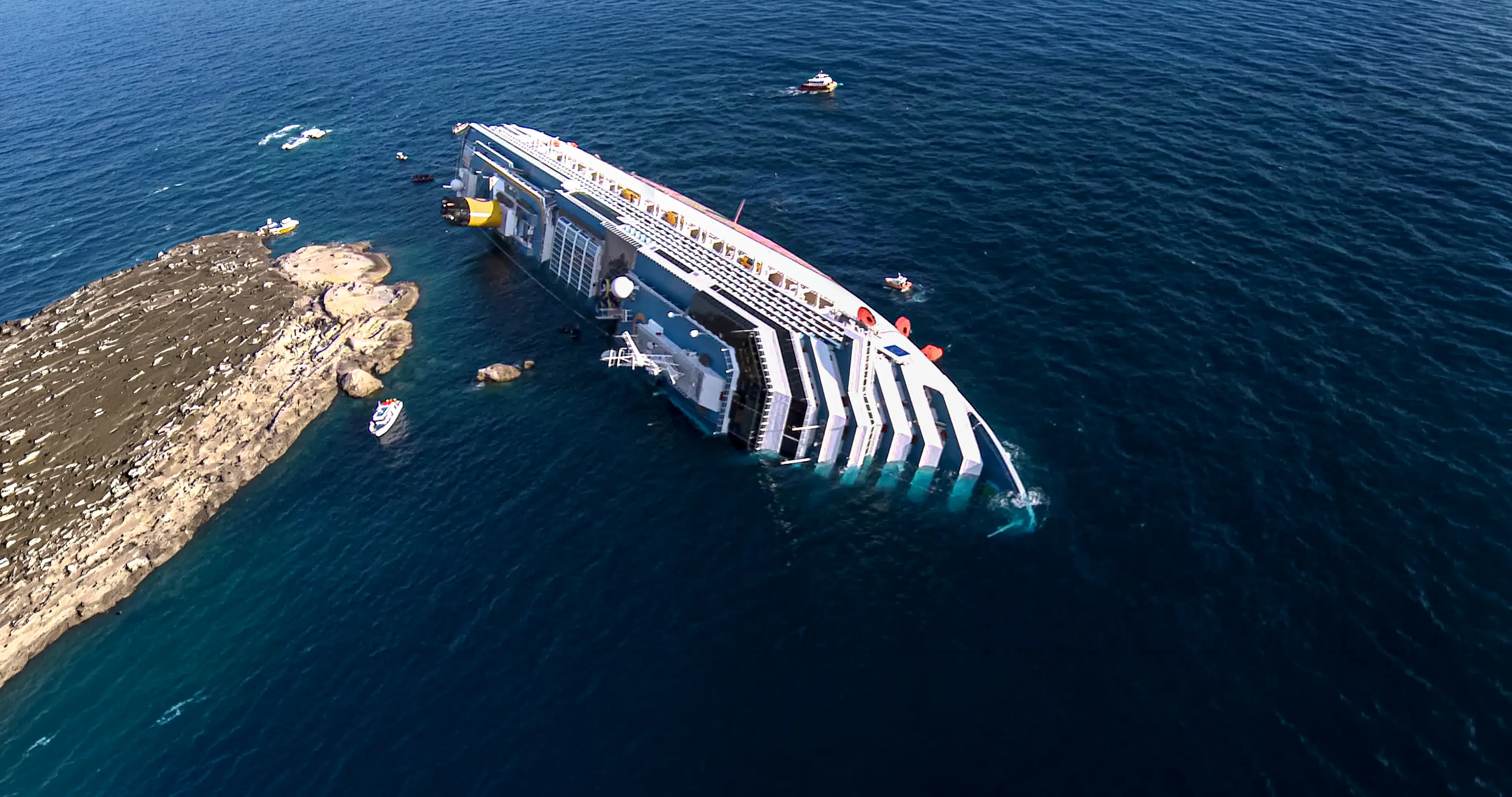
The 2012 catastrophe claimed lives, led to a 16-year prison sentence, and drew global media attention. (Netflix)
Schettino abandoned ship
There was around 4,300 people on board the Costa Concordia, with 33 dying in the disaster (including one salvage diver).
But Schettino was found to have left the ship while passengers were still on board, as it began to flood and sink.
And transcripts shown in court suggested he had not initially told the coastguard of the damage.
“Listen Schettino, perhaps you have saved yourself from the sea, but I will make you look very bad. I will make you pay for this. Dammit, go back on board!” said Coastguard Capt Gregorio De Falco, who repeatedly ordered him to return to the ship.
Schettino spoke by radio from a lifeboat and claimed he was co-ordinating the rescue from there.
“Do you realise that it is dark and we can’t see anything?” he said.
But the coastguard shouted back: “So, what do you want to do, to go home, Schettino?! It’s dark and you want to go home? Go to the bow of the ship where the ladder is and tell me what needs to be done, how many people there are, and what they need! Now!”
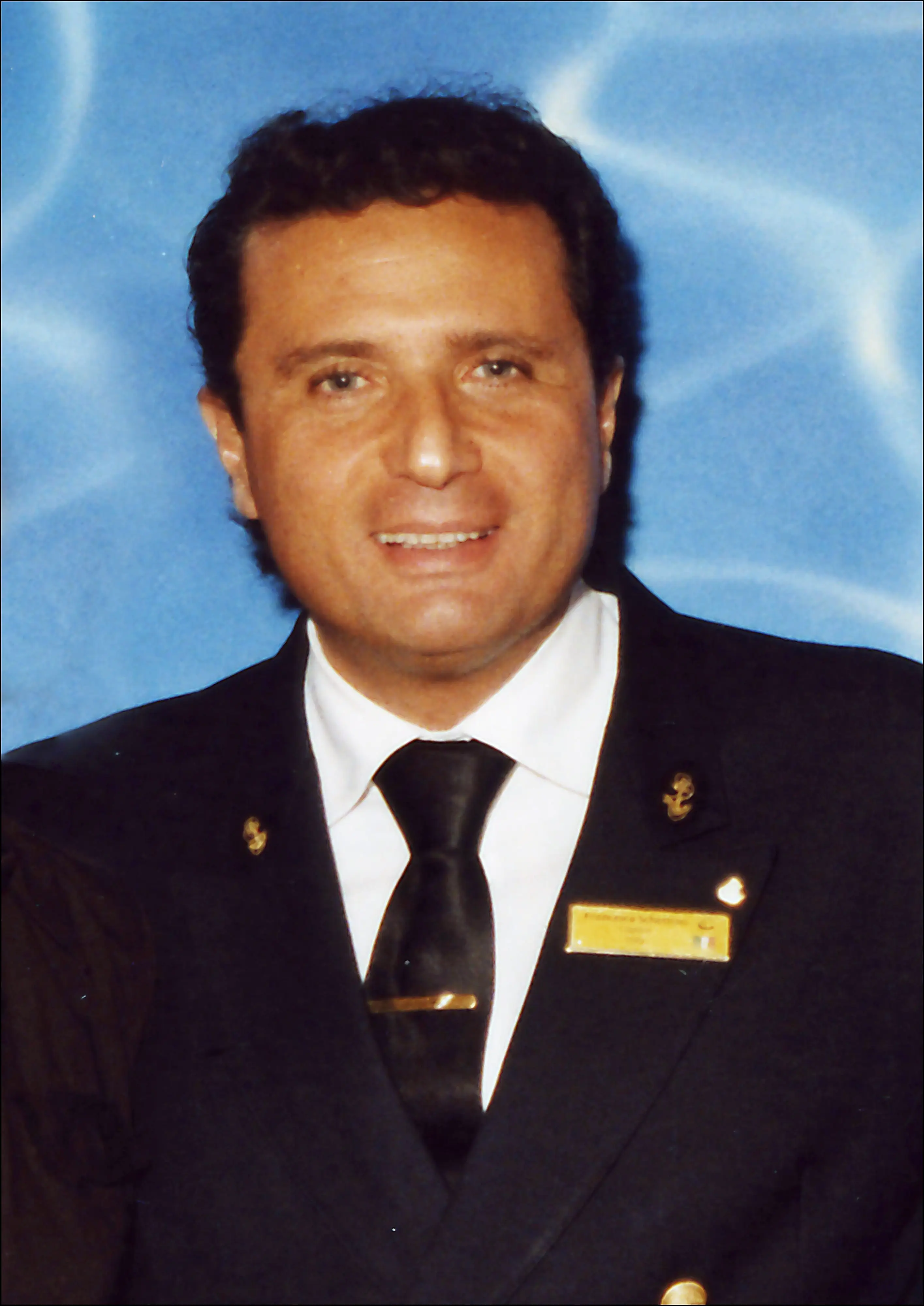
He is currently serving jail time in Rome. (Photonews via Getty Images)
Does a captain legally have to be the last one off a sinking ship?
It’s a popular tradition of the sea that a captain should stay onboard until all of their passengers have been safely evacuated.
And largely, it is lore, a bit of a maritime tradition and ‘ancient code’ of the waters – under UK and US law, it’s not a requirement.
But in Italy, a captain can risk jail time for not leaving last. Article 1097 of Italy’s Maritime Law says that if the commander is not the last one to leave the ship, they risk two years in jail. If the vessel is lost, then it’s two to eight years and if the boat is used to carry people then they risk three to 12 years.
More widely, it becomes a bit murky with a captain’s responsibilities alongside the legalities.
Lawyer Benjamin Maltby, partner at Keystone Law, explained to Dockwalk: “In English law, there is no law which states that the master must be the last to leave a ship in peril.”
However: “All masters are employees of the owner. All employees owe a duty to their employer to exercise reasonable care in performing their duties. The owner, in turn, has a duty to take reasonable care of the health and safety of all its employees. In practice, the owner’s health and safety duties are outsourced to the yacht’s manager (if any) and master. So, if a situation arose where the captain was considering abandoning the vessel, it is likely that other crewmembers’ safety has also been compromised. If those crewmembers are injured or killed, then the claim could be passed on to the captain.”
So, it’s not necessarily just a matter of honour but duty as a captain.
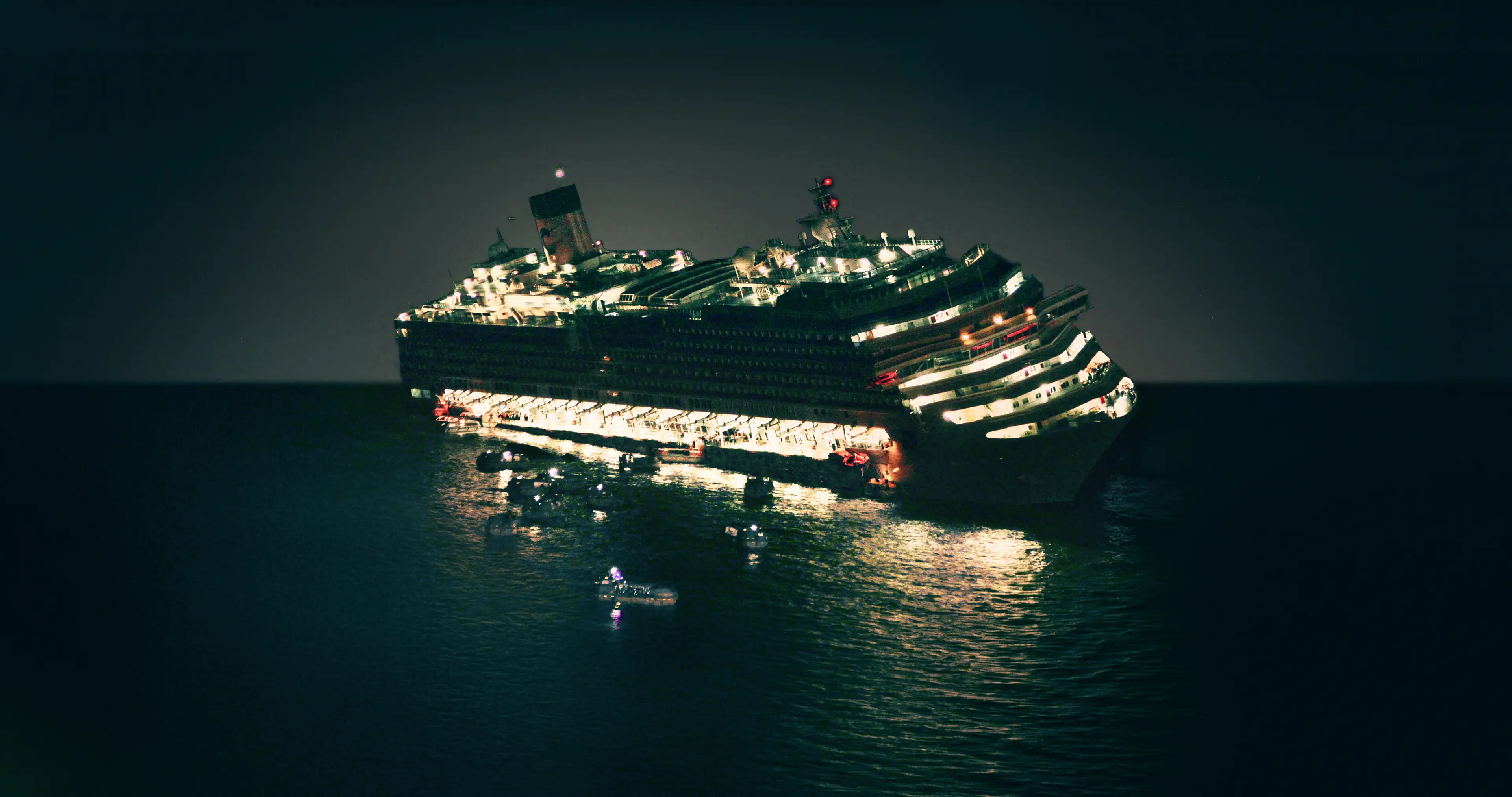
At first, passengers were told there was a blackout. (Netflix)
Schettino’s sentence
Condemned as a ‘careless idiot’ by a prosecutor, Schettino accepted some responsibility for the disaster but denied the criminal charges as he argued he had been made a scapegoat.
He was found guilty in 2015 of manslaughter and convicted of causing the shipwreck and abandoning ship and was sentenced to 16 years in prison.
Schettino attempted to repeal the ruling, but in 2017 was ordered to hand himself in for detention, exhausting his appeals.
In 2025, he filed for early release, requesting to enter a state of ‘semi-liberty’ which would allow him to serve the remainder of his sentence outside of prison.
However, his requests have been withdrawn or denied so far.
Shipwrecked: Nightmare at Sea is now streaming on Netflix.
Joking Hazard by Cyanide & Happiness - 360+ Funny & Inappropriate Comic Cards, Hilarious Party Games | Includes Add-Your-Own-Words Cards
$17.47 (as of October 7, 2026 00:56 GMT +00:00 - More infoProduct prices and availability are accurate as of the date/time indicated and are subject to change. Any price and availability information displayed on [relevant Amazon Site(s), as applicable] at the time of purchase will apply to the purchase of this product.)
1MORE Triple Driver in-Ear Earphones Hi-Res Headphones with High Resolution, Bass Driven Sound, MEMS Mic, in-Line Remote, High Fidelity for Smartphones/PC/Tablet - Silver
$69.99 (as of October 7, 2026 00:56 GMT +00:00 - More infoProduct prices and availability are accurate as of the date/time indicated and are subject to change. Any price and availability information displayed on [relevant Amazon Site(s), as applicable] at the time of purchase will apply to the purchase of this product.)
KiddyCare Diaper Caddy Organizer Cart for Nursery Baby Basket Gift for Boy/Girl | Diaper Caddy for Changing Table Basket Organizer with Dividers | Caddy for Baby Stuff Breast Pump Caddy - Regular
$8.95 (as of October 7, 2026 00:56 GMT +00:00 - More infoProduct prices and availability are accurate as of the date/time indicated and are subject to change. Any price and availability information displayed on [relevant Amazon Site(s), as applicable] at the time of purchase will apply to the purchase of this product.)
Supa Ant Canning Supplies Starter Kit (Food Grade) - Canning Kits Set for Beginners - 3 Pcs. Including Wide Mouth Jar Funnel, Magnetic Lid Lifter, Stainless Steel Jar Lifter (Assembled in USA) Blue
$9.99 (as of October 7, 2026 00:56 GMT +00:00 - More infoProduct prices and availability are accurate as of the date/time indicated and are subject to change. Any price and availability information displayed on [relevant Amazon Site(s), as applicable] at the time of purchase will apply to the purchase of this product.)