The Shocking Truth Behind Knuckle Cracking Revealed by Groundbreaking Simulation
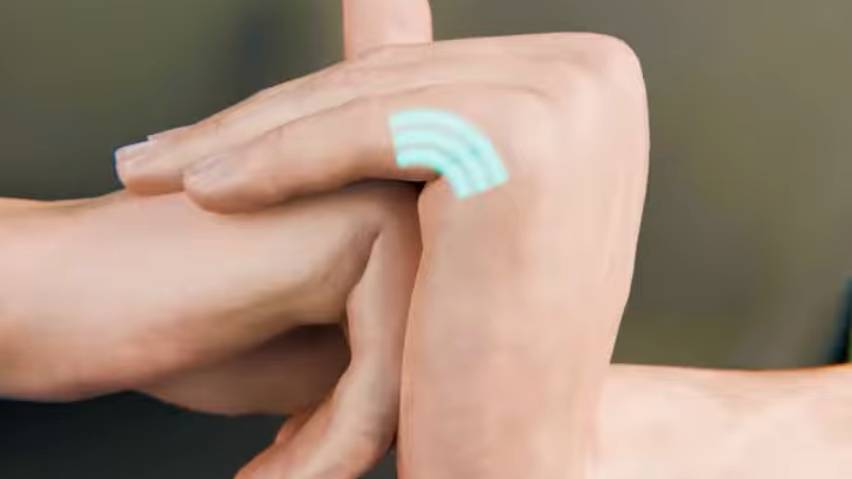
Ever wondered what’s really happening inside your body every time you audibly pop those knuckles? Spoiler alert: it’s not the dramatic bone-cracking catastrophe your grandma warned you about. For years, we’ve been fed tales that cracking your knuckles could turn your fingers into swollen sausages or invite arthritis to the party — frankly, a bit of a downer for a harmless habit. But thanks to a fascinating simulation by Zack D Films and a little MRI magic from the University of Alberta, we now have a front-row seat to the real knuckle crack spectacle. Turns out, it’s all about stretchy joint spaces and popping gas bubbles, with none of the doom and gloom we feared. So, is knuckle-cracking the villain or just a quirky party trick? Buckle up, because the truth might just surprise you — and it’s way less scary than you think.
The question of what goes on inside of the body when you crack your knuckles has finally been answered, and it isn’t quite the same as what we’ve been told growing up.
Cracking your knuckles is a habit that some people just can’t break, and there’s something that’s got to be said about feeling the pop of knuckle, and the release of tension in your hand.
It’s just hard to give up.
But throughout the ages, you might have heard some things about the act, and its risks to your health.
From making your knuckles bigger, to giving you arthritis, there have been many rumours about the habit.
Usually, people tell you that when you pop a knuckle, it expands the air between the joints, essentially building pressure that causes these health complications.

Zach D Films released a simulation which reveals all (YouTube/ @Zackdfilms)
But according to a simulation by Zack D Films, this pressure does happen, but the implications are not as dramatic as that.
His YouTube clip features an internal look into a person’s knuckle as the cracking occurs, which shows how the space between the joints ‘stretches’ as pressure is applied by the individual cracking.
Apparently, once this space expands, the ‘pressure drops’ and gas bubbles form, which pop, causing the sound we’re all familiar with.
However, those bubbles take around 30 minutes to ‘come back’, which is ‘why it’s impossible’ to crack the same knuckle within that time period.
Greg Kawchuk, a professor in the Faculty of Rehabilitation Medicine at the University of Alberta, spoke with Science Alert and explained that this was caught on an MRI machine, where you can see ‘very clearly what is happening inside the joints.’
He said of the gas bubbles: “It’s a little bit like forming a vacuum. As the joint surfaces suddenly separate, there is no more fluid available to fill the increasing joint volume, so a cavity is created and that event is what’s associated with the sound.”
As for whether this can cause arthritis in the long run, a researcher named Donald Unger tested this theory out.
For 50 years, Unger only cracked the knuckles on his left hand twice a day and not on the right hand.
He published the results in 2004, stating that both hands saw no difference.
So, it seems like it’s all just an old wives tale, and whether you choose to crack them or not – there’s not going to be some crazy side effect.
RIVER OF GOODS Alabaster LED Mesh Caged Ceiling Fan - 52" L X 52" W - White/Oak Wood-Grain Blades
(as of September 21, 2026 00:45 GMT +00:00 - More infoProduct prices and availability are accurate as of the date/time indicated and are subject to change. Any price and availability information displayed on [relevant Amazon Site(s), as applicable] at the time of purchase will apply to the purchase of this product.)
Supa Ant 6x8ft. Welding Blanket Fireproof (Pack of 2) - Heavy Duty Weld Fire Blanket Tools - Welders Cover for Men Curtain with Gloves - Large Welding Gear for Welder Accessories
(as of September 21, 2026 00:45 GMT +00:00 - More infoProduct prices and availability are accurate as of the date/time indicated and are subject to change. Any price and availability information displayed on [relevant Amazon Site(s), as applicable] at the time of purchase will apply to the purchase of this product.)
PROMIXX FORM Sports Water Bottle - Premium BPA Free Water Bottle for Fitness Sports & Outdoors - Sustainable Drinks Bottle with Measurement Markers and Leakproof Lid - 760ml / 26oz (Midnight Blue)
$17.96 (as of September 21, 2026 00:45 GMT +00:00 - More infoProduct prices and availability are accurate as of the date/time indicated and are subject to change. Any price and availability information displayed on [relevant Amazon Site(s), as applicable] at the time of purchase will apply to the purchase of this product.)
KiddyCare Diaper Caddy Organizer for Baby Nursery Basket with Handle Lid Nursing Caddy with Changing Table Organizer Cart Newborn Caddy Rosy (Floral Print) X-Large
$16.50 (as of September 21, 2026 00:45 GMT +00:00 - More infoProduct prices and availability are accurate as of the date/time indicated and are subject to change. Any price and availability information displayed on [relevant Amazon Site(s), as applicable] at the time of purchase will apply to the purchase of this product.)