Ancient Mystery Unveiled: The 430,000-Year-Old Wooden Tool That Rewrites Human History
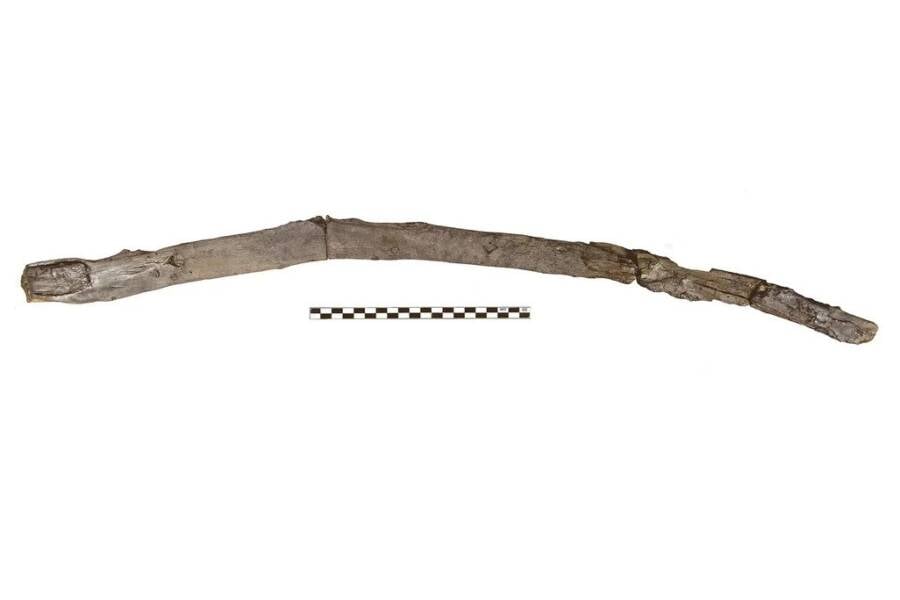
Ever wonder what you’d do if you stumbled upon a 430,000-year-old piece of wood in your backyard? Would you think it’s just an ancient stick or the oldest “Swiss Army knife” of the Paleolithic era? Well, deep in Greece’s Marathousa 1 archaeological site, scientists uncovered a 31-inch alder stick that’s making us rethink prehistoric multitasking. Was it used to hack through mud like the original gardening tool? Or maybe to carve up some elephant-sized snacks, considering the nearby elephant bones? Either way, this wooden relic—not a mere twig—was deliberately shaped by our crafty ancestors, possibly Neanderthals or Homo heidelbergensis, proving early humans were a lot handier than we credit them for. Curious to see how these muddy masterpieces rewrite the story of human ingenuity?
Discovered at the Marathousa 1 archaeological site, this 31-inch piece of alder wood may have been used to either dig through mud or butcher elephants, bones of which were found just nearby.
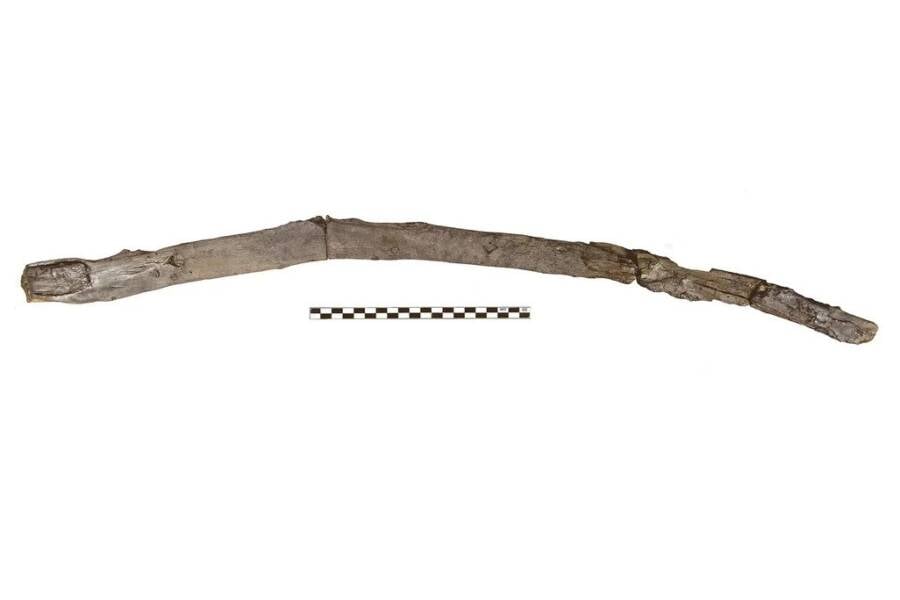
Dimitris Michailidis/K. HarvatiDating back to the Middle Pleistocene, this stick as well as the other prehistoric pieces of wood found alongside it could have been used by either early Neanderthals or Homo heidelbergensis.
During excavations that began 13 years ago, archaeologists in Greece uncovered more than 100 pieces of prehistoric wood. At first glance, some appeared to be sticks or chunks of a tree. But after closely examining these artifacts, researchers now believe that two of their finds were once used by our ancestors for digging or cutting, making them the oldest-known wooden tools ever discovered.
Both of these wooden objects are a whopping 430,000 years old, dating back to the Middle Pleistocene. They indeed appear to have been intentionally carved and shaped, suggesting that they served a clear purpose for the early humans who once wielded them.
The Discovery Of What Could Be The Oldest Wooden Tools Ever Found
According to a study published in the journal PNAS, these wooden objects were part of a much larger hoard discovered during excavations at the Marathousa 1 archaeological site, a mine in Greece’s Megalopolis basin. Between 2013 and 2019, archaeologists recovered 144 pieces of wood that had been preserved through the ages by the area’s wet, muddy conditions.
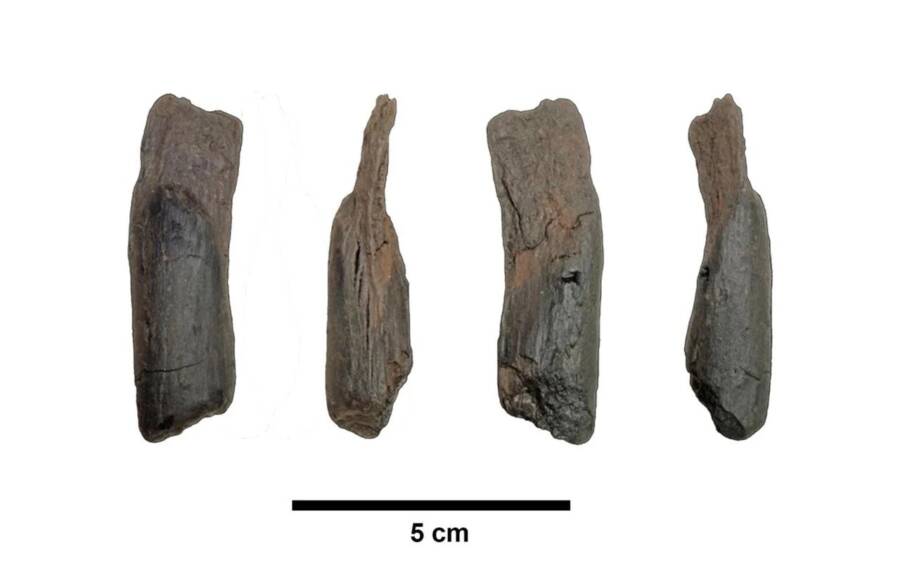
N. Thompson/K. HarvatiThe second wooden tool’s purpose is unknown, though researchers noted that it had been purposefully stripped of bark.
Because of the age of the site, researchers determined that the wood pieces were 430,000 years old. And some of them, examined under a microscope, bore marks which suggested that they had been shaped for use as tools.
The first, which looks like a mere stick at first glance, is 2.7 feet long and made of alder wood. It has cut marks, seemingly made by stone tools, as well as signs of wear that suggest it was used to dig through soil. Researchers suspect that it was used to dig through wet ground, possibly to harvest plants. However, the presence of an elephant carcass nearby also raises the possibility that this wooden tool was used to scavenge meat from the animal’s bones.
The second tool, made from either willow or poplar, is just a few inches long. Though clearly stripped of bark, its exact purpose remains unclear. Researchers have speculated that it was perhaps used to shape stone tools.
These finds also come not long after similar discoveries of prehistoric wooden tools were made in Germany and China. However, the tools unearthed in Greece predate those by more than 100,000 years.
And while questions remain about the wooden tools found in Greece, they nevertheless provide a rare and fascinating window into how our ancestors lived some 430,000 years ago.
The Pleistocene Human Ancestors Who Wielded The Stone Tools Found In Greece

G. Prieto, K. HarvatiHow one of these prehistoric tools was perhaps handled, according to an artist’s depiction.
Roughly half a million years ago, Greece’s Megalopolis basin was likely populated by Neanderthals or an early human ancestor known as Homo heidelbergensis. During the Middle Pleistocene, the basin was a “glacial refugium,” or an area where plants and animals survived during the Ice Age.
Despite the harsh global conditions, this was also an era of groundbreaking ingenuity. As the researchers note in their study, the Middle Pleistocene was “a critical period of human evolution, characterized by increasing behavioral complexity and the first unambiguous evidence of plant-based technologies,” like wooden tools. That said, such tools are incredibly rare in the archaeological record, given that wooden artifacts like those found at Marathousa 1 usually aren’t well preserved.
But the muddy conditions in the Megalopolis basin have preserved several objects from this era — objects that tell a story about what life was like here some 430,000 years ago. In addition to the tools, researchers also came across another fragment of alder wood scarred with claw marks, hinting at the treacherous conditions that once existed in the basin. As the researchers wrote, the claw marks are suggestive of “carnivore presence” at the site, as well as “possible hominin-carnivore competition.”

White Leaf Baby Food Pouches, Toddler Snack, Mango + Carrot + Banana + Pear | 24 Pack, Organic No Added Sugar, Non-GMO, BPA-Free Regeneratively Farmed, Squeeze Puree Smoothie Pouch for Adults & Children
$69.95 (as of September 28, 2026 00:51 GMT +00:00 - More infoProduct prices and availability are accurate as of the date/time indicated and are subject to change. Any price and availability information displayed on [relevant Amazon Site(s), as applicable] at the time of purchase will apply to the purchase of this product.)
Joking Hazard Enlarged Box Empty Box for Card Storage
$12.00 (as of September 28, 2026 00:51 GMT +00:00 - More infoProduct prices and availability are accurate as of the date/time indicated and are subject to change. Any price and availability information displayed on [relevant Amazon Site(s), as applicable] at the time of purchase will apply to the purchase of this product.)
RIVER OF GOODS Coastal 52 Inch Wooden Bead LED Ceiling Fan, Cream
(as of September 28, 2026 00:51 GMT +00:00 - More infoProduct prices and availability are accurate as of the date/time indicated and are subject to change. Any price and availability information displayed on [relevant Amazon Site(s), as applicable] at the time of purchase will apply to the purchase of this product.)
RIVER OF GOODS Alabaster LED Mesh Caged Ceiling Fan - 52" L X 52" W - White/Oak Wood-Grain Blades
(as of September 28, 2026 00:51 GMT +00:00 - More infoProduct prices and availability are accurate as of the date/time indicated and are subject to change. Any price and availability information displayed on [relevant Amazon Site(s), as applicable] at the time of purchase will apply to the purchase of this product.)