Ancient Roman Curse Tablet Unearthed in Netherlands Reveals Chilling Plea for Divine Revenge
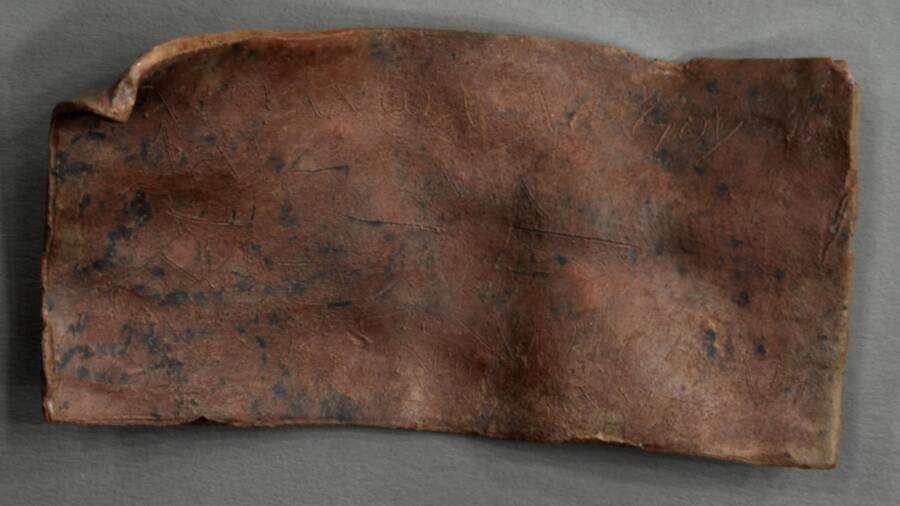
Ever wonder what you’d do if your neighbor started cozying up to your sweetheart or claimed you owed them cash—way back in the 2nd century C.E.? Well, instead of dialing up a lawyer or sending a passive-aggressive text, folks in ancient Roman Coriovallum (today’s Heerlen in the Netherlands) had a more… let’s say, magical approach. Beneath the town hall square, archaeologists dug up a teeny lead tablet—about the size of a sticky note—that’s not just your average old relic. This baby’s etched with curse spells in Ancient Greek (yeah, not Latin—talk about standing out in the Roman crowd) and peppered with Egyptian-style invocations. Imagine sending a supernatural smoke signal to the gods to mess with your rivals! What’s crazier is the drama and cultural mash-up this tablet reveals, hinting at a world where Romans borrowed a bit of secret magic from Egyptian neighbors to settle scores. So, if you think modern-day “subtle” shade throwing is intense, just wait until you hear about these ancient curses…
Unearthed below the town hall square at Heerlen — once the site of the Roman military settlement Coriovallum — this lead tablet measures roughly two inches by four inches and dates back to the second century C.E.

Elke Fuchs/Heidelberg UniversityThe curse tablet found in Heerlen is a rare find because it uses Ancient Greek, rather than Latin.
In the days of ancient Rome, there was never any shortage of everyday conflicts, some of them similar to those we all experience today. Perhaps a neighbor takes you to court, claiming you owe them money. Perhaps someone else has begun courting your one true love. Or maybe — in an example that is of course specific to ancient Rome — a certain gladiator is scheduled to face you in the arena.
However, some 2,000 years ago, if you found yourself in one of these situations and wanted the gods to smite your enemy, you could always ask them for help by creating a curse tablet. You’d carve your vengeful wish into a piece of stone and hope that the gods would help you by hurting your rival. These magical tablets, known as defixiones in Latin or katadesmoi in Greek, were simply a part of life across the Roman Empire.
One such ancient tablet, dated to the second century C.E., was discovered by archaeologists in the city of Heerlen, Netherlands, which was the former site of the Roman military settlement Coriovallum. And unlike other such tablets that have been unearthed by archaeologists, this relic is a rare find because it was inscribed in Ancient Greek rather than Latin.
The Discovery Of A Second-Century Curse Tablet With Rare Egyptian-Style Engravings
Archaeologists discovered the tablet in a pit beneath the town hall square in Heerlen. This sort of burial is common, as these tablets were generally engraved with spells and then placed underground at sites that had local importance or alleged supernatural power.
This tablet measured about four inches by two inches and was made from lead, which has often been the case with Roman-era curse artifacts found in northern Europe.
Heidelberg University’s Institute for Papyrology analyzed the tablet’s engravings, which had become faint over time, and discovered three groups of characters inscribed onto the artifact. The team used reflectance transformation imaging (RTI), which involves digitally combining photos of the artifact taken with different lighting to reveal even the smallest of surface features.

Wikimedia CommonsThe Roman baths of Coriovallum, the most famous ancient discovery made at the ruins of this former military settlement.
Archaeologists determined that one of these sections contains inscriptions of Egyptian-style invocations to deities and demons, written in Ancient Greek. This is a rare find, as the artifacts discovered in northern Europe are usually inscribed with Latin and follow Roman traditions.
Researchers also discovered three magical symbols known as “Characteres,” which were likely used as a way to communicate the intended curse to the supernatural entities invoked in the other inscriptions. Below the symbols, researchers found the names of two men and two women who are referred to in the engraving as “fellow slaves.”
These names were also a rare find, as the men had Latin names and the women had Greek names.
“It cannot be ruled out that one of the two women was the author of the inscription and had brought the supposed ability to communicate with divine powers through such curses with her from Roman Egypt,” Dr. Julia Lougovaya, a research associate at Heidelberg University’s Institute for Papyrology, said in a statement.
What The Curse Tablet Found In Heerlen Reveals About Magical Practices In The Roman Empire
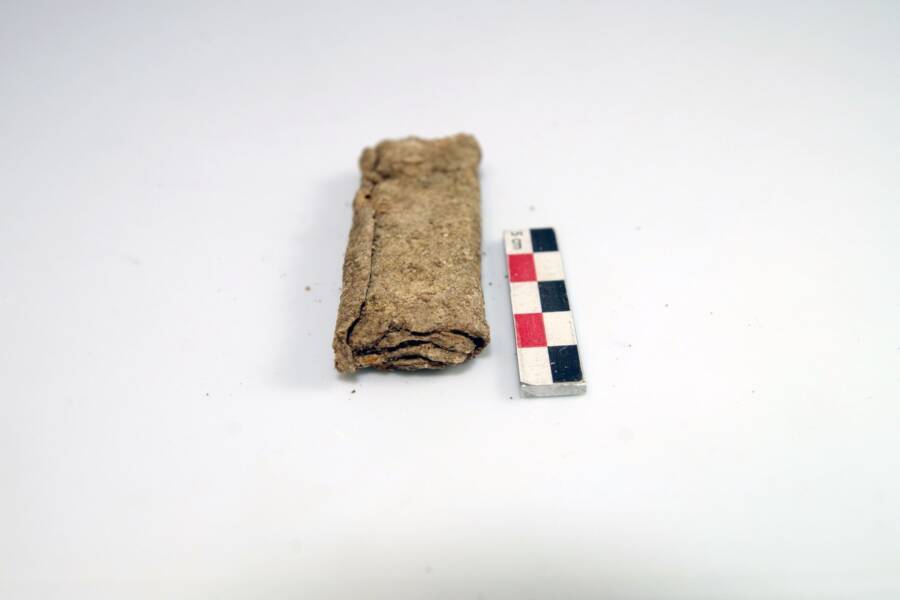
Service Archéologie Orléans (SAVO)A Roman-era curse tablet found in France.
While the exact nature of the curse intended by the tablet’s creator cannot be determined, the team said that curses on ancient tablets were commonly cast upon romantic, athletic, or legal rivals.
“The tablet served either as a curse against these four slaves or as a curse in their name against an unnamed person,” Dr. Rodney Ast, the academic director at the Institute for Papyrology, said in a statement.

1MORE Triple Driver in-Ear Earphones Hi-Res Headphones with High Resolution, Bass Driven Sound, MEMS Mic, in-Line Remote, High Fidelity for Smartphones/PC/Tablet - Silver
$69.99 (as of October 26, 2026 01:02 GMT +00:00 - More infoProduct prices and availability are accurate as of the date/time indicated and are subject to change. Any price and availability information displayed on [relevant Amazon Site(s), as applicable] at the time of purchase will apply to the purchase of this product.)
RIVER OF GOODS Mid-Century Modern Transitional LED Bronze Chrome Ceiling Fan - 52" L x 52" W - Rich Barnwood/Light Driftwood Fan Blades - Metallic Ceiling Fan with Light and Fabric Shade
(as of October 26, 2026 01:02 GMT +00:00 - More infoProduct prices and availability are accurate as of the date/time indicated and are subject to change. Any price and availability information displayed on [relevant Amazon Site(s), as applicable] at the time of purchase will apply to the purchase of this product.)
RIVER OF GOODS Stained Glass Bird Accent Lamp - 8" W x 13.5" H - Tiffany Style Table Lamps for Home, Office Desk, Bedroom, Nightstand - Blue Jay Decor
(as of October 26, 2026 01:02 GMT +00:00 - More infoProduct prices and availability are accurate as of the date/time indicated and are subject to change. Any price and availability information displayed on [relevant Amazon Site(s), as applicable] at the time of purchase will apply to the purchase of this product.)
Joking Hazard Enlarged Box Empty Box for Card Storage
$12.00 (as of October 26, 2026 01:02 GMT +00:00 - More infoProduct prices and availability are accurate as of the date/time indicated and are subject to change. Any price and availability information displayed on [relevant Amazon Site(s), as applicable] at the time of purchase will apply to the purchase of this product.)