The Secret Moments Behind Nicolae Ceaușescu’s Shocking Last Hours Before Execution
For a dictator who held the reins of Romania’s communist regime for a grueling 24 years, Nicolae Ceaușescu’s spectacular tumble from power is downright baffling — and a bit like watching a soap opera unfold in fast-forward. One day, the man who flaunted his grip over a nation was basking in official visits and red-carpet moments, the next, he and his wife Elena were scrambling to escape on a helicopter only to be arrested, tried — in what many call a blink-and-you’ll-miss-it trial — and executed by Christmas Day, 1989. What sort of twist of fate could so quickly unravel a regime so tightly woven? Did a simple eviction notice and a chant of defiance in Timișoara really set off a chain reaction powerful enough to bring down a stop-everything dictator? Hang tight as we dive into the uprising, the dramatic escape, and the final showdown of a ruler whose attempt to cling to control backfired spectacularly — proving once again that even iron fists can rust overnight.
On Christmas Day 1989, Nicolae Ceauşescu and his wife were executed after the people of Romania overthrew the dictator’s communist government.
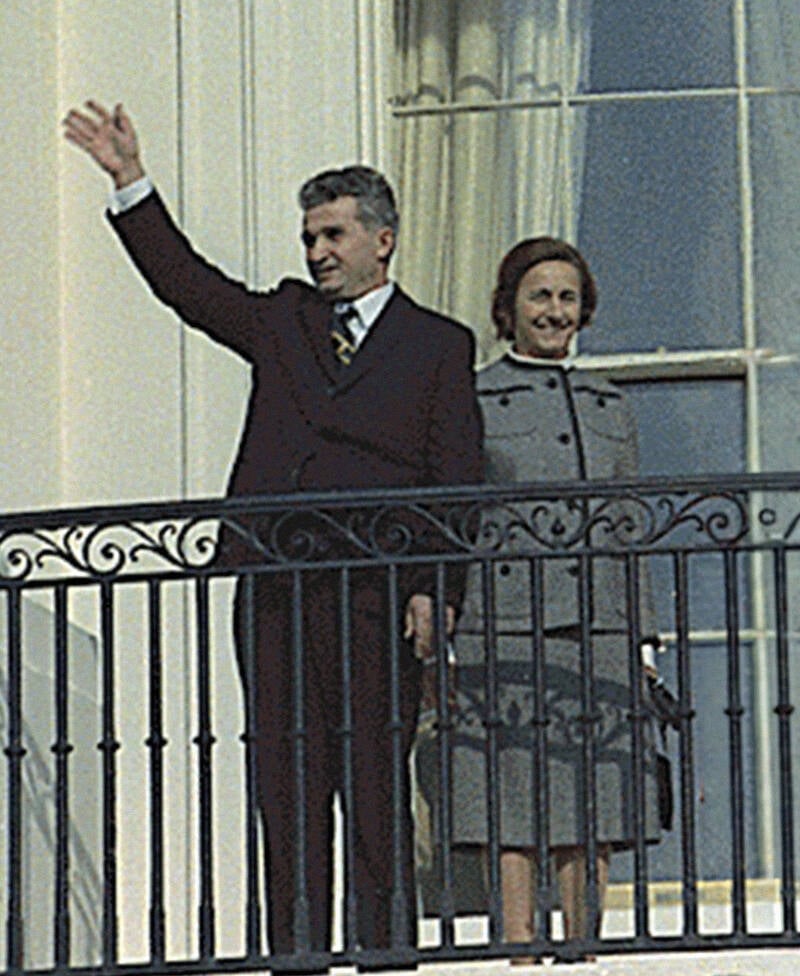
U.S. National ArchivesNicolae and Elena Ceaușescu visiting President Richard Nixon at the White House in 1973.
For 24 years, Nicolae Ceaușescu ruled Romania with an iron fist. Then, in late December 1989, his leadership disintegrated in less than a week. By Christmas Day, he’d been executed.
How could a leader with decades of absolute power fall into disgrace so precipitously? The answer is a fast-paced tale that, after the assemblage of historical accounts over the years, can finally be told in full.
The problems that would lead to Ceauşescu’s downfall began in December 1989. László Tőkés, a dissident Hungarian Reformed pastor in Timișoara, was facing eviction. In order to stop this from happening, parishioners formed a human chain around his home, chanting anti-Ceaușescu slogans and ripping up portraits of the leader.
In response, Romanian state security forces opened fire. Over 70 people were killed — and, in an apparent attempt to cover up their murders, the state reportedly transported 43 of the bodies to Bucharest to be cremated. While this was happening, Nicolae Ceaușescu left the country for a state visit to Iran, believing that any resulting unrest could be quelled upon his return.
This assumption would prove fatally incorrect.
The Romanian Revolution Of 1989
When Nicolae Ceaușescu returned, he was quick to blame the backlash on foreign influence. When this did not calm tensions, he planned a large pro-government demonstration in Bucharest’s Palace Square on Dec. 21, making sure that attendees were supplied with pro-Ceaușescu banners and signs — and informed that they were to cheer at his remarks.
The audience, however, did not cheer. A minute into his speech, the crowd began booing and chanting “Timișoara,” referencing the killings. Visibly shaken, Ceaușescu unexpectedly announced increases in wages, pensions, and social benefits in an attempt to win back the crowd. This did not work, and by the conclusion of his remarks, Bucharest had begun its fall into a state of open revolt.
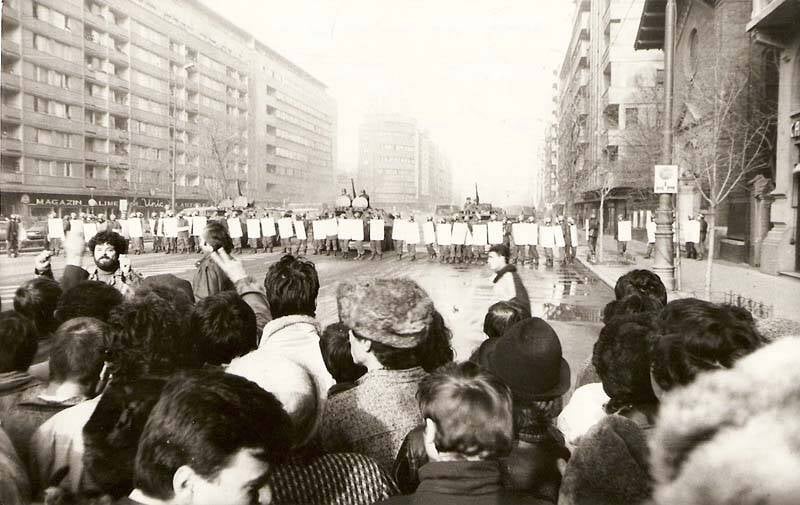
Romanian National History MuseumProtesters face off against the military in the streets of Bucharest during the Romanian Revolution of December 1989.
Nicolae Ceaușescu believed he could wait out the uprising. But, rather than calming down, tensions rose. The following morning, Dec. 22, Romanian Defense Minister Vasile Milea was found fatally wounded. While the government claimed that Milea had taken his own life, later accounts indicate that he had resisted or failed to carry out orders to fire decisively on demonstrators and was thus driven to suicide. This ignited a resistance within the army against Ceaușescu.
Sensing that things were spiraling out of control, Ceaușescu declared a state of emergency and attempted to address the people of Romania once more — but by this point, protesters were already entering government offices. Around noon, Nicolae Ceaușescu and his wife, Elena, climbed to the roof of the Central Committee of the Romanian Communist Party building and boarded a helicopter, escaping just as protestors flooded the government complex.
The Capture Of Nicolae Ceauşescu
The dictator’s escape would not be that easy, however. It soon became clear that a sizable portion of the Romanian population had turned against their leader.
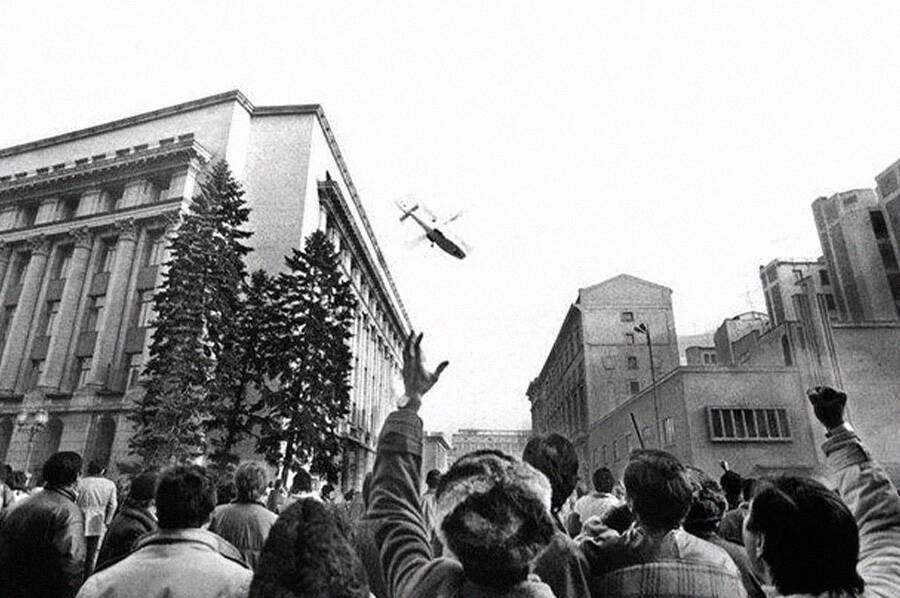
Romanian National ArchivesNicolae and Elena Ceaușescu fled Bucharest by helicopter on Dec. 22, 1989.
After making a stop at the presidential compound at Snagov, where Ceaușescu ordered reinforcements, the helicopter continued onward. As it did, Ceaușescu made repeated calls to different air bases and potential landing spots, only to realize that many of them had decided to stop responding to his authority. The requested reinforcements never arrived.
It seems that this chaos may have frightened the pilot of Nicolae Ceaușescu’s helicopter, Lieutenant Colonel Vasile Maluțan. Without warning, Maluțan announced that they had to make a sudden landing, claiming that flying any further would mean they were at risk of being shot down. Whether Maluțan’s claims were true is debated — but no matter whether Maluțan was being honest, the helicopter landed, dropping off Nicolae, Elena, and their security detail on the side of a road before departing.
KiddyCare Diaper Caddy Organizer Cart for Nursery Baby Basket Gift for Boy/Girl | Diaper Caddy for Changing Table Basket Organizer with Dividers | Caddy for Baby Stuff Breast Pump Caddy - Regular
$8.95 (as of October 4, 2026 00:55 GMT +00:00 - More infoProduct prices and availability are accurate as of the date/time indicated and are subject to change. Any price and availability information displayed on [relevant Amazon Site(s), as applicable] at the time of purchase will apply to the purchase of this product.)
RIVER OF GOODS Coastal 52 Inch Wooden Bead LED Ceiling Fan, Brown
(as of October 4, 2026 00:55 GMT +00:00 - More infoProduct prices and availability are accurate as of the date/time indicated and are subject to change. Any price and availability information displayed on [relevant Amazon Site(s), as applicable] at the time of purchase will apply to the purchase of this product.)
White Leaf Baby Food Pouches, Toddler Snack, Mango + Carrot + Banana + Pear | 24 Pack, Organic No Added Sugar, Non-GMO, BPA-Free Regeneratively Farmed, Squeeze Puree Smoothie Pouch for Adults & Children
$69.95 (as of October 4, 2026 00:55 GMT +00:00 - More infoProduct prices and availability are accurate as of the date/time indicated and are subject to change. Any price and availability information displayed on [relevant Amazon Site(s), as applicable] at the time of purchase will apply to the purchase of this product.)
Rhythm Superfoods Kale Chips, Zesty Nacho, Organic and Non-GMO, 2.0 Oz (Pack of 4), Vegan/Gluten-Free Superfood Snacks
(as of October 4, 2026 00:55 GMT +00:00 - More infoProduct prices and availability are accurate as of the date/time indicated and are subject to change. Any price and availability information displayed on [relevant Amazon Site(s), as applicable] at the time of purchase will apply to the purchase of this product.)