Unraveling a Prehistoric Predator Chain: Fossil Reveals Shocking Multi-Species Meal Mystery in Ancient Australia
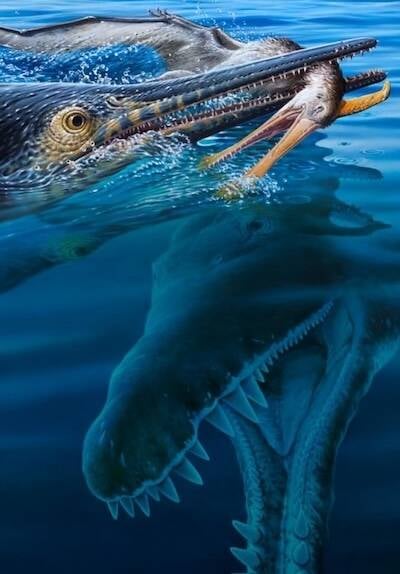
Imagine stumbling upon a prehistoric soap opera frozen in time—only, instead of celebrity catfights, it’s a 100-million-year-old menu gone terribly wrong. Back in 2019, a bunch of amateur fossil hunters digging near Richmond, Queensland, hit the jackpot: an ichthyosaur that had just chowed down on a pterosaur, only to get beheaded and partially devoured by the ocean’s own 50-foot “T. Rex”—the pliosaur. It’s like discovering the ultimate three-act drama where dinner turns into disaster—and the fossils tell the whole juicy tale. Curious how the ancient oceans served up this epic predator showdown? Dive into the prehistoric crime scene that’s got paleontologists buzzing and rewriting what we know about the Cretaceous seas. LEARN MORE
First located by amateur fossil hunters digging near Richmond, Queensland in 2019, this rare find shows an ichthyosaur that had just eaten a pterosaur — before being killed, beheaded, and partially eaten by a pliosaur, the 50-foot predator known as the “T. Rex of the ocean.”
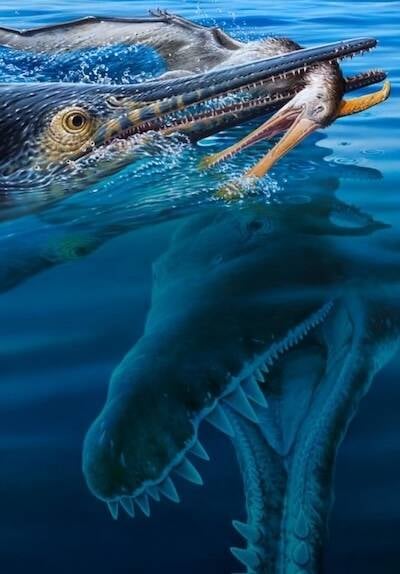
Peter Trusler/Dinosaur Experiences AustraliaAn illustration of the events that created this fossil: an ichthyosaur eating a pterosaur, with a pliosaur lurking in the water beneath them, ready to strike.
In 2019, a group of amateur fossil hunters set out to explore a public “fossicking” site in Australia, where the public is welcome to search for gems, stones, and fossils. The group unearthed large fossilized bones, which they quickly turned over to Kronosaurus Korner museum. But when museum officials took a closer look, they realized that the fossil hunters had uncovered an extremely rare “three-tier predator interaction.”
The fossil hunters had found the bones of an ichthyosaur. But when museum officials examined the site where the ichthyosaur fossils had been found, they discovered the bones of a pterosaur, likely the ichthyosaur’s final meal. And because the ichthyosaur itself had seemingly been badly wounded before its death, they surmised that it had been killed by a pliosaur — the giant, crocodile-like predator known as the “T-rex of the ocean.”
The Discovery Of This Rare Cretaceous Fossil In The Australian Outback
According to a press release from Dinosaur Experiences Australia, the first of these Cretaceous remains was found in 2019, when fossil hunters Mike and Cathy Freeman alongside Gary and Barb Flewelling went to a “fossicking” site in Queensland. There, they stumbled upon some large fossilized bones, which they brought to the Kronosaurus Korner museum.
Three years after this so-called “bag of bones” arrived at the museum, Kronosaurus Korner curator Kevin Petersen returned to the fossicking site to take a closer look. While excavating the area where the fossil hunters had found the bones, he uncovered the “enormous” fossilized skeleton of a 20-foot ichthyosaur that dates back 100 million years.
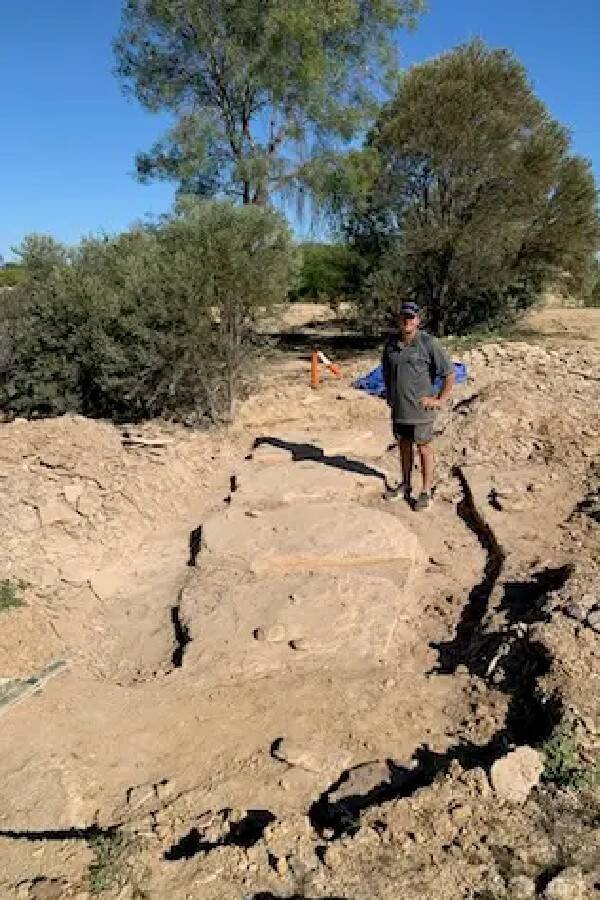
Dinosaur Experiences AustraliaKronosaurus Korner curator Kevin Petersen at the Queensland fossicking site where the bones were originally discovered, and where he found even more bones three years later.
The discovery of the ichthyosaur, a large, dolphin-like reptile that prowled Earth’s prehistoric oceans, would have been incredible on its own. But Petersen and his team soon realized that there was another reptile near the ichthyosaur’s stomach — and that the ichthyosaur itself had died a sudden, violent death just after eating that reptile.
The Story Behind The Prehistoric Marine “Crime Scene” In Queensland
Like police detectives, the paleontologists carefully pieced the story together based on the evidence. As they later wrote in a study published in Gondwana Research, they found a “globular mass” that appeared to be the ichthyosaur’s stomach contents. There, they found the remains of a pterosaur, a large flying reptile — which the ichthyosaur possibly snatched out of the sky as it hunted fish.
This was an incredibly exciting find: It stands as the first known evidence that ichthyosaurs ate pterosaurs. But that wasn’t all that the researchers found.
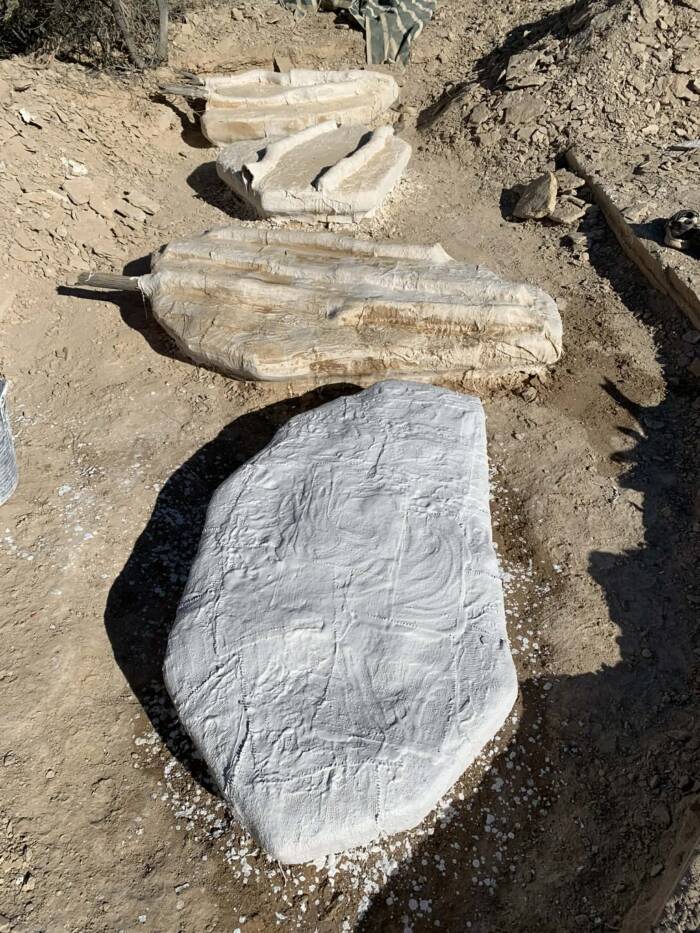
Dinosaur Experiences AustraliaPlastered fossil samples that paleontologists found at the Queensland fossicking site.
The paleontologists also found that the ichthyosaur had seemingly died a gruesome death very soon after devouring the pterosaur. The ichthyosaur’s remains bore “enormous crushing bite marks, shattered bones, and missing sections,” which the paleontologists believe is likely indicative of an attack from a pliosaur, the fearsome apex predator that could reach up to 50 feet in length and was known as the “T-rex of the ocean.”
Though it’s also possible that the ichthyosaur was scavenged by the pliosaur, it seems likely that the ichthyosaur was attacked and killed, then at least partially eaten before its body sank to the seafloor, where it was preserved by the ocean mud.
“I was amazed by the size of the ichthyosaur, and shocked to see it littered with bite marks and partially exposed pterosaur remains behind the skull,” said Matt White, a research associate at the University of New England and the lead author of the new study.
PROMIXX FORM Sports Water Bottle - Premium BPA Free Water Bottle for Fitness Sports & Outdoors - Sustainable Drinks Bottle with Measurement Markers and Leakproof Lid - 760ml / 26oz (Midnight Blue)
$17.79 (as of October 7, 2026 00:56 GMT +00:00 - More infoProduct prices and availability are accurate as of the date/time indicated and are subject to change. Any price and availability information displayed on [relevant Amazon Site(s), as applicable] at the time of purchase will apply to the purchase of this product.)
KiddyCare Diaper Caddy Organizer Cart for Nursery Baby Basket Gift for Boy/Girl | Diaper Caddy for Changing Table Basket Organizer with Dividers | Caddy for Baby Stuff Breast Pump Caddy - Regular
$8.95 (as of October 7, 2026 00:56 GMT +00:00 - More infoProduct prices and availability are accurate as of the date/time indicated and are subject to change. Any price and availability information displayed on [relevant Amazon Site(s), as applicable] at the time of purchase will apply to the purchase of this product.)
Supa Ant 6x8ft. Welding Blanket Fireproof (Pack of 2) - Heavy Duty Weld Fire Blanket Tools - Welders Cover for Men Curtain with Gloves - Large Welding Gear for Welder Accessories
(as of October 7, 2026 00:56 GMT +00:00 - More infoProduct prices and availability are accurate as of the date/time indicated and are subject to change. Any price and availability information displayed on [relevant Amazon Site(s), as applicable] at the time of purchase will apply to the purchase of this product.)
RIVER OF GOODS LED Boho Ceiling Fan with Hand Woven Brown/Natural Rope - Macrame Knot Work and Hemp Rope Style Eclectic Cottage Decor - 52" L x 52" W - Rich Barnwood/Light Driftwood Fan Blades
(as of October 7, 2026 00:56 GMT +00:00 - More infoProduct prices and availability are accurate as of the date/time indicated and are subject to change. Any price and availability information displayed on [relevant Amazon Site(s), as applicable] at the time of purchase will apply to the purchase of this product.)