Ancient Odyssey Secret Unearthed: 1,700-Year-Old Manuscript Fragment Discovered in University Library Stuns Scholars
Ever wonder if ancient folks had their own “pocket-sized” binge-worthy reads? Well, imagine this: a tiny, 1,700-year-old Coptic edition of Homer’s Odyssey—yes, the epic saga of Odysseus’ wild voyage—was chilling quietly in a Dutch library all this time. Experts now say this miniature marvel probably originated near Fayum, Egypt, back in the third or fourth century C.E. It’s like discovering your great-great-grandpa’s secret mixtape, except way cooler and with gods, monsters, and some seriously sacred cattle drama. This little fragment is a rare gem—only around 30 such pieces from that era exist worldwide—and it survived book wear and tear to spill part of the tale where Odysseus’ men make a tragic, greedy mistake. I mean, who knew ancient “just don’t eat the Sun god’s cattle” advice could be so juicy? Dive in to uncover how this pocket epic survived centuries and what it reveals about those old-timey readers obsessed with Odysseus’ journey home.
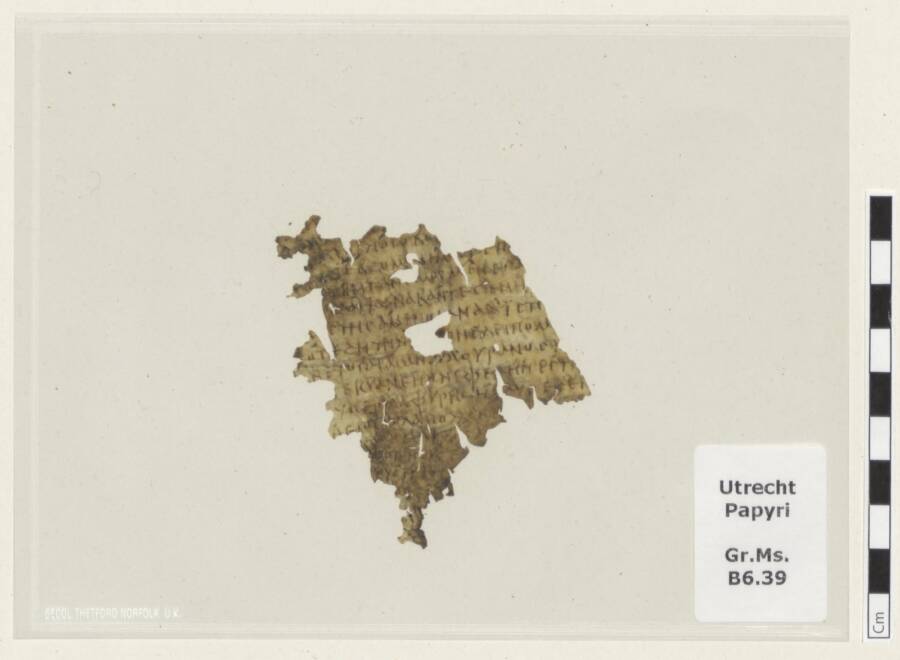
Experts have since determined that this page comes from a pocket-sized edition of the Odyssey written in Coptic and likely produced near Fayum, Egypt sometime in the third or fourth century C.E.

Utrecht UniversityA fragment of Homer’s Odyssey dating back to at least the fourth century C.E. was found in Utrecht University’s library.
To this day, Homer’s Odyssey remains one of the Western World’s most timeless works of art — even more so now that Christopher Nolan’s 2026 movie adaptation has reached millions of viewers across the globe. In the same way that today’s movie audiences have flocked to theaters to watch the story of Odysseus’ voyage back home to Ithaca, countless readers across the ancient Mediterranean devoured the original text some 2,000 years ago.
Now, a papyrus fragment from a 1,700-year-old copy of the Odyssey, surely belonging to one of the story’s ancient fans, has been found hiding in plain sight in a Dutch library.
The Discovery Of A Tiny Papyrus Fragment From Homer’s Odyssey That Dates Back 1,700 Years
The fragment was found by professor, papyrologist, and ancient Greece expert Mark de Kreij while he was examining a collection of early Christian manuscripts owned by the Utrecht University library, according to a statement from the university.

Universal PicturesMatt Damon, center, plays Odysseus in Christopher Nolan’s 2026 film adaptation of the Odyssey.
The university had acquired the collection of texts around 70 years ago from an heir of the German scientist Carl Schmidt. Since then, it hadn’t been extensively studied.
These works included multiple pieces written in Coptic, the Egyptian language that uses the Greek alphabet. These had been examined by another historian in depth. However, a smaller group of Greek papyri in the collection had gone largely unnoticed.
When de Kreij noticed the papyrus fragment, he quickly recognized what story it told. The text appeared to have been a part of a pocket edition of the Odyssey, made in Egypt circa 300 C.E.

Radboud University Professor and papyrologist Mark de Kreij determined that the fragment likely came from a pocket edition of the epic that was produced in Egypt.
More specifically, this fragment likely originated from the Fayum oasis south of Cairo.
This discovery was the second time this year that a fragment from a Homeric epic was unexpectedly uncovered. In the spring, archaeologists in Egypt studying a Roman-era mummy found fragments of the Iliad in its abdomen.
Both Homer’s Iliad and Odyssey were written in the late eighth or early seventh century B.C.E. The Iliad tells the story of the 10-year Trojan War, while the Odyssey details the Greek hero Odysseus’ decades-long journey back home to Ithaca from Troy after the war.
The Pivotal Moment From The Odyssey That Survived On This Papyrus
De Kreij identified that the fragment contained text from Book 12 of the Odyssey, specifically the moment when it is revealed that Odysseus’ men had succumbed to their greed and ate the sacred cattle of the Sun god Helios.
The sorceress Circe warned Odysseus to avoid Helios’ island Thrinacia, but he and his men wash up on its shore after sailing past and surviving their encounters with the six-headed monster Scylla and the monstrous whirlpool Charybdis. Odysseus knows that if his men harm any of Helios’ cattle, they’ll be killed, so he forbids his men from killing them.

Wikimedia CommonsThe parchment contained an excerpt from the pivotal moment when Odysseus realizes his men ate the sacred cattle of the Sun god Helios.
But after a month of low food supplies, Odysseus’ men kill and eat the sacred cattle. Helios asks the gods to enact vengeance, and Zeus destroys their ship and kills the entire crew but Odysseus.
De Kreij said that he wasn’t surprised that this excerpt survived since it occurs in the middle of the epic, and a book would naturally wear down from the outside in.
“There are so many boring parts in The Odyssey. This happens to be a really fun passage,” de Kreij told the Dutch news site RTV Utrecht.
Regardless of which passage it contains, the mere existence of this find is remarkable, as only around 30 similar Odyssey fragments from this era have ever been discovered worldwide.
Joking Hazard Enlarged Box Empty Box for Card Storage
$12.00 (as of October 8, 2026 00:56 GMT +00:00 - More infoProduct prices and availability are accurate as of the date/time indicated and are subject to change. Any price and availability information displayed on [relevant Amazon Site(s), as applicable] at the time of purchase will apply to the purchase of this product.)
The Door Balancer Eliminates The Need for Door Props, Door Stops and Door Wedges
(as of October 8, 2026 00:56 GMT +00:00 - More infoProduct prices and availability are accurate as of the date/time indicated and are subject to change. Any price and availability information displayed on [relevant Amazon Site(s), as applicable] at the time of purchase will apply to the purchase of this product.)
KiddyCare Diaper Caddy Organizer Cart for Nursery Baby Basket Gift for Boy/Girl | Diaper Caddy for Changing Table Basket Organizer with Dividers | Caddy for Baby Stuff Breast Pump Caddy - Regular
$8.95 (as of October 8, 2026 00:56 GMT +00:00 - More infoProduct prices and availability are accurate as of the date/time indicated and are subject to change. Any price and availability information displayed on [relevant Amazon Site(s), as applicable] at the time of purchase will apply to the purchase of this product.)
RIVER OF GOODS Mid-Century Modern Transitional LED Bronze Chrome Ceiling Fan - 52" L x 52" W - Rich Barnwood/Light Driftwood Fan Blades - Metallic Ceiling Fan with Light and Fabric Shade
(as of October 8, 2026 00:56 GMT +00:00 - More infoProduct prices and availability are accurate as of the date/time indicated and are subject to change. Any price and availability information displayed on [relevant Amazon Site(s), as applicable] at the time of purchase will apply to the purchase of this product.)




















Post Comment