Ancient Secrets Unearthed: Cannabis Use Traced Back 2,800 Years in Siberian Tomb
So, picture this: you’re poking around an ancient Scythian tomb in Siberia’s Uyuk Valley, expecting the usual—maybe some dusty bones, old horse gear, the odd trinket—and bam! You stumble upon scores of tiny black balls that turn out to be not just any seeds but a whopping 1,400 cannabis seeds dating back 2,800 years. I mean, who thought a bunch of ancient nomads were the original stoners before it was cool? What’s crazier is the discovery that some of these folks were actually soaking in the psychoactive effects of cannabis, proven by traces found in their hair! Makes you wonder if the horse sacrifices were some kind of ancient party ritual or a serious “last trip.” This jaw-dropping find rewrites our cannabis history books, pushing back human interaction with the herb by centuries—and now scientists are racing to decode whether these plants were wild freebies or carefully grown cultivars. Intrigued? You should be. LEARN MORE
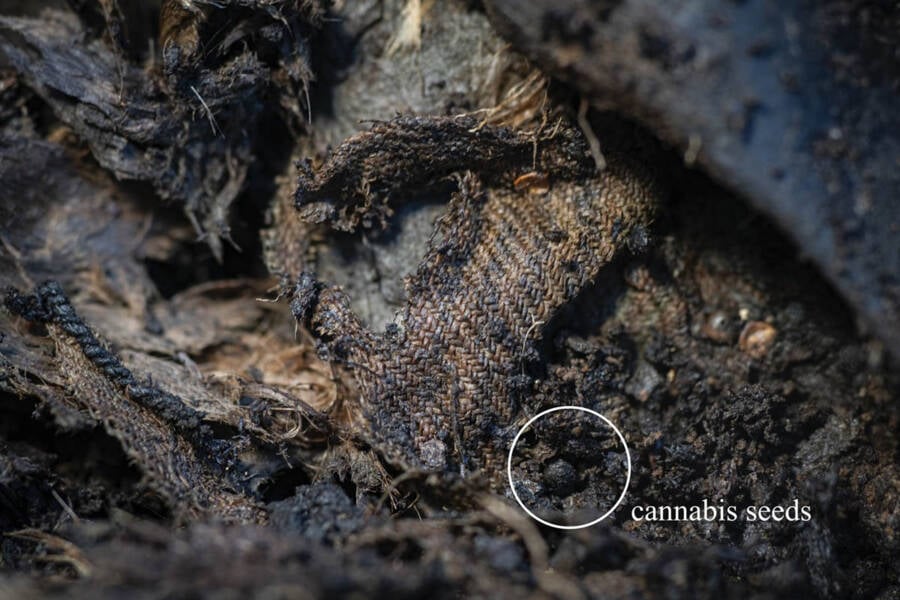
While exploring an ancient Scythian tomb in the Uyuk Valley, researchers noticed scores of little black balls — which turned out to be 1,400 cannabis seeds.

T. WallaceResearchers determined that these cannabis seeds found within a Scythian tomb date back a record-setting 2,800 years.
Humans may have been using cannabis for its psychoactive properties hundreds of years earlier than previously thought. Researchers recently discovered more than 1,000 cannabis seeds in a 2,800-year-old Siberian tomb — and found traces of psychoactive cannabis compounds in the hair of some of the people who were buried at this site.
According to the research team, this discovery of the intoxicating use of cannabis dating back to the early eighth century B.C.E. is the oldest-known evidence of its kind that’s ever been found. Now, researchers hope to sequence the cannabis DNA to determine whether the plants in question were cultivated or found in the wild.
The Discovery Of Ancient Cannabis Seeds Within A Siberian Tomb
Archaeologists from the University of Bern and the Max Planck Institute of Geoanthropology began excavations of this Siberian tomb in 2017.
The monumental burial, located in the Uyuk Valley, measures around 460 feet in diameter and belongs to elite members of the Scythian society, an ancient nomadic, horse-riding people whose territory spanned from Central Asia into southern Russia and modern-day Ukraine.

T. WallaceIn addition to the cannabis seeds, researchers excavating the tomb discovered horse bones and a number of grave goods.
Dr. Gino Caspari, an archaeologist at the University of Bern, told the Associated Press that the team “struck gold” when they discovered cannabis seeds in the grave alongside preserved human hair.
“It’s extremely rare that we have both preserved plant parts and human soft tissue with the active compounds in it in the same context,” Caspari told AP.
Some 1,400 seeds were recovered from the grave, and, per the team’s study published in Science, the seeds were radiocarbon dated and found to have been deposited in the grave around the early eighth century B.C.E.

Caspari et al., Science, 2026Researchers radiocarbon dated the cannabis seeds to the early eighth century B.C.E.
In addition to the seeds and hair, archaeologists also unearthed the remains of 18 horses around the burial mound, opening up questions about whether the animals were sacrificed — and whether the cannabis had anything to do with such ritual practices.
“In this princely tomb, the burials were accompanied by extensive horse sacrifices and, most likely, human sacrifices as well,” Caspari said in a statement.
The Oldest-Known Case Of Human Cannabis Use That Researchers Have Ever Uncovered
Despite the exciting discovery of the cannabis seeds, that find alone does not prove that the cannabis was used for its psychoactive effects.
It has also been proven that, during antiquity, cannabis seeds were pressed to produce oil, while the plant’s fibers were used to make cloth. Thus, cannabis was not solely used as either a medicine or recreational drug.

Caspari et al., Science, 2026Hair analysis showed that at least some of those interred here had cannabis’ psychoactive component, THC, in their system.
However, due to the preserved human hair found near the seeds, the researchers were able to find evidence that this cannabis was indeed consumed by some of the people buried here (by what means, however, remains unclear). The hair analysis showed chemical signals consistent with tetrahydrocannabinol (THC), cannabis’ psychoactive compound, and with cannabinol, a related compound.
“The human body does build cannabis-related molecules like THC and CBD into the hair. That’s how drug tests work,” Caspari told Reuters.
These findings present strong evidence that humans were using cannabis for its psychoactive properties at least 300 years earlier than previously thought. Before now, the oldest-known case of cannabis use was found in China, where it was consumed during funerary practices.

Xinhua WuThe previous oldest-known evidence of human cannabis use was discovered in a funerary site in China, where people inhaled the drug via incense burners.
Now, the research team hopes to perform additional genetic analysis on the cannabis seeds, which could determine whether these specific seeds were cultivated for psychoactive use, or if they came from wild plants.

The Door Balancer Eliminates The Need for Door Props, Door Stops and Door Wedges
$7.99 (as of November 7, 2026 01:07 GMT +00:00 - More infoProduct prices and availability are accurate as of the date/time indicated and are subject to change. Any price and availability information displayed on [relevant Amazon Site(s), as applicable] at the time of purchase will apply to the purchase of this product.)
Joking Hazard by Cyanide & Happiness - 360+ Funny & Inappropriate Comic Cards, Hilarious Party Games | Includes Add-Your-Own-Words Cards
$24.95 (as of November 7, 2026 01:07 GMT +00:00 - More infoProduct prices and availability are accurate as of the date/time indicated and are subject to change. Any price and availability information displayed on [relevant Amazon Site(s), as applicable] at the time of purchase will apply to the purchase of this product.)
Joking Hazard Enlarged Box Empty Box for Card Storage
$12.00 (as of November 7, 2026 01:07 GMT +00:00 - More infoProduct prices and availability are accurate as of the date/time indicated and are subject to change. Any price and availability information displayed on [relevant Amazon Site(s), as applicable] at the time of purchase will apply to the purchase of this product.)
Supa Ant Canning Supplies Starter Kit (Food Grade) - Canning Kits Set for Beginners - 3 Pcs. Including Wide Mouth Jar Funnel, Magnetic Lid Lifter, Stainless Steel Jar Lifter (Assembled in USA) Blue
$9.99 (as of November 7, 2026 01:07 GMT +00:00 - More infoProduct prices and availability are accurate as of the date/time indicated and are subject to change. Any price and availability information displayed on [relevant Amazon Site(s), as applicable] at the time of purchase will apply to the purchase of this product.)




















Post Comment