Ancient Stingray Barbs Discovered in Mexico Reveal Shocking Maya Blood Ritual Secrets
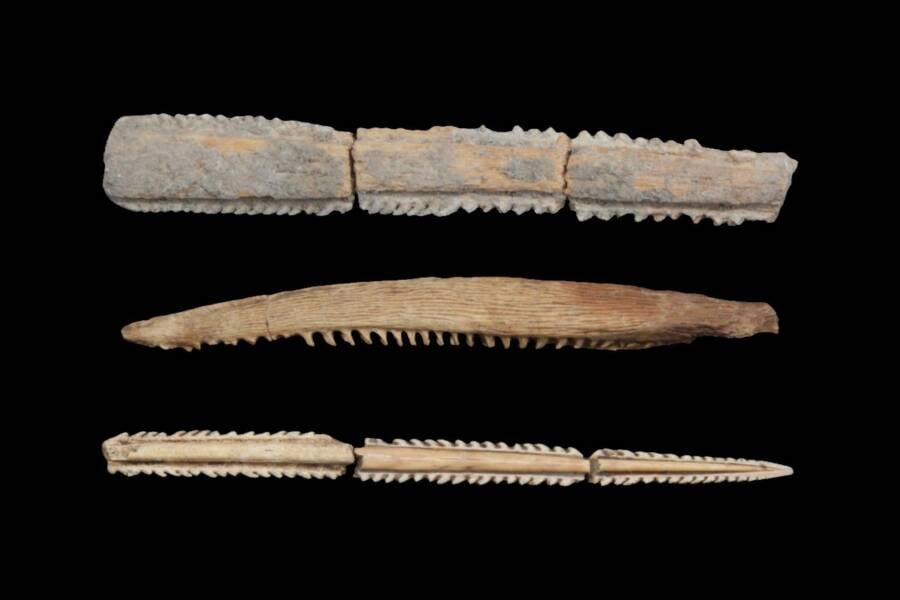
Blood—yep, the stuff that most of us run from at the sight of a paper cut—was the ancient Maya’s go-to ingredient for keeping the cosmos in check. Now, before you ask, “Who willingly poked themselves with stingray barbs instead of just saying a prayer?” well, welcome to a ritual that’s been stirring curiosity for nearly two millennia. Archaeologists digging along the Maya Train route in southern Mexico recently unearthed some prickly artifacts—stingray barb fragments and a curious catfish spine—nestled right with human remains. Were these razor-sharp bits the Maya’s version of a cosmic “blood donation,” aiming to purify souls and appease gods? Or just curious offerings tossed in the dirt? Either way, it’s a bloody fascinating glimpse into a civilization where self-sacrifice was literal, and spiritual order was kept sharp—literally. Ready to dive deep into the prickly past and discover why a stingray might be the original tattoo needle?
For almost 2,000 years starting in approximately 500 B.C.E., the Maya carried out ceremonies in which individuals sacrificed some of their own blood in hopes of either purifying themselves in the eyes of the gods or maintaining cosmic order.
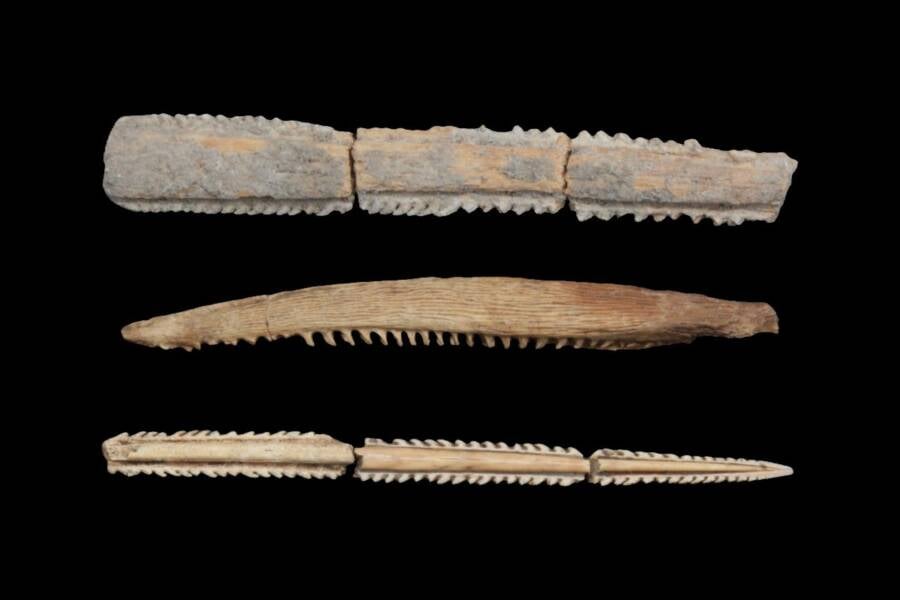
Amiel Luna/INAHArchaeologists in Mexico found three stingray barb fragments and one catfish spine alongside human remains.
Archaeologists in southern Mexico have uncovered stingray barb fragments as well as one catfish spine among ancient human burials that sit along the construction route for the new Maya Train. Now, researchers are studying whether these unusual artifacts were once used in Maya bloodletting rituals.
Researchers believe that studying these specimens could shed new light on the Maya civilization’s storied self-sacrifice rituals during the pre-Columbian period.
The Discovery Of The Stingray Barbs Among Ancient Maya Burials In Mexico
The three stingray barbs and catfish spine were discovered in 2021 during excavations of Section 1 of the Maya Train, a 140-mile stretch from Palenque, Chiapas, to Escárcega, Campeche.
The specimens were uncovered in a roughly seven-acre area near Tenosique, Tabasco in southern Mexico. Now, according to an announcement from Mexico’s National Institute of Anthropology and History (INAH), researchers are studying the objects to determine how they were used, and why they were found near human remains.
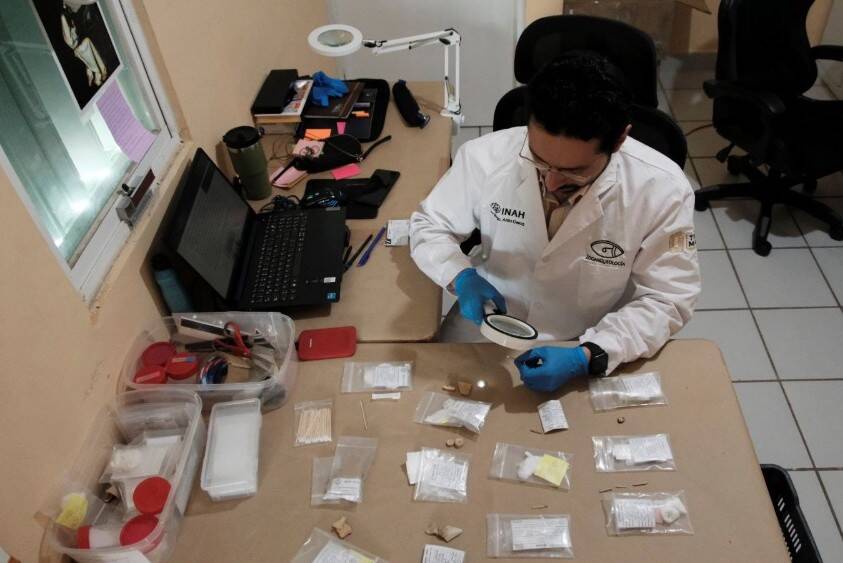
Aldo Dena/INAHResearchers believe the stingray barbs may have been used during Maya bloodletting rituals.
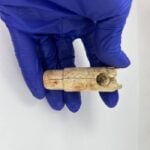
One of the stingray fragments measures a little over an inch long. Both of its ends are fractured, which was likely caused by pressure from surrounding residue.
The fact that the barb’s surface is polished from contact with rough sediments has indicated to researchers that it came from the same archaeological layer as the human burial. However, researchers cannot rule out the possibility that the barb was deposited there later, as an offering to the dead.
The other stingray barbs also have polished surfaces and fractures from surrounding sediment, indicating to researchers that they were also deposited around the same time as the human remains.
The catfish spine was discovered in a burial with the remains of an adult man. This spine was particularly intriguing to the archaeologists, as these are not commonly linked to ritual self-sacrifice among the Maya.
What This Find May Reveal About Ancient Maya Sacrificial Rituals
In the INAH statement, archaeologist Said Amiel Luna Limón said that evidence collected from the Maya civilization has pointed to ritual bloodletting being practiced from the Late Preclassic period through the Postclassic — approximately 500 B.C.E. to 1520 C.E.
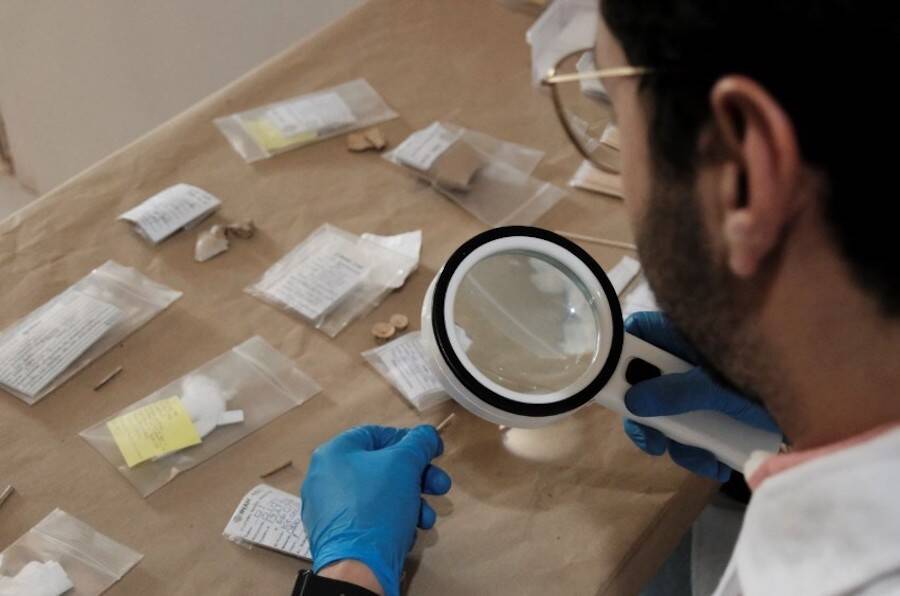
Aldo Dena/INAHArchaeologists are especially intrigued by the presence of the catfish spine because these bones are not commonly associated with Maya bloodletting rituals.
During such rituals, one drew their own blood as an offering to higher powers, as well as a way to purify the body in preparation for a larger ceremony. Researchers believe that bloodletting was practiced by Maya elites in particular and was done to maintain cosmic order.
Oftentimes, women drawing blood pierced their tongue, which was associated with fertility, while men pierced their penis which was associated with creation.
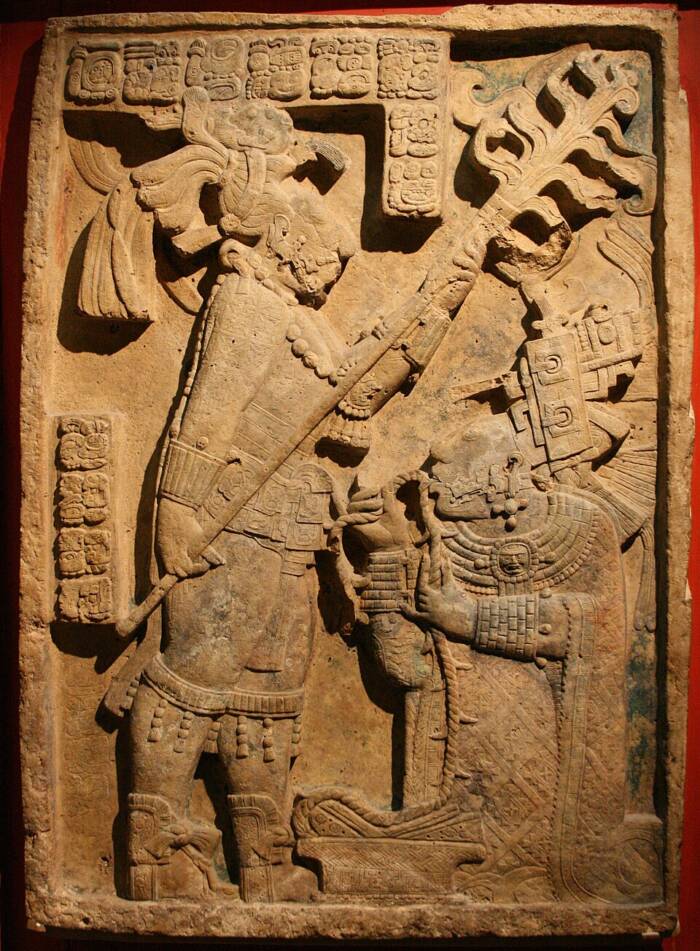
Wikimedia CommonsBloodletting rituals are often associated with Maya elites, as depicted in this piece in which Lady K’ab’al Xook, the wife of the ruler, pulls a barbed rope over her tongue.
“In the Southern Lowlands, the stingray sting was the preferred instrument, as has been recorded in lintels and documents where it is described that the blood was collected in containers that held leaves of tree bark, which, once dry, was burned and, in this way, ascended, immaterialized, to the ‘other world,’” Luna Limón said.
Marisol Arce Acosta, head of the Zooarchaeology Laboratory for the Maya Train Archaeological Salvage Framework Project, said that the stingray remains belong to the whip ray or eagle ray families, both saltwater groups.
Less is certain about the catfish spine, which belongs to the freshwater Ictaluridae family. Although there is not enough evidence to indicate that the spine was used as a bloodletting implement, Arce Acosta noted that the spine “is functionally suitable for the ritual.”

1MORE Triple Driver In-Ear Headphones - Silver - Wired - Adult - In Ear - 18 grams - 90 days limited warranty
(as of October 24, 2026 01:02 GMT +00:00 - More infoProduct prices and availability are accurate as of the date/time indicated and are subject to change. Any price and availability information displayed on [relevant Amazon Site(s), as applicable] at the time of purchase will apply to the purchase of this product.)
Rhythm Superfoods Kale Chips, Zesty Nacho, Organic and Non-GMO, 2.0 Oz (Pack of 4), Vegan/Gluten-Free Superfood Snacks
(as of October 24, 2026 01:02 GMT +00:00 - More infoProduct prices and availability are accurate as of the date/time indicated and are subject to change. Any price and availability information displayed on [relevant Amazon Site(s), as applicable] at the time of purchase will apply to the purchase of this product.)
White Leaf Baby Food Pouches, Toddler Snack, Mango + Carrot + Banana + Pear | 24 Pack, Organic No Added Sugar, Non-GMO, BPA-Free Regeneratively Farmed, Squeeze Puree Smoothie Pouch for Adults & Children
$69.95 (as of October 24, 2026 01:02 GMT +00:00 - More infoProduct prices and availability are accurate as of the date/time indicated and are subject to change. Any price and availability information displayed on [relevant Amazon Site(s), as applicable] at the time of purchase will apply to the purchase of this product.)
KiddyCare Diaper Caddy Organizer Cart for Nursery Baby Basket Gift for Boy/Girl | Diaper Caddy for Changing Table Basket Organizer with Dividers | Caddy for Baby Stuff Breast Pump Caddy - Regular
$9.99 (as of October 24, 2026 01:02 GMT +00:00 - More infoProduct prices and availability are accurate as of the date/time indicated and are subject to change. Any price and availability information displayed on [relevant Amazon Site(s), as applicable] at the time of purchase will apply to the purchase of this product.)