Foreign Office Drops Shocking Travel Ban on 21 Countries — Is Your Destination on the List?

Well, here we are again—just when you thought the Middle East couldn’t get any more unpredictable, the UK Foreign Office decides it’s time to shake up the ‘do not travel’ list. You know that feeling when you cancel plans because your city suddenly turned into a war zone? Yeah, multiply that by a gazillion and you’ve got the latest from the US and Israel launching military strikes across Iran. Remember when Donald Trump teamed up with Israel’s Netanyahu to rock the region like a wrecking ball? That move didn’t just rattle Tehran—it practically flipped the entire Middle East upside down, with Supreme Leader Ayatollah Ali Khamenei taken out in an airstrike, and more than 550 casualties reported. Oh, and if you’re wondering where the drama’s spilling over, think Qatar, Kuwait, Bahrain, Saudi Arabia, and—surprise—Dubai, usually the poster child for luxury tourism, now dodging missiles. Airports are shutting their doors faster than you can say “delayed flight,” and drone debris is making an unwanted appearance on everyone’s doorstep. So, are you Brits stranded, sheltered, or plotting your escape? The Foreign Office has some tips, but the situation’s so volatile even they’re weighing evacuation plans via planes, buses, and maybe some military magic. Hold onto your passports—this one’s just warming up.
The UK Foreign Office has updated its ‘do not travel list’ following the US and Israel launching military strikes across Iran.
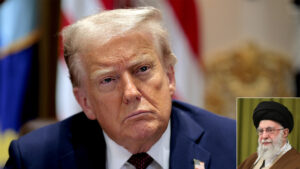
By now, you’re probably aware that Donald Trump‘s decision to join forces with Israel’s Benjamin Netanyahu and launch a wide-scale military attack across Iran has pretty much destabilised the entire Middle East.
Supreme Leader Ayatollah Ali Khamenei was killed in an airstrike at his compound in Tehran, while the Red Crescent reports that at least 550 more people have been killed across the country.
Iran has responded by firing missiles at Israel and US military bases across the region, causing disruption in Qatar, Kuwait, Bahrain, Saudi Arabia and everyone’s favourite tourist hotspot, Dubai.
Video footage has shown debris from intercepted drones landing on residential buildings, hotels and international airports while the region’s airspace remains closed.
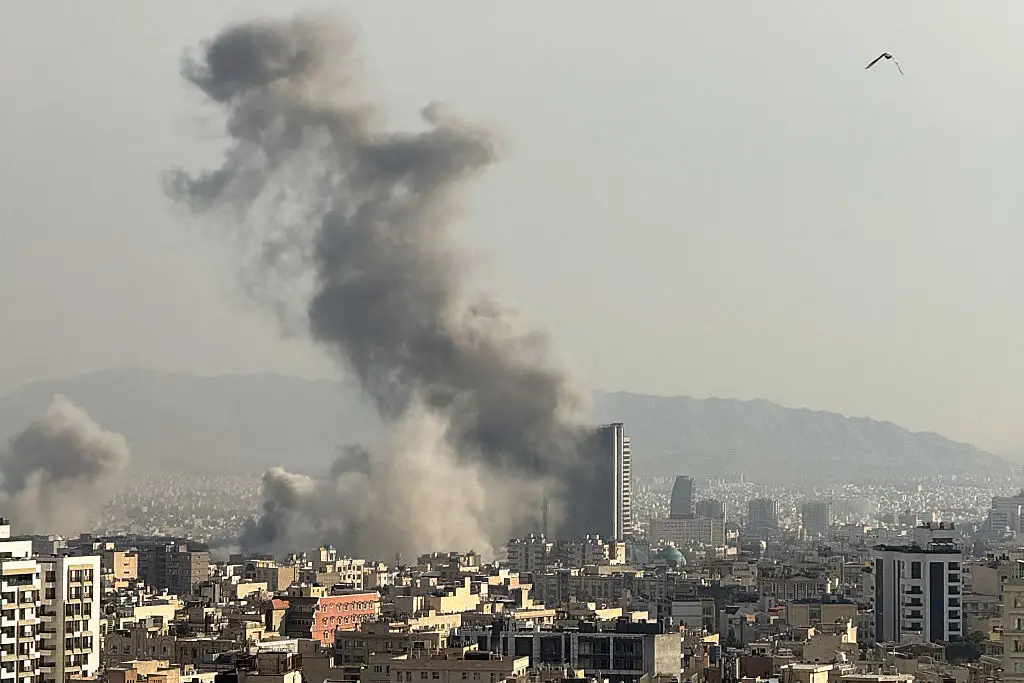
Israel and US airstrikes hit Tehran (Mahsa / Middle East Images / AFP via Getty Images)
What is the latest Foreign Office advice for travel to the Middle East?
Yesterday (1 March), the FCDO updated its travel guidelines to reflect the unfolding conflict, with British nationals in the six countries urged to register their presence in order to receive direct updates and guidance.
These countries are:
- Bahrain
- Israel
- Kuwait
- United Arab Emirates
- Qatar
- Palestine
Travel advice has been updated for several countries, with guidance currently warning against all travel and/or all but essential travel to the above six countries as well as: Iran, Iraq, Oman, Jordan, Pakistan, Lebanon, Jordan, Syria, Egypt, Afghanistan, Yemen, Turkmenistan, Armenia and Azerbaijan.
Meanwhile, Saudi Arabia and Turkey have issued warnings against all but essential travel to certain regions.
Around 300,000 British nationals are currently believed to be in the Middle East at the moment, either as tourists or expats.
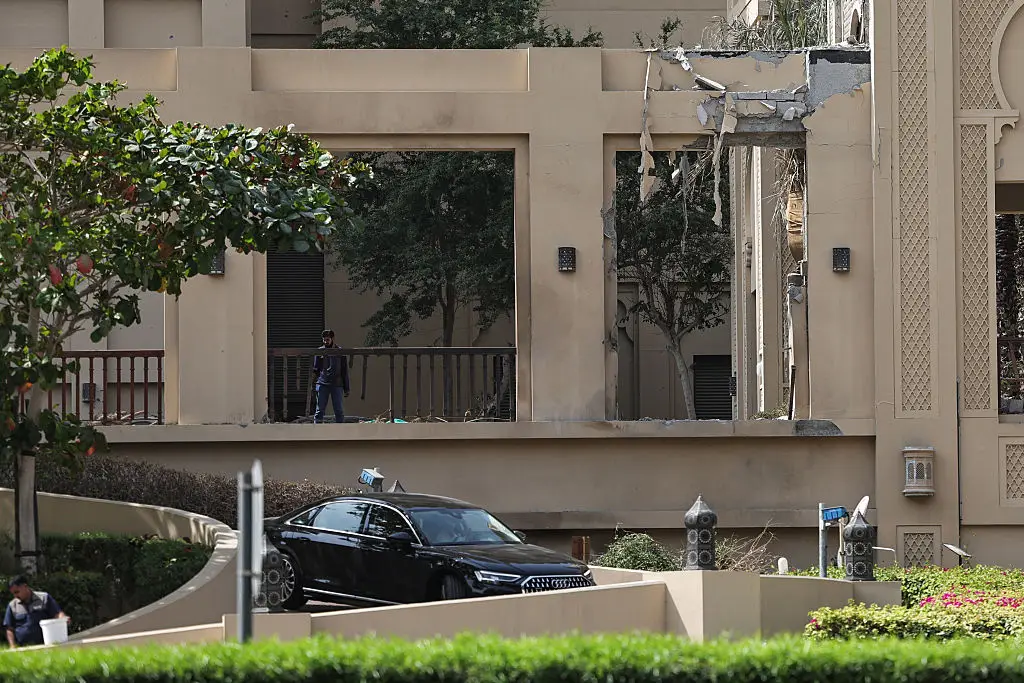
Dubai’s Fairmont hotel, which was hit by an Iranian drone (Fadel SENNA / AFP via Getty Images)
What is the guidance for British nationals in this region?
The overwhelming majority of British nationals in the Middle East are currently in Dubai, the capital of the United Arab Emirates.
Current guidance for those in Dubai and the wider UAE is to shelter in place – which means remaining indoors, avoiding travel and following local instructions – as well as registering their presence.
According to the BBC, Foreign Secretary Yvette Cooper said there are an estimated 300,000 British citizens in Gulf countries, with a total of 102,000 having since registered their presence with the UK government.
Further guidance on what to do should the situation escalate is listed on the FCDO’s ‘If you’re affected by a crisis abroad’ page.
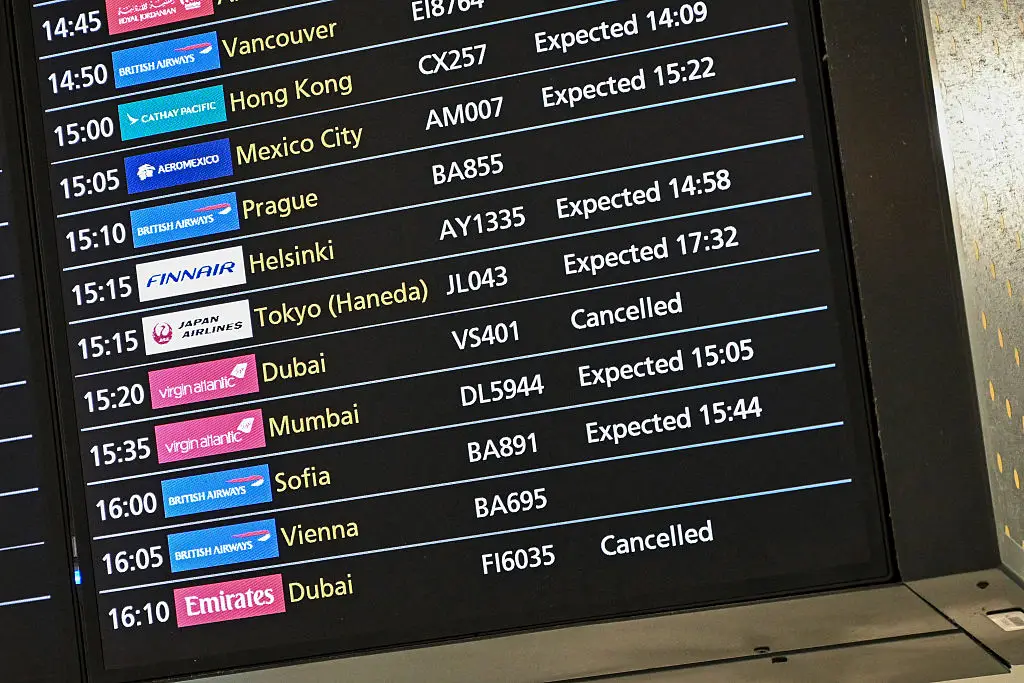
The FCDO currently advises against all but essential travel to countries such as the UAE and Qatar (JUSTIN TALLIS / AFP via Getty Images)
Are airports in the Middle East currently open?
As of 2 March, airports have been closed in Iran, Iraq, Kuwait, Israel, Bahrain and Qatar, while air travel has been strictly limited in the UAE.
FlightRadar reports that airports in Abu Dhabi and Dubai temporarily opened for a small number of departures earlier today. There are also restrictions on commercial flights in some regions of Saudi Arabia and Jordan.
Meanwhile, the BBC is reporting that the UK Government is currently exploring ‘potential scenarios’ for evacuation should the conflict continue, and a Downing Street spokesperson said they ‘are looking at all options’, including using commercial, charter, military flights, and buses to get Britons across the Saudi and Turkish borders (via The Guardian).
Cooper told Sky News that the government is ‘working on every possible option’ and teams have been deployed to Gulf countries to assist British citizens there.
“Of course, we want people to get safely home as swiftly as possible,” she said.

RIVER OF GOODS Stained Glass Magna Carta LED Ceiling Fan - 52" L x 52" W - Tiffany Style - Flush Mount Ceiling Fan with Remote - Teal
(as of March 3, 2026 16:43 GMT +00:00 - More infoProduct prices and availability are accurate as of the date/time indicated and are subject to change. Any price and availability information displayed on [relevant Amazon Site(s), as applicable] at the time of purchase will apply to the purchase of this product.)
Rhythm Superfoods Cripsy Beet Chips, Salted, Organic and Non-GMO, Vegan/Gluten-Free Superfood Snacks, 1.4 Oz (Pack of 4)
(as of March 3, 2026 16:43 GMT +00:00 - More infoProduct prices and availability are accurate as of the date/time indicated and are subject to change. Any price and availability information displayed on [relevant Amazon Site(s), as applicable] at the time of purchase will apply to the purchase of this product.)
Joking Hazard Enlarged Box Empty Box for Card Storage
$12.00 (as of March 3, 2026 16:43 GMT +00:00 - More infoProduct prices and availability are accurate as of the date/time indicated and are subject to change. Any price and availability information displayed on [relevant Amazon Site(s), as applicable] at the time of purchase will apply to the purchase of this product.)
UNiTE Protein Bar, 10g Protein, 200 Calories, Variety Pack, Real Ingredients, No Artificial Sweeteners or Flavors, Gluten & Soy Free, High Protein, Women Owned, 1.59 Oz Bars (12 Pack)
(as of March 3, 2026 16:43 GMT +00:00 - More infoProduct prices and availability are accurate as of the date/time indicated and are subject to change. Any price and availability information displayed on [relevant Amazon Site(s), as applicable] at the time of purchase will apply to the purchase of this product.)