Mysterious ‘Phoenix Planet’ Emerges from Stellar Ashes, Defying Cosmic Understanding
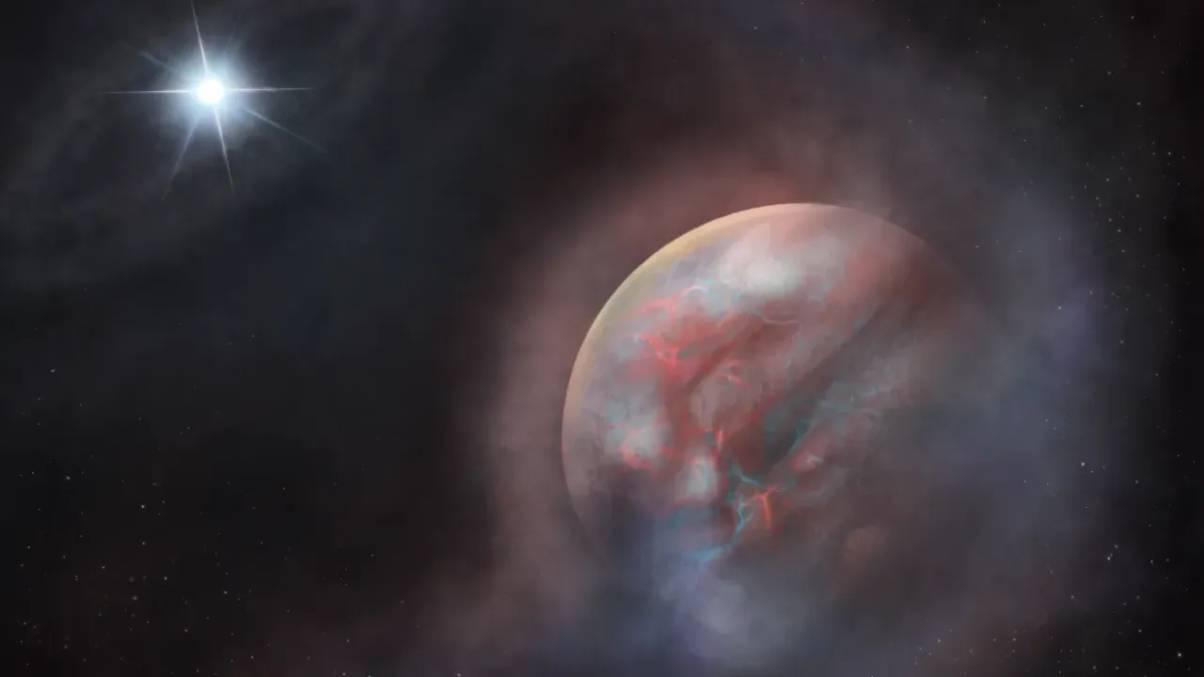
Imagine discovering a planet that’s basically a cosmic comeback story—a “phoenix planet” born from the ashes of its own dead star. Sounds like sci-fi, right? But a team of sharp-eyed astronomers from the University of Warwick just pulled off this “completely unexpected” find, orbiting the white dwarf star HS 0209+0832. What’s wild is this isn’t just any planet; it’s made from the stellar detritus a star once discarded as it died, now feeding the star in a strange celestial dance. The Hubble Space Telescope and NASA’s TESS satellite played sidekick roles, revealing an unusual chemical cocktail in the star’s atmosphere—zinc, copper, niobium—ingredients hinting at a star’s demise and a planet’s rebirth. Now, it makes you wonder—could our own solar system be harboring a secret second-generation world, quietly rising from the Sun’s future ashes? Buckle up, ’cause space just got a whole lot spicier. LEARN MORE.
A team of scientists have said they made a ‘completely unexpected’ discovery of finding a ‘phoenix planet’, one that is made from the remnants of a dead star, orbiting a white dwarf.
The astronomers were led by a team from the University of Warwick and their research focused on white dwarf HS 0209+0832, which has also been examined by NASA and the Hubble Space Telescope, having found an unusual chemical signature in its atmosphere.
A white dwarf is the collapsed core of a star that remains when it has run out of fuel, while our Sun is a yellow dwarf star that fuses hydrogen into helium a white dwarf shines from the remaining heat of a star’s core of carbon and oxygen.
Astronomers found signatures of zinc, copper and niobium, elements which indicate the death of a star, and they suggest that the star is feeding off a ‘phoenix planet’ made of material from a dying star.
Jamie Williams, study author and PhD student at the University of Warwick, said: “Second-generation planets are worlds that form out of the material a star casts off as it dies.
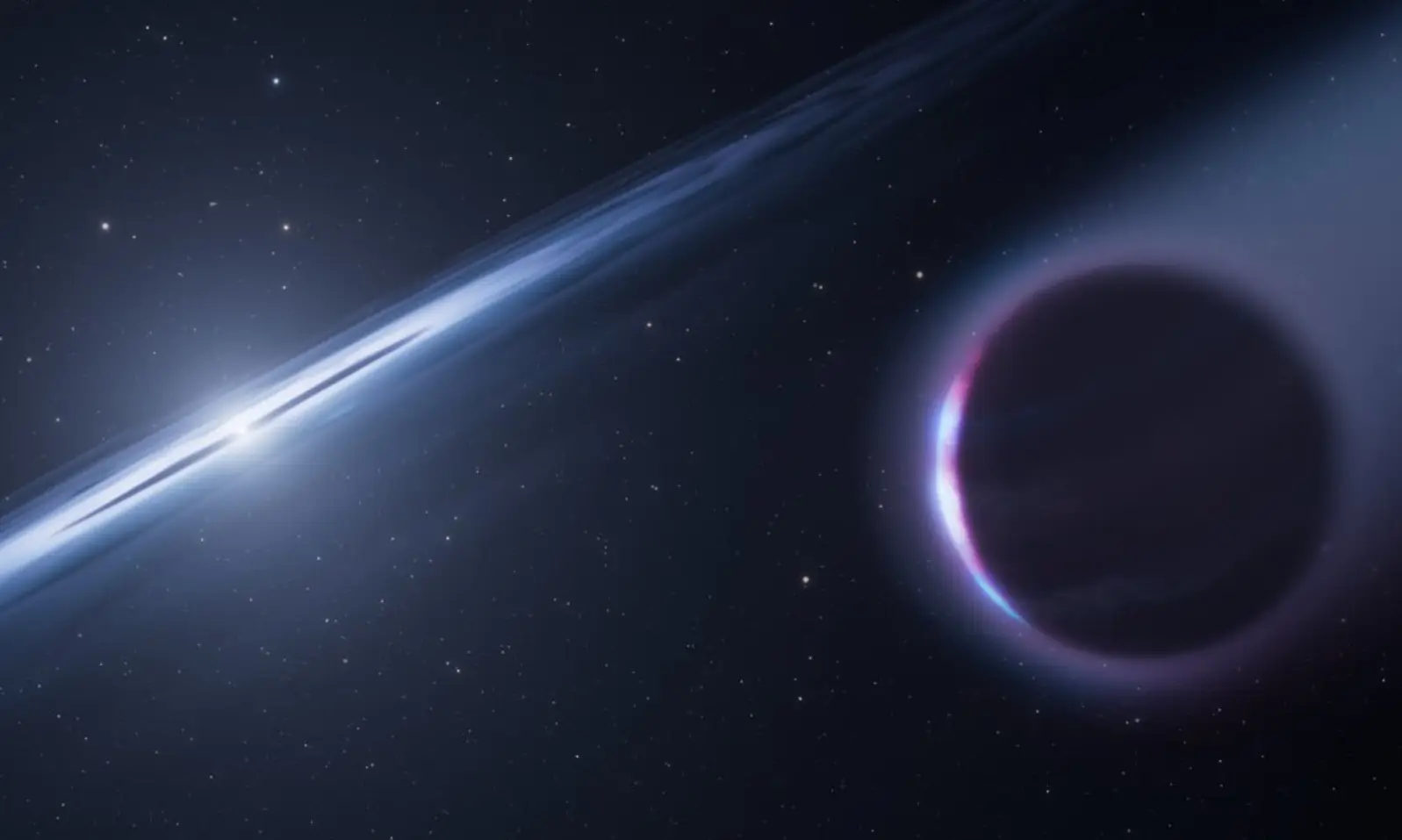
Artist’s impression of a gas giant planet orbiting a white dwarf star, which is leeching material back off it (NASA, ESA, L. Hustak (STScI))
“They’re incredibly rare, and finding one around a white dwarf was completely unexpected. It’s a bit like finding a planet that has risen from the ashes of the very star it once orbited.”
Most white dwarfs are formed after a dying star has shed material, which in this case may have formed a planet, and now the core of that same star is feeding off the phoenix planet that was reborn from the shed material.
Williams said: “Forming the protoplanetary disc in this situation is not easy and helps explain why these planets are so rare. A single, isolated star dies and sheds mass in a roughly symmetrical way.
“To form a disc of material necessary to birth a planet, HS 0209+0832 likely required a companion star that pulled the ejected material back into orbit, rather than letting it escape.”
NASA’s TESS satellite helped their research as it picked up a regularly repeating brightness signal from the planet.
It’s allowed the scientists to hypothesise that the planet is close enough to the star that its atmosphere is being boiled away by radiation, with the material that escapes it raining back down towards the star.
If the team has found a phoenix planet then they may have just discovered how we can find more that are orbiting white dwarf stars.
Professor Boris Gänsicke of the University of Warwick said: “What’s remarkable about the planet around HS 0209+0832 is that this isn’t a planet from somewhere else, or a survivor from the system’s birth, it looks like it was built from the very material its own star cast off as it died.
“In a sense, this system has given birth to a new world using the foundations of the old one.
“Finding this one example raises the question of how many more might be out there and might our own Solar System host a second-generation planet formed from the ashes of our Sun.”
Hubble first observed the star back in 1999 and saw many chemicals that they couldn’t explain, but NASA now reckon the researchers have found an answer to explain the ‘cold case’.

Skater Trainer Wheels - Beginners get Skateboard Tricks Fast, Safe and Fun | Viral accessory gift - Helps beginners stay excited about their new skateboard - Kids & parents love these
$28.99 (as of October 7, 2026 00:56 GMT +00:00 - More infoProduct prices and availability are accurate as of the date/time indicated and are subject to change. Any price and availability information displayed on [relevant Amazon Site(s), as applicable] at the time of purchase will apply to the purchase of this product.)
RIVER OF GOODS Alabaster LED Mesh Caged Ceiling Fan - 52" L X 52" W - White/Oak Wood-Grain Blades
(as of October 7, 2026 00:56 GMT +00:00 - More infoProduct prices and availability are accurate as of the date/time indicated and are subject to change. Any price and availability information displayed on [relevant Amazon Site(s), as applicable] at the time of purchase will apply to the purchase of this product.)
Supa Ant 6x8ft. Welding Blanket Fireproof (Pack of 2) - Heavy Duty Weld Fire Blanket Tools - Welders Cover for Men Curtain with Gloves - Large Welding Gear for Welder Accessories
(as of October 7, 2026 00:56 GMT +00:00 - More infoProduct prices and availability are accurate as of the date/time indicated and are subject to change. Any price and availability information displayed on [relevant Amazon Site(s), as applicable] at the time of purchase will apply to the purchase of this product.)
Joking Hazard by Cyanide & Happiness - 360+ Funny & Inappropriate Comic Cards, Hilarious Party Games | Includes Add-Your-Own-Words Cards
$17.47 (as of October 7, 2026 00:56 GMT +00:00 - More infoProduct prices and availability are accurate as of the date/time indicated and are subject to change. Any price and availability information displayed on [relevant Amazon Site(s), as applicable] at the time of purchase will apply to the purchase of this product.)




















Post Comment