Unlocking the Secrets of Motherboard Earth: Is Our Planet a Giant Living Circuit?

Are Ancient Buildings Similar To PCBs?
When looking at ancient structures, it’s easy to see the similarities to PCBs, as the TikToker points out in his video.
This is simply a coincidence. One way to disprove this theory is by noting the selection bias. For example, there are countless ancient cities that look nothing like circuit boards — and plenty of modern cities that do appear circuit-like, despite not being built with any influence from aliens or artificial intelligence.
The city of Erbil in Iraqi Kurdistan, for example, has been continuously populated for more than 7,000 years. From above, the city looks nothing like a circuit board, with an oblong circular shape divided into uneven fractions.
In contrast, China’s Xiong’an New Area, which only broke ground in 2017, has many of the hard angles and straight lines associated with PCBs.
To be clear, architects for the latter project have not claimed that they are attempting to build an alien battery. Instead, this and the other PCB-like cities are simply examples of pareidolia, which is when our pattern-loving brains find familiar shapes in unfamiliar objects — for example, seeing a face in the clouds or seeing a circuit board in a city built generations before humans harnessed electricity.
Further complicating matters is that the PCB wasn’t even invented until the early 1900s. Many early PCBs looked nothing like ancient cities, with significantly more curved lines and rough edges than the angular structures of ancient temples and fortresses.
The Meaning Behind Shapes And Numbers Used In Ancient Architecture
This isn’t to say that there were no ancient structures with deeper meanings or purposes.
For example, the Maya city of Chichén Itzá is thought to have been founded as early as 400 C.E. While none of its structures were designed to act as a circuit board or battery, there was certainly careful thought put into their construction.

Alexiz Mora/UnsplashThe Maya likely intentionally incorporated calendar and seasonal knowledge into the architecture of Chichén Itzá.
For example, the number of stairs on the Temple of Kukulcan added up to 365 — the number of days in the Maya calendar. Not only that, but the design of the temple gave the illusion that, over the course of the day, the shadow of the serpent deity Kukulcan was slithering down the stairs.
All That’s Interesting reached out to Zieba via email.
There have also been countless religious monuments built throughout history with specific shapes signifying a connection to a higher power: not electrical, but spiritual. In other words, the mystery may not actually be whether ancient people were secretly building computers — but instead, how and why they were building things that are so impressive without them.

Supa Ant Canning Supplies Starter Kit (Food Grade) - Canning Kits Set for Beginners - 3 Pcs. Including Wide Mouth Jar Funnel, Magnetic Lid Lifter, Stainless Steel Jar Lifter (Assembled in USA) Blue
$9.99 (as of October 24, 2026 01:02 GMT +00:00 - More infoProduct prices and availability are accurate as of the date/time indicated and are subject to change. Any price and availability information displayed on [relevant Amazon Site(s), as applicable] at the time of purchase will apply to the purchase of this product.)
Fire Cloak - 1500F CE Certified Emergency Fire Blanket for Home & Kitchen | 500GSM Fabric & 0.5mm Thick - Silicon Coated 100% Fiberglass Essentials in House, Warehouse Office - 55"L x 70"W by Supa Ant
$83.99 (as of October 24, 2026 01:02 GMT +00:00 - More infoProduct prices and availability are accurate as of the date/time indicated and are subject to change. Any price and availability information displayed on [relevant Amazon Site(s), as applicable] at the time of purchase will apply to the purchase of this product.)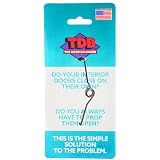
The Door Balancer Eliminates The Need for Door Props, Door Stops and Door Wedges
(as of October 24, 2026 01:02 GMT +00:00 - More infoProduct prices and availability are accurate as of the date/time indicated and are subject to change. Any price and availability information displayed on [relevant Amazon Site(s), as applicable] at the time of purchase will apply to the purchase of this product.)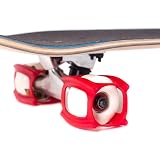
Skater Trainer Wheels - Beginners get Skateboard Tricks Fast, Safe and Fun | Viral accessory gift - Helps beginners stay excited about their new skateboard - Kids & parents love these
$28.99 (as of October 24, 2026 01:02 GMT +00:00 - More infoProduct prices and availability are accurate as of the date/time indicated and are subject to change. Any price and availability information displayed on [relevant Amazon Site(s), as applicable] at the time of purchase will apply to the purchase of this product.)