Unveiling the Shocking Palace Conspiracy That Erased Three Ancient Assyrian Kings from History!
Ever wonder what happens when ancient kings get ghosted from history? Turns out, in the ruthless realm of Assyrian power plays, three kings—Aššur-uballiṭ, Tiglath-pileser, and Shalmaneser—might have been wiped clean from the official record like embarrassing photos after a bad night out. For over a hundred years, historians thought they’d nailed the lineup of Assyria’s final rulers, but new research is shaking things up, suggesting these monarchs may have been politically erased by their successors eager to rewrite the script. What went down in these royal cover-ups? And how many more “lost” kings are lurking just out of sight? Dive into a saga of brief reigns, rebellion, and historical deletions so dramatic, it’s like Game of Thrones—with clay tablets. Ready for the cold, hard truth about who really sat on the throne and why they disappeared?
Ancient Assyrian kings named Aššur-uballiṭ, Tiglath-pileser, and Shalmaneser are seemingly missing from the official record, suggesting that their successors may have tried to erase them from history for political reasons.
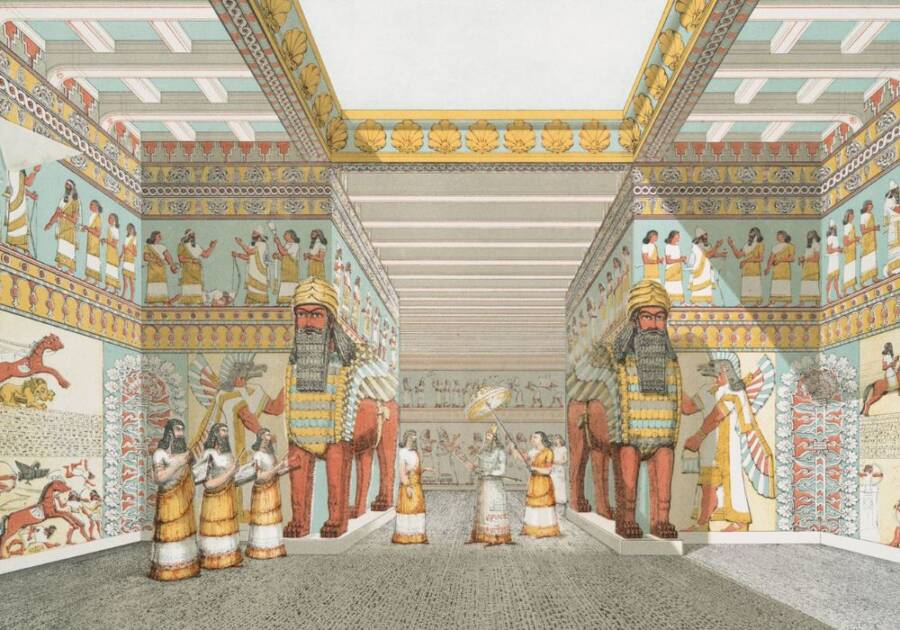
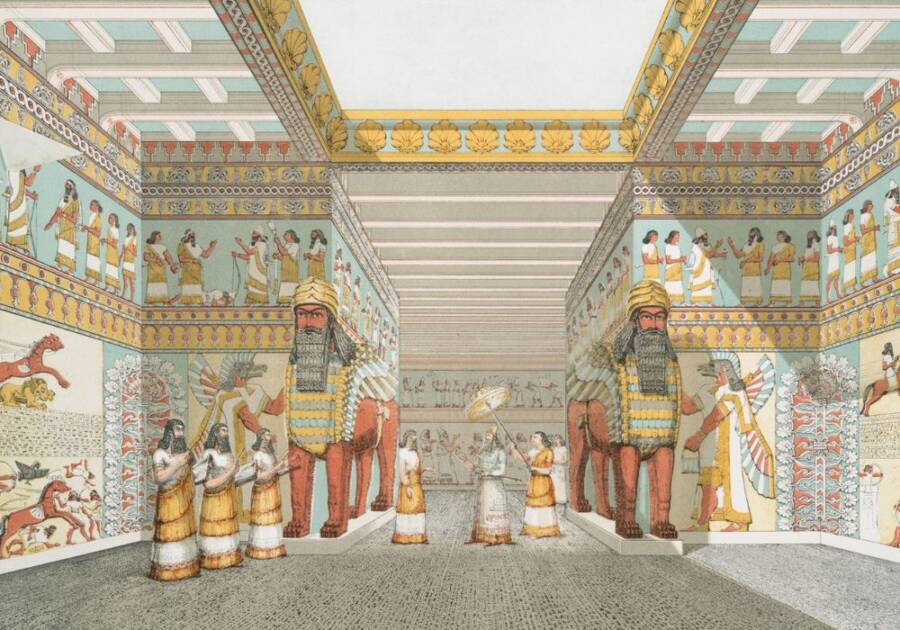
New York Public LibraryA 19th-century illustration of a king in an Assyrian palace.
For over a century, historians believed they had a clear picture of who ruled ancient Assyria during the final centuries of the empire. Now, two scholars say that picture is missing three kings — and it may be the fault of their successors.
According to new research published in the Journal of Cuneiform Studies, Yale University Assyriologist Eckart Frahm and University of Münster researcher Alexander Johannes Edmonds found evidence of three previously unidentified monarchs. A man named Aššur-uballiṭ allegedly ruled from 913 to 912 B.C.E.; Tiglath-pileser seized power around 763 B.C.E. and reigned briefly; and a man named Shalmaneser headed the empire from roughly 747 B.C.E. to 745 B.C.E.
Assyria was an enormous military superpower that conquered vast swaths of the Middle East, including parts of modern-day Turkey, Iran, Iraq, and Syria. Assyria existed from about the 21st century B.C.E. until the seventh century B.C.E.
At first, the explanation for these kings’ absence from the historical record seems easy to explain. Each one only ruled for a brief time. Their reigns were also turbulent, and they were all deposed or defeated.
Still, Assyria was previously believed to have a strong tradition of listing its leaders. So, why were these three absent? The answer, it seems, may have been political.
Why Happened To These Three Assyrian Kings?
There are three relatively well-preserved copies of what historians call the Assyrian King List, or AKL. This document was periodically updated to record Assyrian kings and how long they ruled. Generally speaking, the succession presented in the list is smooth, with reigns often being handed from father to son.
However, Frahm and Edmonds say this may not have been a complete chronology. Part of their evidence comes from a damaged cuneiform tablet currently held by the British Museum, which records a royal land grant dating to 762 B.C.E. This document includes a king who, according to the AKL, did not actually rule during that year.
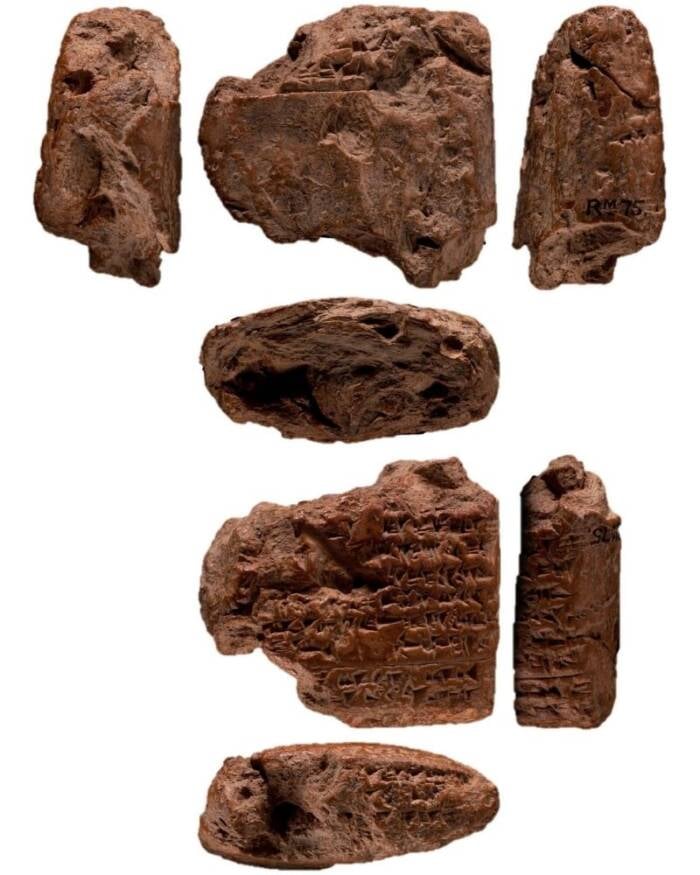
Trustees of the British MuseumThe broken cuneiform tablet that records the land grant.
Frahm suggests that the person mentioned in the document was not Tiglath-pileser III, a known Assyrian leader, but a different Tiglath-pileser — a previously unrecognized member of the Assyrian royal family. The Assyrian Eponym Chronicle records a rebellion at the city of Aššur in 763 and 762 B.C.E., which could mark the time that this new Tiglath-pileser seized power.
Research suggests that this other Tiglath-pileser was quickly toppled, though how this occurred is uncertain. Still, it would appear that his brief leadership was memorialized in a land grant — but not on the AKL.
If one leader could be stricken from the record, how many more could there be? According to the researchers, the answer is at least two.
The Other Lost Assyrian Kings
Evidence for the other kings came from two places.
The first is a stone monument associated with an Assyrian official named Bēl-Ḫarrān-bēlu-uṣur. There is evidence that the monument once bore a different name before the name of the known king Tiglath-pileser III. Frahm and Edmonds argue that this name was the previously unknown Shalmaneser, likely the son and successor of Aššur-nārārī V. The researchers say that he seems to have become king around 747 B.C.E.; Tiglath-pileser III would seize the throne in 745 B.C.E., and the monument may have been altered to bear his name.
The third missing leader, Aššur-uballiṭ, came about two centuries earlier. His name appeared in an inscription about the restoration of a silver ritual vessel used to pour beer for the god Aššur.
Previously, Frahm suggested that the presence of this name may have been a scribal mistake. However, given the context that other kings have been left off of the AKL, Edmonds and Frahm now argue that Aššur-uballiṭ could be the name of another forgotten king.

Supa Ant Canning Supplies Starter Kit (Food Grade) - Canning Kits Set for Beginners - 3 Pcs. Including Wide Mouth Jar Funnel, Magnetic Lid Lifter, Stainless Steel Jar Lifter (Assembled in USA) Blue
$9.99 (as of October 26, 2026 01:02 GMT +00:00 - More infoProduct prices and availability are accurate as of the date/time indicated and are subject to change. Any price and availability information displayed on [relevant Amazon Site(s), as applicable] at the time of purchase will apply to the purchase of this product.)
Fire Cloak - 1500F CE Certified Emergency Fire Blanket for Home & Kitchen | 500GSM Fabric & 0.5mm Thick - Silicon Coated 100% Fiberglass Essentials in House, Warehouse Office - 55"L x 70"W by Supa Ant
$83.99 (as of October 26, 2026 01:02 GMT +00:00 - More infoProduct prices and availability are accurate as of the date/time indicated and are subject to change. Any price and availability information displayed on [relevant Amazon Site(s), as applicable] at the time of purchase will apply to the purchase of this product.)
RIVER OF GOODS Alabaster LED Mesh Caged Ceiling Fan - 52" L X 52" W - White/Oak Wood-Grain Blades
(as of October 26, 2026 01:02 GMT +00:00 - More infoProduct prices and availability are accurate as of the date/time indicated and are subject to change. Any price and availability information displayed on [relevant Amazon Site(s), as applicable] at the time of purchase will apply to the purchase of this product.)
RIVER OF GOODS Stained Glass Bird Accent Lamp - 8" W x 13.5" H - Tiffany Style Table Lamps for Home, Office Desk, Bedroom, Nightstand - Blue Jay Decor
(as of October 26, 2026 01:02 GMT +00:00 - More infoProduct prices and availability are accurate as of the date/time indicated and are subject to change. Any price and availability information displayed on [relevant Amazon Site(s), as applicable] at the time of purchase will apply to the purchase of this product.)